Ceramic & Protection
How to Protect Car Paint: Wax, Sealant, Ceramic, PPF
Key Takeaways
- Protecting car paint means adding a sacrificial barrier over the clear coat: wax lasts weeks, sealant lasts months, ceramic coating lasts years, and paint protection film (PPF) blocks physical impact.
- Ceramic coating resists UV, chemicals, and water spotting and makes washing easier, but it does not stop rock chips or scratches — only PPF does that.
- Most paint damage is self-inflicted through poor washing; a two-bucket wash, a grit guard, and clean microfiber towels prevent more swirls than any coating fixes.
- In San Francisco, fog moisture, salt air, and water spotting attack unprotected paint year-round, so street-parked cars benefit most from a durable coating plus same-day removal of bird droppings and sap.
- Wax and sealant are DIY-friendly; ceramic coating and paint correction are best left to a certified installer, because a bad prep gets sealed in for years.
How to protect car paint comes down to one idea: put a sacrificial barrier between your clear coat and the world, then back it up with smart washing and parking. You climb a protection ladder based on budget and how long you want it to last — wax lasts weeks, a sealant lasts months, a ceramic coating lasts years, and paint protection film (PPF) shrugs off physical impact.
Our technicians have detailed over 500 cars around San Francisco. We've spent years protecting paint against our fog, salt air, and water spotting, and we'll tell you straight where each level is worth it and where it's overkill.
This guide breaks down the four rungs of paint protection, what each one actually stops, a cost-versus-longevity table, and the low-effort habits that keep any of them working longer. No hype — just what holds up.
How do you protect your car's paint?
Your paint is already protected — by its clear coat, a thin layer of hard resin over the color that takes the daily beating from sun, water, and grit. The problem is that clear coat wears down, and once it fails you're looking at oxidation, fading, and an expensive repaint. So the real job isn't protecting the paint. It's protecting the protector.
You do that two ways: add your own sacrificial layer on top, and stop scratching the car every time you clean it. That's the whole game. Everything else is just choosing how strong that layer is and how long it lasts — which is where the protection ladder comes in.
The paint protection ladder: wax to PPF
Think of paint protection as four rungs. Each one costs more and lasts longer than the one below it, and each stops a slightly different set of threats. You don't have to climb to the top — you climb to the rung that matches how you use the car and what you're willing to spend.
| Protection | Typical lifespan | What it stops | Cost (pro) | Best for |
|---|---|---|---|---|
| Wax (carnauba) | 4-8 weeks | Water spotting, light UV; adds warm gloss | $15-40 DIY or part of a detail | Budget shine, quick refresh |
| Sealant (synthetic) | 3-6 months | UV, light contaminants; adds slickness | $20-60 DIY or part of a detail | Set-and-forget seasonal protection |
| Ceramic coating (SiO2) | 2-6+ years | UV, chemicals, staining, water spots; easier washing, light marring | $799-$2,499+ | Long-term protection and gloss |
| PPF (urethane film) | 5-10 years | Rock chips, scratches, road debris (physical impact) | $1,500-$6,000+ | High-impact zones, new or exotic cars |
Pro tip: These rungs overlap in real life. A ceramic-coated car still benefits from an occasional spray sealant as a top-up, and plenty of people run PPF on the front end and ceramic over the rest. It's a ladder, not four separate boxes.
What does each layer actually stop?
Protection isn't one thing — it's defense against a list of specific attackers. Here's what's really hitting your paint and which rung handles it:
- UV rays: The sun oxidizes and fades clear coat over time. Wax slows it; sealant and ceramic block it well.
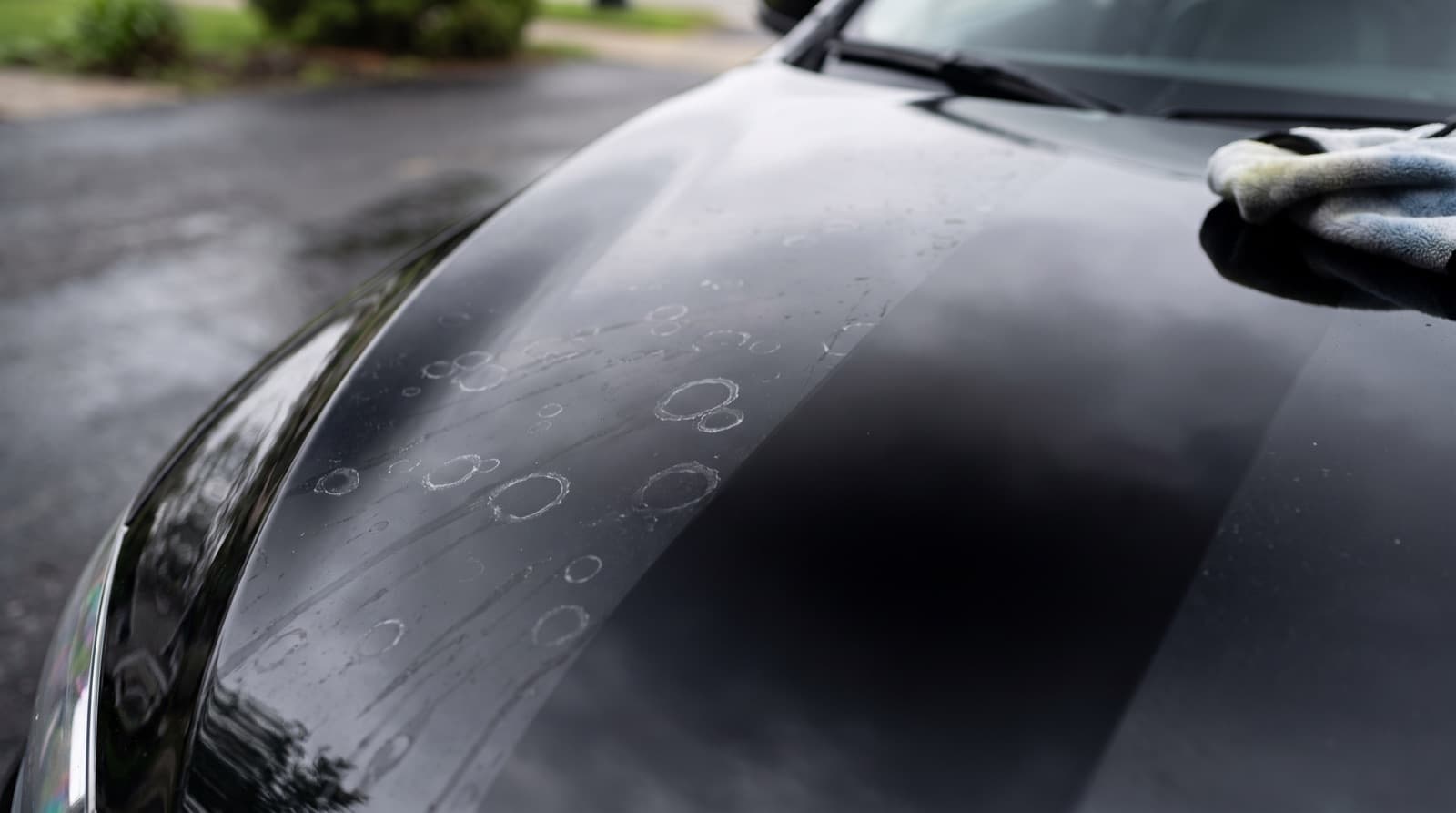
- Water spots and mineral deposits: hose water and sprinkler spray dry into etched rings. Slick sealant and ceramic surfaces let water bead and roll off before it spots.
- Chemical stains — bird droppings, tree sap, bug guts: All acidic. Ceramic resists them best, but nothing is immune if you leave them baking in the sun.
- Road film, salt, and brake dust: Everyday grime that bonds to bare paint. Any coating makes it rinse off instead of sticking.
- Rock chips and scratches: Physical impact. Only PPF actually stops these — no wax, sealant, or ceramic coating will.
Wash it right — most paint damage is self-inflicted
Here's the part nobody wants to hear: the fastest way to wreck your paint is washing it wrong. Almost every swirl mark and fine scratch our technicians correct came from grit being dragged across the surface — usually by a dirty mitt or an automatic car wash with stiff brushes. Protection layers help, but technique matters more.
A safe home wash isn't complicated:
- Use two buckets — one soap, one clean rinse water — with a grit guard so dirt sinks instead of riding back onto your mitt.
- Wash top to bottom; the lower panels are dirtiest and go last.
- Use real car soap, never dish soap, which strips wax and dries out trim.
- Dry with a clean, plush microfiber towel or a blower — never let rinse water air-dry into spots.
- Skip the tunnel washes with spinning brushes; touchless or hand washing only.
Pro tip: Most of the swirls our technicians polish out come from bad washing, not the road. A gritty wash mitt does more damage in one Saturday than a month of street parking ever will.
Protecting paint in San Francisco: fog, salt air, and street parking
San Francisco is quietly hard on paint. The marine layer keeps cars damp for hours, salt air rides in off the ocean and settles into a fine corrosive film, and water left to air-dry spots everything it touches. Add street parking under trees — sap, pollen, bird droppings — and no garage to hide in, and unprotected clear coat ages fast.
If your car lives outside here, lean toward the durable end of the ladder. A ceramic coating earns its keep because that slick surface means fog moisture and salt film rinse off with a quick wash instead of etching in. Between washes, two habits save the most paint: rinse off bird droppings and sap the same day, and park away from sprinklers and out from under the messiest trees when you can.
Pro tip: Because we're mobile and bring our own water and power, we can rinse salt-air film and bird bombs off your car right in your driveway or at your office — no waiting for a weekend trip to a wash that scratches it anyway.
Which level of paint protection should you pick?
Match the rung to the driver. Here's how we'd steer people after 500-plus cars:
- Budget or short-term owner: A good sealant every few months. Cheap, easy, and better than nothing by a mile.
- Daily driver who wants low effort: Ceramic coating. Two-plus years of easier washes and strong stain resistance — the best value for most SF drivers.
- New-car or resale-focused owner: Ceramic over the whole car, ideally after a light paint correction so the finish is flawless before you seal it.
- Enthusiast, exotic, or high highway miles: Add PPF on the hood, bumper, and mirrors for rock-chip protection, with ceramic on top for shine and easy cleaning.
- Weekend or garage-kept classic: Carnauba wax is genuinely fine here. It looks warm, it's cheap, and a garaged car doesn't need years of durability.
Frequently Asked Questions
Does ceramic coating stop rock chips?
No. A ceramic coating is a thin, hard, glass-like layer that resists chemicals, UV, and staining and makes washing easier — but it will not stop a rock chip or a deep scratch. For physical impact protection you need paint protection film (PPF), a thick urethane layer. Many people run PPF on the front bumper and hood and ceramic everywhere else.
How often should I wax my car?
Every 6 to 8 weeks if you rely on carnauba wax, or every 3 to 6 months for a synthetic sealant. Both wear off faster on a car that lives outside in sun, rain, and salt air. If re-waxing every couple of months sounds like a chore, that's exactly why people step up to a ceramic coating.
Is ceramic coating worth it in San Francisco?
For most SF drivers, yes. Fog moisture, salt air, and water spotting are constant here, and a coating's slick surface means grime rinses off instead of etching in. Golden Bay Detailing installs System X ceramic tiers from $799 with a manufacturer-backed warranty, mobile, anywhere from the city through the Peninsula and Marin.
Can I protect my car's paint myself?
Yes — waxing and sealing are genuinely DIY-friendly, and a good spray sealant or a bottle of carnauba takes an afternoon. Where we'd say go pro is ceramic coating and paint correction: the paint has to be decontaminated and often polished first, and a bad prep traps flaws under a layer that lasts years.
Do I need paint correction before a ceramic coating?
Usually a light one, yes. A coating locks in whatever is underneath, so any swirls or water spots get sealed in for years. That's why every Golden Bay ceramic package includes at least a one-step paint correction to clean up the surface before we coat it.
Does wax protect against bird droppings and tree sap?
It buys you time, not immunity. Wax and sealant give bird droppings and sap a slick surface to sit on, so if you wipe them off quickly they usually rinse away clean. Left for days in the sun, though, both are acidic enough to etch through wax and into clear coat — so remove them fast no matter what protection you run.
Keep reading from Golden Bay
Not sure which paint protection you actually need?
Text a photo of your car and we'll tell you straight — wax, sealant, or ceramic — with an exact quote in minutes. No pressure, no upsell. Mobile across SF, the Peninsula, and Marin.