Ceramic & Protection
Best Way to Protect a New Car: A Day-One Owner Guide
Key Takeaways
- A new car's factory clear coat is paint, not protection — it still swirls, oxidizes, and etches from bird droppings and hard water.
- The strongest day-one plan is a sequence: decontaminate, correct any transport swirls, apply a ceramic coating or paint protection film, then seal the interior.
- Ceramic coating adds gloss and easy cleaning and lasts 2–7 years; paint protection film (PPF) is a thicker layer that physically blocks rock chips.
- Dealer 'paint protection packages' are often overpriced sealants or unnamed sprays — ask exactly what product is used and its warranty before paying.
- In San Francisco, salt air, fog moisture, and street-parking exposure make early protection more valuable than in dry, garaged climates.
The best way to protect a new car is to seal the paint before it ever weathers — ideally with a ceramic coating or paint protection film applied in the first few weeks, over a surface that has been decontaminated and lightly corrected first.
Here is the part most new owners miss: a factory car leaves the line with a clear coat, but a clear coat is not a protective sealant. It scratches, oxidizes, and stains like any other paint. "Pre-protected" is a myth.
This guide walks through the day-one plan real detailers use, what is worth paying for, and which dealer add-ons to skip.
Is a new car's paint already protected?
No. Every car rolls off the line with a clear coat — a thin, transparent top layer of paint that gives the color depth and blocks some UV. But a clear coat is sacrificial paint, not a sealant. It is soft enough to swirl during one bad wash and porous enough to stain from bird droppings, tree sap, and hard water.
New cars can also arrive with damage baked in. They sit on lots for weeks, get wiped with dirty towels, and travel thousands of miles under transport film. By the time you drive off, the paint may already carry light swirls and contamination — it just has not been in the sun long enough to show.
- UV oxidation that dulls and fades the color over years
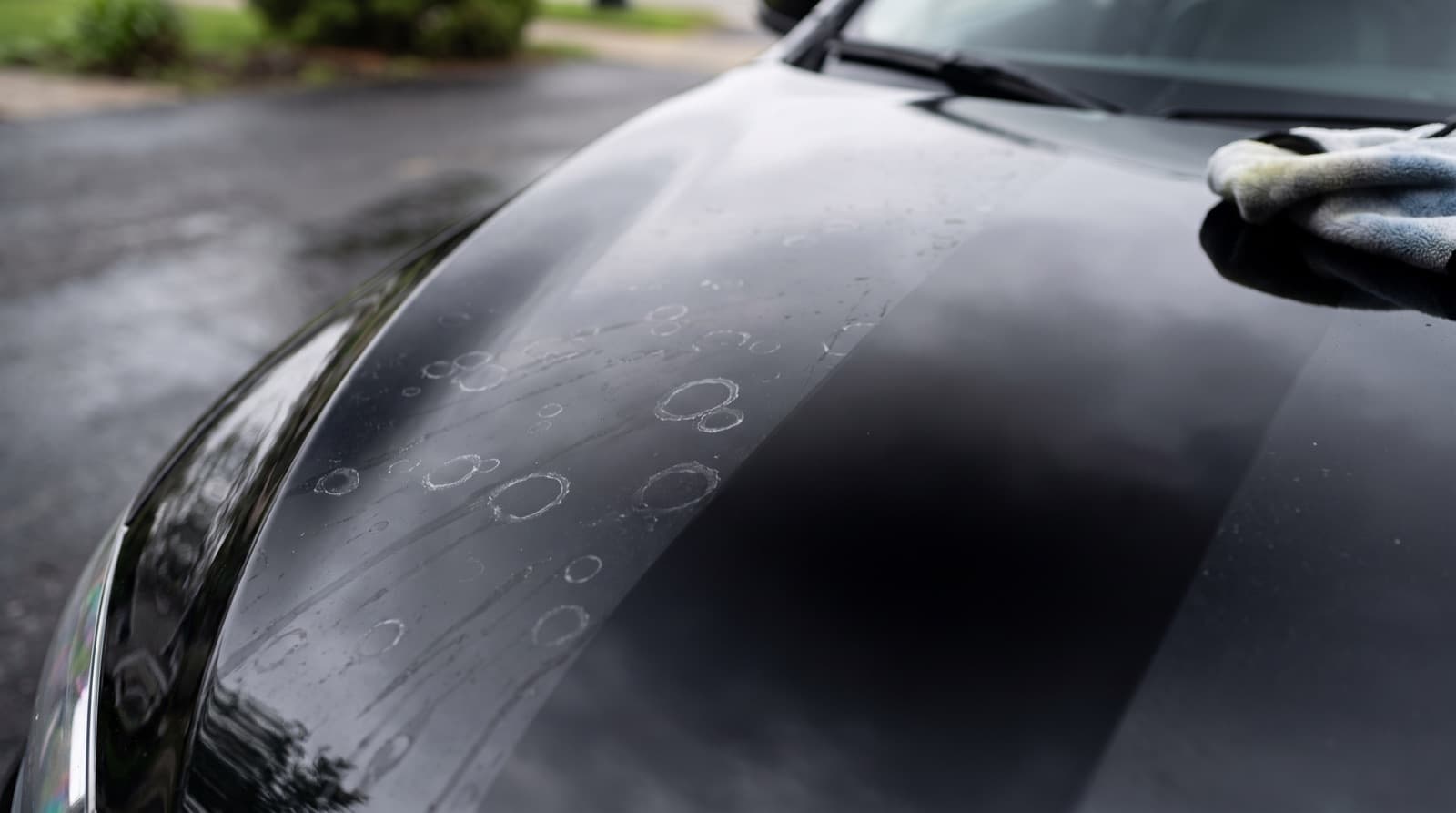
- Bird droppings and bug guts that etch permanent marks within hours
- Water spots from sprinklers, rain, and car washes
- Swirl marks and micro-scratches from wash towels and brushes
- Tree sap, industrial fallout, and road tar that bond to bare paint
Pro tip: Never run a new car through a tunnel or brush car wash, even once. Those spinning brushes are the fastest way to grind permanent swirls into fresh clear coat. Hand wash or touchless only.
What's the best day-one protection plan?
Protecting a new car is a sequence, not a single product. Do it in this order so you never seal contamination or scratches underneath your protection.
Skipping the correction step is the most common mistake. A ceramic coating is optically clear and slightly magnifying — it makes existing swirls easier to see, not hidden. Whatever the paint looks like when you coat it is what you preserve for years.
- Wash and decontaminate — a proper wash plus a clay treatment to pull out bonded contaminants the wash leaves behind.
- Inspect and correct — if the paint has transport swirls, a light one-step paint correction levels them before you lock anything in.
- Protect the paint — apply a ceramic coating or paint protection film (or both) to the clean, corrected surface.
- Protect the inside — seal fabric, leather, and plastics so spills and UV do not set in.
Do you need paint correction on a brand-new car?
Often, yes — at least a light pass. It sounds backwards to correct a car with almost no miles, but new paint is rarely flawless. Dealers wash and 'detail' cars with whatever towels are handy, and transport plus lot time add fine scratches.
A one-step paint correction is a single machine-polishing stage that removes most light swirls and restores true gloss. Heavier defects need a two-step or multi-stage correction, but most new cars only need the one step — which is why good coating packages include it.
Pro tip: At Golden Bay, every ceramic coating tier includes a one-step correction, because coating over swirls just preserves the swirls. On a brand-new car, that single step is usually all it takes.
Ceramic coating vs. PPF: which should you choose?
Ceramic coating and paint protection film (PPF) are the two serious options, and they solve different problems. A ceramic coating is a liquid that cures into a hard, slick, water-repelling layer — it locks out stains and makes washing far easier, but it will not stop a rock chip. PPF is a thick, self-healing urethane film that physically absorbs impacts — it is the only thing that truly prevents chips, at a higher price.
Many owners do both: PPF on the high-impact front end (bumper, hood, mirrors) and a ceramic coating over the rest of the car for gloss and easy maintenance. If you are choosing just one, a ceramic coating gives the best all-around protection per dollar for a daily driver.
| Feature | Ceramic Coating | Paint Protection Film (PPF) |
|---|---|---|
| Main job | Stain resistance, gloss, easy cleaning | Physical impact and chip protection |
| Rock-chip protection | No | Yes |
| Lifespan | 2–7 years | 5–10 years |
| Look | Deep gloss, slick finish | Nearly invisible, self-healing |
| Typical cost | $799–$2,499+ | Higher; often front-end or full body |
| Best for | Whole-car protection on a budget | High-impact areas or full coverage |
Pro tip: SUVs and trucks have more surface area, so budget about $200 more than a sedan for the same coating tier.
Don't forget the inside: interior protection
Paint gets all the attention, but a new interior is just as easy to ruin and far harder to restore. Factory fabric and leather come with no meaningful stain guard from the dealer.
This matters most for anyone with kids, pets, or a long commute. Sealing surfaces on day one means spills wipe up instead of setting into permanent stains.
- Fabric seats and carpet: a spray-on textile sealant so coffee and rain bead up instead of soaking in.
- Leather and vinyl: a conditioner-plus-protectant that blocks UV cracking and dye transfer from jeans.
- Dash and trim: a UV protectant to prevent fading and that sticky, degraded feel.
Which dealer paint-protection add-ons should you skip?
When you buy a car, the finance office will offer a 'paint and interior protection package,' often $1,000 to $2,000. Some are legitimate; many are marked-up sprays with vague warranties. The problem is rarely the idea — it is the value and the vagueness.
You are almost always better off declining the finance-office package and booking a professional coating from a certified installer, who will decontaminate and correct first and give you a manufacturer-backed warranty. Ask who actually applies it and what product they use.
- No named product — if they cannot tell you the exact brand and warranty, do not pay for it.
- 'Applied' in the wash bay — a spray wiped over unwashed, uncorrected paint locks swirls in.
- Warranty gotchas — many require documented reapplications or specific washes, or they void.
- Big markup — a $1,500 dealer 'ceramic' is often a consumer spray a pro would apply for less, better prepped.
Pro tip: It is fine to say no in the finance office and protect the car in your first week or two. A short wait will not harm the paint — a rushed, sloppy application does more damage than a small delay.
Protecting a new car in San Francisco
San Francisco is tougher on new paint than most people expect. Salt air off the bay speeds up oxidation, the marine layer keeps cars damp for hours, and mineral spots set in every time fog or a wash dries on the surface. Add street parking — sap, bird droppings, bumper taps — and garage-free living, and unprotected clear coat ages fast.
That is exactly the environment where early protection pays off. A ceramic coating's water-repelling surface sheds fog moisture and lets water spots wipe off instead of etching in, while shielding against salt air and UV. For EVs, which are dense here and often street-parked, the easy-clean surface saves real time.
Because Golden Bay Detailing is mobile, we come to your driveway, office, or street spot in SF, the Peninsula, or Marin with our own water and power — no dealership drop-off, no waiting room. New-car protection happens where the car already lives.
Frequently Asked Questions
How soon should I protect a new car?
As soon as practical — ideally within the first few weeks. There is no hard deadline, but the sooner you decontaminate, correct, and seal the paint, the less weathering and swirling you lock in. A short wait to book a proper professional job still beats a rushed dealer spray.
Is ceramic coating worth it on a new car?
For most owners, yes. A new car is the cleanest possible starting canvas, so a coating preserves near-factory paint with minimal correction. You get years of easy washing plus stronger stain and UV resistance. It will not stop rock chips, though — that is PPF's job.
Can I just wax my new car instead?
You can, but wax is short-term. A carnauba or spray wax lasts weeks to a couple of months and offers only light protection. A ceramic coating lasts years and resists chemicals, heat, and hard water far better. Wax is fine for maintenance touch-ups; it is not a real day-one protection plan.
Do new cars really come with swirl marks?
Frequently, yes. Lot time, dealer wipe-downs with dirty towels, and transport can all leave fine swirls and contamination on paint that looks perfect until it hits direct sun. That is why a light inspection and one-step correction belong in any real protection plan.
Does Golden Bay Detailing protect new cars?
Yes. We are a mobile, System X-certified detailer in San Francisco, and new-car protection is one of our most common jobs. We decontaminate, include a one-step correction with every ceramic tier, and apply a manufacturer-backed coating at your home or office. Get a free quote at /get-a-quote.
Keep reading from Golden Bay
Protect your new car before SF weather does.
Book a free quote and we'll come to your driveway or office with a full new-car protection plan — decontamination, one-step correction, and a manufacturer-backed ceramic coating.