Cost & Pricing
Why Is Car Detailing So Expensive? An Honest Answer
Key Takeaways
- Car detailing is expensive mainly because of labor: a full detail is two to six hours of hands-on work by a skilled technician, and paint correction can take a day or more.
- You're also paying for professional equipment and products — a dual-action polisher, a hot-water extractor, a pressure washer, and coatings like System X — that a $20 car wash never uses.
- A drive-through car wash and a professional detail are not comparable: one rinses the surface in minutes, the other cleans, corrects, and protects the whole car for months.
- Paint correction and ceramic coating cost more because they take training, carry real risk to the paint, and are backed by insurance and a manufacturer warranty.
- At Golden Bay Detailing in San Francisco, mobile prices match a shop's — $149 exterior, $249 interior, $399 full detail — with no travel fee in the standard service area.
Car detailing is expensive because you're paying for two to six hours of skilled hand labor, professional-grade products, and equipment a $20 car wash simply doesn't use. You're buying a craftsperson's time and results, not a quick rinse.
The reason people ask why car detailing is so expensive is almost always sticker shock — comparing a $149 detail to a drive-through wash. But those aren't the same service, or even close. One cleans the surface for a day; the other cleans, corrects, and protects the entire car for months.
At Golden Bay Detailing in San Francisco, our technicians have detailed more than 500 cars, so here's an honest breakdown of where your money actually goes, why professional work costs what it does, and when it's genuinely worth it.
So, why is car detailing so expensive?
The short answer: detailing is expensive because it's skilled manual labor, and labor is the single biggest cost. A detailer might spend three to six hours working over every panel, seam, and stitch of your car by hand. You're paying for that time and the trained hands doing it.
Materials are actually a small slice of the price. What drives the cost is the combination of hours, expertise, professional equipment, and the insurance and overhead any legitimate business carries.
- Labor — hours of hands-on work, the biggest cost by far.
- Skill — training to safely polish paint and rescue interiors without causing damage.
- Equipment and products — thousands in tools plus pro-grade chemicals.
- Insurance and overhead — coverage, supplies, water, power, and travel.
Pro tip: Owner tip: when a detail seems pricey, ask how long the job takes. A real full detail is an afternoon of work. If someone quotes you 45 minutes for a 'full detail,' that's a wash with a fancy name.
Where does your money actually go?
Think of a detail like hiring any skilled tradesperson — most of the bill is time and expertise, not raw materials. Here's roughly how the cost of a professional detail breaks down and what each part buys you.
| What you pay for | What it covers | Share of the cost |
|---|---|---|
| Labor | Hours of hand washing, polishing, extraction, and finishing | The largest share |
| Skill and expertise | Training to correct paint and treat interiors safely | High |
| Products | Pro-grade soaps, iron removers, polishes, coatings, microfiber | Small but constant |
| Equipment | Polisher, extractor, pressure washer, vacuum, tank, generator | Spread across every job |
| Insurance and overhead | Liability coverage, fuel, water, power, booking, taxes | Built into every price |
How many hours does a real detail take?
Time is the reason detailing costs what it does. A quick wash is measured in minutes; a detail is measured in hours because every step is done carefully by hand. Rush any of it and you get swirls, missed stains, or damaged trim.
Here's a realistic picture of the hands-on time behind each service. Paint correction and ceramic coating stack on top of these, and a full multi-stage correction can run into multiple days.
| Service | Typical hands-on time |
|---|---|
| Exterior detail | 1.5 to 2.5 hours |
| Interior detail | 2 to 3 hours |
| Full detail (inside and out) | 3 to 6 hours |
| 1-step paint correction | adds 2 to 4 hours |
| Multi-stage correction + ceramic | 1 to 3 days |
Why isn't a $20 car wash the same thing?
This is the comparison that makes detailing look expensive, and it's the wrong comparison. A $20 wash and a $399 full detail solve different problems. One is fast surface upkeep; the other is a deep reset and protection you can't get from a tunnel.
- A car wash touches the surface for a day; a detail cleans, corrects, and protects for months.
- A wash can't remove swirls, odor, stains, or bonded contamination — those need polishing, extraction, and decontamination.
- Automatic brush washes can actually add swirl marks, which a detailer then has to correct.
- A wash adds no lasting protection; a detail can seal paint with wax, sealant, or a ceramic coating.
- You're not paying 20x for soap — you're paying for hours, skill, and results a wash physically can't produce.
The equipment and products you're really paying for
A serious detailer carries thousands of dollars of tools and consumables, and the good stuff isn't cheap. Pro chemicals are stronger and safer for your car's finishes than anything on a store shelf, and the machines are what make correction and deep extraction possible in the first place.
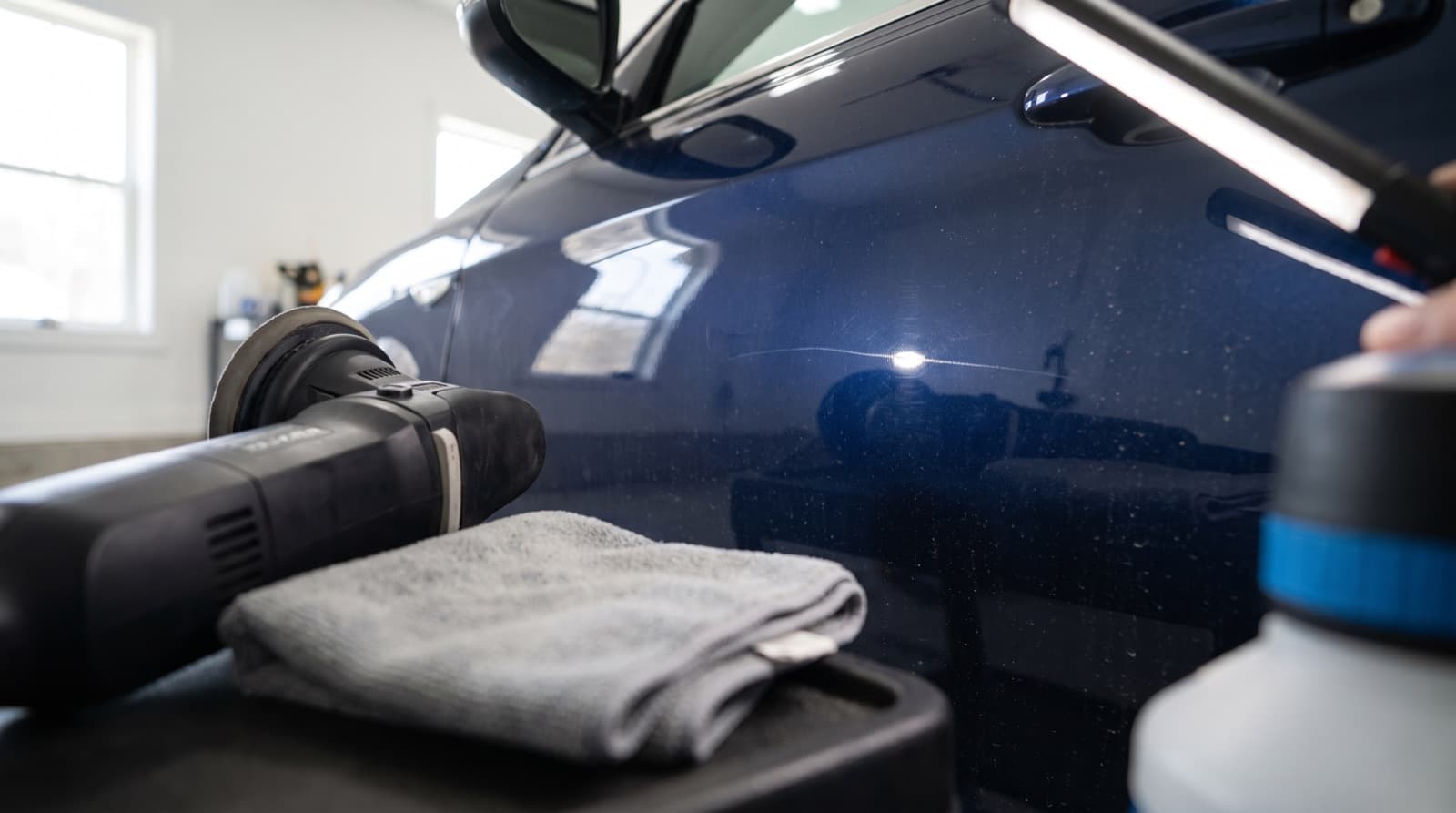
- A dual-action or forced-rotation polisher (Rupes, Flex) to safely cut and refine paint.
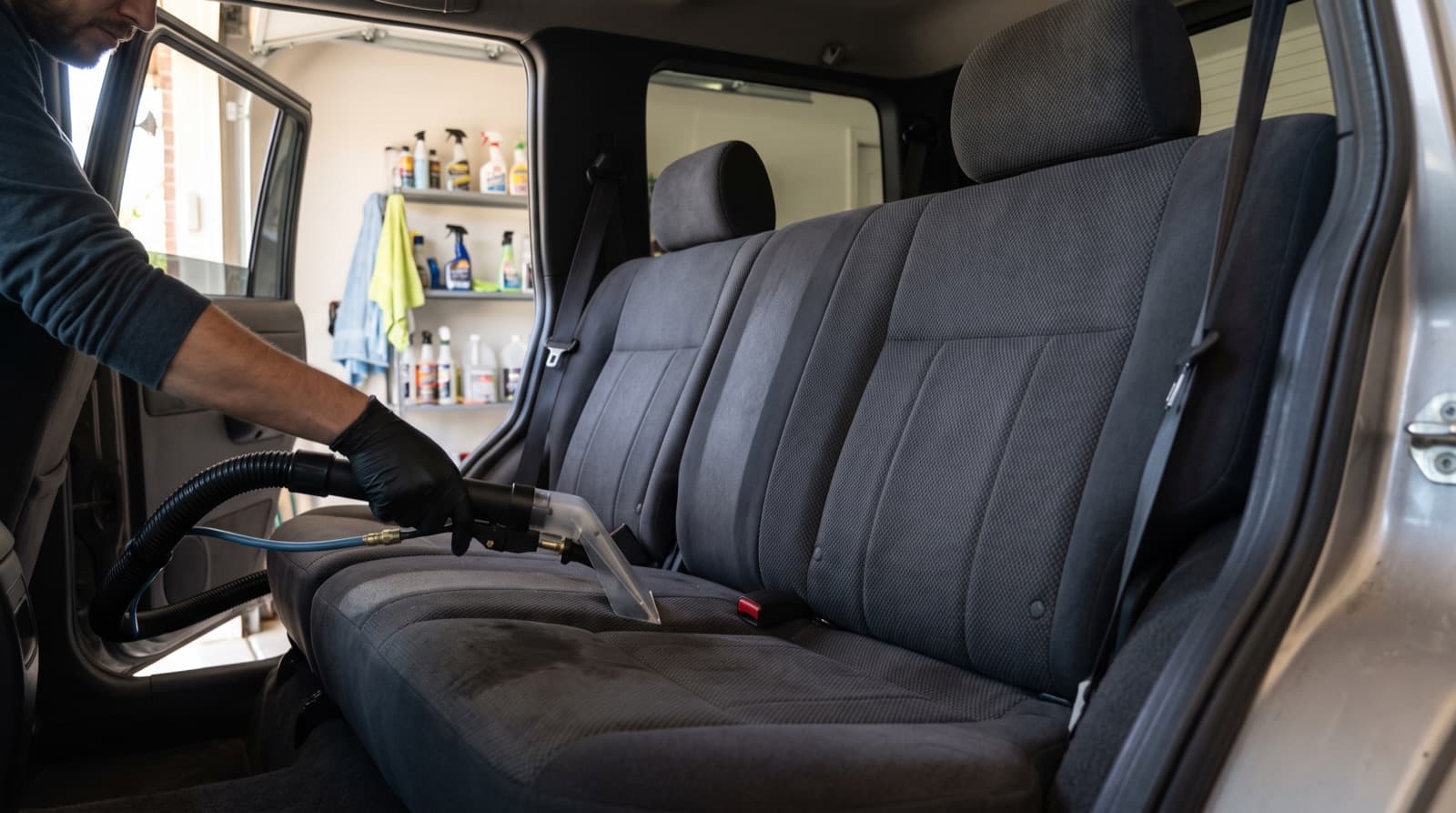
- A hot-water extractor to pull dirt and stains up out of carpet and cloth seats.
- A pressure washer, foam cannon, and pH-correct soaps for a safe wash.
- Clay bars and iron removers to strip bonded contamination a wash leaves behind.
- Certified ceramic coatings like System X, plus a deep inventory of clean microfiber towels.
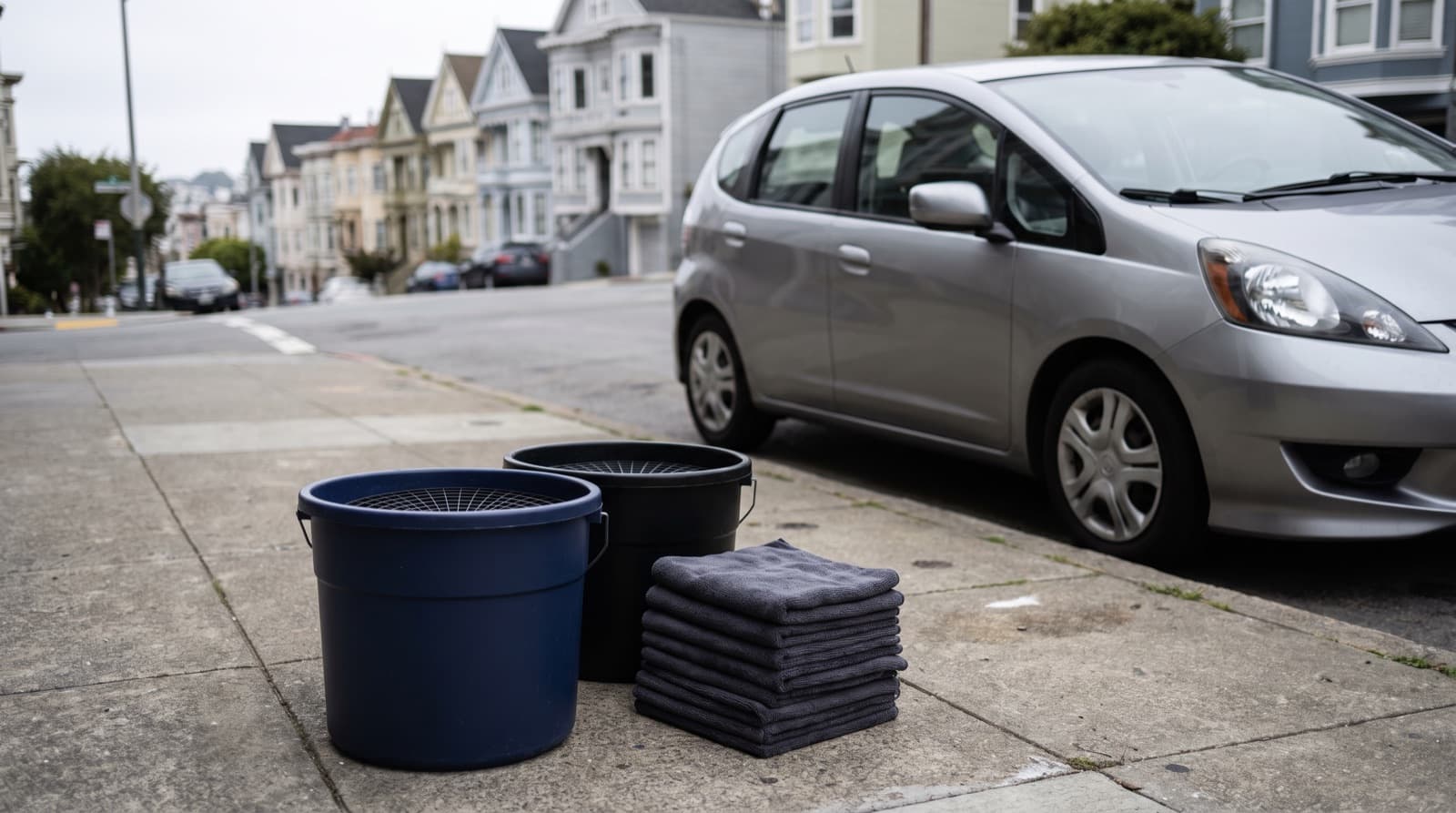
Pro tip: Owner tip: microfiber alone is a real cost. A careful detailer uses a fresh towel per section so grit never gets dragged across your paint — that's dozens of towels laundered after a single car.
Why do paint correction and ceramic cost more?
Paint correction and ceramic coating are the priciest services because they take the most skill and carry the most risk. Machine-polishing removes a microscopic layer of clear coat; do it wrong and you can burn straight through the paint. That expertise is exactly what you're paying for.
Legitimate detailers also carry liability insurance, and certified coatings come with a manufacturer-backed warranty. At Golden Bay we're System X certified, which means the coating is registered and warrantied — protection a $50 spray sealant can't offer.
- 1-step correction runs $399, a 2-step $799, and multi-stage $1,199, because each stage is hours of careful machine work.
- Ceramic coatings run $799 to $2,499-plus by durability tier, and every tier includes a 1-step correction first so the coating locks in a flawless finish.
Pro tip: Owner tip: never let price alone pick your ceramic installer. A cheap 'coating' over swirled, uncorrected paint just locks the flaws in for years. Correction first, coating second — always.
The San Francisco reality: mobile, fog, and salt air
Here's a myth worth killing: that mobile detailing costs more than a shop. It doesn't, at least not with us. Our mobile prices match any shop's range, and there's no travel fee in our standard service area across San Francisco, the Peninsula, and Marin. You save the trip, you don't pay for it.
San Francisco also makes professional protection worth the money. Fog and marine-layer moisture dry into mineral spots, salt air off the ocean is corrosive, and most of us park on the street with no garage. That combination bonds grime and etches paint fast, so a detail with real protection pays off here more than in a dry, garage-kept town.
Because we're self-contained — our own water tank and power — we detail your car in your driveway, at your office, or at the curb. You're paying for the same skilled work a shop does, minus the lost afternoon.
Is it worth it? DIY versus paying a pro
Detailing is expensive, but not every job needs a pro. The honest answer is to DIY what's low-risk and pay for what isn't. Spending money where skill and equipment actually matter is how you get real value out of it.
- Fine to DIY: regular hand washing, basic interior vacuuming, wiping down surfaces, quick spray waxes.
- Worth paying a pro: paint correction, ceramic coating, deep stain extraction, odor removal, and pet hair.
- Worth paying a pro: any job where a mistake is costly — burning paint or soaking electronics is expensive to fix.
- Best value: a full detail every 3 to 6 months plus your own washes in between keeps the car protected for less.
Pro tip: Owner tip: if you only pay for one pro service a year, make it a full detail with protection. A sealed finish sheds SF grime, so your own weekly washes get faster and the car stays cleaner between them.
Frequently Asked Questions
Why is car detailing more expensive than a car wash?
Because they're different services. A car wash rinses the surface in a few minutes, while a detail is two to six hours of skilled hand labor that cleans, corrects, and protects the whole car inside and out. You're paying for time, expertise, and professional equipment — plus results a wash physically can't produce, like removing swirls and odor.
How many hours does a professional detail take?
An exterior detail runs about 1.5 to 2.5 hours, an interior detail 2 to 3 hours, and a full detail 3 to 6 hours. Paint correction adds several hours on top, and a ceramic coating with its included correction runs 4 to 6 hours. Labor is the single biggest reason detailing costs what it does.
Why does paint correction cost so much?
Paint correction is machine-polishing that removes a microscopic layer of clear coat to level out swirls and scratches. It takes hours of careful work and real skill — done wrong, you can burn through the paint. That expertise, plus the risk and the equipment involved, is why a 1-step correction starts around $399 and multi-stage work runs into four figures.
Is expensive car detailing actually worth the money?
For the right jobs, yes. Paying a pro is worth it for paint correction, ceramic coating, deep extraction, and odor removal — work that needs skill and equipment you likely don't own. For routine upkeep like weekly washing, DIY is perfectly fine. The best value is a full detail every few months plus your own washes in between.
Does mobile detailing cost more than a shop?
Not with a well-run mobile detailer. Our mobile prices match a shop's range, and there's no travel fee in our standard service area, because a self-contained van carries the same water, power, and equipment a shop bay has. You get the same work without losing an afternoon to a drop-off and pickup.
What does Golden Bay Detailing charge in San Francisco?
Our mobile pricing is straightforward: $149 exterior, $249 interior, and $399 for a full detail, with paint correction from $399 and ceramic coatings from $799. There's no travel fee in our standard area across San Francisco, the Peninsula, and Marin. Text a few photos to (415) 483-5686 or request a quote online for an exact price.
Keep reading from Golden Bay
Curious what your car would actually cost?
Text a couple of photos to (415) 483-5686 and we'll send an honest, itemized quote — no upsell. We come to you anywhere in San Francisco, the Peninsula, and Marin with our own water and power, at the same price as any shop.