Maintenance & Care
How Often to Detail Your Car: A Real Cadence Guide
Key Takeaways
- Most cars need a full detail every 4 to 6 months, a maintenance wash every 2 weeks, and an interior refresh every 1 to 2 months.
- Street-parked cars in cities like San Francisco need washing more often because fog, salt air, and tree sap build up fast with no garage protection.
- A ceramic coating stretches your wash interval and needs only a light maintenance detail every 6 to 12 months to keep its warranty and shine.
- Daily drivers, pet owners, and kids-in-the-car families should detail interiors more often than weekend cruisers.
- Regular detailing protects resale value, not just looks — trapped grime and UV damage cost far more to fix later than to prevent.
Most cars should get a full detail every 4 to 6 months, a quick wash every 1 to 2 weeks, and an interior clean every 1 to 2 months. That is the baseline. But how often you actually need to detail your car depends on three things: your climate, where you park, and what you want out of the car.
We have detailed over 500 cars around San Francisco, and no two schedules look the same. A garaged weekend Porsche and a street-parked Tesla that hauls two kids and a dog live in different worlds. One needs a light touch. The other needs a plan.
This guide breaks down a real cadence you can follow — wash, interior, full detail, and ceramic maintenance — and shows how to adjust it for your life. No fluff, just what actually keeps a car clean and holding its value.
What's the difference between a wash, an interior clean, and a full detail?
Before you can set a schedule, you need to know what each service actually does. People use these words loosely, and that leads to over-paying or under-caring for a car. Here is the honest breakdown.
A wash keeps grime from building into something worse. A full detail resets the car to near-new. Interior work sits in between. You do the small stuff often and the big stuff a few times a year.
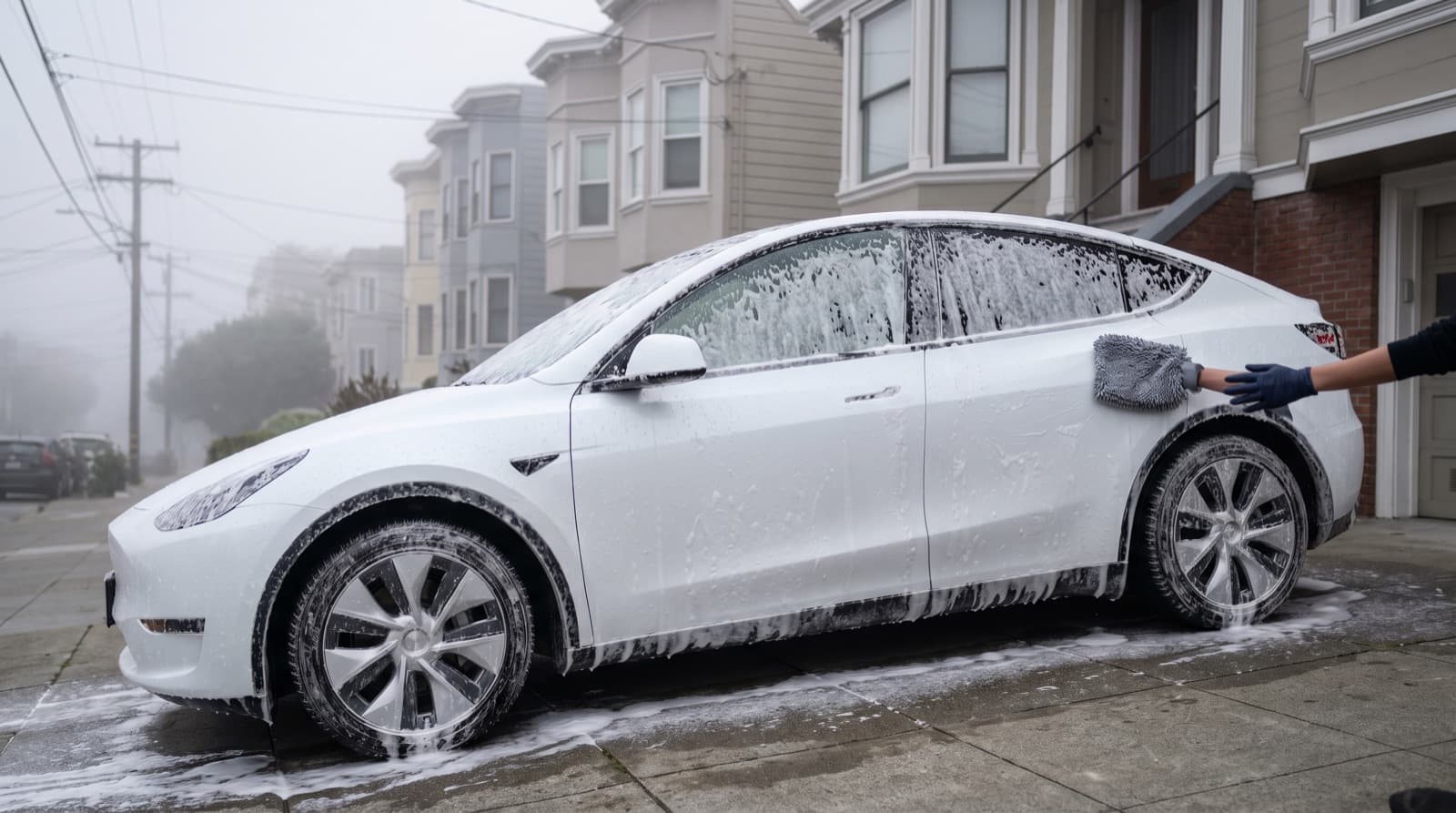
- Maintenance wash: exterior rinse, foam, hand wash, dry, and wheels. Keeps contaminants from bonding to paint. Fast and frequent.
- Interior detail: vacuum, wipe-down, glass, mats, and a deeper clean of seats and carpets. Handles the mess that daily life leaves behind.
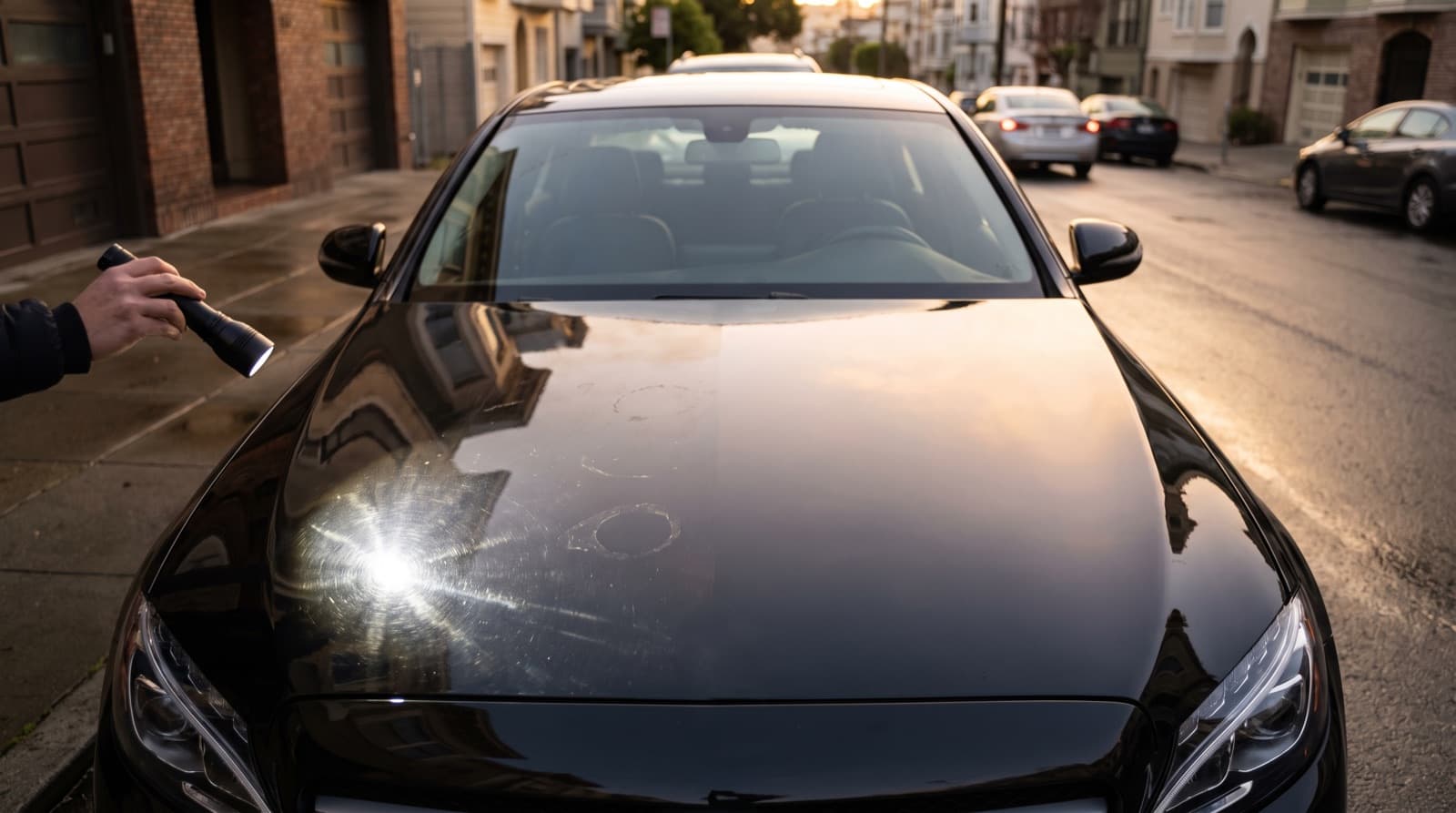
- Full detail: exterior decontamination, interior deep clean, and protection top to bottom. The reset that undoes months of buildup.
Pro tip: A wash and a detail are not the same purchase. If a price sounds too good for a 'full detail,' it is probably a glorified wash. Ask what decontamination and protection are actually included.
How often should you detail your car? The cadence table
Here is the schedule we give most SF and Peninsula clients. Think of the middle column as the default for a normal daily driver with typical parking. Then shift up or down based on your situation, which we cover next.
These ranges assume a car that is driven regularly and matters to you. A garaged collector car can stretch everything. A rideshare car or a job-site truck needs the tighter end of every range.
| Service | Light use / garaged | Typical daily driver | Heavy use / street-parked |
|---|---|---|---|
| Maintenance wash | Every 3-4 weeks | Every 2 weeks | Weekly |
| Interior refresh | Every 2-3 months | Every 1-2 months | Every 2-4 weeks |
| Full detail | Every 6 months | Every 4-6 months | Every 3 months |
| Ceramic maintenance | Once a year | Every 6-12 months | Every 6 months |
Pro tip: If you only remember one number, make it this: wash every two weeks. That single habit prevents most of the paint damage we get called to correct.
How do climate and parking change your detailing frequency?
Environment is the biggest factor most people ignore. The same car needs very different care in a dry inland garage versus a foggy coastal street. Moisture, salt, sun, and airborne grime all attack paint and interiors at different speeds.
If your car lives outside in a humid or coastal area, move every row in the table up a notch. If it sleeps in a garage in a mild, dry climate, you can relax the schedule and still keep it looking sharp.
- Coastal and foggy areas: salt air and marine moisture speed up corrosion and water spotting. Wash more often and stay on top of protection.
- Hot, sunny climates: UV bakes paint and cracks dashboards. Prioritize interior UV protection and a good coating or sealant.
- Tree-lined streets: sap and bird droppings are acidic and etch clear coat within days. These need same-week removal, not a monthly cleanup.
- Dry garaged storage: the easiest life for a car. You can push wash and detail intervals to the long end of every range.
The San Francisco street-parking reality
Living in SF without a garage changes the math completely. We see it every day. Cars here fight fog and marine-layer moisture that never fully dries, salt air off the bay, water spots, and a steady coat of street-parking grime. Park under a tree in a place like Noe Valley or the Sunset and you add sap and bird droppings on top.
For a street-parked SF car, we recommend a wash every week to ten days and a full detail every three months. That sounds like a lot until you remember the car has zero shelter. Every day it is collecting the stuff a garage would block.
This is also exactly why mobile detailing makes sense here. We come to your driveway, curb, or office with our own water and power, so you never have to chase down a car wash or move the car on street-cleaning day. For no-garage apartment living, that convenience is the difference between staying on schedule and letting the car go.
Pro tip: Bird droppings and sap are acidic. On SF's coastal clear coats they can etch permanent marks in under a week. Wipe them off with a damp microfiber the day you see them — do not wait for wash day.
Does a ceramic coating change how often you detail?
Yes, and this is where a lot of people get it wrong. A ceramic coating does not mean your car cleans itself and never needs attention. It means dirt sticks less, water beads off, and washing gets easier and less frequent. You still wash — just not as often, and with far less effort.
A quality coating like System X or Gyeon also needs a light maintenance detail every 6 to 12 months to keep performing and, importantly, to keep the manufacturer warranty valid. That visit refreshes the hydrophobic layer and catches any early contamination before it bonds.
If you are weighing a coating against a traditional wax, the maintenance difference is real: wax needs reapplying every few months, while a coating holds for years.
| Protection type | Lasts | Wash frequency after | Maintenance needed |
|---|---|---|---|
| Traditional wax | 2-3 months | Same as before | Re-wax quarterly |
| Ceramic coating (2-3 yr) | 2-3 years | Less often, easier | Light detail every 6-12 mo |
| Ceramic coating (6 yr+) | 6+ years | Less often, easier | Annual inspection detail |
Pro tip: Every ceramic tier we install includes a 1-step paint correction first, so the coating locks in corrected paint — not swirls. Coating over damage just seals the damage in.
Protect value or just stay clean? Match the schedule to your goal
Your reason for detailing should shape your cadence. Some people just want a car that feels clean to drive. Others are protecting a serious asset. Both are valid, and they call for different plans.
If your goal is resale value or preserving a nice car, lean toward the frequent end and invest in protection. Trapped grime, UV fade, and etched water spots cost far more to correct later than to prevent. If you just want clean and tidy, a solid wash rhythm plus a couple of full details a year is plenty.
- Protecting value: regular washes, full details every 3-4 months, and a ceramic coating. This is the cheapest way to keep paint and interior near-new.
- Just staying clean: wash every 2 weeks, full detail twice a year, interior refresh as life demands.
- Pets and kids: bump interior cleaning way up — hair, crumbs, and spills bond into fabric fast and cause odor if ignored.
- Selling soon: one full detail before listing can noticeably lift what buyers offer and how fast the car moves.
When is DIY fine, and when should you call a pro?
We are detailers, but we will tell you straight: you do not need a professional for everything. Plenty of the routine work is easy to do at home if you have the time and a shaded spot. The trick is knowing where DIY stops helping and starts causing damage.
The maintenance stuff is fair game for anyone. The correction and protection work is where a pro earns the money, because the tools and products are unforgiving in untrained hands.
- Fine to DIY: regular two-bucket washes, vacuuming, wiping surfaces, cleaning glass, and quick-detailer touch-ups.
- Call a pro: paint correction, ceramic coating, deep stain and odor removal, pet-hair extraction, and headlight restoration.
- The big DIY risk: a dirty sponge or a rushed dry drags grit across paint and creates swirls — the exact damage correction exists to remove.
Pro tip: Never use a dish soap or an automatic tunnel wash on coated or corrected paint. Dish soap strips protection, and tunnel brushes are the number one cause of swirl marks we see.
Frequently Asked Questions
How often should you get a full detail?
Most daily drivers need a full detail every 4 to 6 months. If your car is street-parked, driven hard, or lives in a coastal or humid climate, aim for every 3 months. A garaged car that is lightly used can stretch to twice a year and still look great.
Is it bad to wash your car too often?
Washing itself does not harm your car — poor technique does. Frequent washing with a clean mitt, the right soap, and proper drying is good for paint. The damage comes from automatic tunnel brushes, dish soap, or dragging grit across the surface, no matter how often you wash.
How often should I clean the inside of my car?
A quick interior wipe-down and vacuum every 1 to 2 months keeps most cars fresh. If you have pets, kids, or eat in the car, bump that to every 2 to 4 weeks. Crumbs, hair, and spills bond into fabric fast and are the main cause of lingering odor.
Does a ceramic coating mean I never have to wash my car?
No. A ceramic coating makes dirt release easier and water bead off, so you wash less often and with less effort — but you still wash. A quality coating also needs a light maintenance detail every 6 to 12 months to keep performing and to keep its warranty valid.
How often should I detail my car if I park on the street in San Francisco?
Street-parked SF cars need a wash every week to ten days and a full detail about every 3 months. With no garage, the car constantly collects fog moisture, salt air, water spots, and street grime. Golden Bay is mobile, so we come to your curb, driveway, or office with our own water and power to keep you on schedule.
How much does regular detailing cost?
At Golden Bay, exterior details start at $149, interiors at $249, and full details at $399. Spreading a few of these across the year costs far less than correcting the paint and interior damage that builds up when a car is neglected.
Keep reading from Golden Bay
Not sure where your car falls on the schedule?
Tell us your car, your parking, and your goal, and we'll send back an exact text quote in minutes — no pressure, no guesswork. We come to you anywhere in SF and the Peninsula.