How-To
How to Freshen Car Interior Smell So It Stays Fresh
Key Takeaways
- To make a car interior smell good and keep it that way, clean the source of the odor first — dirt, spills, damp fabric, and the vents — instead of relying on an air freshener, which only masks the smell for a few days.
- The most common sources of car odor are food and drink spills ground into carpet, damp fabric that never dried, a dirty cabin air filter, and mold growing on the AC evaporator behind the dash.
- A musty smell that appears when you turn on the AC is usually mold on the evaporator coil; an AC evaporator cleaner and running the fan on fresh air at the end of each drive both help remove and prevent it.
- Most manufacturers recommend replacing the cabin air filter every 15,000 to 30,000 miles or about once a year, and a clogged filter is a common hidden cause of bad interior smells.
- Baking soda, activated charcoal, and a full vacuum-and-extraction clean remove odor at the source, while hanging air fresheners and sprays only mask it temporarily.
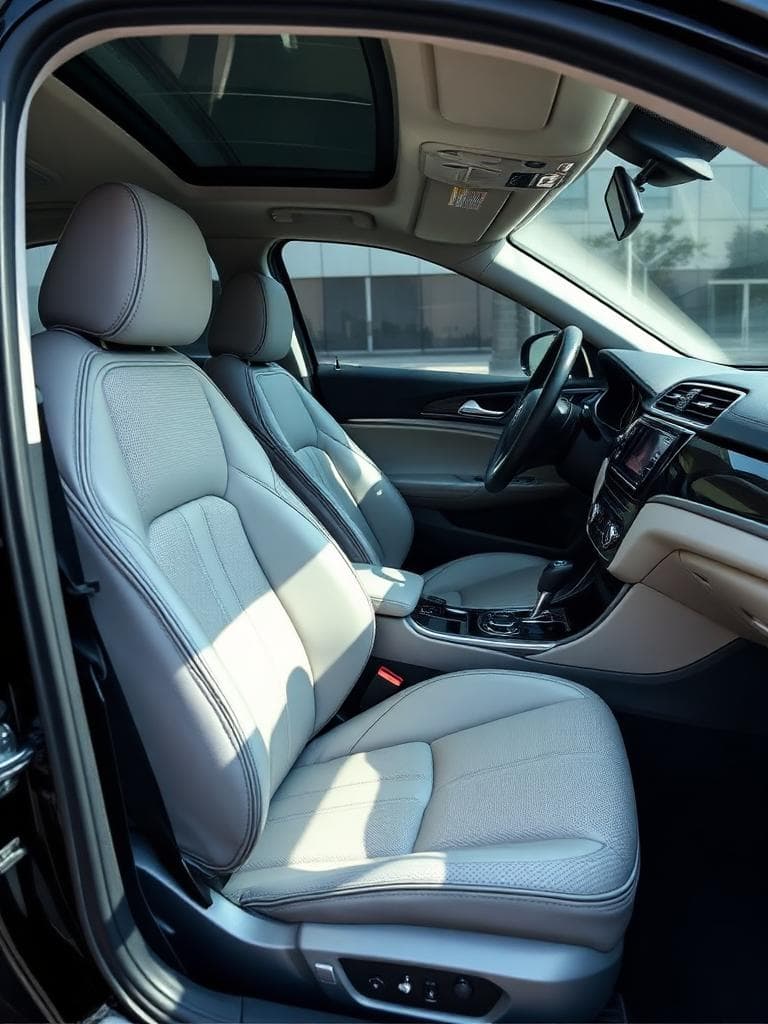
To make your car interior smell good and keep it that way, clean the source of the odor first, then add a light scent last — never rely on an air freshener alone. Smells come from dirt, spills, damp fabric, and the vents, so masking them only buys a few days before the odor returns.
Most "mystery" smells that come back fast were never removed in the first place. The air freshener just sits right on top of the problem, quietly losing.
At Golden Bay Detailing here in San Francisco, our technicians clean interiors every week, and the cars that stay fresh are always the ones where we found the source. Here's how to do that yourself, and when it's worth handing off.
How do you make a car interior smell good?
Start by removing what's causing the odor, not covering it. A fresh-smelling interior is almost always a clean, dry interior, because odor molecules cling to fabric, carpet, and dust.
The order that works: vacuum and wipe every surface, clean the vents and cabin air filter, treat any stains, let the car dry fully, then add a light scent last. Do the first four steps and the car often smells fine before you add anything at all.
Pro tip: If a smell comes back within a week, you masked it instead of removing it. That's your signal to go find the source, not to buy a stronger air freshener.
What's the difference between masking and removing a smell?
Masking adds a stronger scent on top of the odor so your nose notices the new smell first. Removing takes the odor-causing material out of the car entirely.
Air fresheners, sprays, and scented cardboard all mask. They are fine as a finishing touch, but on their own they fade in days and the original smell returns. Cleaning, extraction, and fresh air remove.
- Masking: hanging trees, vent clips, aerosol sprays — fast, cheap, and temporary
- Removing: vacuuming, shampoo and extraction, vent cleaning, a new cabin filter — slower, but lasting
Where do car smells actually come from?
You can't remove a smell you haven't found. In most cars, the odor traces back to a short list of usual suspects.
- Spilled coffee, soda, or food ground into the carpet and seats
- Damp floor mats and fabric that never fully dried out
- Dust, crumbs, and skin cells feeding bacteria deep in the upholstery
- A clogged cabin air filter and mold in the AC vents
- Pet hair, dander, and gym bags left in a warm car
- Cigarette or vape residue soaked into the headliner
Pro tip: Smell the vents with the fan on and the AC off, then smell the carpet by the pedals. Those two spots tell you fast whether the problem is the air system or the fabric.
How do you clean the source step by step?
This is the part that actually fixes the smell, and most of it is DIY-friendly with basic tools. Give yourself an afternoon and let the car dry with the windows down.
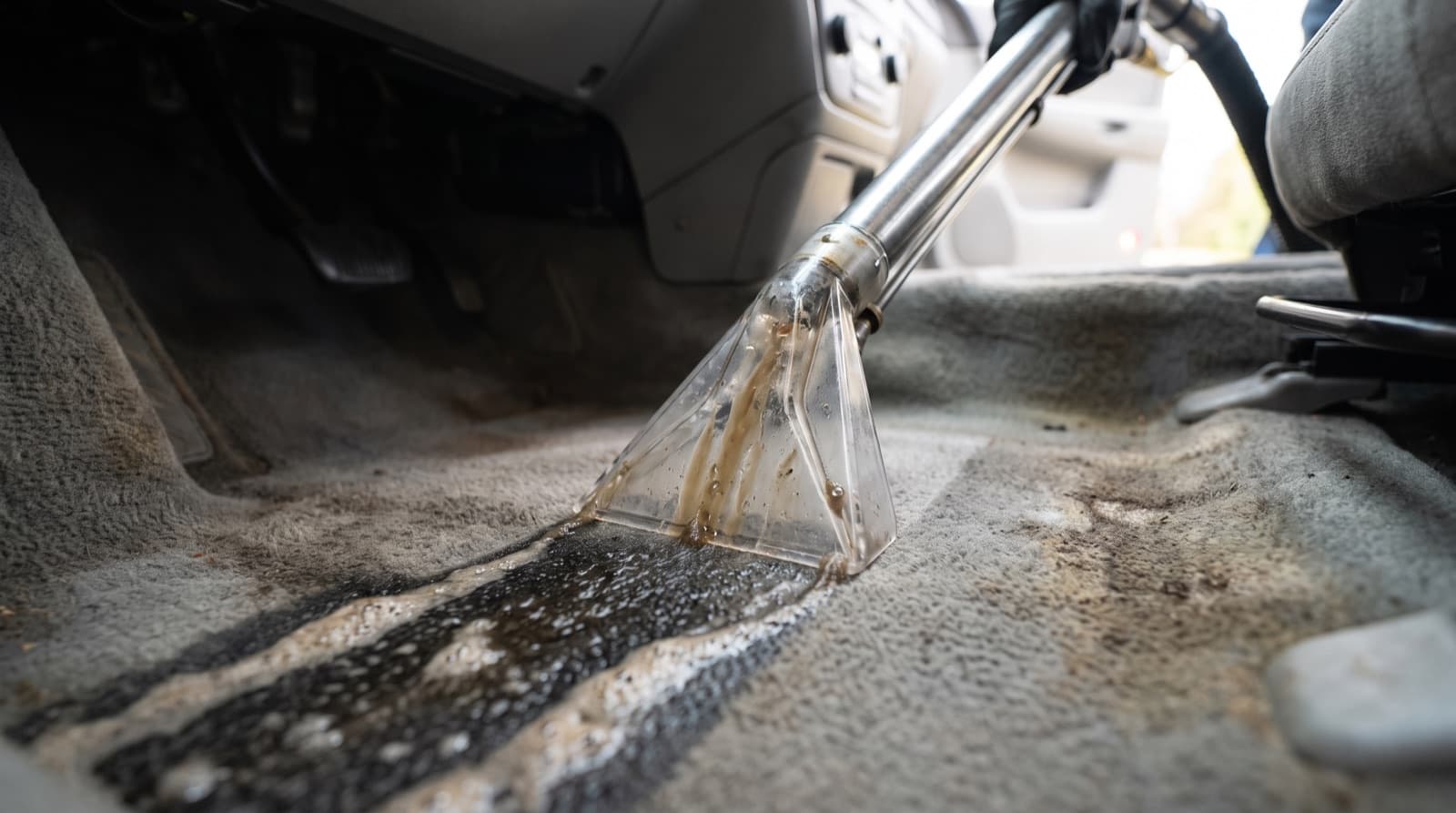
- Clear out trash, then vacuum seats, carpet, mats, and every crack — crumbs feed odor
- Pull the floor mats out and wash them separately so they dry all the way through
- Wipe hard surfaces with an interior cleaner; skip heavily perfumed products
- Spot-treat fabric stains with an enzyme or upholstery cleaner, then blot them dry
- Shampoo seats and carpet only if the smell is deep, using little water so it dries fast
- Leave the doors open in the sun or run the fan until everything is completely dry
Pro tip: Over-wetting fabric is the number one cause of a musty car. If you shampoo, use as little water as you can and keep air moving until it's bone dry.
How do you get the musty smell out of your vents and AC?
That sour, gym-sock smell that hits when you turn on the AC is usually mold and bacteria growing on the evaporator behind the dash. No amount of carpet cleaning will touch it.
An AC evaporator cleaner or vent foam sprayed into the intake reaches the coil the air passes over. Run the fan on high afterward to dry it out. To keep it from returning, run the fan with the AC off for the last minute of each drive so the coil dries.
Pro tip: Set your climate to fresh air, not recirculate, for the last few minutes of a drive. A dry evaporator can't grow the mold that causes that vent smell.
When should you replace your cabin air filter?
The cabin air filter cleans the air coming through your vents, and a clogged one traps moisture, pollen, and mold — a hidden source of bad smells. Most makers suggest changing it every 15,000 to 30,000 miles, or about once a year.
It's one of the cheapest fixes in a car. On most vehicles it sits behind the glovebox and pops out in a few minutes with no tools.
Pro tip: In a foggy, pollen-heavy city, we lean toward the once-a-year end of that range. A $20 filter often clears a smell people were spending months trying to spray away.
Do natural odor removers actually work?
Yes, a few do — and they remove rather than mask, which is why they beat a hanging tree. They work by absorbing odor molecules out of the air and fabric instead of covering them.
Here's how the common options compare, so you can pick the ones that actually pull the smell out:
| Method | What it does | Masks or removes? | How long it lasts |
|---|---|---|---|
| Hanging air freshener | Adds scent over the odor | Masks | Days to a couple weeks |
| Baking soda on seats and carpet | Absorbs odor molecules | Removes (mild) | Until you vacuum it up |
| Activated charcoal bag | Pulls odor from the air | Removes (mild) | Weeks, and rechargeable in sun |
| Full vacuum plus extraction | Takes out the source | Removes | Months |
| Enzyme or ozone treatment | Neutralizes deep odor | Removes | Long-term |
Pro tip: Baking soda is underrated. Sprinkle it on dry seats and carpet, leave it overnight, then vacuum it up — it pulls out odor for the price of a coffee.
Why do San Francisco cars smell musty so often?
SF is tough on interiors. The fog and marine layer keep the air damp, so wet jackets, gym bags, and floor mats never fully dry — perfect conditions for that musty smell.
Most of us park on the street with no garage, so cars miss the dry, warm hours that air an interior out. Add wet dog fur from Ocean Beach and a foggy commute, and the fabric stays humid for days.
- Crack a window on a dry day or in a garage to let trapped moisture escape
- Never leave damp towels, wetsuits, or gym clothes in the car overnight
- Keep a small activated-charcoal bag under a seat to soak up humidity and odor
Pro tip: This is exactly why we bring our own water and power to your driveway — we extract the moisture and odor on site, then leave the car to dry in your own spot instead of a damp shop.
Frequently Asked Questions
Why does my car still smell bad after I clean it?
The odor source is probably somewhere you didn't reach — often the AC vents, the cabin air filter, or fabric that's still damp underneath. Smells also come back when a shampoo left the seats or carpet too wet, which grows mildew. Find and dry the source, and the smell usually goes for good.
Can I make my car smell good without using an air freshener?
Yes, and it lasts longer. A thorough vacuum, a wiped-down interior, a fresh cabin filter, and fully dried fabric will leave a car smelling clean on their own. Air fresheners are best as a light finishing touch, not the main plan.
How often should I replace my cabin air filter?
Most manufacturers recommend every 15,000 to 30,000 miles, or about once a year. In a damp, pollen-heavy place like San Francisco, once a year is a safe default. It's a cheap part that sits behind the glovebox on most cars and takes only a few minutes to swap.
What is the musty smell when I turn on my car's AC?
That sour, gym-sock smell is almost always mold and bacteria on the AC evaporator behind the dash. Spraying an AC evaporator cleaner into the system and running the fan on fresh air at the end of each drive helps clear it and keep it from coming back.
Can Golden Bay Detailing get an odor out for good?
Yes. Our interior details and dedicated odor removal include a full vacuum, fabric extraction, vent treatment, and proper drying, so we take the smell out at the source instead of covering it. We're mobile across San Francisco and bring our own water and power to your driveway. Get a free quote to see what your car needs.
Keep reading from Golden Bay
Want an interior that smells clean, not covered up?
Golden Bay Detailing comes to your driveway anywhere in San Francisco and removes odors at the source — vents, fabric, and all. Get a free quote today.