How-To
How to Clean Car Seats: Cloth, Leather, Vinyl Guide
Key Takeaways
- To clean car seats, identify the material first: cloth takes an interior all-purpose cleaner and a soft brush, leather takes a pH-balanced leather cleaner, and vinyl wipes clean with mild soap and water.
- Deep-set stains and odors in cloth seats usually need a hot-water extractor, which sprays cleaning solution in and vacuums the dirty water back out; surface cleaning alone leaves the padding wet and dirty.
- Never soak fabric seats, because water trapped in the foam padding causes mildew and a musty smell, especially in damp climates.
- Always blot spills instead of rubbing, work a stain from the outside edge inward, and test any cleaner on a hidden spot first.
- After cleaning, dry seats fully with airflow and low heat before closing the car, and do not reinstall seat covers while the fabric is still damp.
To clean car seats, first identify the material, then match the cleaner and method to it. Cloth takes an interior all-purpose cleaner and a brush. Leather needs a pH-balanced leather cleaner. Vinyl wipes clean with mild soap. Match the product to the seat and you avoid soap rings, water spots, and cracking.
Most people grab one spray bottle and hit every surface with it. That is how cloth ends up with rings and leather ends up dry and cracked. Two minutes spent figuring out your material saves you a ruined seat.
At Golden Bay Detailing, our technicians clean interiors in San Francisco cars all week, from fog-damp fabric to coffee-stained commuters to sandy Ocean Beach floors. Here is the exact method they use on each seat type, plus how to pull stains and smells and dry everything so it never turns musty.
First, figure out what your seats are made of
The single biggest mistake is using one cleaner on every seat. Cloth, leather, and vinyl each react differently, and the wrong product can stain fabric or dry out leather. So start by identifying your material.
Cloth (fabric or velour) feels soft and porous and soaks up water fast. Leather is smooth and cool to the touch, and on most cars it is coated, so water beads on top. Vinyl and leatherette (badged SensaTec, MB-Tex, or Leatherette) look like leather but feel like firm plastic and do not absorb liquid.
Not sure which you have? Put one drop of water on a hidden area. If it soaks in and darkens, it is cloth or uncoated leather. If it beads on top, it is coated leather or vinyl.
- Cloth / fabric: soft, porous, absorbs water. Clean with foam and a brush.
- Leather: smooth, cool, usually beads water. Clean gently, then condition.
- Vinyl / leatherette: firm, plastic-like, beads water. Wipe with mild soap.
Pro tip: Check your owner's manual or the seat tag. Some cars use real leather on the seating surface and vinyl on the side bolsters. Clean each part for what it actually is.
How to clean cloth and fabric car seats
Vacuum first, always. Loose crumbs and grit turn into mud the second they get wet, and grinding grit around with a brush wears the fabric out. Get into the seams and under the seat rails.
Then work in sections. Lightly mist an interior all-purpose cleaner (APC) or a dedicated fabric cleaner onto the seat, agitate with a soft upholstery brush to lift the dirt, and blot it up with a clean, dry microfiber towel. The towel should come away dirty. That is the soil leaving the fabric.
Do not soak the seat. Cloth seats sit on foam padding, and if you drench them, water sinks into the foam and takes days to come back out. Light product, good agitation, and blotting beats a soaking every time.
- Vacuum thoroughly, including seams and crevices.
- Mist fabric cleaner or diluted APC onto one section at a time.
- Agitate with a soft brush to lift embedded dirt.
- Blot with a dry microfiber towel until it comes up clean.
- Move to the next section, then let the seat air-dry with airflow.
Pro tip: For pet hair, drag a rubber pet-hair brush or a damp nitrile glove across the fabric before you vacuum. It balls the hair up so the vacuum can actually grab it.
How to clean leather car seats
Leather is simpler than people think, as long as you stay gentle. Spray a pH-balanced leather cleaner onto a microfiber towel, not straight onto the seat, wipe the surface, and agitate stubborn spots with a soft-bristle brush. Wipe away the residue with a second clean towel.
Skip the household stuff. All-purpose cleaner, alcohol, baby wipes, and magic erasers all strip leather's protective coating and lead to cracking and fading. Most factory leather is coated, so it needs gentle surface cleaning, not heavy oils.
Finish with a leather conditioner every two to three months to keep the surface soft and shielded from the sun. Wipe it on thin, let it absorb, then buff off the excess so the seats are not slippery.
Pro tip: On perforated leather, keep product on the towel and never spray into the holes. Trapped cleaner in the perforations dries to a white crust that is a real pain to remove.
How to clean vinyl and leatherette seats
Vinyl and leatherette are the easiest seats to clean because they do not absorb anything. A little mild soap and warm water on a microfiber towel handles most dirt. For grime stuck in the grain, use an interior APC and a soft brush, then wipe dry.
You do not need a leather conditioner on vinyl, but a water-based interior dressing with a matte finish keeps it from drying and cracking over years of sun. Stay away from glossy dressings on seats. They get slippery and greasy the moment you sit down.
- Wipe with mild soap and warm water for routine cleaning.
- For stuck-on grime, use an interior APC and a soft brush.
- Skip leather conditioner; use a matte water-based dressing instead.
- Never use a high-gloss dressing on the seating surface. Too slippery.
Quick cheat sheet: cleaner and tool by seat type
Keep this handy the next time you clean. The right combination changes with each material.
| Seat type | Cleaner | Tool | Avoid |
|---|---|---|---|
| Cloth / fabric | Fabric cleaner or interior APC | Soft brush + microfiber | Soaking the foam padding |
| Coated leather | pH-balanced leather cleaner | Soft brush, then conditioner | APC, alcohol, baby wipes |
| Vinyl / leatherette | Mild soap or interior APC | Microfiber + soft brush | Conditioner, gloss dressing |
| Perforated leather | Leather cleaner on the towel | Towel only near the holes | Spraying into perforations |
Getting out tough stains and smells
Blot, do not rub. Rubbing spreads a stain and pushes it deeper into the fibers. Blot spills the moment they happen, and always work a stain from the outside edge toward the center so you do not grow the ring.
Match the fix to the mess. Sugary drinks lift with a fabric cleaner, grease needs an APC, and biological messes need an enzyme cleaner that digests the source instead of masking it.
| Stain or smell | What to use | Notes |
|---|---|---|
| Coffee, soda, juice | Fabric cleaner + blotting | Blot fast; old stains need extraction |
| Grease, food oil | Interior APC + soft brush | Agitate, then blot; may take two passes |
| Ink or dye | Dedicated spot remover | Test first; do not use raw on leather |
| Vomit, milk, odor | Enzyme cleaner + extraction | Enzymes eat the odor source, not just cover it |
| General musty smell | Full dry-out + enzyme | Moisture is usually the real cause |
Extraction vs. surface cleaning: what is the difference?
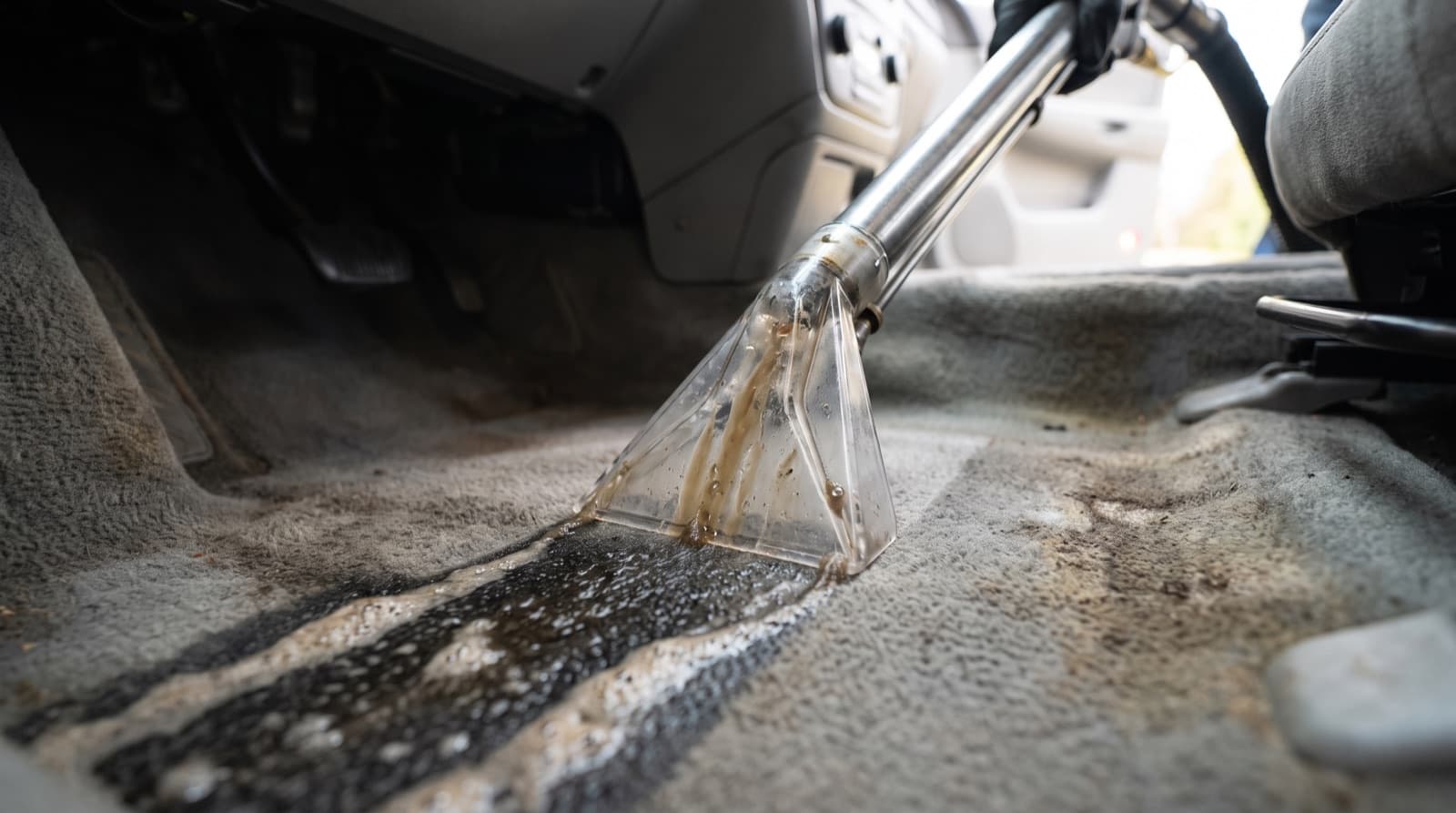
Surface cleaning lifts dirt off the top of the fabric. Extraction reaches the dirt and moisture living down in the padding. A hot-water extractor sprays cleaning solution into the seat and immediately vacuums the dirty water back out, so the soil and odor leave with it instead of soaking deeper.
For a lightly dirty daily driver, surface cleaning is plenty and you can do it at home. For set-in stains, spills that reached the foam, or any lingering smell, extraction is the move. It is the difference between a seat that looks clean and one that actually is clean.
Smells almost always come from moisture or a spill that soaked into the foam. Air fresheners just cover it. To truly remove an odor you have to clean the source and dry the seat completely, which is exactly where extraction earns its keep.
Pro tip: Renting a carpet extractor works, but the common mistake is over-wetting and under-vacuuming. Do slow, dry vacuum passes with no spray to pull as much water back out as you can.
Drying seats so they do not turn musty
This is the step people skip, and in San Francisco it is the one that matters most. Our marine layer keeps interiors damp, and a lot of city cars live on the street with no garage to dry out in. A seat that is still wet when you close the doors turns musty within days.
After cleaning, dry seats with airflow and gentle heat, not by baking them shut in the sun. Crack the windows, run the fan or an interior blower, and leave the car open in a dry spot if you can. Press a dry towel firmly into fabric to wick out moisture, and do not put seat covers back on until everything is fully dry.
If a seat got soaked, get real airflow through it with a fan or shop blower for a few hours. Trapped water in the foam is the number-one cause of that old-car smell, and no amount of air freshener will fix it.
Pro tip: No garage and foggy all week? This is exactly why we bring our own power and water, run extraction on site, then dry the seats before we leave so nothing sits wet on the street.
Frequently Asked Questions
Can I use household cleaners on car seats?
It is risky. All-purpose household sprays, alcohol, and baby wipes can strip leather's protective coating and leave soap rings or discoloration on fabric. Stick to cleaners made for auto interiors, and always test on a hidden spot first.
How do I get a coffee or food stain out of cloth car seats?
Blot up as much as you can right away, then mist a fabric cleaner, agitate gently with a soft brush, and blot with a dry microfiber towel. Work from the outside of the stain inward so you do not spread it. Set-in stains usually need a hot-water extractor to pull them fully out of the padding.
Do leather car seats really need conditioner?
Yes, but lightly. A conditioner every two to three months keeps coated leather soft and helps prevent sun-related cracking and fading. Apply it thin, let it absorb, then buff off the excess so the seats are not slippery.
Why do my car seats smell musty after I clean them?
Almost always because they did not dry fully. Water trapped in the foam padding grows mildew and creates that musty odor. Dry seats with airflow and low heat before closing the car, and never reinstall seat covers while the fabric is still damp.
How often should I deep-clean my car seats?
For most people, a deep interior clean two to three times a year keeps seats fresh, with quick spot-cleaning of spills as they happen. Rideshare drivers, parents, and pet owners should do it more often. If you commute daily on damp San Francisco streets, do not let stains or moisture sit.
Does Golden Bay Detailing clean car seats at my home or office?
Yes. We are a mobile detailer in San Francisco, so we come to your driveway, office, or street parking with our own water and power. That lets us run full hot-water extraction on site and dry your seats before we leave, which matters in our damp, foggy climate. Call (415) 483-5686 or request a quote online.
Keep reading from Golden Bay
Want your seats cleaned right, at your curb?
Our technicians will bring the extractor, water, and power to your San Francisco driveway or office, then dry your seats before they leave so nothing sits wet on the street. Get a free quote and we will take care of the rest. — Muza, Golden Bay Detailing