How-To
How to Clean Cloth Car Seats Without Wrecking Them
Key Takeaways
- To clean cloth car seats, vacuum first, pre-treat stains, agitate an upholstery cleaner into the fabric with a brush, extract or blot out the dirty moisture, then dry the seats fast to prevent mildew.
- A surface clean freshens only the fabric you can see, while a deep extraction uses a hot-water machine to pull dirt and odor out of the foam padding underneath.
- Match the stain to the method: enzyme cleaners for organic stains like food, pet, and bodily fluids; a degreaser for grease; and isopropyl alcohol for ink.
- Over-wetting is the top cause of a musty car, so use as little water as possible and keep air moving until the fabric is completely dry.
- Light cleaning is an easy DIY job, but deep-set stains, whole-car odor, and mildew are worth handing to a pro with a shop-grade extractor.
The short answer to how to clean cloth car seats is this: vacuum thoroughly, pre-treat any stains, agitate an upholstery cleaner into the fabric with a brush, then extract or blot out the dirty moisture and dry the seats fast. Do those five things in order and most seats come out looking close to new.
The part people get wrong is the water. Cloth is basically a sponge sitting on foam padding, so soaking it and walking away is how you trade a stain for a musty smell that is harder to fix.
At Golden Bay Detailing, our technicians have deep-cleaned the cloth interiors of 500-plus cars around San Francisco, so here is the honest, product-specific way to do it right at home — and how to know when a spray bottle is not enough.
How do you clean cloth car seats step by step?
Cleaning cloth car seats comes down to five steps: vacuum, pre-treat, agitate, extract, and dry. Skip any one of them and you either leave dirt behind or trap moisture that turns musty.
The order matters. Vacuuming first pulls out loose grit so you are not grinding it deeper when you scrub. Pre-treating stains before you clean the whole seat gives the product time to break the stain down.
- Vacuum every surface, including the seams and the crack where the seat meets the backrest.
- Pre-treat visible stains and let the product dwell for a few minutes.
- Spray upholstery cleaner and work it into the fabric with a medium-stiff brush.
- Extract or blot out the loosened dirt and moisture right away.
- Dry the seats fast with airflow so mildew never gets a chance to start.
What do you need to clean fabric seats?
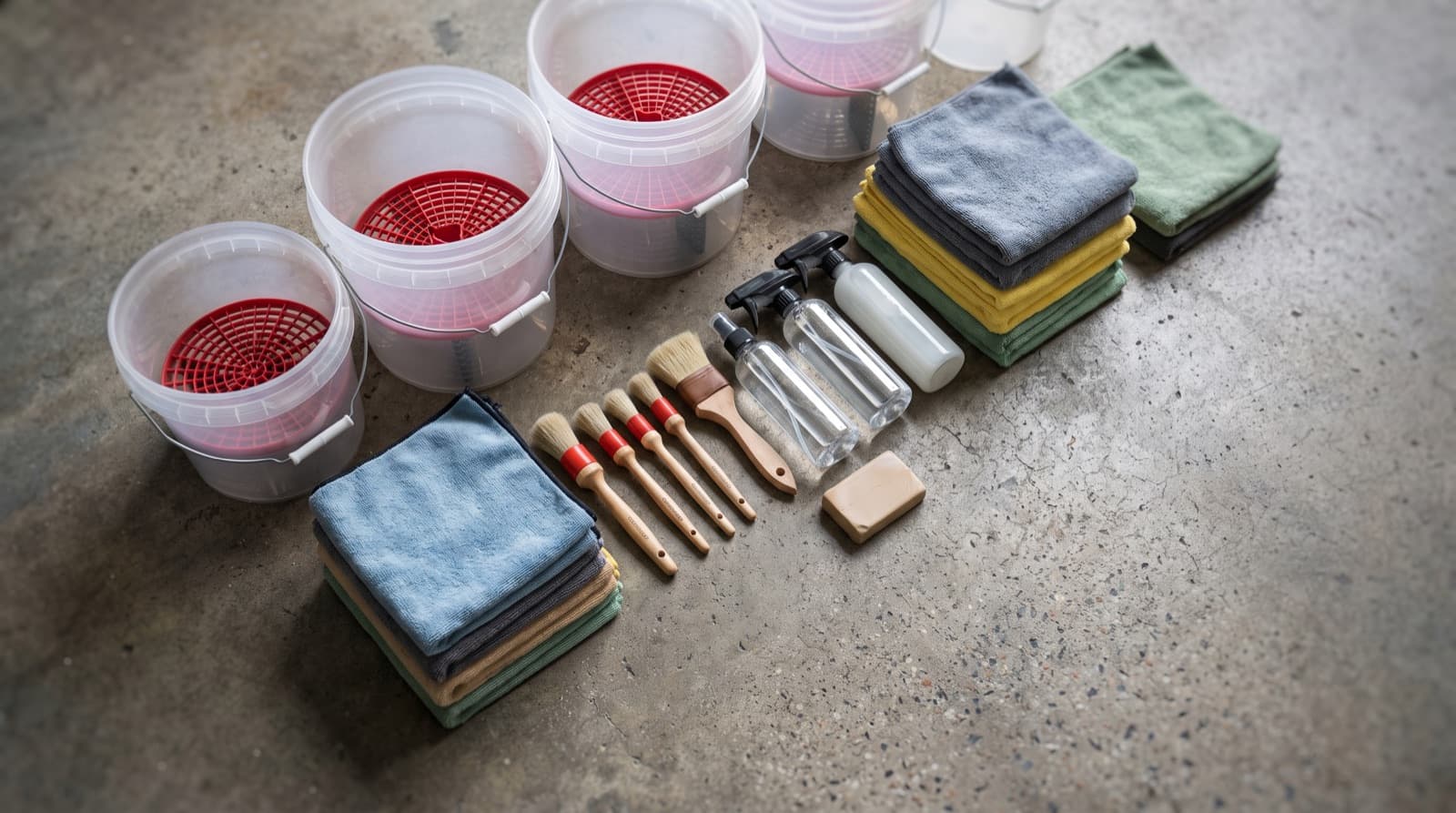
You do not need a shop full of gear for a solid at-home clean. A vacuum, a brush, a good upholstery cleaner, and a stack of microfiber towels will handle most cloth seats.
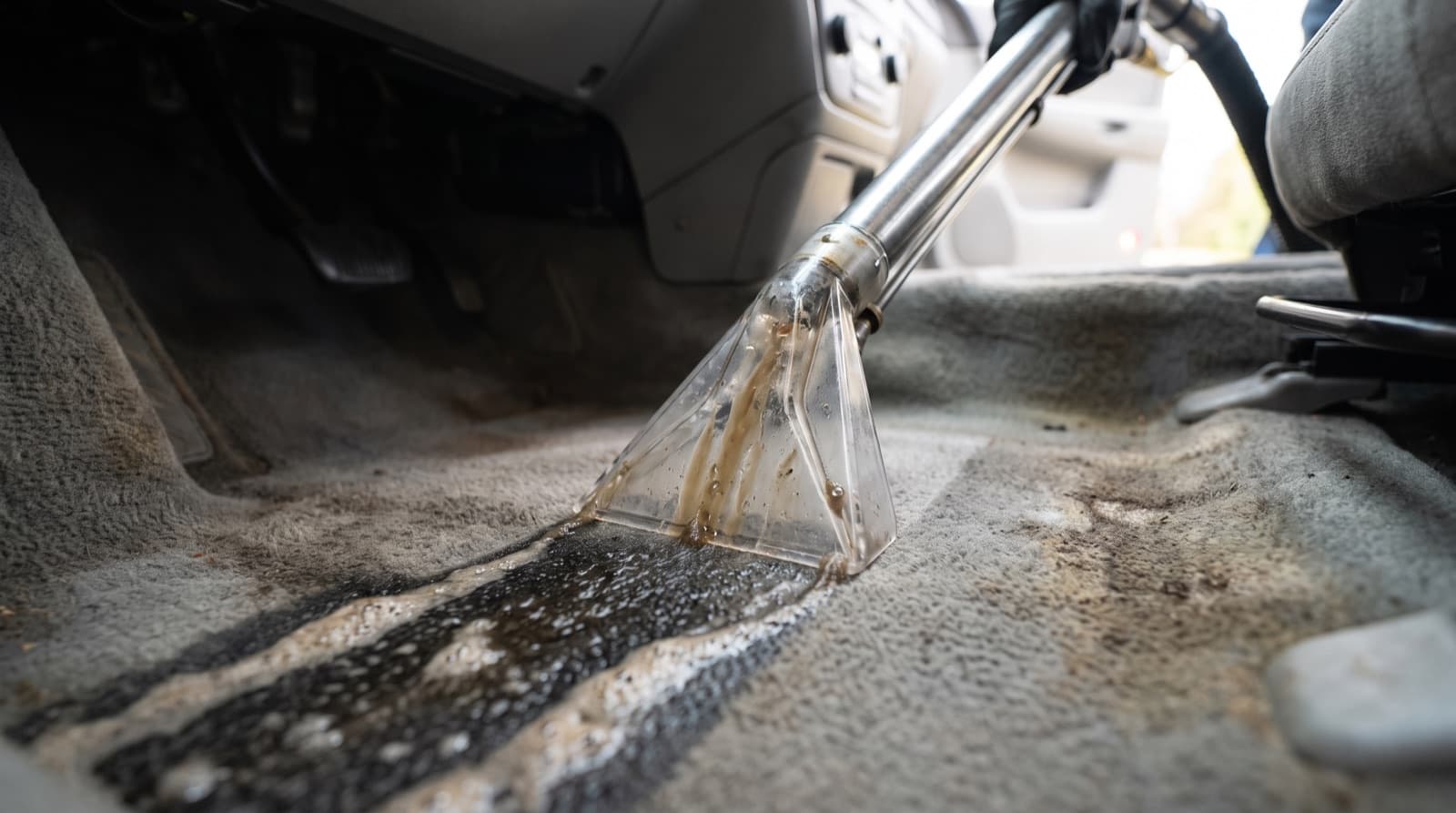
If you want results closer to a pro, a small hot-water extractor is the upgrade that matters most. Machines like the Bissell Little Green spray cleaner in and vacuum the dirty water back out in one pass, which is what actually pulls grime out of the padding.
- A vacuum with a crevice tool and an upholstery brush head.
- A medium-stiff detailing brush, or a drill brush for heavy soiling.
- An upholstery cleaner such as Chemical Guys Fabric Clean, Meguiar's Carpet & Upholstery, or a diluted all-purpose cleaner.
- A dedicated spot remover like Folex for set-in stains, and an enzyme cleaner for organic messes.
- Clean microfiber towels and, ideally, a Bissell Little Green or a shop-grade extractor.
How do you pre-treat and remove stains from cloth seats?
Match the treatment to the stain. A coffee spill, a grease mark, and a splotch of dried mud each respond to a different approach, and the wrong one can set the stain instead of lifting it.
Always blot, never rub. Rubbing spreads the stain and pushes it deeper into the foam. Work from the outside of the stain toward the middle so you do not grow the ring.
| Stain type | Best treatment | Watch out for |
|---|---|---|
| Coffee, soda, juice | Blot up the liquid, then upholstery cleaner or diluted APC | Rubbing it in before you blot |
| Grease or food oil | Degreaser or APC, agitate, then extract | Hot water can spread the oil before it lifts |
| Mud or dirt | Let it dry fully, vacuum, then spot-clean | Cleaning wet mud just paints it around |
| Ink or dye | Isopropyl alcohol on a towel, dab lightly | Test a hidden spot first — alcohol can fade dye |
| Vomit, urine, blood | Enzyme cleaner, let it dwell, then extract | Hot water and bleach set protein stains |
Pro tip: For anything organic — food, pets, or bodily fluids — reach for an enzyme cleaner, not a stronger detergent. Enzymes actually digest the stain and the smell at the source, which is why a masking air freshener never really wins.
What is the difference between a surface clean and deep extraction?
A surface clean freshens the fabric you can see. You spray cleaner, agitate, and wipe the foam and loosened dirt off the top with a towel. It is quick, it looks good, and it is fine for light, regular upkeep.
A deep extraction reaches the dirt that has soaked into the foam padding under the fabric. A hot-water extractor flushes cleaner through the material and vacuums the dirty water back out, pulling up embedded grime, old spills, and odor a surface wipe never touches.
- Surface clean: fast, low moisture, good for maintenance between deep cleans.
- Surface clean: leaves deep-set dirt and smells sitting in the padding.
- Deep extraction: removes embedded grime and the actual source of odors.
- Deep extraction: uses more water, so drying fast matters even more.
How do you get smells out of cloth seats?
Smell lives in the fabric and the foam, so masking it never lasts. To actually remove an odor, you have to clean out whatever is causing it and then neutralize what is left behind.
Start with a full extraction to pull the source out. For everyday staleness, sprinkle baking soda over the dry seats, leave it overnight, and vacuum it up — it absorbs odor for almost nothing. Strong or organic smells need an enzyme treatment or a professional ozone pass to finish the job.
- Extract first — you cannot deodorize dirt you left behind.
- Baking soda overnight handles routine, everyday staleness.
- An enzyme cleaner targets pet, food, and bodily-fluid odors.
- Ozone or hydroxyl treatment clears smoke and deep, stubborn smells, and is usually a pro service.
Why does fast drying matter most in San Francisco?
Here is the mistake we see most on foggy-city cars: people soak the seats, then park in a garage-less spot where the fabric stays damp for days. In San Francisco's marine layer, that wet foam grows mildew fast, and now you have traded one smell for a worse one.
The fix is airflow. After any wet clean, open the doors, run the fan on fresh air, and point a household fan or two at the seats. On a dry day you can dry seats in a few hours; in heavy fog you may need a full day, and sometimes a dehumidifier or heater in the mix.
Pro tip: This is exactly why we work mobile. We bring our own water and power, extract the moisture out on site, and leave your car to finish drying in your own driveway or curb spot — not sitting damp in a shop overnight.
Should you clean cloth seats yourself or call a pro?
Most light cleaning is a great DIY job. If your seats are just dusty or have a fresh spill, a vacuum, an upholstery cleaner, and twenty minutes will get you most of the way there.
Call a pro when the seats are heavily soiled, when a stain has been sitting for months, or when a smell will not leave. A shop-grade extractor and the right enzyme and odor tools pull out what a spray bottle cannot — and a pro gets the fabric dry without leaving it musty.
- DIY is fine for routine dust, fresh spills, and light maintenance.
- Go pro for deep-set stains, whole-car odor, mildew, or seats that have never been deep-cleaned.
- Go pro if you have no way to dry the seats fast after a wet clean.
Frequently Asked Questions
What is the best cleaner for cloth car seats?
A dedicated automotive upholstery cleaner like Chemical Guys Fabric Clean or Meguiar's Carpet & Upholstery works best because it is made to lift dirt without soaking or staining the fabric. A diluted all-purpose cleaner is a fine budget option for light jobs. For set-in spots, keep a spot remover like Folex on hand, and use an enzyme cleaner for anything organic.
Can you use a household carpet cleaner on car seats?
Yes. A small machine like the Bissell Little Green works well on cloth car seats and is the single biggest upgrade for an at-home deep clean. It sprays cleaner in and vacuums the dirty water back out, which is exactly what you want. Just use less water than you think you need and dry the seats fast afterward.
How long do cloth car seats take to dry?
On a warm, dry day with the doors open and a fan running, seats can dry in two to four hours. In San Francisco fog or after a heavy extraction, plan on a full day. Never close the car up while the fabric is still damp, because trapped moisture is what causes that musty smell.
How do you get old, set-in stains out of cloth seats?
Old stains need dwell time and agitation, not just a quick wipe. Pre-treat the spot, let the cleaner sit for several minutes, agitate with a brush, then extract. Some stains that have baked in the sun for months are permanently dyed into the fabric, and even a pro cannot fully remove those, but a deep extraction gets you as close as possible.
Does Golden Bay Detailing clean cloth seats at my home?
Yes. We are a mobile service, so we come to your driveway, office, or curb anywhere in San Francisco, the Peninsula, or Marin with our own water and power. Our interior and full-detail services include hot-water extraction of the cloth seats, stain treatment, and odor removal, and we get everything dry on site. You can request a free quote in about a minute.
Will deep cleaning cloth seats also remove the smell?
Often, yes, because a lot of car odor is just trapped dirt and old spills in the fabric. A full extraction removes that source, which handles most everyday smells. Strong or organic odors from pets, smoke, or spoiled food may also need an enzyme treatment or an ozone pass to fully clear.
Keep reading from Golden Bay
Cloth Seats Beyond a Spray Bottle? We Come to You.
Golden Bay Detailing brings hot-water extraction, stain treatment, and fast drying right to your San Francisco curb. Get a free quote today.