Local SF
How to Choose a Car Detailer: 12 Questions to Ask First
Key Takeaways
- To choose a car detailer, verify four things before booking: general liability insurance, a registered business, manufacturer certification for any coating they install, and a written scope listing what the price includes.
- Any detailer who machine-polishes paint should own a paint depth gauge and be willing to show you the readings, because thin or repainted panels can be burned through in seconds.
- Real ceramic coatings carry a manufacturer-backed warranty tied to a tier and a maintenance schedule; a "lifetime coating" claim is a marketing line, not a warranty.
- Prices far below market signal a wash rather than a detail. In San Francisco, an exterior detail runs about $149, interior about $249, and a full detail about $399.
- Ask a mobile detailer whether they bring their own water and power, and how they handle wash-water runoff, street parking, and the marine layer during coating cures.
Choose a car detailer by verifying four things before you hand over your keys: liability insurance, a registered business, manufacturer certification for any coating they sell, and a written scope that lists exactly what the price covers. The van wrap, the drone footage, and the Instagram grid tell you nothing about any of that.
The gap between a trained detailer and a guy with a pressure washer is wide, and you usually discover which one you hired after the fact. Swirl marks polished into soft clear coat. Water spots etched into glass. A "lifetime" coating that stops beading in eight months, with nobody answering the phone.
Our technicians have detailed 500+ cars in San Francisco since 2022, and we get called in to fix other people's work often enough to know what the warning signs look like. Here are the questions we would ask if we were hiring someone else, plus the red flags worth walking away from.
What separates a professional detailer from a guy with a pressure washer?
Detailing has no state license requirement in California, so anyone can buy a polisher and start booking jobs. That is not automatically bad — plenty of good detailers started exactly that way — but it means the burden of vetting falls on you.
The difference shows up in process, not equipment. A pro can explain why they chose a specific pad and compound for your paint, what they measured before touching it, and what result you should realistically expect. An amateur talks about the product brand and the finished shine.
Here is what actually correlates with good work:
- Insurance they can email you a certificate for, not just mention on the phone.
- A named product line they are trained on and buy directly, not gallon jugs of unlabeled sealant.
- A written scope that survives comparison with a competitor's quote.
- Before-and-after photos of their own cars, shot in the same light and angle.
- Honest limits — a detailer who tells you a scratch will not fully come out is more valuable than one who promises it will.
Which 12 questions should you ask before you book?
Run this list on a phone call or over text. A real operation answers all twelve in a few minutes without getting defensive. Hesitation on insurance, paint measurement, or warranty terms is your answer.
- Do you carry general liability insurance, and can you send the certificate?
- Is the business registered, and what name is it registered under?
- What products and coating brands are you certified or trained to install?
- Do you measure paint thickness before polishing, and will you show me the readings?
- Can you send three before-and-after photos you shot yourself?
- What exactly is included at this price, and what costs extra?
- How many hours will you be with my car?
- Do you bring your own water and power?
- What is your deposit, and what is the cancellation or reschedule policy?
- If you install a coating, who backs the warranty and what voids it?
- What can you not fix on my car, and what will still be visible when you finish?
- What maintenance does this need afterward, and do you offer it?
How do you verify insurance, licensing, and certification?
Ask for the certificate of insurance by email. General liability is the baseline; if they take your car off-site or drive it, ask about garagekeepers coverage too. A detailer working in your driveway is operating around your property, your neighbor's cars, and a storm drain — uninsured means you absorb whatever goes wrong.
On the business side, anyone doing business in San Francisco is supposed to register with the city's Treasurer and Tax Collector. You do not need to audit anyone, but a detailer who cannot tell you their registered business name is telling you something.
Certification is where most people get misled. There is no universal "certified detailer" credential that matters. What does matter is manufacturer certification for coatings — brands like System X, Gtechniq, and Ceramic Pro only let trained installers register a warranty, and only registered installs get manufacturer backing. The International Detailing Association also runs a skills-based certification worth asking about.
Pro tip: Ask who the warranty is with. If the answer is "me," the warranty is only as durable as that person's business. A manufacturer-backed warranty means the coating maker registered your car and stands behind the install.
Do they measure your paint before polishing it?
This single question filters out most of the risk. Factory clear coat is roughly 1.5 to 2 mils thick, and polishing removes a fraction of that every time. A repainted panel, a thin resprayed bumper, or a car that has already been corrected twice can have very little left.
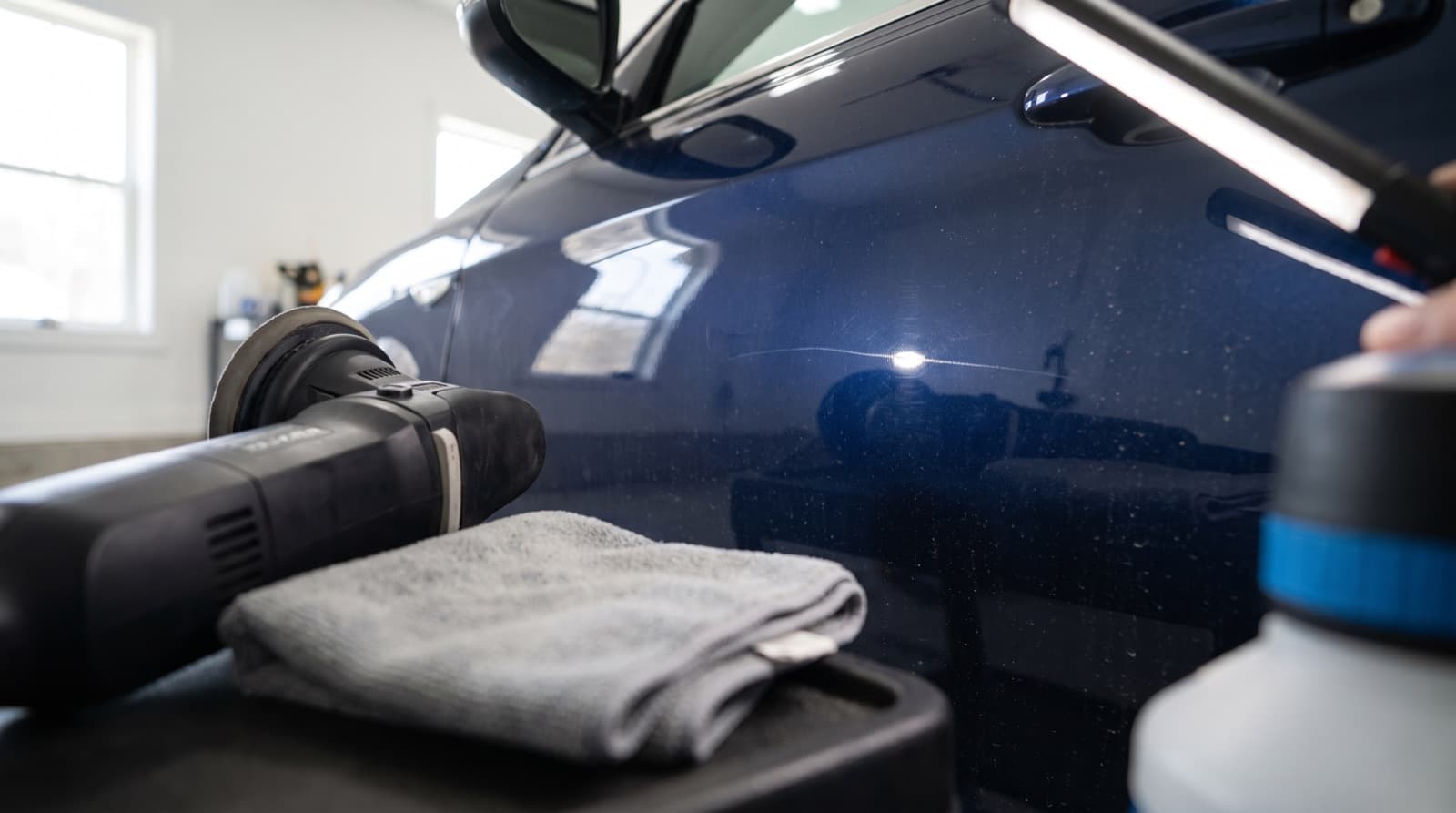
A pro uses a paint depth gauge — a PosiTector or similar — takes readings across panels, and adjusts or refuses to polish where the numbers are low. That is how you avoid a burn-through, which is not a polish issue anymore; it is a repaint.
The related question is whether they do a test spot. A detailer should correct one small section first, check it under proper lighting after an IPA wipedown, and show you the result before committing to the whole car. If someone quotes you paint correction over the phone with no inspection and no test spot, they are guessing.
This is also where DIY has a hard ceiling. Washing, drying, decontaminating with a clay bar, and applying a spray sealant are all reasonable weekend jobs. Machine correction on a car you cannot afford to damage is not.
What should a written scope include, and what should it cost?
Get the scope in writing, even by text. A quote that just says "full detail — $399" is fine only if a task list comes with it. Vague scope is how the same service turns into three different jobs at three different price points.
Use these as San Francisco reference points. These are our published prices, so you have a real benchmark to compare against instead of a national average. SUVs and large trucks add about $200 to correction and coating work.
| Service | Reference price | What the written scope should spell out |
|---|---|---|
| Exterior detail | $149 | Wheels and wheel wells, decon wash, bug and tar removal, sealant, glass, tire dressing |
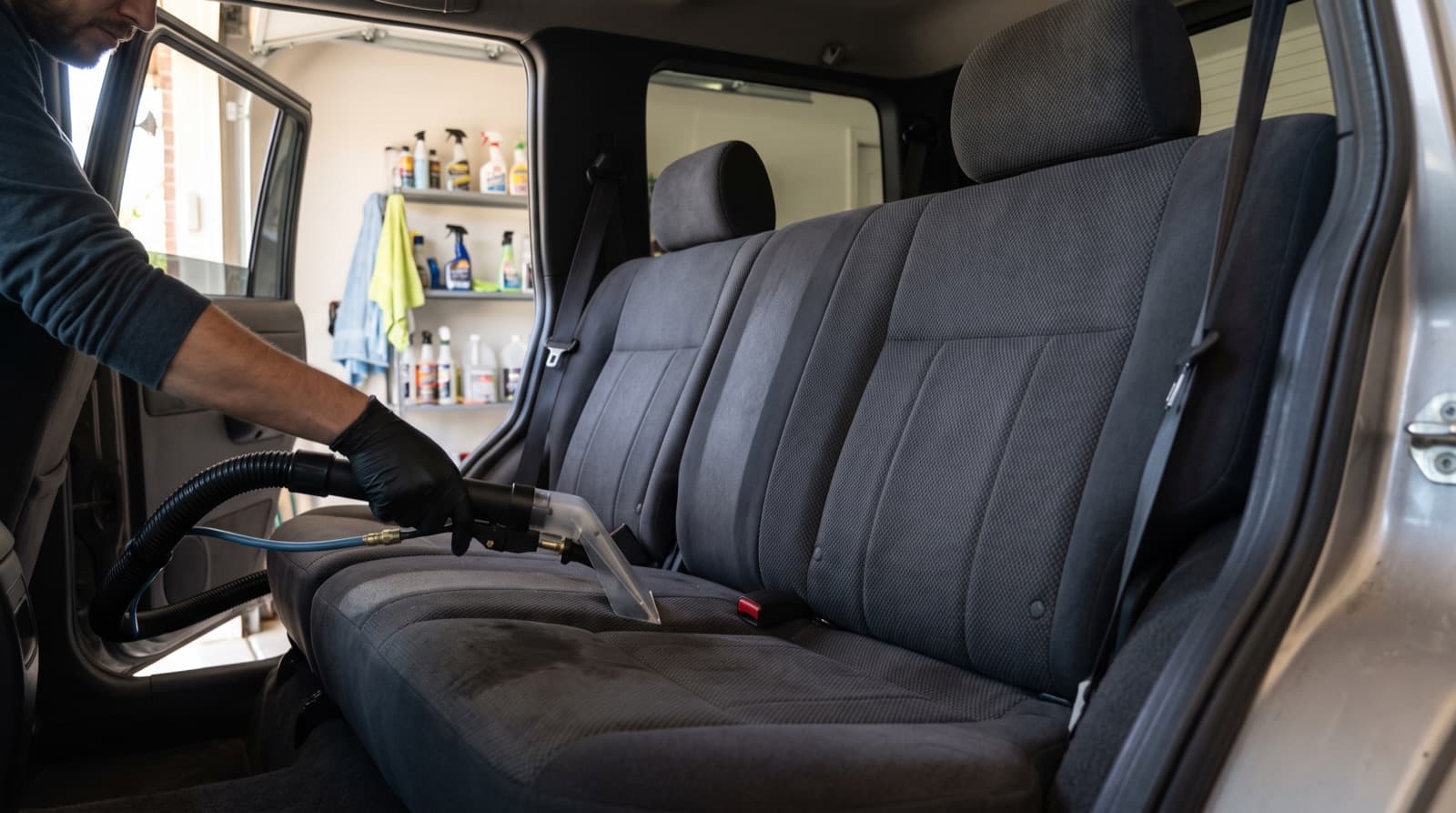
| Interior detail | $249 | Full vacuum, shampoo or hot-water extraction, leather clean and condition, vents and crevices, glass |
| Full detail | $399 | Everything above in one visit, plus door jambs and trunk |
| 1-step paint correction | $399 | Paint readings, test spot, single compound or polish stage, IPA wipedown, realistic gloss expectation |
| 2-step correction | $799 | Cut and refine stages, defect removal percentage, panels included |
| Ceramic coating | $799 (2-3 yr) to $2,499+ (Max) | Coating brand and tier, prep and correction included, cure time, warranty terms, maintenance schedule |
| Maintenance plan | From $149/mo | Visit frequency, what each visit covers, coating-safe chemicals only |
Is my mobile detailer any good? A 10-point check after the visit
Check the car in daylight within 48 hours, before it gets dirty again. A good detailer wants to hear about anything they missed, and a quick walk-around tells you fast if the job was done right.
- Paint: look down the side of the car in the sun. It should look clear and feel smooth, with no wax left in badges, seams or trim.
- Glass: no streaks or haze inside or out, including the top edge of each window.
- Door jambs: open every door. The frames should be wiped clean, not just the parts you see from outside.
- Wheels: clean between the spokes and inside the barrel, not just on the face. Tire shine should be even, with no splatter on the paint.
- Carpets and mats: even vacuum lines, and no sand under the seats or in the seat rails.
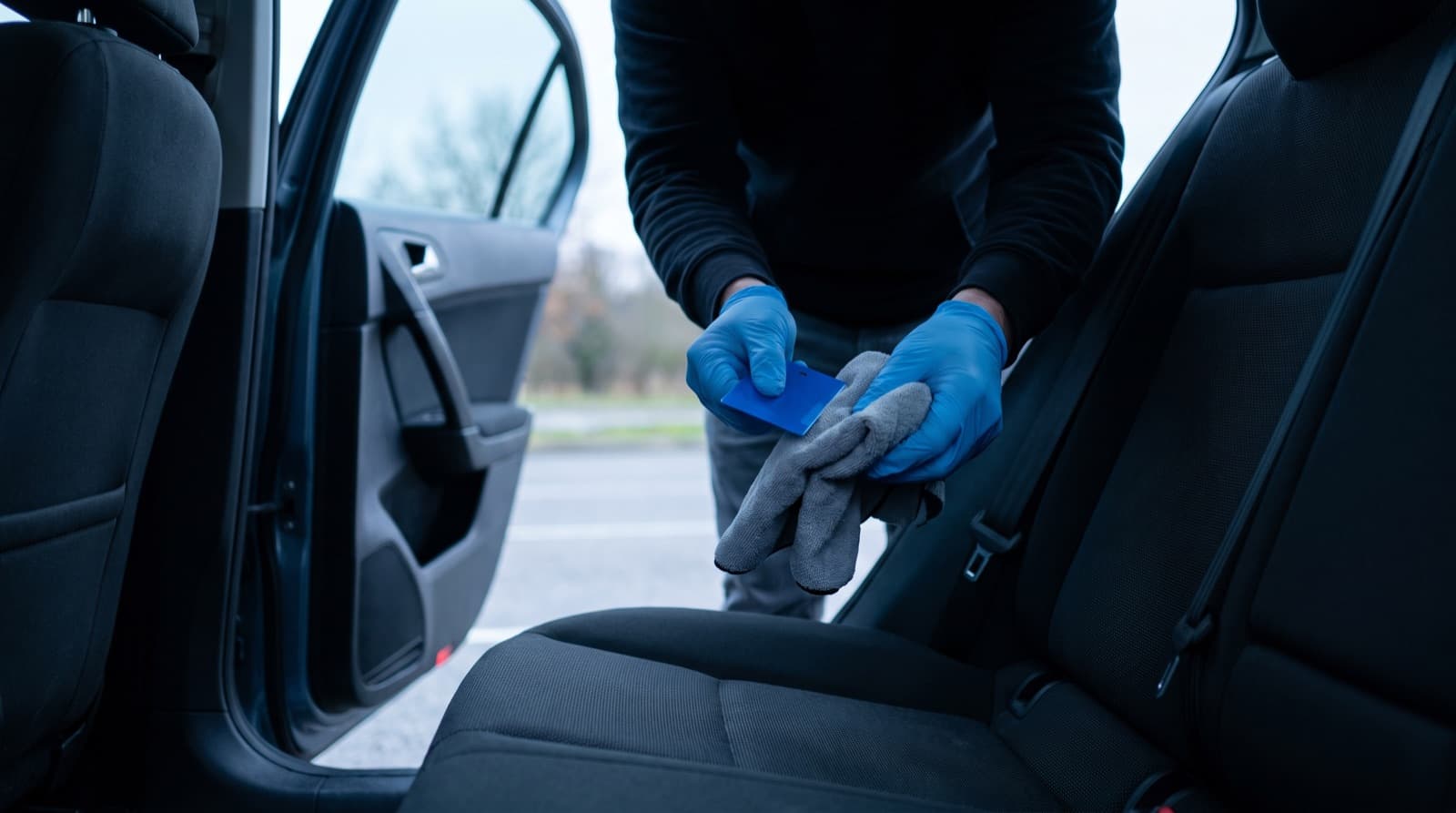
- Seats: stains treated as promised, and no sticky or stiff soap left in the fabric.
- Small spaces: cup holders, air vents, console seams and door pockets free of dust and crumbs.
- Smell: clean and neutral, not a heavy perfume hiding an odor.
- Scope: everything on your written quote was done.
- Follow-up: they answer when you text a photo of a missed spot, and they offer to fix it.
Pro tip: At Golden Bay Detailing, our 48-Hour Spotless Guarantee works like this: if you find a missed spot within 48 hours, send us a photo and we come back to fix it.
What red flags should make you walk away?
Most bad experiences trace back to one of these. None of them are subtle once you know to look.
| Red flag | Why it matters | Ask this instead |
|---|---|---|
| "Lifetime ceramic coating" | No consumer coating lasts a lifetime. Real warranties are tied to a tier and to maintenance. | Which coating and tier, how many years, and what voids it? |
| Cash only, no invoice | No paper trail means no warranty claim and no recourse. | Can you send a written quote and an itemized invoice? |
| A $79 "full detail" | That price buys a wash. Time, chemicals, and pads all get cut to make the math work. | How many hours will you be with the car? |
| Stock or borrowed before-and-afters | You cannot judge work you have never actually seen. | Send three photos you took yourself, same car, same angle. |
| No insurance, or "nobody's ever needed it" | A polisher through clear coat becomes your bill, not theirs. | What is your liability limit, and can you email the certificate? |
| Polishing with no measurement | Thin or repainted panels burn through in seconds. | Do you use a paint depth gauge, and can I see the readings? |
| No business name, no reviews anywhere | Mobile is normal. Untraceable is not. | What name is the business registered under, and where can I read reviews? |
| "Coated cars don't need washing" | Coatings shed dirt more easily; they do not clean themselves. | What is the maintenance schedule after the coating cures? |
What extra questions matter for mobile detailing in San Francisco?
Mobile detailing here has logistics a shop never deals with, and the answers separate people who work in this city daily from people who show up hoping it works out.
Start with water and power. A properly equipped mobile setup carries its own tank and power, so you are not running a hose across the sidewalk or an extension cord out a window. Then ask about your specific spot — a sloped Noe Valley driveway, a Marina street space, or a garage with low clearance all change how the job runs.
Fog matters more than people expect. Coatings need a dry, temperature-controlled cure window, and a 56-degree marine layer rolling in at 6 p.m. is not that. Ask what happens if it dews overnight, and whether the coating work can happen in your garage or under a canopy rather than open street parking.
Ask about runoff too. Many Peninsula and Marin cities enforce stormwater rules that prohibit soapy water entering storm drains, and a detailer who controls their rinse water is a detailer who has thought about it.
- Do you bring your own water and power, or do you need mine?
- Will street parking work, or do I need a driveway or garage?
- What is your service area, and are there travel fees to my address?
- What happens if the fog comes in during a coating cure?
- How do you handle wash-water runoff?
- Do you work on boats, RVs, or fleets if I need that later?
Pro tip: For ceramic work, book a day when your car can sit undisturbed and dry for at least 12 hours afterward. If your only option is street parking, say so up front — it changes which coating tier makes sense for you.
How do you read before-and-after photos and reviews?
Photos are easy to fake and easy to verify. Ask for the same car, same angle, same lighting, before and after. Swirl-mark correction only shows under direct light, so a genuine after shot will have a bright source in it, not a shaded parking spot that hides everything.
On reviews, volume and specificity beat star ratings. Look for reviews that name the car, the service, and the detailer, and read the two- and three-star ones if they exist. A pattern of no-shows or scope surprises will show up there long before it shows up in the average.
For reference on our end: a 5.0 average across 104 Google reviews. Anyone can quote a number, so ask where you can go read them.
- Same car, same angle, direct light, before and after.
- Interior shots that include carpet edges and seat seams, not just a wiped dashboard.
- Reviews that describe the service, not just "great job."
- A named person you can reach if something needs fixing after the fact.
Frequently Asked Questions
How much should a good car detail cost in San Francisco?
Expect roughly $149 for an exterior detail, $249 for an interior detail, and $399 for a full detail on a standard car. Paint correction starts around $399 for one step and runs to $1,199 for multi-step work, and ceramic coatings range from $799 for a 2-3 year coating to $2,499 and up for the top tier. Anything dramatically cheaper is a wash with a detail label on it.
Does a car detailer need to be licensed and insured?
California does not license detailers, so there is no state credential to check. What you can and should verify is general liability insurance and a registered business — in San Francisco that means registration with the Treasurer and Tax Collector. If a detailer works near other cars or takes yours off-site, insurance is not optional from your side of the deal.
Which detailing certifications actually mean something?
Manufacturer coating certifications carry real weight because they gate the warranty. Brands like System X, Gtechniq, and Ceramic Pro only allow trained installers to register a coating, and an unregistered install has no manufacturer backing. The International Detailing Association's skills certification is also legitimate. Generic "certified detailer" badges with no issuing organization behind them mean nothing.
What deposit and cancellation terms are normal?
A small deposit to hold a slot is standard and reasonable, especially for coating jobs, which take a detailer's whole working day to fit around. What you want is the policy in writing before you pay: how much, whether it applies to the final price, and how much notice you need to reschedule. Detailers who demand large cash deposits with no written terms are the ones to avoid.
Is a mobile detailer as good as a shop?
For interior work, washing, and most coatings, a properly equipped mobile detailer matches shop quality because the process is the same — the water, power, lighting, and extraction all come on the truck. The real trade-off is environmental control. Heavy multi-step correction and cold, damp coating cures benefit from an enclosed space, which is why a good mobile detailer will ask about your garage before quoting that work.
What makes Golden Bay Detailing different from other SF detailers?
Most jobs are done by our own master technicians. When a vetted partner contractor handles a booking, they are screened, trained on our process and checklist, and held to the same standard, and our 48-Hour Spotless Guarantee applies the same way. We are System X certified, so coatings come with a manufacturer-backed warranty rather than just our word, and we bring our own water and power to anywhere in San Francisco, the Peninsula through San Mateo and Foster City, and Marin through San Rafael with no travel fee. We hold a 5.0 average across 104 Google reviews.
Keep reading from Golden Bay
Ask us all twelve questions
Send a few photos and your address for a free, no-pressure quote. We will tell you what your car actually needs, what it will cost, and what we cannot fix — before you book anything. Call (415) 483-5686 or request a quote online.