How-To
How to Clean a Car Dashboard Without Streaks or Glare

Key Takeaways
- To clean a car dashboard, remove loose dust first with a dry microfiber or soft brush, then wipe with a lightly dampened microfiber and a pH-neutral interior cleaner, and detail the vents with a soft brush.
- Avoid glossy, greasy dashboard dressings because they create windshield glare, attract dust, and can feel tacky in the heat; a matte or satin finish looks more natural and stays cleaner.
- A matte interior protectant with UV inhibitors helps prevent the sun-fading and cracking that dashboards suffer, especially on cars parked outside all day.
- Never use ammonia glass cleaner, all-purpose degreasers, or bleach wipes on a dashboard, since they strip the plasticizers that keep the vinyl flexible and can cause discoloration.
- Clean your dashboard every one to two weeks and re-apply matte UV protectant every one to two months for the best results.
To clean a car dashboard, dust it dry first, then wipe it down with a mild interior cleaner and a soft microfiber towel, working the vents and seams with a detailing brush. Finish with a matte UV protectant to guard against fading and cracks. The order matters, because wiping a dusty dash before you dust it just grinds grit into the plastic and leaves fine scratches.
Your dashboard is the largest interior surface you look at all day, and it takes more direct sun than almost any other panel in the car. That mix of dust, skin oils, and UV is what dulls it, dries it out, and eventually cracks it.
At Golden Bay Detailing here in San Francisco, our technicians clean and protect hundreds of dashboards a year, and the method below is exactly what they use, plus the two products we tell everyone to stop using.
How do you clean a car dashboard step by step?
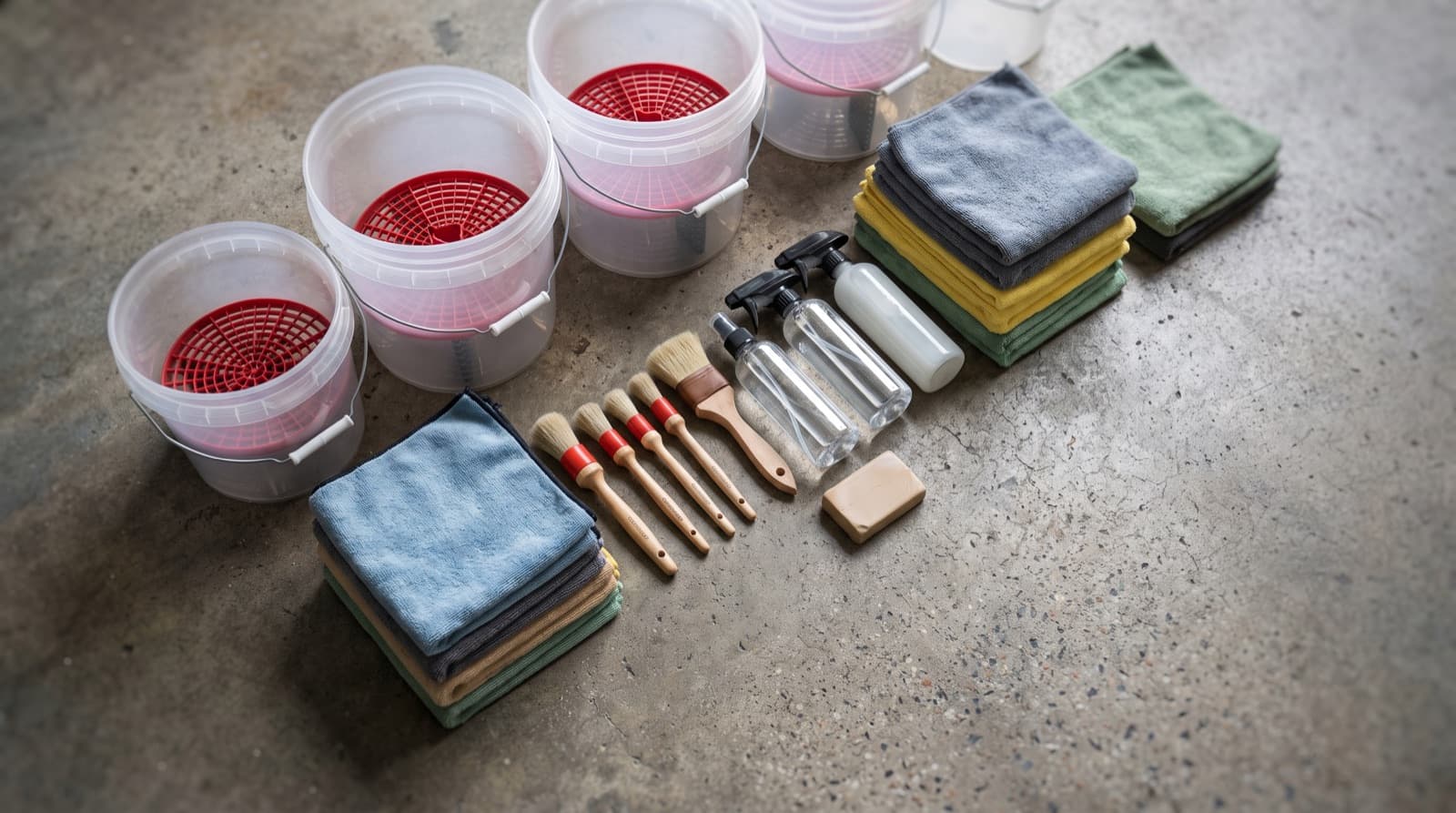
The whole job takes about ten minutes and needs almost nothing: a couple of clean microfiber towels, a soft detailing brush, and a mild interior cleaner. Skip paper towels, since they shed lint and can scratch soft plastic.
Work top to bottom so falling dust lands on areas you haven't cleaned yet, and clean the dashboard before you do the seats and floor.
- Dust dry first: sweep loose dust off with a dry microfiber or soft brush so you don't grind grit into the plastic.
- Spray cleaner onto the towel, not the dash, to keep overspray off the windshield, gauges, and screen.
- Wipe in sections with a damp microfiber, folding to a clean side as it loads up with grime.
- Work the vents, seams, and buttons with a soft detailing brush and a foam swab.
- Dry with a second clean microfiber, then apply a matte protectant if you're sealing it.
Pro tip: Pull your microfiber towels straight from the dryer with no dryer sheets. Fabric softener leaves a residue that smears on plastic and glass. Wash detailing towels separately from everything else.
What is the best thing to clean a dashboard with?
The safest cleaner is a pH-neutral automotive interior cleaner and a plain microfiber towel. For a lightly dusty dash, a damp microfiber with a drop of the mildest dish soap in water is plenty. Save the strong stuff for the floor mats.
What you use matters more than how hard you scrub. Harsh household cleaners strip the plasticizers that keep the dashboard flexible, and that's exactly what leads to a dry, chalky, crack-prone surface.
| Product | Safe on dashboards? | Why |
|---|---|---|
| pH-neutral interior cleaner | Yes | Gentle and purpose-made for automotive plastics and vinyl |
| Damp microfiber + mild soapy water | Yes | Enough for everyday dust and light skin oils |
| Matte interior dressing with UV | Yes | Cleans lightly and protects without adding shine |
| Ammonia glass cleaner | No | Dries out plastic and can fog gauge lenses and screens |
| All-purpose degreaser | No | Too strong; strips plasticizers and can discolor vinyl |
| Bleach or disinfecting wipes | No | Dry out and lighten vinyl over repeated use |
| Silicone wet-look shine gel | No | Greasy glare magnet that attracts dust |
How do you clean dashboard vents and crevices?
The flat top of the dash is the easy part. The dust that actually bugs people hides in the vent slats, the seams around the gauge cluster, and the gaps beside buttons. A towel just pushes that dust deeper, so switch tools here.
Small, soft tools do the work that a big towel can't reach without scattering dust everywhere.
- Run a soft detailing brush along the vent louvers to knock dust loose, then vacuum or wipe it away.
- Use a foam-tipped swab for tight seams and the areas around knobs and dials.
- A can of compressed air or a small blower clears vents fast; do it with the windows open.
- For screens, use a dry or barely damp microfiber only, and never spray cleaner directly onto a touchscreen.
Pro tip: Lightly mist your detailing brush with cleaner instead of the dash. A slightly damp brush grabs dust instead of flinging it into the air and back onto the surface you just cleaned.
Should you use a shiny dashboard dressing?
Short answer: no, skip the high-gloss, greasy dressings. They look impressive for a day, but that wet shine on top of the dash reflects straight up into the windshield and creates glare that is genuinely distracting when the sun sits low.
There's a second problem. Glossy silicone dressings stay slightly tacky, so they pull dust out of the air and hold it. Within a week the dash looks dustier than before you started, except now the dust is stuck in a greasy film.
Choose a matte or satin finish instead. It protects the plastic, looks like a clean factory dashboard, and doesn't throw glare or grab dust.
How do you protect a dashboard and stop it from cracking?
Cleaning removes what's on top; protecting is what keeps the dashboard from drying out and cracking. Once the dash is clean and dry, apply a matte interior protectant that lists UV inhibitors on the label.
UV protection is the entire point. Sunlight through the windshield bakes the dash more than any other panel, slowly breaking down the plastic until it fades, turns brittle, and splits, usually right along the top edge below the glass. A UV protectant slows that down the same way sunscreen slows a sunburn.
- Apply protectant to a microfiber or applicator pad, never straight onto the dash.
- Spread a thin, even coat and buff off the excess so nothing is left greasy.
- Re-apply every one to two months, and more often for a car that parks outside all day.
- Keep a sunshade in the windshield when you park to cut interior heat and UV dramatically.
Why do San Francisco dashboards fade and crack?
You'd think fog-belt cars would be safe from sun damage, but San Francisco dashboards crack for reasons that are very local. Most of us park on the street with no garage, so the car sits exposed all day, every day.
The marine layer burns off by midday in a lot of neighborhoods, and that afternoon sun through the windshield is intense even when the air outside feels cool. Add salt air near the coast and the dust that drifts in through cracked windows, and dashboards here dry out faster than people expect.
Because we're a mobile detailer, we clean and protect a lot of these dashboards right in the customer's driveway or at their office, car parked on the street, us bringing our own water and power. If your dash already shows a faded strip or hairline cracks along the top, a proper clean plus UV protectant won't reverse the cracks, but it stops them from spreading.
Pro tip: EV owners especially: big glass roofs plus long street-parking hours cook interiors. A windshield sunshade and a matte UV protectant every month are cheap insurance against a dash replacement that can run well over $1,000.
How often should you clean and protect your dashboard?
For most people, a quick dust-and-wipe every one to two weeks keeps the dash looking clean and stops buildup. Re-apply a matte UV protectant every one to two months.
If you park outside all day, have pets or kids, or eat in the car, clean more often, because dust and oils build up faster than you'd guess. A dashboard is easiest to keep nice when you never let it get bad in the first place.
Frequently Asked Questions
Can I use baby wipes to clean my dashboard?
Baby wipes work in a pinch for light dust because they're gentle and alcohol-free. The catch is they leave a thin lotion or fragrance residue that builds up over time and attracts dust. For a real clean, use a microfiber with a pH-neutral interior cleaner, then protect with a matte UV dressing.
Why is my dashboard always dusty right after I clean it?
Usually it's the product, not you. Glossy, silicone-heavy dressings stay slightly tacky and pull dust out of the air, so the dash looks dusty again within days. Switch to a matte protectant and the dust stops clinging almost immediately.
Does a shiny dashboard cause windshield glare?
Yes. A high-gloss dressing on top of the dash reflects sunlight up into the windshield, especially when the sun is low, and that glare can be distracting or even unsafe while driving. A matte finish removes the reflection entirely.
Can you fix a cracked dashboard by cleaning it?
No. Once a dashboard cracks, cleaning and protectant can't glue the plastic back together, because it has already dried out and split. What they can do is slow further cracking and keep the rest of the dash from getting there. UV protection is the only real fix, and it's prevention, not repair.
Does Golden Bay Detailing clean and protect dashboards?
Yes. Every interior and full detail we do includes cleaning the dashboard, vents, and console, plus a matte UV protectant with no greasy shine. We're mobile, so we come to your home or office anywhere in San Francisco and the Peninsula. Interior details start at $249, and you can get a free quote in about a minute.
Keep reading from Golden Bay
Want a factory-fresh dash without the greasy shine?
Golden Bay Detailing comes to your driveway or office anywhere in San Francisco and the Peninsula. Get a free quote in about a minute, and interior details start at $249.