How-To
How to Clean a Car Headliner Without Ruining the Fabric
Key Takeaways
- To clean a car headliner, spot-clean it: apply a small amount of gentle fabric or upholstery cleaner to a soft brush or microfiber towel, agitate lightly, blot up the moisture, and never soak the fabric.
- The headliner is thin fabric glued to a foam-backed board, so over-wetting dissolves that adhesive and causes the fabric to sag, bubble, or leave water stains.
- Work one small area at a time, always blot instead of scrubbing hard, and dry the panel quickly with airflow to keep moisture from reaching the foam.
- Never use bleach, straight solvents, or a stiff brush on a headliner, and always test your cleaner on a hidden corner first.
- Smoke and nicotine odor soaks deep into headliner foam, so it usually needs several light cleaning passes plus a dedicated odor treatment rather than one heavy scrub.
To clean a car headliner, spot-clean it: lightly mist a gentle fabric cleaner onto a soft brush or microfiber towel, work one stain at a time, blot up the moisture, and never soak the fabric. The headliner is glued to a foam-backed board, so keeping it barely damp is the whole game — over-wetting is exactly what makes a headliner sag.
The mistake almost everyone makes is treating the ceiling like the carpet: spraying it wet, scrubbing hard, and pressing water straight into the foam. That dissolves the adhesive holding the fabric down, and a week later the material droops or bubbles away from the roof.
At Golden Bay Detailing here in San Francisco, our technicians clean headliners on everything from daily commuters to smoke-soaked lease returns. Here's the careful, specific method that gets stains and odor out without turning a $40 job into a $300 headliner replacement.
How do you clean a car headliner without ruining it?
The safe approach is spot-cleaning with the least moisture that gets the job done. You are not washing the headliner — you are lifting a stain or freshening the fabric while keeping water away from the glue underneath.
Go small and slow. Treat one hand-sized area at a time, use just enough product to dampen the surface fibers, and blot the moisture back out before it can migrate down into the foam. If you can wring water out of your towel, you used far too much.
- Vacuum the headliner first with a soft brush attachment to pull out loose dust.
- Mist cleaner onto your towel or brush — not directly onto the ceiling.
- Work one small section at a time, using light circular passes.
- Blot with a clean, dry microfiber to lift the stain and the moisture together.
- Dry the panel fast with a fan, cracked windows, or the AC on high.
Why does a wet headliner start to sag?
A headliner is three layers: the fabric you see, a thin foam backing, and a rigid board shaped to the roof. A spray adhesive bonds all three together. That foam and glue are the weak point.
When you over-wet the fabric, water seeps through to the foam and breaks down the adhesive. The fabric then separates from the board and droops — usually near the edges, sunroof, or rear window first. Heat makes it worse, which is why sagging often shows up after a hot day following a heavy cleaning.
Once the glue lets go, no amount of cleaning fixes it. The panel has to be re-glued or replaced. That is why 'don't soak it' is the single most important rule of headliner care.
Pro tip: If you ever see water beading or the fabric darkening in a spreading circle, stop immediately and blot dry. That spreading ring means moisture is reaching the foam — the exact thing that causes sagging.
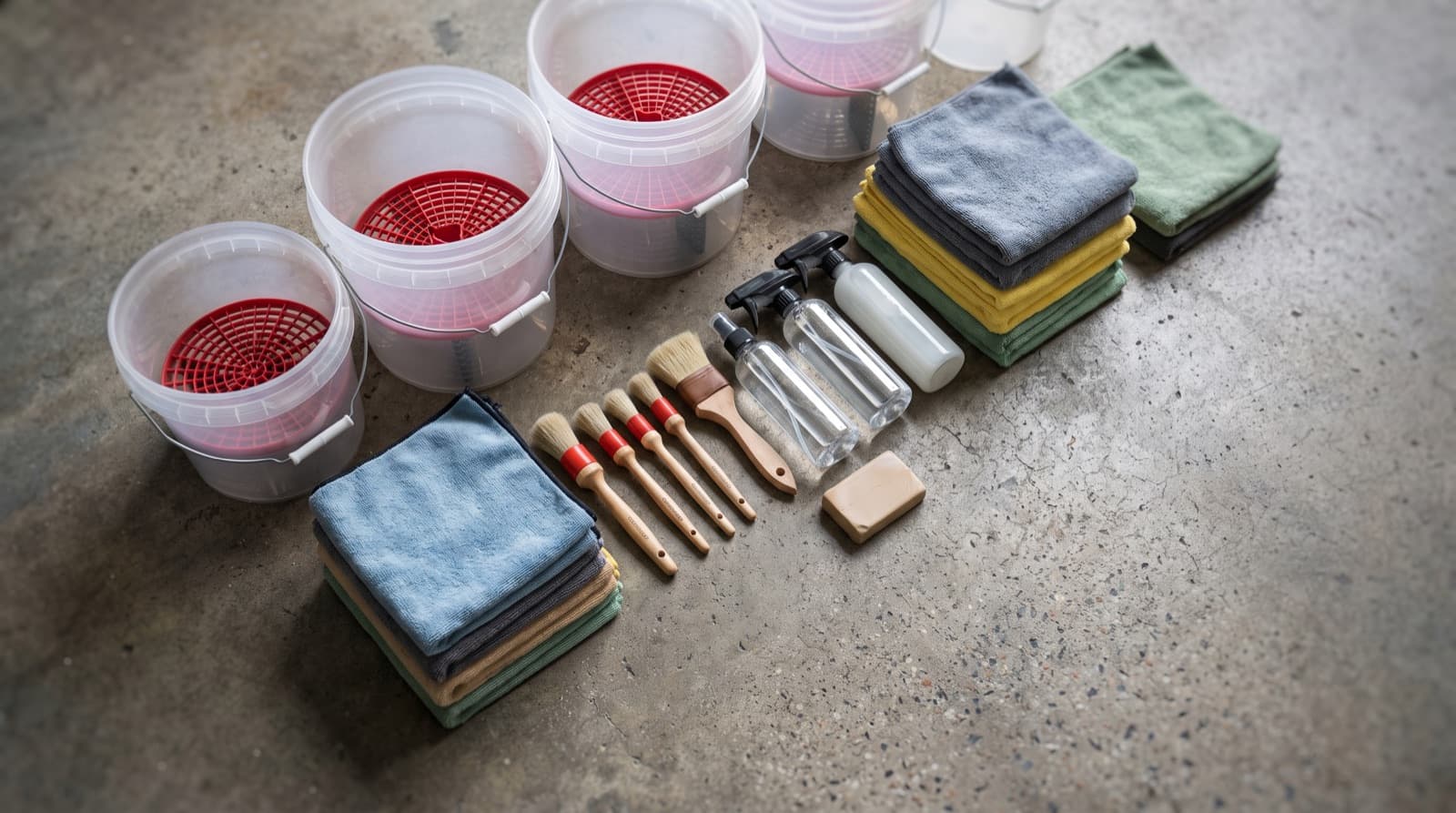
What you need to clean a headliner safely
You don't need much, and gentler is better. The goal is a mild, water-based cleaner and soft tools that won't fuzz or tear the fabric.
Match the cleaner to the mess. General grime and light stains lift with a diluted all-purpose cleaner or a foaming upholstery cleaner. Grease and food need a touch more, but still applied to the towel, not the ceiling.
- Skip: bleach, straight solvents, acetone, degreasers, and stiff or metal brushes.
- Skip: steam at high moisture unless you know how to control it — pros keep it dry and fast.
| Product / tool | Use it for | Watch out for |
|---|---|---|
| Diluted all-purpose cleaner (APC) | General grime, dust film, light stains | Dilute it well; test on a hidden spot first |
| Foaming upholstery / fabric cleaner | Set-in spots, coffee, food marks | Use the foam only — never the wet liquid |
| Soft-bristle detailing brush | Gently lifting the stain from the fibers | Light pressure only; stiff brushes fuzz fabric |
| Clean microfiber towels | Blotting up product and moisture | Keep several dry ones ready to swap |
| Portable fan / open windows | Drying the panel fast after cleaning | Skip heat guns and direct sun to avoid warping |
How to spot-clean a headliner stain step by step
This is the exact sequence our technicians use on a stained headliner. It works for coffee splatter, food, fingerprints, and general dinginess.
The rhythm is apply light, agitate gentle, blot dry, repeat. Two or three light passes always beat one soaking scrub.
- Test first: dab your cleaner on a hidden corner (behind a visor or near a pillar) and check for color transfer or fabric damage.
- Spray a small amount of cleaner onto your microfiber towel or brush until it's just damp.
- Gently work the stain in small circles, moving from the outside of the spot inward so you don't spread it.
- Immediately blot with a dry microfiber to pull the stain and moisture out of the fibers.
- If the stain remains, let it dry a minute, then repeat with another light pass instead of adding more water.
- Once clean, wipe the whole panel with a barely-damp towel so you don't leave a clean 'halo,' then dry it fast with airflow.
Pro tip: Always blot, never scrub hard. Aggressive scrubbing frays the fabric nap and pushes moisture into the foam. Let the cleaner and time do the lifting.
How do you get smoke smell out of a headliner?
Smoke is the hardest headliner problem because it isn't sitting on the surface — nicotine tar and odor soak into the foam and the fabric weave. The headliner is often the single biggest odor reservoir in a smoker's car, along with the carpet.
You can't fix that by masking it. You have to actually clean the tar out and then neutralize what's left. Do it in light passes so you never saturate the foam.
Wipe the headliner with a lightly dampened microfiber and a mild cleaner, flipping to a fresh towel side often — you'll see yellow-brown residue transfer. Repeat until the towel comes up clean, drying between passes. Then treat the whole cabin with an odor process, not just an air freshener, because the smell also lives in the vents, carpet, and seats.
- Clean the headliner in several light passes until residue stops transferring.
- Follow with a true odor treatment (ozone or enzyme-based) for the whole cabin, not a cover-up spray.
- Expect to also address carpet, seats, and the HVAC system — smoke never lives in one place.
When should you leave the headliner to a pro?
DIY spot-cleaning is perfectly fine for a fresh coffee splash, fingerprints, or a bit of dinginess. Go pro when the headliner is heavily stained edge to edge, smells strongly of smoke, has mold, or is already starting to sag.
There's also a local reason to be careful here. San Francisco's fog and marine layer keep the air damp, and if you park on the street with no garage, a headliner you cleaned too wet can stay moist for a day or more — plenty of time for the adhesive to loosen or for a musty smell to set in. Fast, controlled drying matters more here than in a dry climate.
That's the advantage of a mobile detail: we come to your driveway or curb with our own water, power, and extraction gear, clean the headliner with tightly controlled moisture, and dry it on the spot so nothing lingers. It's part of our interior and deep-interior services, and we handle smoke and odor jobs all over the city.
Pro tip: Owner tip: if your car lives outside in the Sunset or Richmond fog, clean the headliner on a dry morning and run the fan or AC afterward. Damp air plus a damp headliner is how mildew smell starts.
Frequently Asked Questions
Can I use water and soap to clean my headliner?
Yes, but only a small amount applied to a towel or brush — never a wet, soapy rag pressed into the fabric. A tiny bit of mild soap in water works for light grime. The rule is the same as with any cleaner: keep it barely damp, blot the moisture back out, and dry the panel quickly so water never reaches the foam and glue underneath.
Will cleaning my headliner make it sag?
Only if you over-wet it. Sagging happens when water soaks through to the foam backing and dissolves the adhesive holding the fabric to the roof board. If you spot-clean lightly, blot instead of soaking, and dry the panel fast, cleaning will not cause sagging. Drenching it will.
What is the best cleaner for a car headliner?
A gentle, water-based cleaner is best: a well-diluted all-purpose cleaner or a foaming upholstery cleaner used as foam, not liquid. Avoid bleach, acetone, and harsh degreasers, which can discolor the fabric or break down the backing. Whatever you choose, test it on a hidden corner first and apply it to your towel or brush rather than spraying the ceiling directly.
How do I get a smoke smell out of my headliner myself?
Wipe the headliner in several light passes with a damp microfiber and mild cleaner, switching to a clean towel side as yellow tar transfers, and drying between passes. Then treat the whole cabin with an ozone or enzyme odor process, since smoke also lives in the carpet, seats, and vents. Heavy smoke odor often needs a professional odor treatment to fully clear.
Does Golden Bay Detailing clean headliners as part of an interior detail?
Yes. Headliner spot-cleaning is included in our interior and full detail services, and we come to you anywhere in San Francisco and the Peninsula with our own water and power. For smoke-soaked or heavily stained headliners we use controlled-moisture cleaning and a dedicated odor treatment. Book online or request a free quote and we'll tell you exactly what your headliner needs.
Keep reading from Golden Bay
Headliner stains or smoke smell you can't shift?
Golden Bay Detailing comes to your driveway or curb anywhere in San Francisco with the right gear to clean your headliner safely — no sagging, no shortcuts. Get a free quote today.