How-To
How to Clean Your Car Interior Like a Pro Detailer
Key Takeaways
- Clean a car interior in one order every time: declutter, vacuum, brush and steam, wipe surfaces, then finish with glass.
- Vacuum before you add any liquid — wet grit turns to mud and grinds into the fabric.
- Match the product to the surface: pH-neutral cleaner for most plastics and fabric, a dedicated cleaner and conditioner for leather, and a barely damp microfiber for screens.
- Steam loosens grime and sanitizes with very little water, which matters in damp climates where trapped moisture breeds mildew and odor.
- Always dry the interior fully — crack the windows and run the fan — before closing the car to prevent a musty smell.
To clean your car interior like a detailer, work in one order every time: declutter, vacuum, brush and steam, wipe each surface, then finish with the glass.
That order is the whole trick. Detailers move top to bottom and clean dry before wet, so dust and grit fall down and get vacuumed out instead of smearing into a seat you already cleaned. The products matter too, but the sequence is what saves you from redoing your own work.
Our technicians have detailed 500+ cars around San Francisco, and interiors here carry their own problem: fog and marine-layer moisture. Clean the wrong way and you can trap dampness that turns into a musty smell within days. Here is the exact process our technicians use, plus how to dry a car so it actually stays fresh.
What order should you clean a car interior in?
The order matters more than the products. Detailers always clean top to bottom and dry before wet. That way dust and grit end up on the floor and then in the vacuum, instead of getting ground into a surface you already wiped.
- Declutter: pull out trash, floor mats, and loose items.
- Vacuum: every surface, working top to bottom.
- Brush and steam: loosen baked-in grime and lift stains.
- Wipe: clean each surface with the right product.
- Glass last: finish windows and screens so you catch any overspray.
Pro tip: Follow this order every time and you stop fighting yourself. Skip around, and you will end up cleaning the same seat twice.
Declutter and vacuum first
Empty the car completely. Take out floor mats, trash, coins, and anything in the door pockets and console. You cannot clean around clutter, and small debris hides the spots that need the most work.
Now vacuum. Start high at the headliner and work down to the carpet so gravity is on your side. Use a crevice tool for the seat rails, the gap between the seat and console, and the tracks where crumbs collect. Slide the seats forward and back to reach underneath.
- Vacuum before adding any liquid — wet grit turns to mud and grinds into fabric.
- Tap and brush cloth seats as you vacuum to shake loose embedded dirt.
- For pet hair, drag a rubber brush or pumice stone across the fabric first, then vacuum.
Brush and steam: the step most people skip
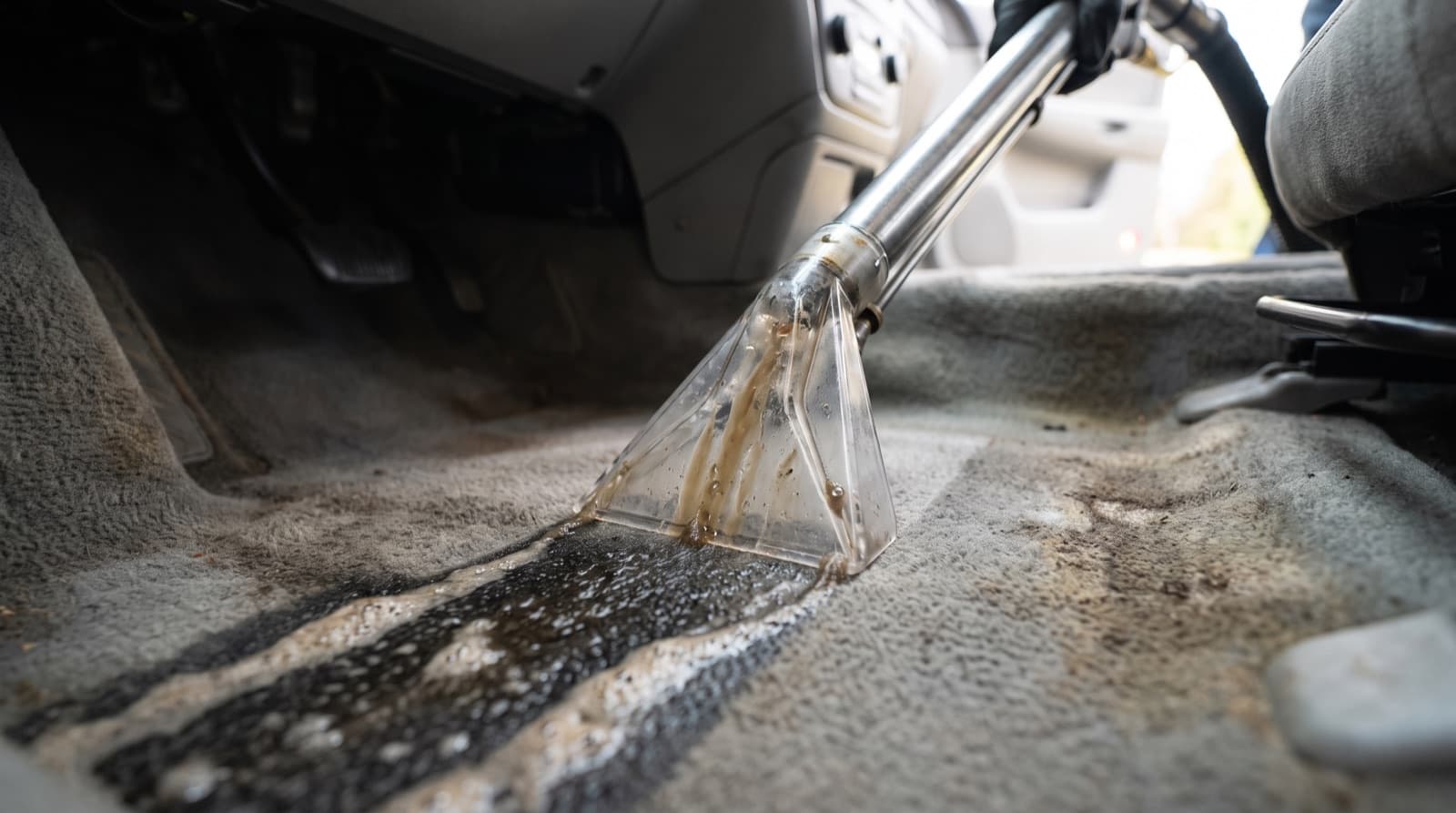
Agitation is what actually cleans. Spraying a surface and wiping just moves grime around; scrubbing it with a soft brush breaks it loose. Pair that brush with steam and you reach the detailer-level result most people never get at home.
Steam does three things at once: it heats and loosens grime, sanitizes without harsh chemicals, and uses very little water so surfaces dry fast. Run it over vents, seams, cupholders, buttons, and door jambs — the tight spots a towel can never reach.
- Vents and dash seams
- Cupholders and the console tray
- Buttons, knobs, and stitching
- Seat seams where crumbs and dirt hide
Pro tip: Owner tip: a $30 handheld steamer on a low setting does about 80% of what our commercial unit does on plastics and vents. Just keep the tip moving so you never warp textured trim or soften adhesive.
Safe products for every surface (leather, plastic, screens)
The fastest way to ruin an interior is using one cleaner on everything. Leather, plastic, fabric, and screens all react differently. Match the product to the surface and you protect the car while you clean it.
| Surface | Safe product | Avoid | Pro method |
|---|---|---|---|
| Leather | pH-neutral leather cleaner + conditioner | All-purpose cleaner, bleach, silicone dressings | Clean, wipe, then condition and buff to a matte finish |
| Hard plastic / vinyl | Diluted all-purpose cleaner + soft brush | Greasy high-gloss shine dressings | Agitate, wipe, finish with a matte protectant |
| Fabric seats / carpet | Water-based fabric cleaner or steam | Over-wetting, harsh solvents | Spray, agitate, extract or blot, then dry fully |
| Screens / touchscreens | Barely damp microfiber (water only) | Ammonia glass cleaner, paper towels | Wipe gently — never spray directly onto the screen |
| Glass | Ammonia-free auto glass cleaner | Household ammonia cleaners on tinted glass | Spray the towel, then do a two-towel wipe |
| Headliner | Light mist of cleaner on a cloth | Soaking it (the glue can let go) | Blot gently, never scrub hard |
Steam vs. chemical cleaners: which and when
You do not have to pick one. The best interiors get both, each used for what it does well.
For everyday dirt, a diluted all-purpose cleaner and a brush handle most of the job. Save the heavier chemicals for the spots that truly need them, and reach for steam when you want a deep clean without leaving residue behind.
- Use steam to sanitize, kill odor at the source, clean tight vents, or avoid residue — ideal in damp climates.
- Use a chemical cleaner for grease, ground-in stains, or sticky spills that need a degreaser or an enzymatic spot treatment.
- Combine them: pre-treat a stain with cleaner, then hit it with steam to lift it out.
Do the glass last (and how to keep it streak-free)
Clean the glass last so you catch any overspray or dust kicked up during the earlier steps. Interior glass builds a hazy film from plastic off-gassing, so it usually needs two passes to look truly clear.
Use an ammonia-free auto glass cleaner. Spray the towel, not the glass, so nothing drips onto the dash or electronics. Wipe with one microfiber to clean and a second dry one to buff. Never do it in direct sun — the cleaner flashes off and leaves streaks.
The San Francisco problem: dry it or fight mildew
Here is the part most guides skip. San Francisco's fog and marine layer keep the air cool and damp, and salt air adds even more moisture. If you deep clean an interior and close it up while it is still wet, that trapped dampness can turn into mildew and a musty smell within a day or two.
So drying is not optional. As mobile detailers, we plan the job around dry time — cleaning earlier in the day so the interior has hours to air out before the evening fog rolls back in.
- Crack the windows and run the fan or heater after cleaning.
- Park in the sun with the doors open whenever you can.
- Check under the mats and carpet for standing water.
- Keep a moisture absorber in the car during foggy stretches.
When to DIY and when to call a pro
Plenty of interior work is fine to do yourself. A regular vacuum, a wipe-down of the dash and console, and clean glass keep a car fresh and only take about an hour.
Call a pro when the job is bigger than a towel can handle: ground-in stains, heavy pet hair woven into the fabric, odors that keep coming back, or a headliner that needs careful low-moisture cleaning so the glue does not let go. And if you live in an apartment with no driveway or garage — common in the city — a mobile detailer brings the water, power, and equipment straight to you.
Frequently Asked Questions
How often should I clean my car interior?
Do a quick vacuum and wipe-down every two to four weeks, and a full deep clean two to four times a year. If you eat in your car, drive kids around, or carry pets, lean toward the more frequent end. In a damp climate like San Francisco, regular light cleaning also keeps moisture and odor from building up.
Can I use household cleaners on my car interior?
Some are fine, but many are not. Glass cleaners with ammonia can damage tinted windows and dry out leather and vinyl, and bleach or strong degreasers can stain fabric and fade plastic. A diluted, pH-neutral all-purpose cleaner is safer for most surfaces, and leather needs its own dedicated cleaner and conditioner.
What is the fastest way to clean car seats?
Vacuum first, then match the method to the material. For cloth seats, spray a water-based fabric cleaner, agitate with a soft brush, and blot or extract the moisture. For leather, use a leather cleaner and a microfiber towel, then condition. Steam speeds up either one and helps lift stains without soaking the seat.
Does steam cleaning damage a car interior?
Not if you use it correctly. Keep the steamer on a lower setting for plastics and screens, keep the tip moving, and never blast one spot long enough to warp trim or loosen adhesive. Steam is actually gentler than harsh chemicals because it cleans and sanitizes with heat and very little moisture.
How do I get rid of a musty smell in my car?
Musty smells almost always come from trapped moisture or mildew, not just dirt. Deep clean the carpet and seats, dry everything fully with the windows cracked and the fan running, and check under the mats for standing water. If the smell keeps coming back, the source is usually deep in the padding and needs professional odor treatment.
Do you clean car interiors at my home in San Francisco?
Yes. Golden Bay Detailing is fully mobile, so we come to your driveway, office, or street parking anywhere in San Francisco and down the Peninsula, and we bring our own water and power. That is handy if you live in an apartment with no garage. Text us a few photos and we send back an exact quote in minutes.
Keep reading from Golden Bay
Rather Skip the Elbow Grease?
We bring the steam, water, and power right to your driveway anywhere in SF and the Peninsula. Text a couple of photos and get an exact quote in minutes — no travel fee in our standard area.