Ceramic & Protection
How to Clean Matte Car Paint Without Ruining It
Key Takeaways
- To clean matte car paint, hand-wash with a pH-neutral matte-specific shampoo using the two-bucket method, then dry with a clean microfiber towel.
- Never use wax, polish, compound, or an automatic car wash on matte or satin paint, because they fill the flat texture and create permanent shiny spots.
- Matte paint has a rough, light-scattering clear coat, so any abrasive buffing or polishing burnishes it smooth and leaves a glossy blemish that cannot be fixed by more polishing.
- Protect matte finishes with a dedicated matte sealant or a matte-friendly ceramic coating instead of traditional wax or sealant.
- Spot-clean bird droppings, tree sap, and bug splatter immediately with a matte-safe detail spray so they do not etch the flat clear coat.
To clean matte car paint safely, hand-wash it with a pH-neutral matte-specific shampoo, rinse thoroughly, and dry with a soft microfiber towel—no wax, no polish, and no automatic car wash, ever. Matte and satin finishes look flat because their clear coat is textured to scatter light, and anything that smooths or fills that texture leaves a permanent shiny blemish.
That one rule changes everything about how you wash the car. The products and habits that keep glossy paint looking deep are the same ones that ruin a matte finish.
Below is a straightforward, SF-tested routine for washing, protecting, and spot-cleaning matte paint and matte paint protection film (PPF) without wrecking the look you paid extra for.
Why is matte paint so different to clean?
Glossy paint reflects light in one direction, which is why it looks like a mirror. Matte and satin clear coats are engineered with a fine, uneven surface texture that scatters light in many directions, and that scattering is what gives the flat, low-sheen look.
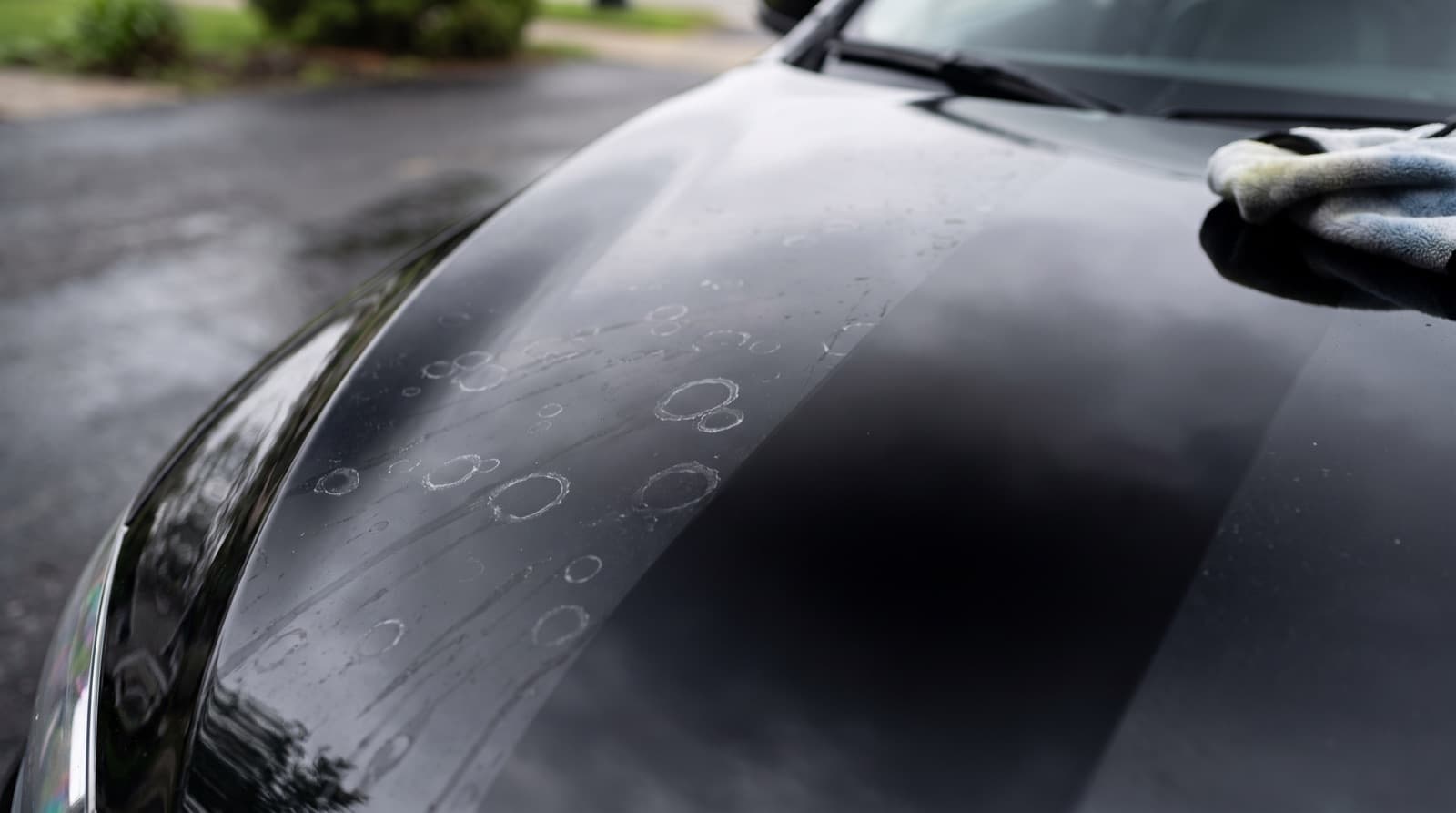
The catch is that this texture is fragile. Wax, polish, sealant residue, and swirl marks all work by filling or smoothing microscopic peaks and valleys. On glossy paint that adds shine; on matte paint it destroys the effect and creates a glossy patch that stands out worse than a scratch.
- Matte clear coat is textured on purpose to scatter light.
- Filling or smoothing that texture creates permanent shiny spots.
- No consumer product can restore matte texture once it is polished flat.
- The finish is more about prevention than correction.
What should you never use on matte paint?
The fastest way to ruin a matte finish is to treat it like a normal car. Avoid anything abrasive, anything that adds gloss, and any machine that scrubs the paint for you.
Keep this short banned list memorized before you buy a single product.
- No wax or paste wax—it fills the texture and shines the finish.
- No polish, compound, or clay bar—these are abrasive and burnish the clear coat.
- No automatic or brush car washes—brushes and driers scuff and gloss the surface.
- No all-in-one glossy shampoos, tire shine overspray, or dressing on the paint.
- No dish soap or degreasers, which strip and blotch matte clear coat.
Pro tip: Owner tip from Muza: if a product does not clearly say matte, satin, or flat-safe on the label, assume it will add gloss and keep it off the panels. When in doubt, test on a hidden spot like the inside of a door jamb first.
How do you wash matte car paint step by step?
Washing is where most matte damage happens, usually from grinding street grit across the paint with a dirty mitt. The two-bucket method with a matte-specific shampoo prevents that.
Work in the shade, keep the surface wet, and never let soap or water dry on the panel.
- Rinse the whole car first to flush loose SF street grit and salt before touching it.
- Fill one bucket with matte-specific pH-neutral shampoo and one with clean rinse water.
- Use a plush microfiber wash mitt; wash top to bottom, rinsing the mitt in the clean bucket between panels.
- Rinse each panel fully so no soap dries in the texture.
- Dry by gently blotting or laying a clean microfiber drying towel flat—do not scrub or buff in circles.
- Use an air blower or filtered-water final rinse if you have hard water to avoid spots.
How do you protect matte paint without wax?
Matte paint still needs protection from UV, bird droppings, and SF salt air—it just needs the right kind. The rule is simple: only use products specifically formulated for matte or satin finishes.
Two good options exist. A matte spray sealant is the easy DIY route and lasts a few weeks to a couple of months. A matte-friendly ceramic coating is the durable, go-pro route and adds years of protection while keeping the flat look.
| Protection option | How long it lasts | Best for | Adds gloss? |
|---|---|---|---|
| Matte spray sealant | Weeks to ~2 months | DIY upkeep between washes | No, if matte-rated |
| Matte-specific ceramic coating | 2-6+ years | Long-term protection, easy cleaning | No, keeps flat look |
| Traditional wax or sealant | N/A—never use | Glossy paint only | Yes—ruins matte |
| Matte PPF (film) | 5-10 years | Rock chip + stain defense | No, film is matte |
Pro tip: A matte-rated ceramic coating is one of the few upgrades that makes a matte car easier to own—it fills nothing, keeps the flat look, and makes bird droppings and sap rinse off before they etch.
How do you handle matte PPF and satin wraps?
Matte paint protection film and satin vinyl wraps clean almost the same way as factory matte paint: pH-neutral matte-safe shampoo, two buckets, gentle drying, no wax or polish. The main extra rule is chemical care.
Avoid strong solvents and bug removers that can stain film, and treat seams and edges gently so you do not lift them. Many matte PPF makers sell their own approved cleaner and sealant, so use those when available.
- Use matte-safe or PPF-approved shampoo and sealant only.
- Spot-treat stains quickly—film can absorb sap and droppings if left.
- Keep harsh solvents and traditional bug-and-tar removers off the film.
- Do not pressure-wash directly at wrap or PPF edges and seams.
How do you spot-clean bird droppings and sap on matte?
SF throws a lot at flat paint: tree sap on Peninsula streets, bird droppings, bug splatter, and salty marine-layer film. These are acidic and will etch matte clear coat if they sit, so speed matters more than technique.
The move is to soften and lift, never to rub hard.
- Soak the spot with a matte-safe detail spray or plain water and let it dwell.
- Lay a wet microfiber over stubborn droppings for a few minutes to soften them.
- Wipe in one direction with light pressure—no scrubbing or circular buffing.
- Follow with a quick matte detail spray to even out the panel.
- If it already etched or dulled unevenly, stop and call a matte-experienced pro.
Pro tip: Never dry-wipe a bird dropping off matte paint. The grit acts like sandpaper and can scuff a shiny streak into the finish that no polish can undo.
When should you call a pro for matte paint?
Plenty of matte upkeep is DIY-friendly: regular washing, spot-cleaning, and matte spray sealant are all reasonable to do yourself with the right products. Where people get into trouble is protection and correction.
Applying a durable ceramic coating, dealing with a shiny blemish, or protecting the car with matte PPF are jobs where the wrong move is expensive. We are a mobile, System X certified detailer. Our technicians come to your driveway or office anywhere in SF, the Peninsula, or Marin with their own water and power, so the car never sees an automatic wash.
- DIY-fine: routine matte washes, spot-cleaning, matte spray sealant.
- Go-pro: matte-safe ceramic coating for multi-year protection.
- Go-pro: uneven gloss, etching, or wash marring you cannot fix.
- Go-pro: matte PPF installation and warranty-backed film care.
Frequently Asked Questions
Can you use regular car soap on matte paint?
No. Most regular shampoos are designed to add gloss and can leave residue that fills the matte texture, creating shiny spots. Always use a pH-neutral shampoo that specifically says it is matte, satin, or flat-safe on the label.
Why does buffing or polishing create shiny spots on matte paint?
Matte clear coat looks flat because it is microscopically textured to scatter light. Polishing and buffing are abrasive and smooth that texture flat, so light reflects evenly again and you get a permanent glossy patch. No amount of additional polishing brings the matte look back.
Can matte paint be ceramic coated?
Yes, as long as you use a ceramic coating specifically formulated for matte or satin finishes. A matte-rated coating protects against UV and contaminants and makes washing easier without adding gloss. A standard glossy coating will ruin the flat look, so the product choice is everything.
Is it safe to take a matte car through an automatic car wash?
No. Brush washes scuff and gloss the texture, and even touchless washes often use harsh chemicals and high-gloss driers that can blotch matte paint. Hand-washing with matte-safe products is the only safe method.
Does Golden Bay Detailing clean and protect matte and satin finishes in San Francisco?
Yes. Golden Bay Detailing is a professional mobile service that comes to you across San Francisco, the Peninsula, and Marin with its own water and power. We hand-wash matte and satin finishes with matte-safe products and offer matte-friendly ceramic coating, so your flat finish stays flat. Request a free quote to get started.
Keep reading from Golden Bay
Keep your matte finish flat and flawless
Golden Bay Detailing hand-cleans and protects matte and satin paint at your SF, Peninsula, or Marin driveway—no wax, no automatic wash, no shiny spots. Request your free quote today.