Problem Solvers
How to Get Rid of New Car Smell: VOCs and Off-Gassing
Key Takeaways
- New car smell is off-gassing: volatile organic compounds (VOCs) evaporating out of fresh plastics, adhesives, foams, and treated leather in the cabin.
- Off-gassing is strongest when the car is new and fades over the first weeks to months, and heat speeds it up while ventilation clears it out.
- For most healthy adults the smell is a nuisance, but VOCs can cause headaches, dizziness, and irritation in a hot sealed car, so pregnant people, kids, and sensitive drivers should ventilate more.
- Activated charcoal, airing the car out daily, a heat-then-vent bake-out cycle, and an activated-carbon cabin air filter reduce the smell, while fragrance sprays only mask it.
- A full interior detail with hot-water extraction and steam removes the settled dust and residue that hold odor, resetting the cabin instead of covering it up.
To get rid of new car smell, ventilate the cabin often and use heat to speed off-gassing, because that smell is VOCs evaporating out of fresh interior materials and fresh air is what clears them. There is no spray that neutralizes it — time, airflow, and a deep clean do the real work.
New car smell may seem harmless or even pleasant, but it is a mix of volatile organic compounds (VOCs) coming off the plastics, glues, and foams in a brand-new interior. Understanding what it is makes it easy to clear faster and handle safely.
At Golden Bay Detailing in San Francisco, our technicians have reset the interiors of 500-plus cars — new and used — so here's an honest, health-aware guide to what causes new car smell, whether it's harmful, and how to get rid of it for good.
What causes that new car smell?
That new car smell is off-gassing: dozens of volatile organic compounds evaporating out of the fresh materials packed into a modern interior. Warm air pulls them out of the plastics, adhesives, foams, sealants, carpet backing, and treated leather that make up your dashboard, seats, and trim.
The main culprits are the solvents in adhesives and the plasticizers that keep a dashboard flexible. You'll see compounds like benzene, formaldehyde, toluene, and styrene named in coverage of the topic — they're among the VOCs released as a new cabin cures and settles.
| Interior source | What it off-gasses |
|---|---|
| Dashboard and trim plastics | Plasticizers and solvents |
| Adhesives and sealants | Toluene and benzene-type solvents |
| Foam and carpet padding | Styrene and flame-retardant residues |
| Treated leather and vinyl | Conditioner and tanning solvents |
Pro tip: The smell is loudest on day one and quietest by the end of year one. You're not removing a permanent problem — you're speeding up a process that ends on its own.
Is new car smell harmful?
For most healthy adults, brief exposure to new car smell is more of a nuisance than a hazard. The real concern is that VOCs can trigger headaches, dizziness, nausea, and eye, nose, and throat irritation — especially in a car that's been sealed shut and baking in the sun.
Off-gassing is strongest when the car is new and drops steadily over the first weeks and months as the materials cure. Heat speeds it up, which is exactly why a parked car smells strongest the moment you open the door on a warm day.
If you're pregnant, drive with young kids or pets, or you're sensitive to chemical smells, take it seriously: ventilate, and don't sit in a hot sealed cabin longer than you need to. This is general guidance, not medical advice — if symptoms keep up, check with a doctor.
How do you air out a new car and speed off-gassing?
Time and fresh air do most of the work. You can't neutralize VOCs with a spray, but you can pull them out of the cabin faster by ventilating often and using heat to your advantage.
- Drive with the windows cracked and use fresh-air mode, not recirculate, so the cabin exchanges air instead of trapping it.
- Air it out daily. A few minutes with all the doors open moves more air than a cracked window does in an hour.
- Bake it out: on a warm day, park in the sun with the windows cracked for an hour, then open everything to release the loaded air. Heat drives the VOCs out; ventilation carries them away.
- Avoid the recirculate button on hot days for the first few months.
Pro tip: Run the bake-out cycle a few times, not once. Each round of heat-then-vent pulls another wave of off-gassing out of the foam and plastics.
What actually absorbs the smell, and what just masks it?
There's a real difference between removing odor molecules and covering them up. Absorbers pull compounds out of the air; fragrances just pile a stronger smell on top and can add VOCs of their own.
| Method | Does it help? | Notes |
|---|---|---|
| Activated charcoal or bamboo bags | Yes, absorbs | Leave several in the cabin; recharge them in sunlight |
| Baking soda on carpet or in an open box | Mild help | Cheap, good on fabric odors, then vacuum it out |
| Air purifier with a carbon filter | Yes | Runs while you drive |
| Fragrance sprays and tree fresheners | Masks only | Hides the smell and adds its own VOCs |
| Ozone generator | Situational | Powerful, but needs pro handling; not a daily fix |
Pro tip: Activated charcoal works until it's full. Set the bags in the sun for a few hours every couple of weeks to dry them out and reset their absorbing power.
Can interior detailing reset the odor?
Yes — a proper interior detail resets the smell of any cabin, new or used. Over the first months, VOCs and fine manufacturing dust settle into the carpet, vents, and every plastic seam. A deep clean lifts that residue out instead of masking it.
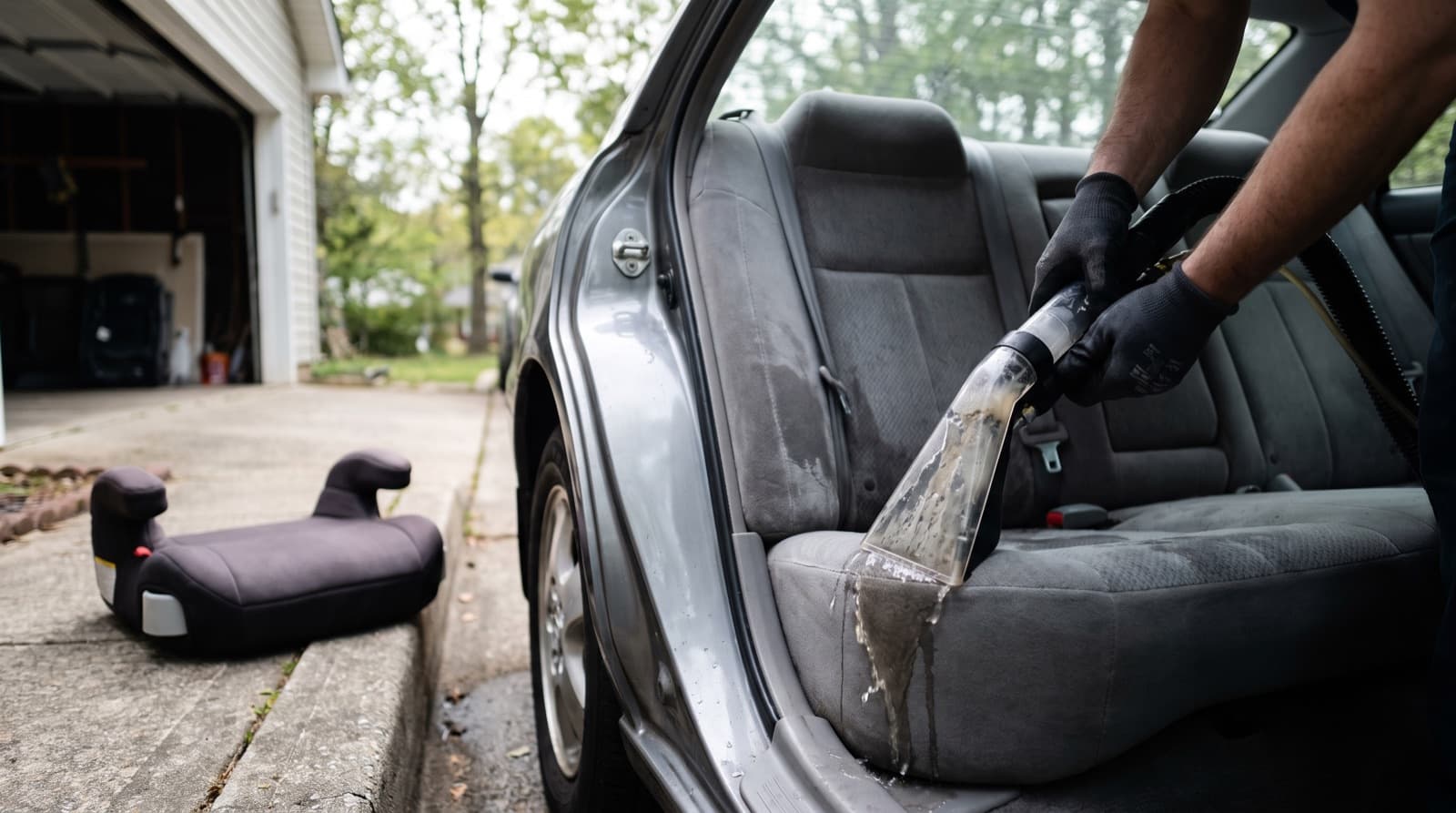
A real interior service means hot-water extraction on the carpets and upholstery, steam on the plastics and vents, and a wipe-down of every hard surface — which removes the dust and film that hold odor. For a stubborn trapped smell, a targeted ozone or hydroxyl treatment finishes the job. That's a precise step, not a fragrance bomb.
Because we're fully mobile, we bring the extractor, steamer, and our own water and power to your driveway or office anywhere in San Francisco, the Peninsula, or Marin. You reset the cabin without losing a day to a shop.
Pro tip: Ask for the vents and headliner to be steamed. That's where odor and dust hide, and a surface-only wipe skips them entirely.
Don't forget the cabin air filter
The cabin air filter is the one part almost everyone forgets. It sits behind the glovebox and filters the air your vents push into your face. An activated-carbon cabin filter traps odors and pollutants before they reach you; a plain paper filter won't.
On a brand-new car the factory filter is usually fine. But on a used car with a lingering smell, swapping in a fresh carbon filter is one of the cheapest, most effective upgrades you can make — often a ten-minute job in the glovebox.
New car smell in San Francisco's climate
San Francisco makes the bake-out trick harder. Our fog and marine layer mean fewer hot, sunny days to heat the cabin, and a lot of drivers park on the street with no garage to open up the car safely.
Work with the microclimate instead of against it. Catch the warm inland afternoons — a sunny day in the Mission or a trip down the Peninsula — and use that heat to bake and vent. Salt air and damp also mean you want moisture out of the cabin, so favor fresh-air mode and never let a humid car sit sealed for days.
- No garage? Air the car out for a few minutes every time you park somewhere safe, rather than waiting for one long session.
- Foggy week? Let the heater run on fresh-air mode to warm and exchange the cabin air even without direct sun.
Frequently Asked Questions
How long does new car smell last?
Off-gassing is strongest in the first few weeks and fades over the first several months as the interior materials cure. Airing the car out daily and running heat-then-vent cycles speeds it up noticeably. Most cars are close to odor-free within about six months to a year.
Is new car smell toxic?
For most healthy adults, short exposure is a nuisance rather than a proven danger. The VOCs behind the smell can cause headaches, dizziness, and eye or throat irritation, especially in a hot sealed car. If you're pregnant, driving with kids, or sensitive to chemicals, ventilate more and limit time in a baking cabin.
Does an air freshener get rid of new car smell?
No. Sprays and tree fresheners only mask the smell, and many add VOCs of their own. To actually reduce it, use absorbers like activated charcoal, air the car out daily, and use heat to speed off-gassing.
Will a car wash or detail remove new car smell?
A basic wash won't touch it, but a full interior detail will. Hot-water extraction and steam remove the settled dust and residue that trap odor, which resets the cabin instead of covering it up. A targeted ozone treatment can finish off a stubborn smell.
Can Golden Bay Detailing help with new car smell?
Yes. Our interior detail and odor-removal service uses hot-water extraction, steam on the vents and plastics, and a targeted ozone treatment when a smell won't quit — all at your curb in San Francisco, the Peninsula, or Marin. Book a slot or get a free quote and we'll come to you.
Should I replace the cabin air filter to fix the smell?
On a used car with a lingering smell, an activated-carbon cabin filter is a cheap and effective upgrade that traps odors before they reach the vents. On a brand-new car the factory filter is usually fine, so focus on ventilation and a deep clean first.
Keep reading from Golden Bay
Ready to reset that new car smell?
Golden Bay comes to your San Francisco curb with the extractor, steamer, and our own water and power. Get a free quote today and breathe easy in your car.