Problem Solvers
How to Remove Pet Odor From Your Car for Good in 2026
Key Takeaways
- Pet odor lives in a car's fabric, carpet, headliner, and vents rather than the air, so masking sprays only hide dog smell for a few hours before it returns.
- The proven fix is a sequence: remove all hair, break down the odor with an enzyme cleaner, then steam and extract it from the fibers, and finish tough cases with ozone.
- Enzyme cleaners work because they contain bacteria and enzymes that digest the organic oils, saliva, and dander causing the smell instead of covering it up.
- Waterproof, hammock-style seat covers and drying your dog off before rides are the most effective ways to keep pet odor from setting in.
- Set-in urine, vomit, or years of buildup usually need professional steam and extraction, because the odor has soaked into seat foam that household tools can't reach.
To remove pet odor from a car for good, you have to treat the source buried in the fabric, carpet, and vents — not just spray something in the air. Pet smell is oil and organic residue that soaks into soft surfaces, so masking it only buys a few hours before it comes back.
The real fix is a sequence: pull out every hair, break down the odor with an enzyme cleaner, then steam and extract it from the fibers, and finish stubborn cases with ozone. Skip a step and the dog smell returns on the next warm day.
At Golden Bay Detailing here in San Francisco, our technicians clean up after a lot of very good dogs, so here's the exact process that actually works — plus what you can handle yourself and when it's smarter to call a pro.
Why does my car still smell like dog?
Your car still smells because the odor isn't in the air — it's in the materials. Dog and cat smell comes from natural skin oils, saliva, dander, and the occasional accident, all of which are organic. Those molecules sink into cloth seats, carpet, the headliner, and seatbelt webbing, where bacteria feed on them and keep producing fresh smell.
Heat and humidity wake it up. On a warm afternoon, or when your defroster pushes air through a damp cabin, the smell floods back even though you cleaned last week.
The vents matter too. Your HVAC system pulls cabin air across the evaporator and blows it back out, so odor and dander build up inside the ducts and the cabin air filter. That's why a car can smell like dog the second you turn on the fan.
Why you have to remove the hair and fur first
Hair removal always comes first. Fur traps dander and oils, and it clogs your extractor and turns into a wet mess if you shampoo over it. Get the car as hair-free as you can before any liquid touches it.
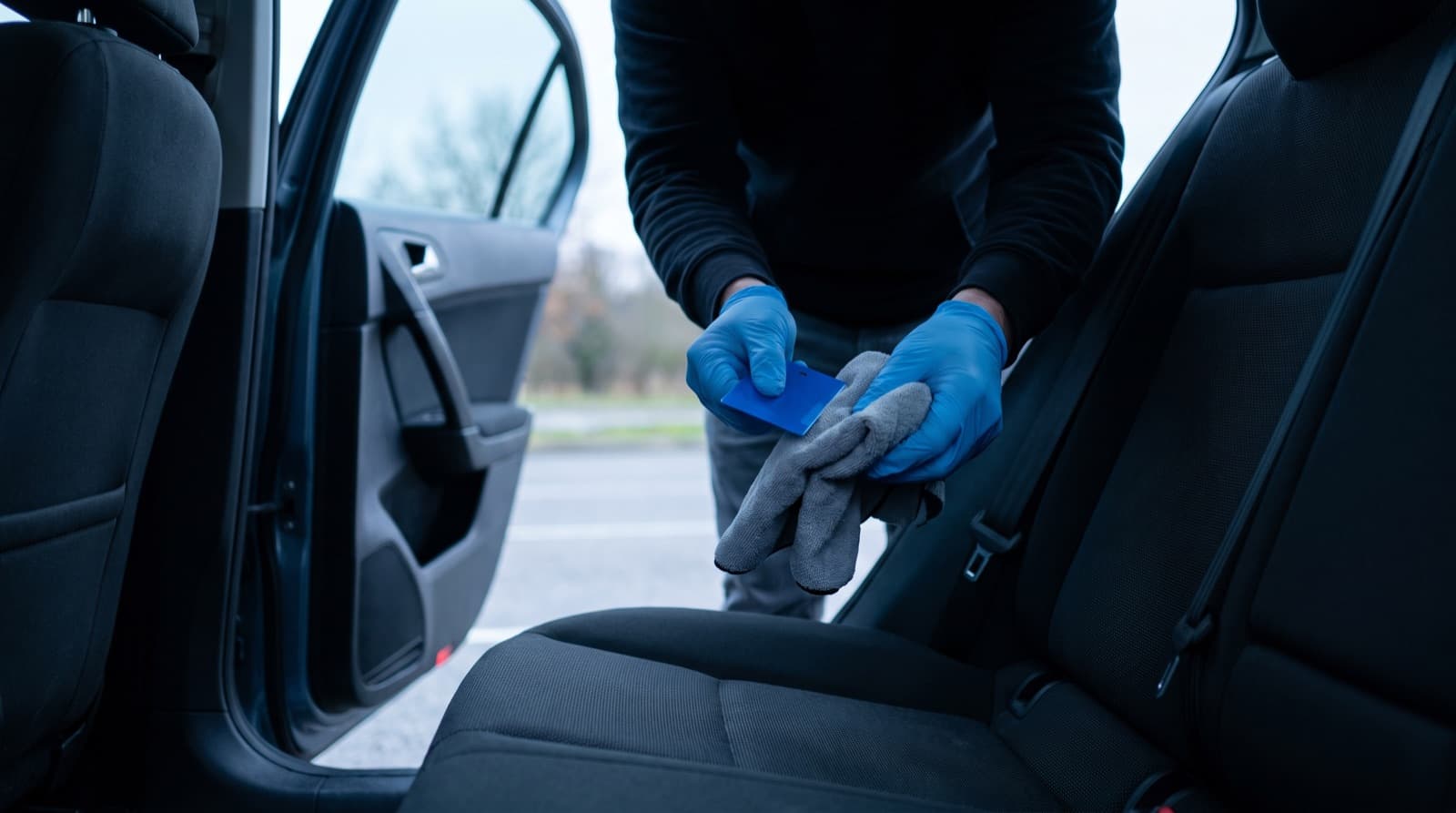
- Rake it out dry with a rubber pet-hair brush, a pumice stone, or a stiff rubber squeegee — the friction lifts embedded fur that a vacuum leaves behind.
- Follow with a strong vacuum, using a crevice tool along seat seams, under the seats, and in the trunk.
- Wipe down hard plastics and glass, since fine hair clings there too.
- Pull the floor mats out and clean them separately so trapped fur doesn't fall back into the carpet.
Pro tip: A slightly damp nitrile glove is the cheapest pet-hair tool there is — drag your palm across the seat and the fur balls up so you can pick it right off.
Why enzyme cleaner is the secret to killing pet odor
An enzyme cleaner is the one product that removes pet odor instead of hiding it. Enzymatic cleaners contain live bacteria and enzymes that digest the organic compounds causing the smell — the proteins in saliva, urine, and dander — and break them down into odorless byproducts.
That's completely different from a deodorizer or air freshener, which just stacks a stronger scent on top. Once the enzymes eat the source, there's nothing left to smell.
To use one right, saturate the spot instead of misting it. The cleaner has to reach as deep as the odor did, so spray until the padding under the carpet feels damp, then let it dwell. Most enzyme products need to stay wet for 10 to 15 minutes so the bacteria have time to work.
Pro tip: Enzymes are living organisms, so skip the hot water and harsh degreasers on the same spot — heat and strong chemicals can kill them before they finish the job.
How to remove pet odor step by step
Here's the order that gets pet smell out and keeps it out. Work top to bottom — the sequence matters as much as the products do.
- Remove all hair and fur, then vacuum thoroughly.
- Saturate odor spots with a pet-store enzyme cleaner like Nature's Miracle and let it dwell 10 to 15 minutes.
- Agitate cloth and carpet with a soft brush to work the cleaner into the fibers.
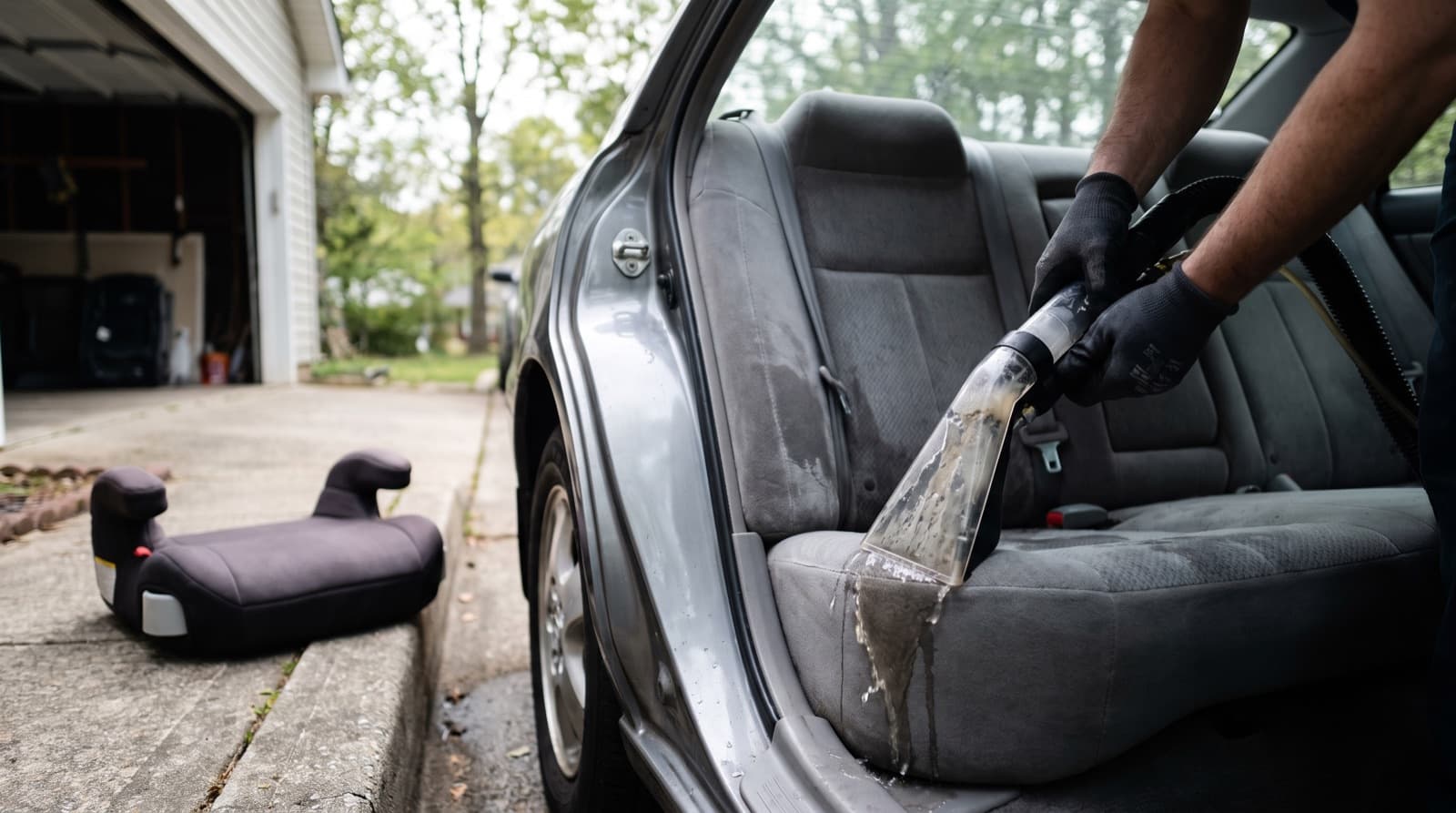
- Steam clean seats, carpet, and the headliner to loosen residue and kill bacteria with heat.
- Extract everything with a hot-water extractor, pulling the dirty moisture — and the odor — back out of the material.
- Replace the cabin air filter and treat the vents so the HVAC system stops recirculating the smell.
- Dry the car fully with airflow, because leftover moisture creates its own musty odor.
Which odor removal method actually works?
Not every method does the same job, and some do almost nothing. Here's how the common options compare so you don't waste a Saturday on the wrong one.
| Method | What it does | Best for | Verdict |
|---|---|---|---|
| Air freshener | Adds a scent over the smell | Nothing lasting | Masks for hours, then fails |
| Baking soda | Absorbs some surface odor | Light, fresh smells | Helps a little, not a cure |
| Enzyme cleaner | Digests the organic source | Set-in dog and urine smell | The essential first step |
| Steam + extraction | Lifts and pulls odor from fibers | Seats, carpet, headliner | The core of a real fix |
| Ozone / hydroxyl | Neutralizes trapped and airborne odor | The final 10 percent | A pro finish, not a shortcut |
The San Francisco problem: fog, wet fur, and no garage
SF is rough on a dog owner's car. The marine layer keeps everything a little damp, most of us park on the street with no garage to dry things out, and a trip to Ocean Beach or Fort Funston means wet, sandy fur soaking into the seats. Damp plus organic residue is exactly what bacteria — and smell — need to thrive.
Prevention beats cleanup every time. A few habits keep the odor from ever setting in:
- Use a waterproof, hammock-style seat cover so fur and moisture never reach the upholstery.
- Keep a microfiber towel in the car and dry your dog off before they climb in after Crissy Field or the beach.
- Crack the windows or run the fan to air the cabin out after a wet ride, since a sealed foggy car stays damp for days.
- Change your cabin air filter twice a year — it's cheap, and it stops the vents from holding onto smell.
Pro tip: Heading to Burning Man or Tahoe with the dog? Throw the seat covers and mats in the wash the day you get back — playa dust and trail dirt bond with fur fast.
Can you do this yourself, or should you call a pro?
A light dog smell is a fair DIY project. A pet-hair brush, a pet-store enzyme cleaner, and a rented carpet extractor will handle a car that just smells a bit like your dog.
Some jobs need a pro, though. Set-in urine that soaked through to the seat foam, vomit, or years of buildup usually need a full teardown, commercial steam, and truck-mounted extraction to fully reverse. At that point the padding itself is holding the odor, and household tools can't reach it.
Ozone is the other line. It works, but the gas is harmful to breathe and can dry out or crack rubber and leather if it's overdone, so it belongs with a trained detailer who runs it in an empty, sealed car and airs it out properly — not something to try in your driveway with a cheap machine.
Either way, we'll tell you honestly which camp your car is in. If a quick enzyme treatment will fix it, that's exactly what we'll say.
Frequently Asked Questions
Does baking soda really remove pet odor from a car?
Baking soda absorbs some surface odor and it's a fine helper, but it won't remove set-in pet smell on its own. It can't reach the oils and bacteria soaked deep into carpet and seat padding. Use it as a light freshener between deeper cleanings, not as your main fix.
Will an air freshener get rid of dog smell?
No. Air fresheners add a scent on top of the odor, so the dog smell returns as soon as the fragrance fades, usually within hours. To actually remove it you have to break down the organic source with an enzyme cleaner and pull it out with steam and extraction.
Is ozone treatment safe for my car?
Ozone is effective but should be left to a professional. The gas is harmful to breathe and can dry out or crack rubber, vinyl, and leather if it runs too long, so it needs to be done in an empty, sealed car and then aired out fully. Done correctly, it's a safe and powerful finishing step.
How long does it take to get pet smell out of a car?
A thorough job usually takes a few hours, plus dwell and drying time. Enzyme cleaners need 10 to 15 minutes to work, steam and extraction take time to do right, and the car has to dry completely so it doesn't turn musty. Rushing any of those steps is why the smell so often comes back.
Can Golden Bay Detailing remove pet odor at my home in San Francisco?
Yes. We're a mobile detailer, so we come to your driveway, office, or street parking anywhere in San Francisco and the Peninsula with our own water and power. Our deep interior and odor-removal work covers hair removal, enzyme treatment, steam, and extraction in one visit. Book a free quote and tell us about your dog.
Keep reading from Golden Bay
Still smelling the dog? Let's fix it for good.
Golden Bay Detailing comes to you anywhere in San Francisco with the tools to pull pet odor out for good — not cover it up. Get your free quote today.