Problem Solvers
How to Remove Sticker Residue From Car Paint Safely
Key Takeaways
- To remove sticker residue from a car, soften the adhesive with gentle heat, lift the sticker with a plastic razor, dissolve the leftover glue with isopropyl alcohol or an automotive adhesive remover, then polish away any outline.
- Isopropyl alcohol (70-99%) and dedicated adhesive removers like Goo Gone Automotive or 3M Adhesive Remover are safe on clearcoated paint and glass when you wash the area afterward.
- Never use acetone, nail polish remover, lacquer thinner, or a metal razor blade on car paint, because they strip clearcoat or scratch instantly.
- A metal razor blade is safe on flat glass at a low angle but should never touch painted panels.
- A faint 'ghost' outline left after removal is usually oxidation or etching around where the sticker sat, and it comes out with a light machine polish or paint correction.
To remove sticker residue from a car, soften the adhesive with gentle heat, lift the sticker or decal with a plastic razor, then dissolve the leftover glue with isopropyl alcohol or a dedicated adhesive remover. Always test on a hidden spot first, and match the tool to the surface — glass is tough, but clearcoated paint scratches easily.
The mistake most people make is reaching straight for a fingernail, a metal blade, or whatever solvent is under the sink. That's how you turn a five-minute fix into a scratch or a dull patch that needs correcting.
At Golden Bay Detailing, our technicians pull dealer decals, expired parking permits, and sun-baked bumper stickers off cars across San Francisco every week. Here's the precise, safe method — and exactly what to avoid.
How do you remove sticker residue from a car?
The safe method is the same whether it's a parking permit on the windshield, a dealer badge on the trunk, or old glue left after a bumper sticker: soften, lift, dissolve, then polish. Let the products do the work instead of forcing anything.
Before you start, test your remover on a hidden area — a door jamb or a low corner — to confirm it doesn't affect the finish. And know your surface. Glass is hard and forgiving; paint is soft clearcoat that marks with the wrong tool. The two get different treatment.
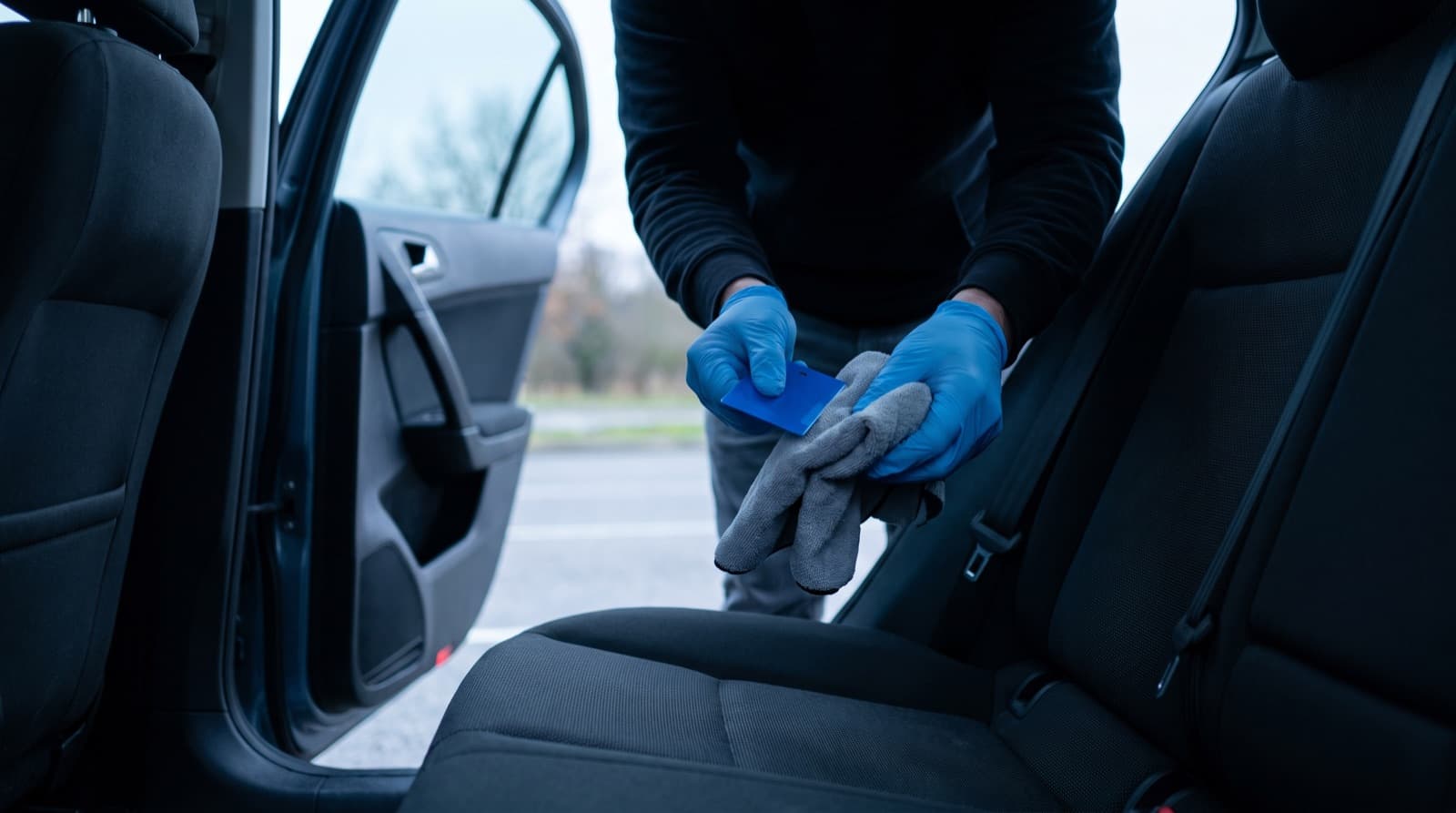
- Heat the sticker for 30-60 seconds to soften the adhesive.
- Lift a corner and peel slowly; on glass, use a plastic razor at a low angle.
- Dissolve the leftover glue with 70-99% isopropyl alcohol or an automotive adhesive remover.
- Wash the spot, dry it, then polish away any faint outline that remains.
Why does heat make the job easier?
Adhesive is basically a soft plastic that grips harder as it cools and cures. Warm it up and it goes gummy, so the sticker peels in one piece instead of shredding into a hundred tiny flakes you then have to scrub.
A regular hair dryer works for most stickers. Hold it four to six inches away and keep it moving over the sticker for 30 to 60 seconds until it's warm to the touch. A heat gun is faster but far easier to overdo — keep it on low, keep it moving, and never park it in one spot, especially near plastic trim or tint film.
On a warm day, parking in the sun for an hour does the same thing for free.
Pro tip: Warm the sticker, not the panel. If the paint or glass gets too hot to rest your palm on, you're overheating it — back the heat off and let it settle before you keep going.
How do you peel a sticker without scratching?
Once the adhesive is warm, lift a corner with your fingernail or the edge of a plastic card and pull slowly at a low, flat angle. Pulling straight up snaps the sticker and leaves more glue behind; pulling back on itself, almost parallel to the surface, brings more of it with you.
On glass, a plastic razor blade is your best friend — held at roughly a 20 to 30 degree angle, it shaves stickers and glue off windows and windshields without marring them. A metal blade also works on flat glass at a low angle, but it is unforgiving on curves and disastrous on paint.
On painted panels, no razor of any kind. Use your fingernail, a plastic card, or a plastic scraper only. If it won't lift by hand, it needs more heat or more solvent, not more force.
What dissolves sticker residue safely?
After the sticker is off, you're usually left with a sticky glue film. This is where a solvent does the heavy lifting. Apply it to a microfiber towel or straight onto the residue, give it 30 to 60 seconds to break the glue down, then wipe it away and repeat if needed.
Here's how the common options compare on a car:
| Product | Safe on paint? | Safe on glass? | Best for | Watch out for |
|---|---|---|---|---|
| 70-99% isopropyl alcohol | Yes | Yes | Light, fresh residue | Can dull wax or sealant — re-protect after |
| Adhesive remover (Goo Gone Automotive, 3M) | Yes | Yes | Stubborn, aged glue | Wash the area after; don't let it dry on |
| WD-40 | Yes, with care | Yes | Loosening residue fast | Leaves an oily film you must wash off fully |
| Clay bar + lubricant | Yes | Yes | Final thin haze of glue | Needs a clean, wet surface to glide |
| Acetone / nail polish remover | No | Yes | — | Strips clearcoat and paint |
| Metal razor blade | No | Yes (flat, low angle) | Scraping flat glass only | Instant scratches on paint |
Pro tip: Whatever solvent you use, wash the spot with car soap and water when you're done. Adhesive removers and WD-40 leave a residue that repels wax and attracts dust if you skip the rinse.
What should you never use on car paint?
Plenty of things dissolve glue. Some of them also dissolve your clearcoat or grind scratches into it. Keep these away from painted panels:
- Acetone and nail polish remover — they strip clearcoat and can leave a permanent dull spot.
- Lacquer thinner, paint thinner, and gasoline — far too aggressive for automotive finishes.
- Metal razor blades or box cutters on paint — one slip is a scratch you'll pay to correct.
- Magic Eraser, Scotch-Brite, or any abrasive pad — they're sanding sponges and they haze paint fast.
- Bug-and-tar removers left to soak — they work, but they're harsh; test first and don't let them sit.
How do you fix the ghost outline left behind?
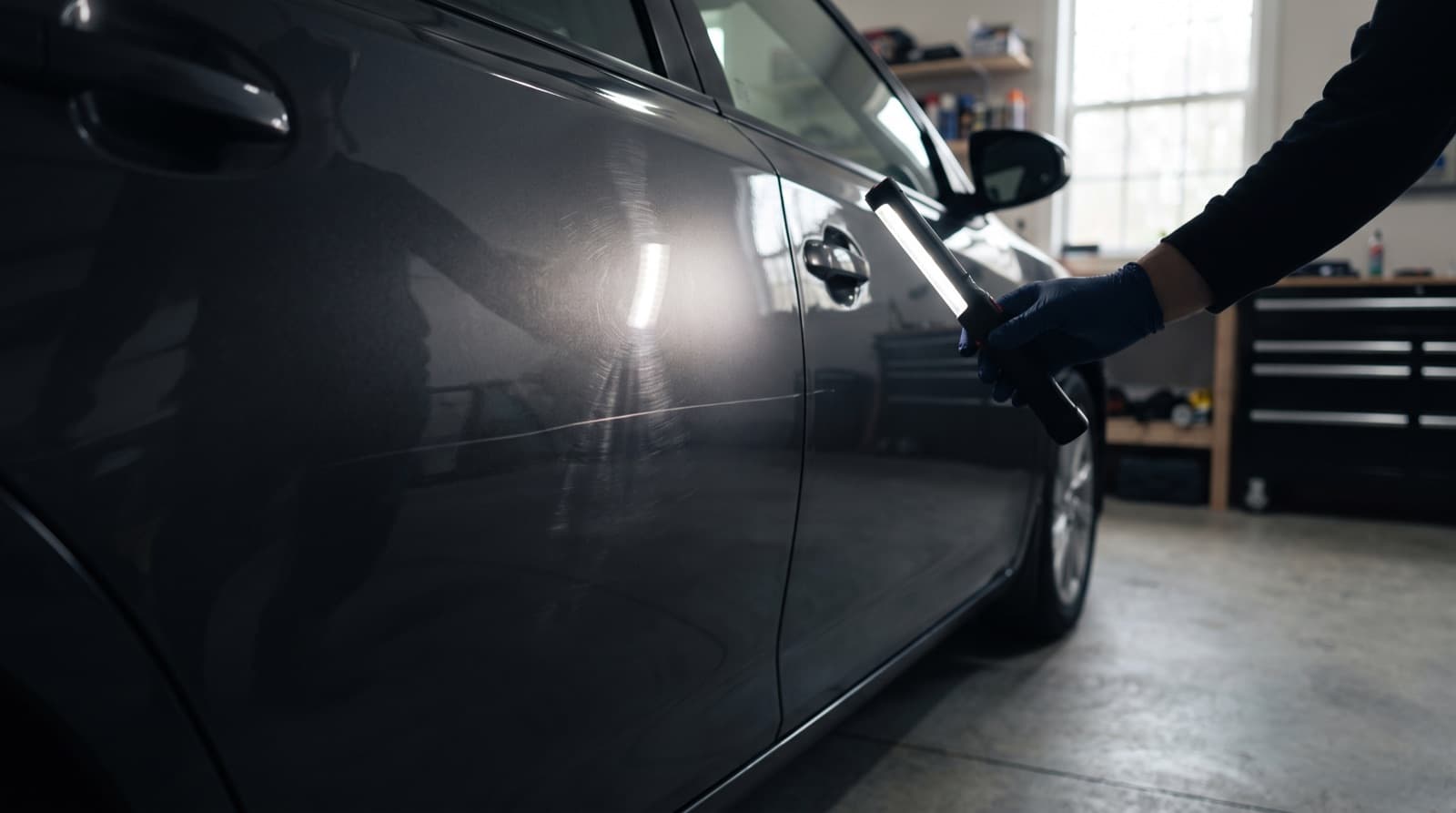
Sometimes the glue is gone but you can still see a faint outline where the sticker used to be. That 'ghost' isn't glue — it's usually oxidation or light etching. The paint around the sticker aged in the sun and UV while the covered patch stayed protected, so you're seeing the difference between weathered and fresh clearcoat.
A clay bar over the whole panel lifts any last microscopic residue and bonded contamination. If the outline is still visible after that, it takes a light machine polish or a proper paint correction to blend the covered area back into the surrounding finish. Hand-polishing with a mild compound handles faint cases; deeper etching needs a machine.
If the sticker sat for years, that outline can be stubborn, and forcing it by hand often just burns through more of your afternoon than it's worth.
The SF twist: parking permits, dealer decals, and sun-baked stickers
San Francisco cars collect stickers — RPP parking permits on the windshield, expired registration tags, dealer badges, and bumper stickers that have baked through a few summers of marine-layer mornings and afternoon UV. The older and more sun-exposed the sticker, the more the adhesive has cured and the more likely you'll find a ghost outline underneath.
Windshield permits come off with heat and a plastic razor from inside the corner; just be gentle near the black frit band and any toll transponder. Long-baked bumper and paint stickers are the ones that leave outlines needing correction.
Because we're fully mobile, we handle this at your curb or office lot — no garage needed. If it's one fresh permit, the method above is genuinely a DIY job. If you've got a faded dealer decal outline, several stickers before a lease return, or you just don't want to risk the clearcoat, that's a quick add-on to a wash or paint correction. Bundling it into a
Pro tip: Selling or returning a leased car? Pull every decal and permit before the inspection. Fresh outlines polish out easily; the longer they cure, the more they cost to fix.
Frequently Asked Questions
Does Goo Gone damage car paint?
Goo Gone Automotive is formulated to be safe on clearcoated car paint and is a solid choice for stubborn glue. The key is to wipe it off within a minute or two and wash the area with car soap afterward — never let it dry on the surface, and always test a hidden spot first.
Will rubbing alcohol damage car paint?
Isopropyl (rubbing) alcohol at 70 to 99 percent is safe on cured automotive paint and is one of the best everyday residue removers. It can strip wax or sealant from that spot, so plan to re-wax or re-seal the area once you're done.
How do you remove sticker residue from car glass or windows?
Glass is much tougher than paint, so you have more options. Warm the sticker, shave it with a plastic or metal razor held at a low angle, then dissolve the remaining glue with isopropyl alcohol or an adhesive remover. Finish with glass cleaner. On tinted windows, skip the metal blade and harsh solvents so you don't damage the film.
How do you get old, sun-baked stickers off a car?
Add more heat and more patience. Warm the sticker thoroughly so the hardened adhesive turns gummy, peel slowly, then soak the residue in adhesive remover and re-apply as needed. Expect a faint outline underneath from years of UV exposure, which a clay bar and a light polish will usually blend away.
Can Golden Bay Detailing remove sticker residue and the outline it leaves?
Yes. We remove decals, permits, and adhesive residue as a mobile add-on anywhere in San Francisco, the Peninsula, and Marin, and we can polish or paint-correct any ghost outline the sticker leaves behind. Request a free quote and tell us what's on the car so we bring the right products.
Keep reading from Golden Bay
Sticker gone but the outline won't budge?
We remove decals, permits, and adhesive residue — then polish away the ghost — right at your curb across SF, the Peninsula, and Marin. Get a free quote today.