Ceramic & Protection
Headlight UV Protection: Sealant vs Ceramic vs Film
Key Takeaways
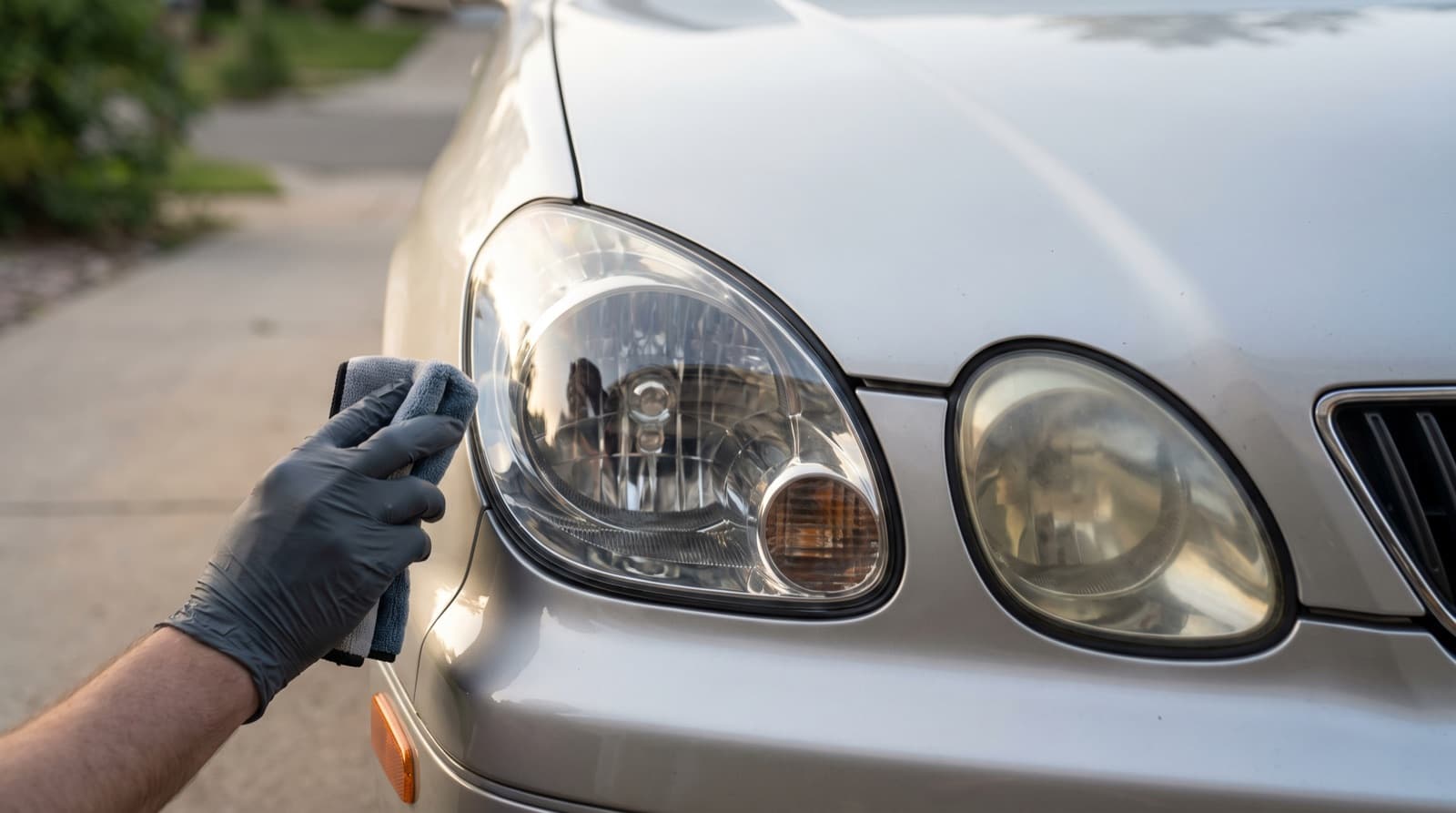
- Restored headlights yellow again because sanding strips the factory hard coat, leaving bare plastic with no UV shield.
- The four main kinds of headlight UV protection are wipe-on sealants, clear coats, ceramic coatings and clear film.
- For headlights, a UV clear coat comes closest to the factory hard coat. Clear film on headlights gives the most defense against rock chips and sand.
- Headlight protection wears out faster on cars parked in full sun, near salt air, or washed with harsh cleaners.
- Golden Bay Detailing restores headlights from $79 to $119 for most vehicles. We come to you in San Francisco, the Peninsula and Marin.
Headlight UV protection is a fresh clear layer that shields plastic lenses from the sun. You can use a wipe-on sealant, a clear coat, a ceramic coating or clear film. Any of them beats a bare lens, which can turn yellow again fast.
Most headlight lenses are made of a tough plastic called polycarbonate. The factory adds a thin hard coat that blocks UV (the part of sunlight that breaks down plastic). Once that coat wears off, or gets sanded off in a restoration, the plastic has no shield left.
Why do restored headlights turn yellow again?
New lenses leave the factory with a thin hard coat. It holds UV blockers that keep the plastic clear. Sun, heat and harsh soaps wear it down over the years.
When a lens turns yellow, that coat has failed. Restoring it means sanding off the damaged layer and polishing the plastic clear again. The sanding also removes any factory coat that was left.
So a freshly restored lens is bare plastic. It looks great, but nothing blocks the sun. Skip the protection step and the haze comes back, often much sooner than the factory coat lasted.
Our headlight restoration guide covers sanding and polishing. This post covers what goes on the lens next.
Watch for these signs that a lens has lost its shield:
- The top of the lens goes cloudy first, since it faces the sky.
- Tiny spiderweb cracks show in the surface when light hits it.
- Clear flakes or peeling patches appear. That means an old coating is letting go.
- The lens feels rough when you run a clean hand over it.
What are the best options for headlight UV protection?
For a freshly restored lens, a UV clear coat gives the strongest shield. For easy DIY upkeep, a wipe-on UV sealant is simplest. On a new car, a ceramic coating or clear film helps the factory coat last.
A UV sealant for headlights is the easy choice. It is a thin liquid you wipe on by hand, often the last bottle in a headlight kit.
Some brands call it a headlight lens sealer. Since it is thin, it wears off faster than the others.
A UV clear coat for headlights is a real hard layer, much like the one the factory used. It is sprayed or wiped on, then cured.
UV-cured clear hardens under UV light, from a lamp or, with some kits, direct sun. 2K clear is a two-part clear that hardens once the parts mix.
How long any headlight coating lasts depends on how the car lives. Sun, parking and washing habits matter more than the label.
| Option | How it goes on | What it guards against | Upkeep | Best for |
|---|---|---|---|---|
| Wipe-on UV sealant | Wiped on by hand, dries in air | UV and light road grime | Reapply when the lens looks dull; more often if parked outside | DIY upkeep on lenses that are already clear |
| UV clear coat (UV-cured or 2K) | Sprayed or wiped on after taping off, then cured | UV and daily wear, much like the factory coat | Gentle washing; no harsh cleaners | Freshly restored lenses that need a new hard layer |
| Ceramic coating | Wiped on thin, then bonds and hardens | UV, bugs, road film and salt; makes cleaning easy | Hand wash or touchless wash | New cars, or on top of a fully cured sealant or clear coat |
| Clear film (PPF) | Stretched and trimmed by a film installer | Rock chips, sand pitting and UV | Check the edges; replace if it lifts or yellows | Freeway drivers and costly lenses |
Pro tip: Test your lens before you buy anything. Wipe it with a wet towel. If it looks clear while wet but cloudy once dry, it needs restoring before any protection goes on.
Is a ceramic coating good for headlights?
Yes, as a slick top layer. A headlight ceramic coating is a very thin, hard, glass-like layer that bonds to the lens.
Bugs, road film and salt then rinse off with less scrubbing. Many coatings help block UV too.
Some ceramic headlight coatings are made to go straight onto a restored lens, so check the label. A coating made for paint is very thin. On bare plastic, it works best on top of a fully cured UV sealant or clear coat.
Ceramic is a great fit for a new car. The factory coat is still there, and the ceramic helps it last. If you are coating the whole car, ask your installer whether the lenses are included.
Treat a coated lens like coated paint. Hand wash it or use a touchless wash. Skip brush tunnel washes and strong degreasers, which wear down any coating.
Is PPF for headlights worth it?
PPF (paint protection film) is a thick, clear plastic sheet. An installer stretches it over the lens and trims it to fit.
It is the only option here that takes the hit from rock chips and sand. Many films block UV too.
It makes the most sense on new cars, freeway commuters and cars with costly lenses. A chipped film can be peeled off and replaced. A chipped lens cannot.
Film costs more than a sealant and needs a skilled installer.
Edges can lift on very curved lenses, and some cheaper films can yellow with age. Pick clear film, since clear lenses let more light through.
Film is not a fix for a cloudy lens. Put it over haze and you lock the haze in. Restore first, then add film.
We do not install film ourselves, so a film shop is the right call for that step.
How do you apply UV sealant to headlights?
This DIY job is safe on lenses that are already clear. If yours are yellow, restore them first. Otherwise the sealant just seals the haze in.
Follow the steps on your product label, since each one differs a bit. Here is the general flow:
- Check the lens. It should be clear and smooth, with no cracks and no fog inside.
- Wash it with car soap and water. Dry it with a clean microfiber towel.
- Tape off the paint and rubber trim around the lens with painter's tape.
- Wipe the lens with your kit's prep wipe, or rubbing alcohol mixed half and half with water. This strips old wax and oils so the sealant can grip.
- Work outside or with the garage door open for fresh air.
- Pick a shady spot on a dry day. The lens should feel cool, with no dew or fog on it.
- Put on gloves. Apply one thin, even coat with straight, overlapping strokes.
- Do not go back over spots that have started to turn tacky.
- Let it cure as long as the label says. Keep it dry and do not wash it until then.
- Peel the tape off slowly when the label says it is safe.
Pro tip: Do one lens, then look at it from a low angle in daylight. Streaks and dry spots are easy to fix before the sealant cures and very hard to fix after.
Why do Bay Area headlights need extra UV protection?
Fog does not block all UV light. A car parked on a gray street in the Sunset still takes sun every day. Sunny spots like the Mission, Potrero Hill and much of Marin get even more.
Street parking means no roof overhead. On a steep hillside driveway, a car parked nose-up tilts its lenses toward the sky. That puts the top edge in the sun for hours.
Near the water, salt air and wet fog leave a film on the lenses. Wind off the beach can carry sand that pits soft plastic. Rain season adds road grime, and people often scrub it off with harsh cleaners.
These habits make any headlight protection wear out faster:
- Parking outside in full sun all day.
- Living near the coast, with salt air and blowing sand.
- Brush tunnel washes and strong degreasers.
- Ammonia glass cleaner, or strong solvents like acetone, lacquer thinner or brake cleaner.
- Lots of freeway miles, with rock chips and bug hits.
Pro tip: When you can, park nose-away from the afternoon sun or in the shade of a building. Give the lenses a quick look each time you wash. Top up the sealant at the first sign of dullness.
When should you call a pro for headlight protection?
A wipe-on sealant on a clear lens is an easy weekend job. Call a pro when the lens needs more than a top-up:
- Your lenses are yellow, cloudy or rough. They need restoring before any protection goes on.
- An old coating is peeling or flaking. It has to come off fully first, or the new layer will not stick.
- You want a sprayed clear coat. Two-part sprays give off harmful fumes and call for a real respirator and a safe place to work.
- The lenses are costly LED units, and a slip with sandpaper would hurt.
- You see cracks or water inside the housing. That headlight needs repair or replacing, not protecting.
Can Golden Bay Detailing restore and protect my headlights?
Yes. Our headlight restoration runs $79 to $119 for most vehicles. The final price depends on lens condition.
Our technicians sand off the damaged layer, polish the lens clear and seal it with fresh UV protection.
We come to your home, office, apartment garage or a legal street spot. The van brings its own water and power.
We cover all of San Francisco, plus many Peninsula and Marin towns. Request a free quote online, or text a photo of your lenses to (415) 483-5686.
Frequently Asked Questions
Do new headlights need UV protection?
New lenses still have their factory hard coat, so they are protected for now. Adding a ceramic coating, sealant or clear film early helps that coat last longer. It matters most on cars parked outside.
Can you put UV sealant on yellow headlights?
You can, but it will not fix them. The sealant locks the haze under a clear layer. Restore the lens first, then protect it.
How often should you reapply headlight UV sealant?
It depends on sun, parking and washing, not the calendar. Reapply when the lens looks dull or the top edge starts to haze. Street-parked cars need it more often than garaged ones.
Is a UV sealant the same as a clear coat?
No. A sealant is a thin liquid you wipe on by hand. A clear coat is a thicker, harder layer. It is sprayed or wiped on, then cured, much like the factory coat.
Can I use clear coat spray paint on headlights?
A regular one-part spray can clear is made for paint, not lenses. It often has weak UV blockers and can yellow or peel on plastic. A 2K or UV-cured clear made for headlights is the safer pick.
Can I just wax my headlights?
Wax adds shine and a little protection, but it wears off quickly. Think of it as a short top-up, not real UV protection.
Does Golden Bay Detailing restore and protect headlights?
Yes, our headlight restoration runs $79 to $119 for most vehicles and ends with fresh UV protection. We come to you across San Francisco, the Peninsula and Marin. Request a free quote online or call (415) 483-5686.
Keep reading from Golden Bay
Keep Your Headlights Clear for Longer
Get a free quote for headlight restoration with fresh UV protection. Our technicians come to you across San Francisco, the Peninsula and Marin.