Problem Solvers
How to Get Smoke Smell Out of a Car Fast: Real Fixes
Key Takeaways
- The fastest way to cut smoke smell is a deep vacuum, a wipe-down of every hard surface, a fresh cabin air filter, and baking soda or activated charcoal left in the car overnight.
- Smoke odor lingers because tar and fine particles soak into the headliner, seat foam, carpet padding, and HVAC vents, which surface sprays cannot reach.
- The durable fix is a full interior deep clean followed by an ozone or hydroxyl treatment that neutralizes odor at the source instead of masking it.
- Ozone works fast but must be run in an empty car and aired out fully afterward, because ozone is a respiratory and eye irritant.
- Heavy smoker cars, or cars where the smell returns after cleaning, usually need a professional to reach trapped odor and treat the ventilation system.
To get smoke smell out of a car fast, start with a deep vacuum, wipe every hard surface with a diluted all-purpose cleaner, swap the cabin air filter, and set out baking soda or activated charcoal overnight. Those four steps knock down most of the odor in about an hour. The catch is that they rarely kill it for good.
Cigarette and smoke smell is stubborn because tar and microscopic particles soak into the soft surfaces you can't wipe — the headliner, the seat foam, the carpet padding, and the air-conditioning vents. Surface sprays only mask what's trapped underneath.
This guide splits the job into two parts: the quick wins you can do today, and the real fix — a deep clean paired with ozone or a hydroxyl generator — that removes the smell instead of hiding it.
What actually gets smoke smell out of a car fast?
The fastest real progress comes from removing the source, not spraying over it. In one focused hour you can pull out most of the loose smoke residue with a vacuum, a good cleaner, and an odor absorber.
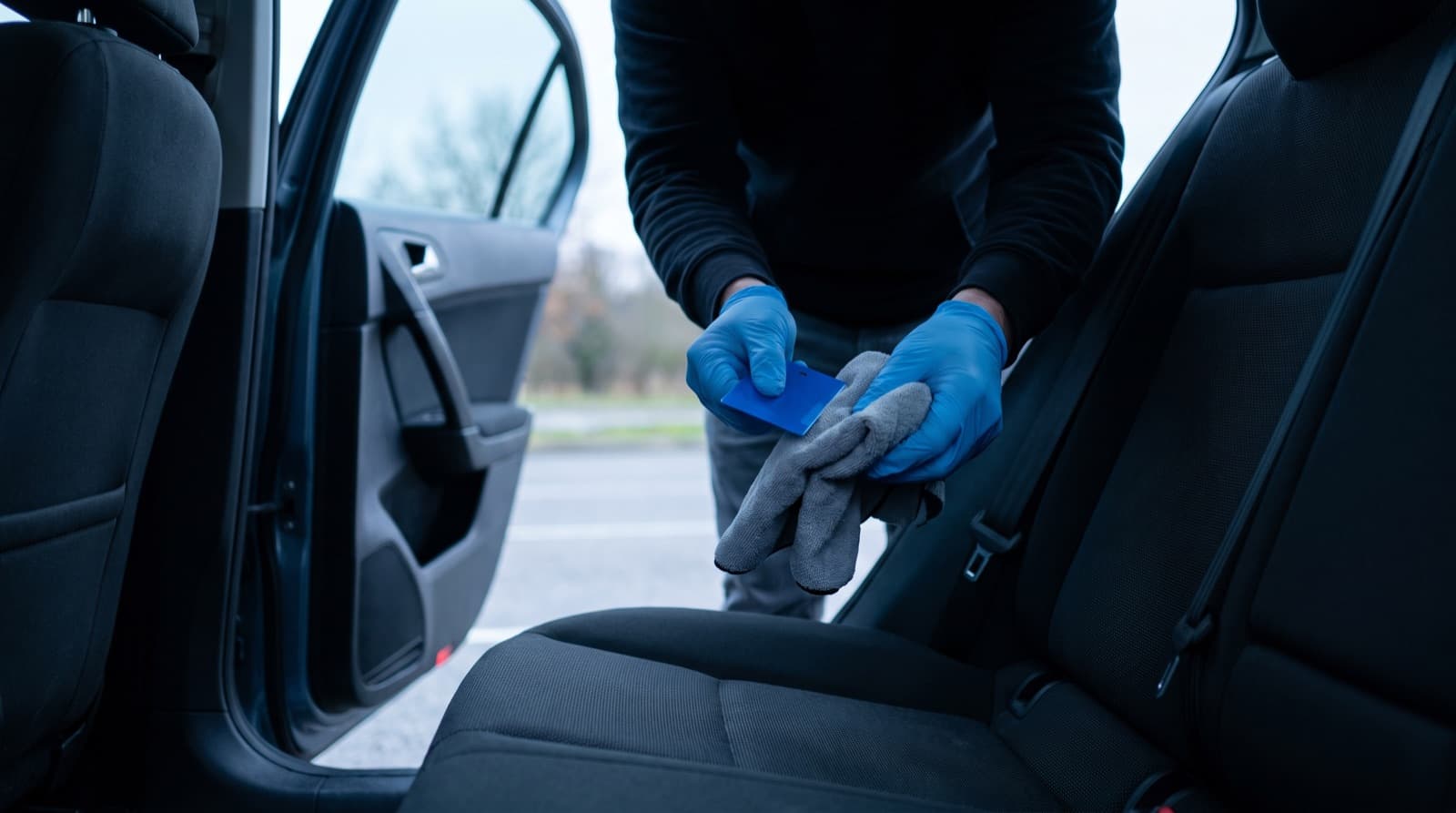
- Vacuum every surface — seats, carpet, trunk, and between the cushions — to lift ash and particles.
- Wipe all hard surfaces (dash, doors, console, steering wheel, glass) with a diluted all-purpose cleaner.
- Replace the cabin air filter, which traps smoke and keeps recirculating it through the vents.
- Leave an open box of baking soda or a bag of activated charcoal in the car overnight to absorb what's left.
Pro tip: This won't fully erase a longtime smoker's car, but it makes a fresh, casual smoke smell far more bearable by the next morning.
Why does the smoke smell keep coming back?
Smoke isn't just an odor floating in the air — it's tar and fine particles that settle into every porous surface. You wipe the dash, the smell fades for an hour, then it returns as the soft surfaces keep releasing it.
The worst offenders are the headliner (the fabric ceiling), the seat foam, the carpet padding, and the HVAC system. Every time you run the fan or AC, air pulls through smoke-coated vents and the evaporator and carries the smell right back into the cabin.
Pro tip: Owner tip: if the smell hits you hardest the moment you turn on the AC, the odor is living in your vents and evaporator — cleaning the seats alone will never fix that.
The 1-hour quick wins (do these first)
Before you spend money on treatments, do the free and cheap steps. They remove the source material that any deeper treatment would otherwise have to fight through.
- Deep vacuum: use a crevice tool on seat seams, floor mats, and the trunk. Pull the mats out and beat them clean.
- Hard-surface wipe: diluted all-purpose cleaner on a microfiber for the dash, doors, console, and headliner edges — don't soak the headliner fabric.
- Glass: smoke leaves an oily film on the inside of the windshield. An auto glass cleaner cuts both the glare and the odor.
- Cabin filter: a $15 to $30 part on most cars, often a ten-minute swap behind the glovebox.
- Absorbers overnight: baking soda, activated charcoal, or even a bowl of white vinegar left in a closed car pulls odor out of the air.
Quick fix vs. real fix: what each method does
Here's how the common methods stack up. Notice that everything under an hour reduces the smell but doesn't remove it — the durable results come from the last two rows.
| Method | Time | What it does | Kills smell for good? |
|---|---|---|---|
| Deep vacuum + wipe-down | 30-60 min | Removes loose ash, tar film, particles | No — reduces only |
| New cabin air filter | 10 min | Stops vents recirculating smoke | No — but essential |
| Baking soda / charcoal | Overnight | Absorbs airborne odor | No — temporary |
| Odor spray / enzyme cleaner | 15 min | Neutralizes surface odor | Partly, on soft surfaces |
| Full interior deep clean | 2-4 hrs | Extracts odor from foam, carpet, headliner | Mostly |
| Ozone or hydroxyl treatment | 1-8 hrs | Neutralizes odor in air, vents, all surfaces | Yes, when paired with a deep clean |
The real fix: deep clean plus ozone or hydroxyl
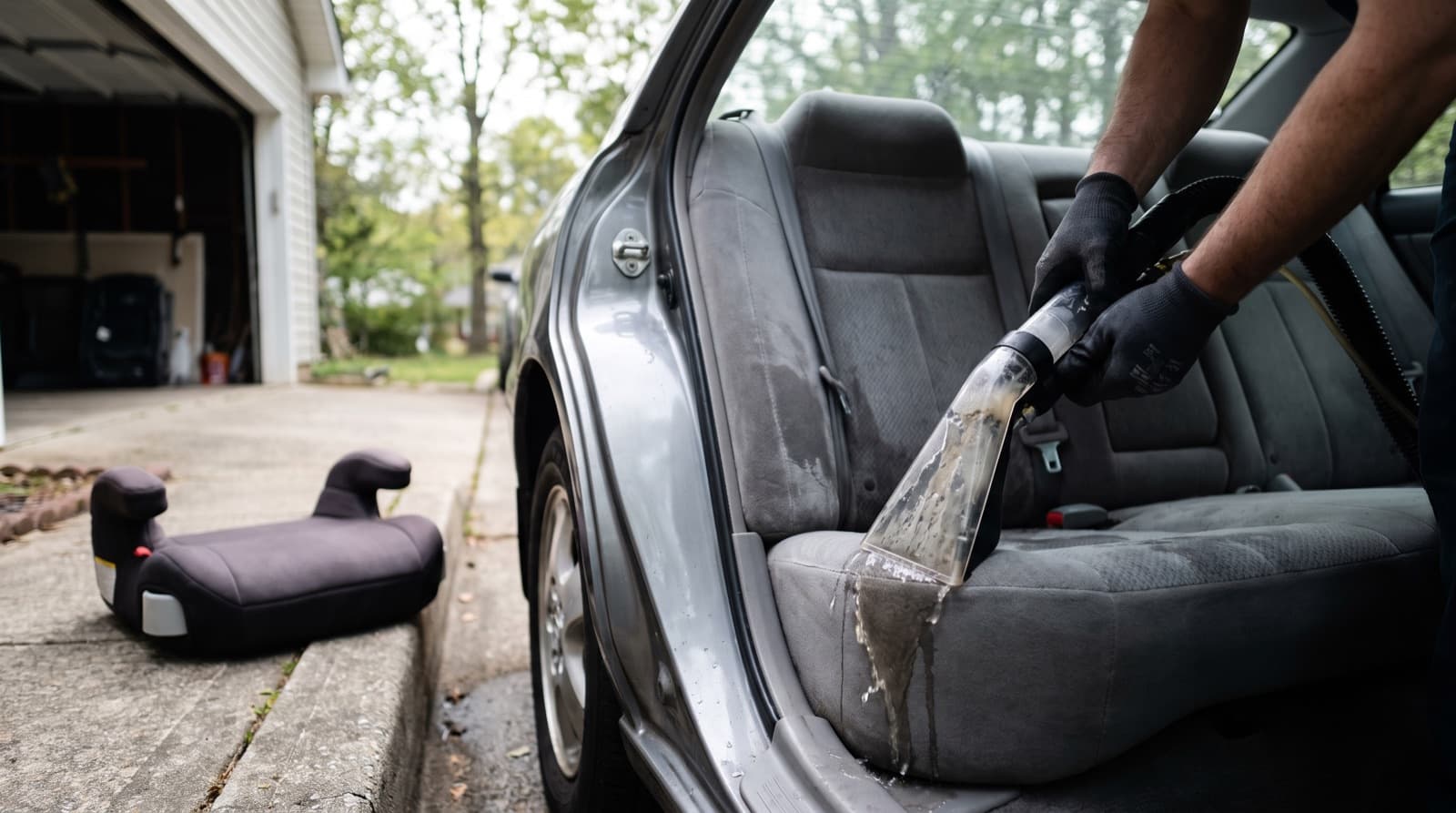
When the smell is baked in — a longtime smoker's car, a smoke-damaged used buy, or a rental gone wrong — the durable fix is two steps. First, a full interior deep clean with hot-water extraction and steam to physically remove tar from the carpet, upholstery, and headliner. Second, an air-based treatment that neutralizes whatever is left in the vents and cabin air.
Ozone treatment is the fast, powerful option. An ozone generator floods the sealed car with ozone (O3) that chemically breaks down odor molecules, including deep inside the HVAC system. It usually runs from 30 minutes to a few hours.
Ozone is not a set-and-forget spray, though. It has to run in an empty car with the fan circulating, and the car must air out fully afterward, because ozone is a lung and eye irritant. Overusing it can also dry out rubber seals and leather over time.
A hydroxyl generator is the gentler alternative. It's slower — often several hours to overnight — but it's safe to run around people and won't harm interior materials, which is why detailers reach for it on delicate or high-value interiors.
Getting smoke smell out of a car in San Francisco
San Francisco adds its own wrinkle. Most city drivers park on the street or in buildings with no garage, so you can't just leave a car sealed in hot sun to bake the odor out — the reliable heat that helps treatments work isn't there, and the marine layer keeps interiors damp.
Damp, foggy air actually makes smoke smell worse, because moisture reactivates odor trapped in fabric. That's why a quick spray in a cold, humid car in the Sunset can smell fine at noon and turn sour again by morning.
This is where mobile detailing helps. We bring our own water and power to your driveway, curb, or office in the city, the Peninsula, or Marin, run the deep clean and treatment on site, and you skip driving a smoke-damaged car across town to a shop.
When should you call a pro?
DIY is completely fine for a light, recent smoke smell — a few cigarettes, a vape session, or one passenger who lit up once. The quick wins above will usually handle it.
Call a pro when the smell returns after you clean, when it's a heavy smoker's car, when it comes through the vents, or when you're prepping a car for sale or lease return and it needs to smell neutral to a stranger. Pros have extractors, steam, and ozone or hydroxyl equipment that reach what household methods can't.
Pro tip: Owner tip: if you're buying a used car with a smoke smell, budget for a professional deep clean and ozone treatment before you commit — it's far cheaper than living with it or masking it for months.
Frequently Asked Questions
How do I get smoke smell out of my car fast?
Deep vacuum every surface, wipe the hard surfaces with a diluted all-purpose cleaner, replace the cabin air filter, and leave baking soda or activated charcoal in the car overnight. That cuts most of a light smoke smell within a day. Baked-in odor needs a full deep clean plus an ozone or hydroxyl treatment.
Does baking soda really remove smoke smell from a car?
Baking soda absorbs airborne odor, so it helps as a quick, cheap overnight step. But it only pulls smell from the air, not the tar soaked into foam, carpet, and the headliner. Use it alongside a deep clean, not as a standalone fix.
Is ozone treatment safe for my car?
Yes, when it's done correctly: the car is empty, the fan circulates the ozone, and the car airs out fully before anyone gets back in. Ozone is a respiratory irritant, so it's never run while people are inside, and overuse can dry out rubber and leather. A hydroxyl generator is a gentler alternative for delicate interiors.
Why does my car smell like smoke only when the AC is on?
Because smoke residue has coated your HVAC vents and evaporator. When the fan pulls air through them, it carries the odor back into the cabin. Cleaning the seats won't fix it — the ventilation system itself needs to be treated, usually with ozone or hydroxyl.
Can Golden Bay Detailing remove cigarette smoke smell from my car?
Yes. We handle smoke and odor removal as a mobile service across San Francisco, the Peninsula, and Marin, combining a full interior deep clean with an ozone or hydroxyl treatment to neutralize odor at the source. Because we come to you, there's no driving a smoke-damaged car across town. Get a free quote to start.
Keep reading from Golden Bay
Ready to breathe easy in your car again?
Golden Bay Detailing removes smoke and odor at your door across SF, the Peninsula, and Marin. Get a free quote today.