How-To
How to Wash a Car Without Scratching It — Safe Steps
Key Takeaways
- To wash a car without scratching it, use the two-bucket method, a clean microfiber mitt, and wash from the wheels first and the roof down so you never drag grit across the paint.
- Most swirl marks are self-inflicted by automatic brush tunnel washes and dirty sponges that grind trapped grit into the clear coat.
- The single most important habit is to never let a dirty mitt touch your paint — rinse the grit off after every panel and wash in straight lines, not circles.
- A grit guard in the bottom of each bucket costs about $10 and traps sunken dirt so it never gets back onto your mitt.
- Never let a car air-dry; dry it right away with a plush microfiber towel to prevent mineral spots.
To wash a car without scratching it, use the two-bucket method, a clean microfiber mitt, and wash from the wheels first and the roof down — so you never drag grit across the paint. That one idea, keeping dirt off the mitt, prevents almost every swirl mark.
Our technicians have hand-washed over 500 cars around San Francisco, and we can tell you most scratches are not from rocks or bad luck. They come from how the car gets washed. Automatic tunnel washes and dirty sponges do more paint damage than the road ever will.
This guide walks through the exact steps our technicians use: the two-bucket method, grit guards, the right mitt and drying, and the wash order that keeps grit moving away from your paint instead of into it.
Why does washing a car leave swirl marks?
Swirl marks are thousands of tiny scratches in your clear coat. You usually notice them as fine spider-web circles under direct sunlight or a garage light. They come from one thing: dragging dirt across the paint instead of lifting it off.
Most swirls are self-inflicted. The two biggest culprits are automatic tunnel washes and dirty sponges. A brush tunnel runs the same stiff bristles over hundreds of cars a day, grinding grit from other people's paint into yours. A sponge or old bath towel traps sand in its pores and sands your finish with every pass.
- Automatic brush tunnels: shared bristles drag other cars' grit across your clear coat.
- Dirty sponges and bath towels: they hold sand and release it back onto the paint.
- Wiping a dry, dusty car: even a quick wipe with a rag grinds dust straight in.
- Washing in circles: circular motions make swirls show up worse under the sun.
The one habit that protects paint most
If you remember one thing, remember this: never let a dirty mitt touch your paint. Every scratch starts when a piece of grit gets caught between your mitt and the clear coat. Keep the grit off the mitt and you stop almost all swirls.
That is why pros rinse the mitt after every panel and wipe in straight lines, not circles. Wash one section, rinse the grit out, reload with clean soap, move on. It feels slow the first time. After that it is muscle memory.
Pro tip: Wash top to bottom and rinse your mitt in the clean-water bucket after every single panel. The lower rockers and bumpers hold the most grit, so save them for last — that way road dirt never rides up onto your hood or doors.
How to wash a car with the two-bucket method
The two-bucket method is the simplest way to wash a car without scratching it. One bucket holds clean soapy water. The other holds plain rinse water. You wash with the soap, then rinse the dirty mitt in the rinse bucket before reloading — so grit ends up in the rinse water, not back on your paint.
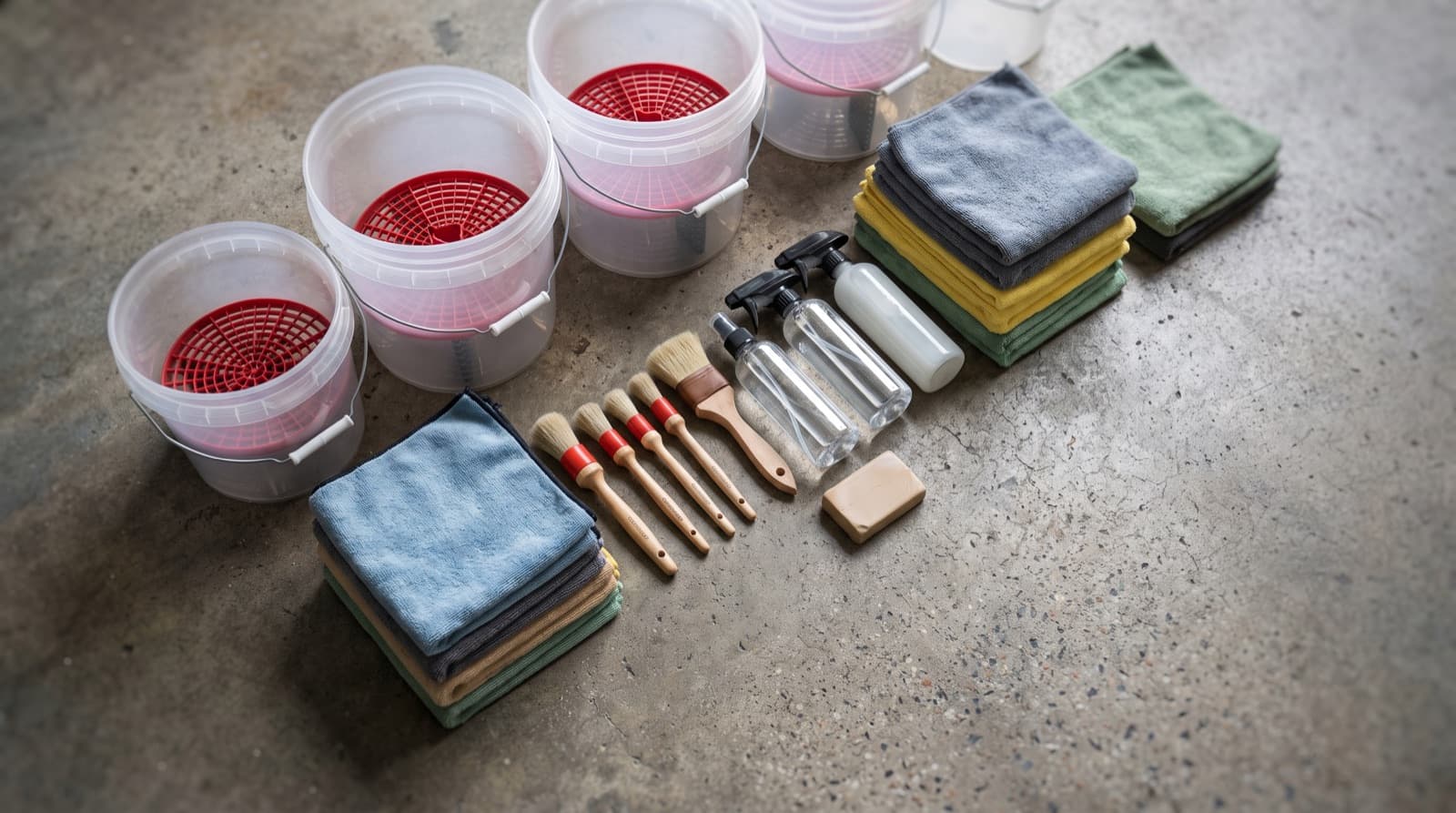
- Fill two buckets: one with car shampoo and water, one with plain rinse water. Drop a grit guard in the bottom of each.
- Rinse the whole car with a hose first to knock off loose dirt before you touch it.
- Load your mitt from the soap bucket and wash one panel, top to bottom, in straight lines.
- Rinse the mitt in the rinse bucket, scrubbing it against the grit guard to release trapped dirt.
- Reload from the soap bucket and move to the next panel. Repeat, working downward.
- Rinse the car and dry it right away with a clean, plush microfiber towel.
Pro tip: A grit guard is a $10 plastic grate that sits in the bottom of the bucket. It traps sunken grit so you never dunk your mitt back into it. It is the cheapest paint insurance you can buy.
Wash in the right order: wheels first, top to bottom
Order matters as much as method. Always wash the wheels first, then clean the paint from the roof down.
Wheels and tires are the dirtiest part of the car — brake dust, road grime, and coarse grit. If you save them for last, you have already loaded your mitt and buckets with wheel filth. Do them first with a separate wheel mitt and separate bucket, then switch to the paint with clean gear.
- Wheels and tires first — use a dedicated wheel mitt, brush, and bucket you never use on paint.
- Then rinse the whole car, top to bottom.
- Wash the roof, glass, and upper panels next — the cleanest areas.
- Work down to the hood, doors, and finally the lower bumpers and rockers — the dirtiest paint.
Pro tip: Keep a separate mitt and bucket for wheels forever. Wheel grit is the coarsest on the car, and one crossover onto a paint mitt undoes everything else you did right.
Pick tools that don't scratch: mitts, soap, and drying
Your tools decide how gentle the wash is. Soft, plush, and clean beats stiff, cheap, and dry every time. Here is what to reach for and what to leave in the garage.
| Step | Use this | Skip this | Why it matters |
|---|---|---|---|
| Wash mitt | Plush microfiber or lambswool mitt | Sponge, brush, or bath towel | Deep pile lifts grit away from paint instead of grinding it in |
| Soap | Dedicated pH-neutral car shampoo | Dish soap or laundry detergent | Dish soap strips wax and dries out trim; car shampoo lubricates the wash |
| Drying | Large plush microfiber towel or blower | Chamois, old T-shirt, or air-drying | Air-drying leaves water spots; rough cloth drags leftover grit |
| Glide | Quick-detailer spray as drying lube | Dry buffing the panel | Lube lets the towel slide instead of dragging dirt across paint |
Pro tip: Never let a car air-dry, especially in a hard-water area. The minerals bake onto the paint as spots that a normal wash won't remove. Dry right away with a plush towel and a mist of quick-detailer for glide.
Are automatic and tunnel car washes safe?
Brush tunnel washes are the fastest way to swirl your paint. Touchless washes are safer but weaker. If you want a hands-off option, a touchless wash beats a brush wash — but nothing protects paint like a careful hand wash.
| Wash method | Swirl risk | Notes |
|---|---|---|
| Brush / tunnel wash | High | Shared stiff bristles grind grit from other cars into your clear coat |
| Automatic soft-touch cloth | Medium-High | Cloth still holds grit and drags it — better than bristles, still not safe |
| Touchless (high-pressure, no contact) | Low | No brushes, but weak on bonded grime; fine as a rinse between hand washes |
| Single-bucket hand wash | Medium | Better than a tunnel, but grit builds up in the one bucket |
| Two-bucket + grit guard hand wash | Very Low | The safest DIY method — grit stays out of the wash water |
How to wash your car with no garage in San Francisco
San Francisco makes safe washing harder. Fog and marine-layer moisture keep cars damp, salt air speeds up grime, and a wet panel dries into spots the moment the sun hits it. Add street parking and no garage, and a proper two-bucket wash in your building's driveway is not always realistic.
A few things help. Wash in the shade or early morning so the car does not flash-dry into spots. Use filtered or deionized water if you can get it. And if you live in an apartment with no hose access, a mobile detailer brings their own water and power right to your curb or office.
Pro tip: We hand-wash at your home or office anywhere in SF and down the Peninsula — two buckets, grit guards, plush mitts, and never a tunnel brush. If your paint already has swirls, a one-step paint correction removes them before a good wash routine keeps them gone.
Frequently Asked Questions
Does hand washing scratch a car?
Hand washing only scratches your car if you use dirty or rough tools. A clean plush mitt, two buckets, and a grit guard let you lift dirt off instead of grinding it in. Done right, hand washing is the safest way to clean paint.
How do I stop swirl marks when washing my car?
Never drag a dirty mitt across the paint. Use the two-bucket method, rinse your mitt after every panel, wash in straight lines, and dry with a plush microfiber towel. Skip automatic brush tunnels, which cause most swirls in the first place.
Is a touchless car wash safe for paint?
Touchless washes are safer than brush tunnels because nothing physically touches your paint. They rely on high-pressure water and strong soaps instead. The trade-off is they clean less thoroughly, so they work best as a quick rinse between proper hand washes.
Can you remove swirl marks that are already there?
Yes. Swirls live in the clear coat, and a paint correction machine-polishes that layer to erase them. A one-step correction handles light swirls, while deeper marks need a two-step. After correcting, a careful wash routine keeps them from coming back.
What soap should I use to wash my car?
Use a dedicated pH-neutral car shampoo, never dish soap or laundry detergent. Dish soap strips wax and sealant and dries out plastic trim. Car shampoo adds lubrication so your mitt glides over grit instead of grinding it into the paint.
Do I need a garage to wash my car safely in San Francisco?
No. You can hand-wash safely on the street or in a driveway if you work in the shade and dry the car fast to beat water spots. If you have no hose or space, a mobile detailer like Golden Bay brings the water, power, and gear to your SF or Peninsula curb.
Keep reading from Golden Bay
Rather Skip the Buckets? We'll Wash It Right.
Golden Bay brings the two-bucket method, our own water, and 500-plus cars of experience to your San Francisco curb. Text us for a free quote and an exact price in minutes.