How-To
Car Detailing Tips: 12 Pro Habits Home Detailers Miss
Key Takeaways
- The highest-impact car detailing tips are to wash top to bottom, use clean high-GSM microfiber towels, work in the shade on a cool panel, finish one section at a time, and apply protection as soon as the surface is clean.
- Washing in the wrong order, or with a single dirty bucket and towel, is the number-one cause of swirl marks and light scratches in clearcoat.
- Direct sun and a hot panel make soap and water flash-dry, which bakes on water spots and streaks, so shade and a cool surface give a cleaner result.
- Freshly washed paint has no protection until you add it, so wax, sealant, or a ceramic coating should go on right after washing or correcting.
- Use separate microfiber towels for wheels, paint, glass, and interior so you never grind wheel grit back into your clearcoat.
The single most important car detailing tip is to slow down and work in the right order: wash top to bottom, clean one panel at a time, and protect the surface as soon as it is clean. Most home detailers get a mediocre result not because they lack expensive products, but because they rush and skip the habits that actually move the needle.
At Golden Bay Detailing, our technicians have detailed more than 500 cars across San Francisco since 2022, and the gap between a driveway wash and a pro finish almost always comes down to technique, not gear.
Below are the highest-impact car detailing tips, each with the reason it matters, so you can get a cleaner, glossier, better-protected car with the tools you already own.
Why do professional details look better than a home wash?
A pro finish comes from process, not magic product. Detailers follow a fixed order every time, which means dirt never gets a second chance to scratch the paint. Home washes usually mix the steps or skip half of them.
The good news is that almost every habit below is free or cheap. You don't need a $200 polisher to see a big jump. You need clean towels, the right order, and a little patience.
- Clean the wheels first, then wash the body from the roof down.
- Decontaminate before you protect, and protect before the paint dries out.
- Use fresh, high-quality microfiber and never let a dropped towel back on the car.
- Stay out of direct sun and work one panel at a time.
Should you wash top to bottom or bottom to top?
Always wash top to bottom, and do the wheels first. Wheels and tires hold the heaviest brake dust and road grime, so if you save them for last you'll splash that grit onto panels you already cleaned.
Then work the body from the roof down. Dirt runs downhill, which makes the lower doors and rocker panels the filthiest part of any car. Washing top to bottom saves the dirtiest sections for last and stops you from dragging grit upward across clean paint.
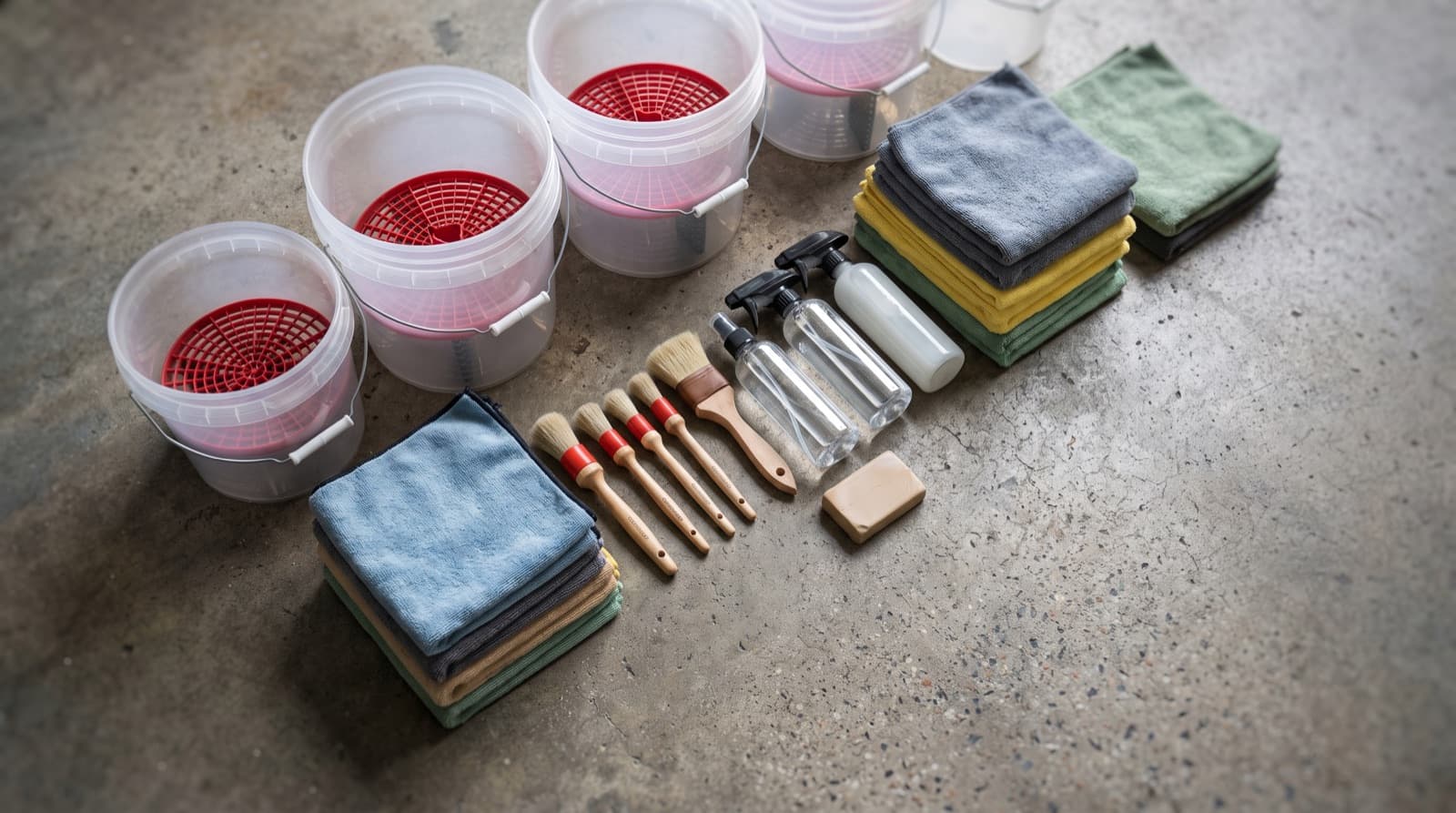
Pro tip: Use two buckets, one with soap and one with plain rinse water, and rinse your mitt in the rinse bucket after every panel. A grit guard in the bottom traps the dirt so it can't get back on your mitt. This one change eliminates most wash-induced swirl marks.
Why do your microfiber towels matter more than your soap?
Cheap, thin towels and re-used shop rags are the fastest way to scratch a car. A quality microfiber towel is thick (300 GSM or higher), plush, and has soft sewn or laser-cut edges so nothing hard ever drags across the paint.
Color-code your towels by job and never mix them. A towel that touched a wheel picks up metal shavings, and if you wipe your hood with it later you've just sanded your clearcoat. The moment a towel hits the ground, it's done for that session, so drop it in the laundry pile.
| Job | Towel type | Why it matters |
|---|---|---|
| Drying paint | Large plush 500+ GSM or twist-loop | Holds water and glides without dragging |
| Buffing wax or sealant | Short-pile 300 to 400 GSM | Removes product without smearing |
| Glass | Waffle-weave, glass only | No wax residue means no streaks |
| Wheels | Dedicated dark-colored towel | Traps brake grit away from paint |
| Interior | All-purpose 300 GSM | Safe on plastics, screens, and leather |
Why should you detail in the shade?
Never wash, wax, or polish in direct sun. On a hot panel, soap and water evaporate before you can rinse, leaving mineral water spots etched into the surface. Wax and quick detailer flash-dry into a haze that's a chore to buff off.
Park in a garage, under a tree, or on the shady side of the street, and touch the panel before you start. If it feels warm, wait or move to shade. Early morning and evening are the easiest times to get a spot-free finish.
Why finish one section at a time?
Work one panel, or a two-by-two-foot area, from start to finish before you move on. If you soap the whole car and then rinse, the first panels are already drying by the time you reach them. The same goes for wax: spread it over the entire car and the first section is baked on before you can remove it.
One section at a time also means you actually see what you're doing. You'll catch tar, sap, or a bug you missed instead of sealing it under a fresh coat of wax.
How do you protect the paint after cleaning?
Bare, freshly washed paint has zero protection. The wash strips off whatever wax or sealant was there, leaving the clearcoat exposed to UV, bird droppings, and fallout until you add a new layer. Always follow a wash with a protectant while the car is still clean.
Do the same inside. After you clean the plastics and leather, wipe on a UV protectant, because SF sun coming through the windshield slowly cracks and fades dashboards over time.
- Quick detailer spray after each wash for fast gloss and a little protection.
- Spray sealant or ceramic spray for weeks of protection in about ten minutes.
- Paste wax for a couple of months of protection, applied by hand.
- A professional ceramic coating for years of protection and a self-cleaning surface.
What are the best detailing tips for San Francisco cars?
San Francisco throws problems most detailing guides ignore. Fog and marine layer keep cars damp, salt air near the coast speeds up corrosion, and letting a car air-dry leaves stubborn mineral spots. Always dry by hand or with a blower instead of letting it drip.
If you street-park without a garage, your paint takes constant sun, tree sap, and bird droppings with no cover. Rinse sap and droppings off the same day because they etch fast in warm weather, and keep a layer of protection on the paint so contaminants sit on top instead of biting into the clearcoat.
Pro tip: No driveway or hose? That's exactly why mobile detailing exists in SF. We bring our own water and power to your home, office, or street spot, so a proper wash-and-protect still happens even if you live in a third-floor walk-up with no garage.
Frequently Asked Questions
What is the most important car detailing tip?
Work in the right order and don't rush. Wash top to bottom with clean microfiber, stay out of direct sun, finish one panel at a time, and protect the paint as soon as it's clean. Those habits matter far more than any single product you buy.
Can I use dish soap to wash my car?
It works in a pinch, but it isn't ideal. Dish soap is built to strip grease, so it also strips any wax or sealant off your paint and leaves it unprotected. Use a pH-neutral car shampoo for normal washing, and reserve dish soap only for a deliberate decon strip-wash right before you wax or coat.
Do expensive microfiber towels really make a difference?
Yes, more than almost any other tool. Thin, low-quality towels have coarse fibers and hard edges that drag across clearcoat and leave fine scratches. A plush, high-GSM towel with soft edges glides over the paint and lifts dirt instead of grinding it in. It's the cheapest upgrade with the biggest payoff.
How often should I wash and detail my car in San Francisco?
In a city like SF, a wash every one to two weeks keeps grime, sap, and bird droppings from etching the paint. A full interior-and-exterior detail two to four times a year keeps protection fresh and the cabin clean. Cars that street-park without a garage usually need both more often.
Which detailing jobs can I do myself, and when should I go pro?
Regular washing, drying, claying, and applying wax or spray sealant are all easy to do at home once you follow the right order. Go pro for paint correction, ceramic coatings, and heavy stain or odor removal, because those need machine polishers, certified products, and experience to avoid damage. At Golden Bay Detailing we handle all of it mobile across San Francisco, so get a free quote and we'll tell you honestly what's worth doing yourself.
Keep reading from Golden Bay
Want a pro finish without the driveway work?
Golden Bay Detailing comes to your home, office, or street spot anywhere in San Francisco, with our own water and power. Get a free quote and we'll handle the wash, correction, and protection for you.