How-To
How to Wash a Car at Home the Right Way, Step by Step
Key Takeaways
- To wash a car at home the right way, rinse it first, clean the wheels, then hand-wash the paint top to bottom with two buckets and a plush microfiber mitt, and dry it right away with a soft towel.
- Use pH-neutral car shampoo, never dish soap or a household sponge, because those strip protection and grind grit into the clear coat.
- The two-bucket method keeps one bucket for soapy water and one for rinsing the mitt, so dirt never rides back onto your paint.
- Always dry a car immediately with a plush microfiber towel; letting it air-dry leaves water spots that a normal wash will not remove.
- A full home wash takes about an hour and is the single best thing you can do for your paint between professional details.
To wash a car at home the right way, rinse it first, clean the wheels, then hand-wash the paint from the roof down using two buckets and a plush microfiber mitt, and dry it right away with a soft towel. Doing it in that order is what keeps your paint clean and swirl-free.
Most people never learned a real wash routine, so they reach for a sponge and a bucket of dish soap and grind grit straight into the clear coat. The good news is the correct method is simple, cheap, and takes about an hour once it clicks.
At Golden Bay Detailing, our technicians have hand-washed more than 500 cars around San Francisco. Here is the exact step-by-step they use, the tools that actually matter, and the mistakes that quietly ruin paint.
What you need to wash a car at home
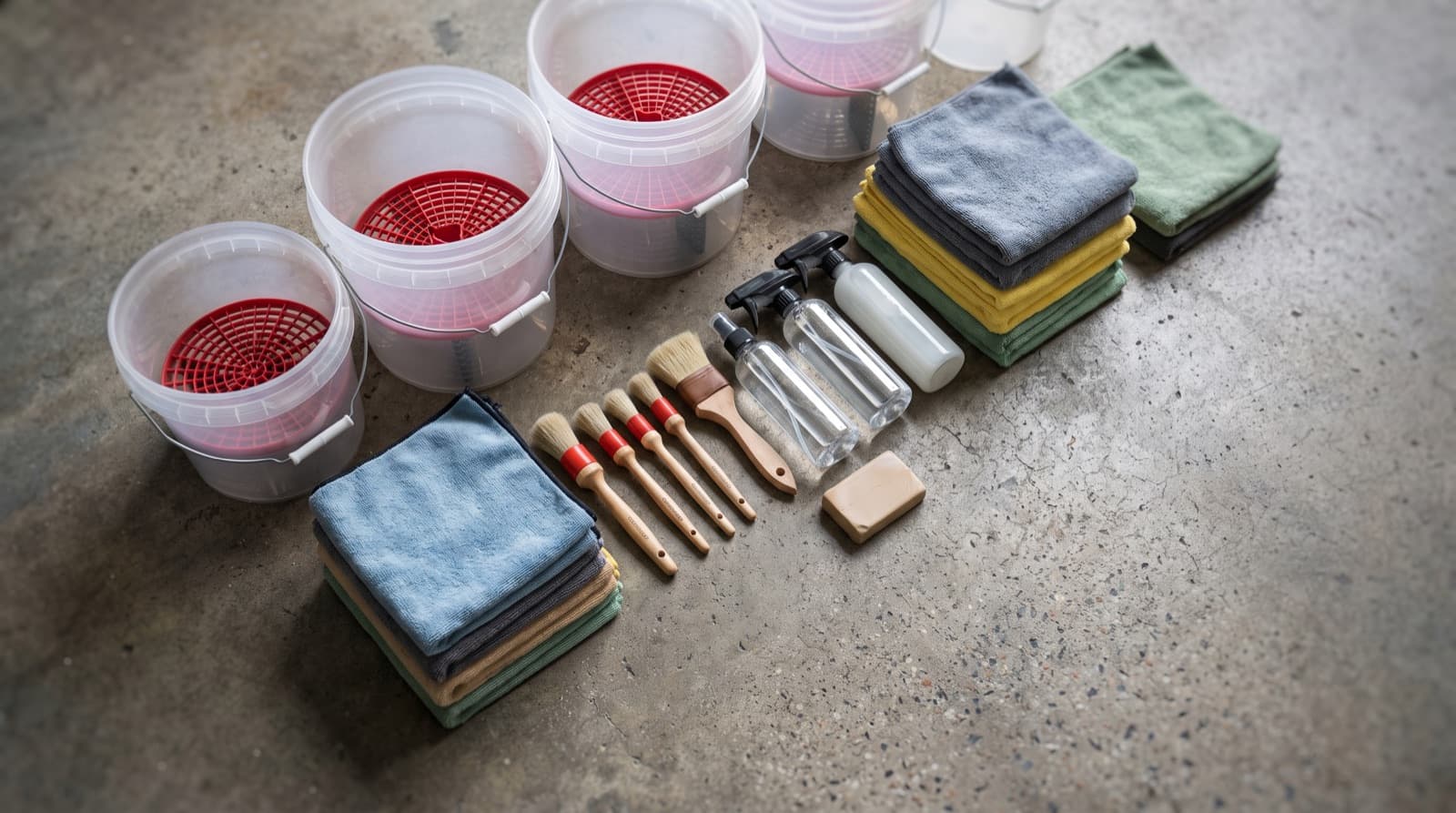
You do not need much, and you do not need the priciest brand. What matters is that every tool is clean and made for paint. Skip the kitchen sponge and the dish soap, because those are what cause most of the damage.
Set everything out before you start so you are not hunting for a towel while a soapy car dries in the sun.
- Two buckets, one for soapy water and one for clean rinse water (five gallons each)
- A grit guard for the bottom of each bucket, about $10, to trap sunken dirt
- pH-neutral car shampoo, not dish soap (Meguiar's Gold Class, Chemical Guys, or Adam's all work)
- A plush microfiber or lambswool wash mitt, never a sponge or bath towel
- A separate bucket, mitt, and brush used only for wheels
- A dedicated wheel cleaner and a soft wheel brush
- One or two large plush microfiber drying towels, or a waffle-weave
- A hose, plus an optional foam cannon for the pre-rinse
How to wash a car in 8 steps
Work in the shade, on cool paint, and go one panel at a time. The whole point of the order below is to move dirt away from your paint, never across it.
- Rinse the whole car first. A thorough pre-rinse floods off loose dust and grit so your mitt never has to drag it. A foam cannon makes this better but is optional.
- Clean the wheels and tires next, before the paint. Wheels hold the coarsest brake dust and grit, so you finish the dirtiest part first with a separate mitt and brush.
- Fill both buckets: soap in one, plain rinse water in the other, with a grit guard in each.
- Dunk the mitt in the soap bucket and wash the roof first, working in straight lines, not circles.
- Wash top to bottom: roof, glass, hood, upper doors, then lower doors, rockers, and bumpers last.
- Rinse the mitt in the clean-water bucket after every panel, then reload with soap. This is the two-bucket method, and it is the heart of a safe wash.
- Rinse the whole car again with a free-flowing sheet of water to carry the soap and dirt off the paint.
- Dry immediately with a plush microfiber towel. Never let it air-dry.
Pro tip: Owner tip: if you ever drop your mitt on the ground, do not put it back on the paint until it is rinsed clean. One pebble stuck in the fibers can scratch a whole panel. Our technicians keep a spare mitt in the kit for exactly this.
The two-bucket method, explained
The two-bucket method is the difference between washing your car and sanding it. One bucket holds your soapy water. The other holds plain water for rinsing the mitt. After each panel you rinse the grit out in the clean bucket before reloading with soap, so dirt never rides back onto your paint.
A grit guard, the cheap plastic grate at the bottom of each bucket, does the quiet work here. When you rinse the mitt, you scrub it against the guard and the loosened grit sinks below it, where it cannot get stirred back up onto your paint.
Pro tip: Owner tip: color-code your buckets. Wheel water and paint water should never mix. We keep the wheel bucket a different color so there is zero chance a mitt goes in the wrong one.
How to dry a car without water spots
Drying is where a lot of good washes fall apart. If you let the car air-dry, the water evaporates and leaves behind its dissolved minerals as chalky spots, and on a sun-warmed panel those bake on fast.
Use a large, plush microfiber drying towel or a waffle-weave. Lay it flat and drag it gently, or blot, but do not scrub. A light mist of quick-detailer spray on each panel gives the towel glide so it never grabs at the paint.
- Dry right away, before the car air-dries, especially in sun or wind
- Use a plush microfiber or waffle-weave towel, not an old bath towel
- Work top to bottom again so drips run onto panels you have not dried yet
- A little quick-detailer spray adds glide and a thin layer of protection
- Get the door jambs, mirrors, and badges, where water hides and drips later
Pro tip: Owner tip: a cordless leaf blower or a car dryer blasts water out of mirrors, grilles, and badge gaps that a towel cannot reach. It sounds like overkill, but it stops those annoying drips that show up ten minutes after you finish.
Car wash mistakes that wreck your paint
Almost every scratch our technicians fix started as a habit, not an accident. Here are the common ones and what to do instead.
| Common mistake | Why it hurts your paint | Do this instead |
|---|---|---|
| Automatic brush tunnel wash | Shared bristles grind other cars' grit into your clear coat | Hand-wash, or use a touchless wash only |
| Dish soap or household cleaner | Strips wax and sealant and dries out trim and rubber | Use pH-neutral car shampoo |
| One bucket and a sponge | The sponge traps sand and sands the paint on every pass | Two buckets, grit guards, and a plush mitt |
| Washing in direct sun | Soap and water dry too fast and leave spots and streaks | Wash in shade on cool paint |
| Letting the car air-dry | Minerals in the water bake on as chalky spots | Dry right away with microfiber |
| Wiping a dry, dusty car | Even a quick rag grinds dust straight into the finish | Always rinse first, never wipe dry dust |
Washing your car in San Francisco: fog, water spots, no driveway
San Francisco makes car washing its own challenge. Marine-layer fog and salt air leave a fine, gritty film on the paint, and our water is hard enough to spot a panel the second it dries. That is why washing in the shade and drying fast matter even more here than in a dry inland city.
The bigger problem for a lot of San Franciscans is simpler: no driveway. If you park on the street, a full two-bucket wash at the curb is tough, and hosing a car down is not always practical. A rinseless wash is a decent option for light upkeep between deeper cleans.
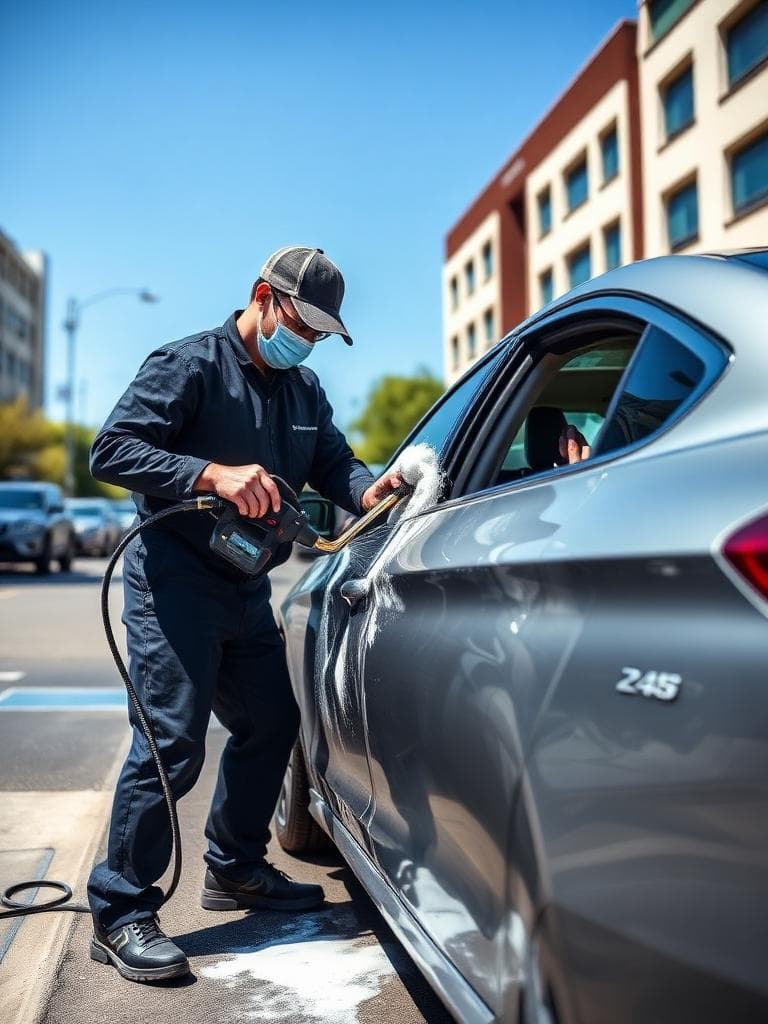
When a street-parked car collects weeks of fog film, tree sap, and road grime, that is where a mobile detail earns its keep. We bring our own water and power to your curb or office anywhere in SF and down the Peninsula, so you never have to find a hose.
Pro tip: Owner tip: a home wash is absolutely worth doing, and it is the best thing you can do for your paint between details. But if your clear coat already shows swirls, a wash will not remove them. That is a one-step paint correction, worth having a pro do once, and then a good wash routine keeps it looking that way.
How often should you wash your car?
For most drivers, wash every two weeks. If you park on the street in SF, near the coast, or under trees, aim for weekly, because salt air, sap, and bird droppings are acidic and eat into paint the longer they sit.
Between full washes, a quick rinse or a rinseless wipe-down keeps grime from building up, so your next real wash is faster and safer.
- Garage-kept, light use: every 2 to 3 weeks
- Street-parked or near the coast: weekly
- After Tahoe road salt, Burning Man playa dust, or a bird bomb: as soon as you can
- Bird droppings and tree sap: spot-clean the same day, because they etch fast
Frequently Asked Questions
Can I use dish soap to wash my car?
No. Dish soap is made to cut grease, so it strips the wax and sealant that protect your paint and dries out your trim and rubber seals over time. Use a pH-neutral car shampoo instead, which lifts dirt without removing protection. It costs about the same and is far safer for the finish.
Do I really need two buckets to wash a car?
It is the single biggest upgrade you can make. One bucket holds soapy water and the other holds clean water for rinsing your mitt, so grit gets rinsed off instead of dragged back onto the paint. If you only have one bucket, you are washing your car with the same dirt you just removed. Two buckets and a pair of grit guards cost very little and prevent most swirl marks.
Is it bad to wash a car in the sun?
Yes, avoid it. In direct sun the soap and water dry before you can rinse them off, leaving streaks and water spots on the paint. Wash in the shade, early morning, or late afternoon on cool paint. If you have to work in the sun, do one small section at a time and rinse quickly.
What is the best thing to dry a car with?
A large, plush microfiber drying towel or a waffle-weave towel. They hold a lot of water, glide over the paint, and will not scratch like an old bath towel or chamois can. Dry right after rinsing, work top to bottom, and add a light mist of quick-detailer spray for extra glide.
How long does it take to wash a car at home?
About 45 minutes to an hour once you know the routine, including wheels, a two-bucket wash, a final rinse, and drying. Your first few washes take longer while the steps become muscle memory. Doing it right at a relaxed pace is still faster and cheaper than fixing swirl marks later.
Can Golden Bay wash my car if I don't have a driveway?
Yes. We are a mobile detailer, so we come to your street parking, office, or curb anywhere in San Francisco and the Peninsula with our own water and power. That is a real fix for the no-driveway, foggy, water-spot reality of SF. Text us at (415) 483-5686 or request a quote online.
Keep reading from Golden Bay
No driveway? No hose? We'll wash it right.
Golden Bay brings the two-bucket wash, our own water and power, and 500-plus cars of experience to your San Francisco curb or office. Text us for a free quote and an exact price in minutes.