How-To
7 Car Wash Mistakes That Wreck Your Paint (And Fixes)
Key Takeaways
- The most damaging car wash mistakes are automatic tunnel brushes, dish soap, using one bucket with a sponge, washing in direct sun, and wiping dry dust off the paint.
- Nearly all paint swirl marks come from friction — dragging trapped dirt across the clear coat with a dirty sponge or a spinning brush.
- The two-bucket method (one wash, one rinse) with a grit guard and a plush microfiber mitt is the single biggest fix for scratch-free washing.
- Never use dish soap on car paint; it strips wax and protective coatings. Use a dedicated pH-neutral car shampoo instead.
- Golden Bay Detailing is a mobile detailer in San Francisco that hand-washes and corrects paint at your home or office, no travel fee in the standard service area.
The fastest way to scratch your car's paint is to wash it wrong, and most people do at least three of these mistakes every single time. The good news: every common car wash mistake has a simple, cheap fix, and none of them require special talent.
Paint damage from washing almost always comes down to one thing — friction. When you drag trapped grit across the clear coat, you carve thousands of tiny scratches called swirl marks. They show up as spider-webbing under the sun and slowly turn a glossy finish dull and hazy.
Below are the seven mistakes we see most often on cars around San Francisco, why each one hurts, and exactly how to fix it. Do these right and your paint stays sharp for years instead of clouding over in months.
Why do car washes cause swirl marks in the first place?
Your paint is protected by a thin layer of clear coat, and it scratches more easily than most people think. When dirt, sand, or brake dust sits on the surface and you rub it with a towel, sponge, or brush, that grit acts like sandpaper.
The result is a web of micro-scratches that catch light. You usually can't see them in shade, but park in direct sun and the swirls jump out across the hood and doors. Almost every swirl mark is self-inflicted during washing or drying — not from driving.
Pro tip: Look at your paint under bright, direct sunlight at an angle. If you see fine circular scratches that appear to spiral out from a point, that's wash-induced swirling — and it's almost always preventable.
Are automatic car washes bad for your paint?
The old-style tunnel washes with spinning cloth or nylon brushes are one of the worst things you can do to your finish. Those brushes scrub hundreds of cars a day and hold onto grit, sand, and grime from every one of them, then grind it into your clear coat.
Touchless automatic washes are gentler because nothing physically rubs the paint, but they rely on strong chemicals to lift dirt and often leave the car poorly rinsed and spotty.
- Fix: Skip the brush tunnels entirely. If you must use a machine, choose a touchless wash.
- Better fix: Hand-wash at home with the two-bucket method, or hire a hand-wash detailer.
- Worth knowing: A single pass through a stiff-brush tunnel can add more swirls than a year of careful hand-washing.
Can you use dish soap to wash a car?
No — dish soap is built to strip grease, and it strips your car's protection right along with it. One wash with dish soap removes any wax, sealant, or the top sacrificial layer of a ceramic coating, leaving bare clear coat exposed to the elements.
Dish soap is also not pH-balanced for automotive paint, so repeated use dries out trim and rubber over time. Use a dedicated pH-neutral car shampoo like Meguiar's Gold Class, Chemical Guys, or a similar car-wash soap. It lubricates the surface so grit slides off instead of grinding in.
Pro tip: If you just applied a ceramic coating or wax, dish soap is the fastest way to undo it. Stick to a coating-safe pH-neutral shampoo to protect your investment.
What is the two-bucket wash method?
The single biggest upgrade you can make is going from one bucket to two. With one bucket, every time you dip your dirty sponge back in, you reload it with the grit you just pulled off the car — then smear it right back on.
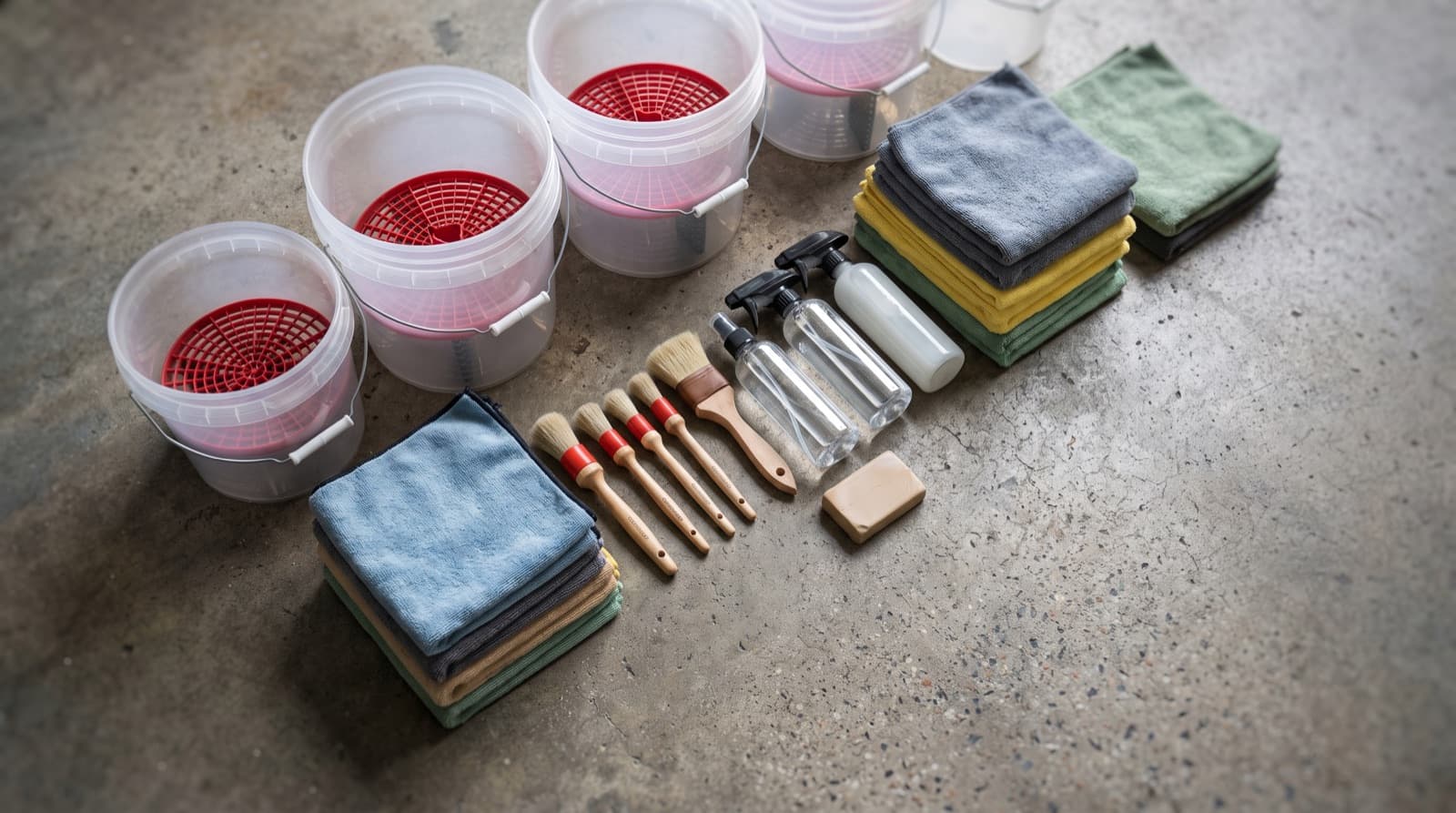
The two-bucket method fixes this. One bucket holds your soapy water, the other holds clean rinse water. You wash a section, then rinse the mitt in the clean bucket before reloading with soap. A grit guard at the bottom of each bucket traps sand so it stays down and away from your mitt.
- Bucket 1: car shampoo and water.
- Bucket 2: clean rinse water with a grit guard.
- Wash top to bottom (the lower panels are dirtiest — do them last).
- Use a plush microfiber wash mitt, not a sponge or brush — a flat sponge traps grit against the paint instead of pulling it up into the fibers.
Is it bad to wash your car in the sun?
Yes. Washing in direct sun or on a hot panel means the water and soap dry before you can rinse and dry them, and that baked-on residue leaves water spots and soap streaks.
Water spots are mineral deposits left behind when water evaporates. In areas with hard water they etch into the clear coat if left too long, and removing them can require polishing. Wash in the shade, early morning, or evening, and keep the whole car wet until you're ready to dry it.
Pro tip: On a warm day, rinse the car and start washing from the shaded side. Work one panel at a time and rinse it before the soap can dry — this alone eliminates most water spotting.
The full list: car wash mistakes and how to fix each one
Here's every common mistake in one place with the fix. Print it, tape it in the garage, and you'll out-wash most detailers.
| Mistake | Why it damages paint | The fix |
|---|---|---|
| Automatic brush tunnel | Shared brushes grind trapped grit into clear coat | Use touchless or hand-wash instead |
| Dish soap | Strips wax, sealant, and ceramic coatings | Use pH-neutral car shampoo |
| One bucket + sponge | Reloads dirt and drags it across paint | Two-bucket method with a grit guard |
| Washing in the sun | Water and soap dry into spots and streaks | Wash in shade, keep panels wet |
| Wiping dry dust off | Dry grit scratches like sandpaper | Rinse first, never rub a dry car |
| Dirty or old towels | Embedded grit and lint scratch the finish | Use clean plush microfiber, wash separately |
| Circular scrubbing | Concentrates swirl marks in tight spirals | Wipe in straight lines, front to back |
How should San Francisco drivers wash their cars?
SF throws a specific set of problems at your paint: salt air near the coast, gritty street-parking film, tree sap, bird droppings, and water spots from fog and marine layer. If you park on the street with no garage, your car collects fine abrasive grime that makes dry-wiping especially risky.
Rinse thoroughly before you ever touch the paint to flush that grit off. If you live in a no-hose apartment, a rinseless wash product like Optimum No Rinse works well for lightly soiled cars. And because standing water in SF is often hard, dry the car promptly with a clean microfiber towel or a plush drying towel to beat the spots.
- Coastal cars: rinse salt off weekly, even a quick hose-down helps.
- Street parkers: never dry-dust — always rinse first.
- No garage or no hose: rinseless wash or hire a mobile detailer who brings their own water and power.
Frequently Asked Questions
Do microfiber towels really scratch less than regular towels?
Yes, when they're clean. Microfiber lifts grit up into its deep fibers instead of dragging it across the paint the way a flat cotton towel or paper towel does. But a microfiber towel that's been dropped on the ground or dried with fabric softener becomes abrasive, so keep your paint towels clean, softener-free, and separate from your wheel and interior rags.
How often should I wash my car to protect the paint?
Every two weeks is a good rhythm for most drivers, and more often if you park on the street or near the coast. The goal isn't just looks — regular washing removes salt, bird droppings, and sap before they etch into the clear coat. Contaminants left sitting cause more permanent damage than the occasional light dust film.
Can swirl marks be removed once they're already there?
Yes. Light swirls can be polished out with a machine and cutting compound in a process called paint correction, which levels the clear coat just enough to erase the fine scratches. Deeper scratches that catch a fingernail may not fully come out. Prevention is far cheaper than correction, which is exactly why washing technique matters so much.
Is a mobile detailer better than washing it myself?
It depends on your time, tools, and where you live. Careful DIY washing with the two-bucket method keeps most cars in great shape. But if you have no garage, no hose, or want a machine correction and ceramic coating done right, a pro saves you the risk. Golden Bay Detailing hand-washes and corrects paint at your home or office anywhere in San Francisco, bringing its own water and power with no travel fee in the standard area.
Keep reading from Golden Bay
Skip the scratches — let us hand-wash it right
Golden Bay Detailing brings the water, power, and pro-grade wash to your driveway or office anywhere in San Francisco. Get a free quote today.