Maintenance & Care
How to Clean Chrome Trim on a Car: Step-by-Step Guide
Key Takeaways
- To clean chrome trim on a car, wash the trim first, identify whether it is real chrome or chrome-look plastic, then use metal polish on true chrome only and a pH-neutral cleaner plus sealant on everything else.
- A 50/50 mix of distilled white vinegar and distilled water dissolves most hard-water spots on chrome within a few minutes of dwell time.
- Grade 0000 steel wool, kept soaked in polish or soapy water, safely removes light pitting and rust flecks from true chrome plating but permanently hazes plated plastic and anodized aluminum.
- Pitting is missing metal, so polishing can hide it but never refills it; chrome pitted deep enough to catch a fingernail needs re-plating or part replacement.
- San Francisco salt air and overnight marine-layer moisture speed up chrome corrosion, so trim here needs rinsing weekly and sealing every two to three months.
To clean chrome trim on a car, wash the area first, figure out whether the trim is real chrome or chrome-look plastic, then treat each one differently: metal polish and light abrasives are fine on true chrome, while plated plastic and anodized aluminum need only a gentle cleaner and a sealant. Skipping that identification step is how most people ruin their trim in about ten seconds of rubbing.
Our technicians have detailed more than 500 cars in San Francisco, and cloudy, spotted, pitted brightwork is one of the most common complaints we hear. It is also one of the fastest wins on a car. Twenty minutes of correct work can make a ten-year-old window surround look factory again.
Here is the process our technicians use in driveways and on street parking across the city, including what to do when the chrome is already pitting from salt air.
How do you clean chrome trim on a car?
The order matters more than the products. Chrome is a thin plating over a base material, and any dirt left on the surface becomes an abrasive the moment you start wiping. Clean first, correct second, protect third.
Work one section at a time, roughly six inches at a stretch, so nothing dries on the surface before you wipe it off.
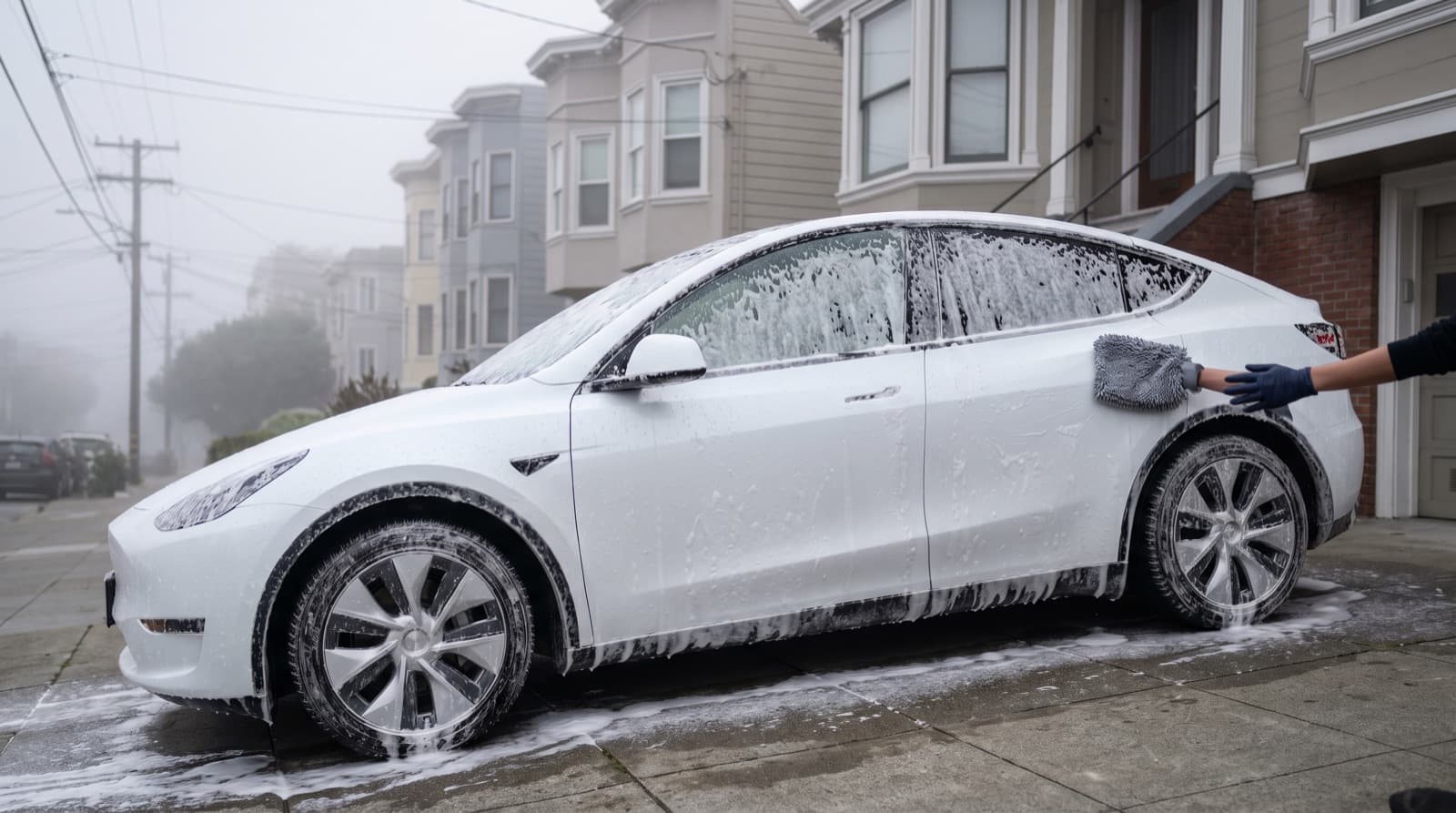
- Rinse and wash the trim with car shampoo and a clean mitt so no grit is left sitting on the surface.
- Spray stubborn deposits with a bug and tar remover or an iron fallout remover and let it dwell two to three minutes.
- Identify the trim type before you reach for polish (the next section covers how).
- Scrub tight edges, badge gaps and grille slats with a soft detailing brush and a pH-neutral all-purpose cleaner diluted around 10:1.
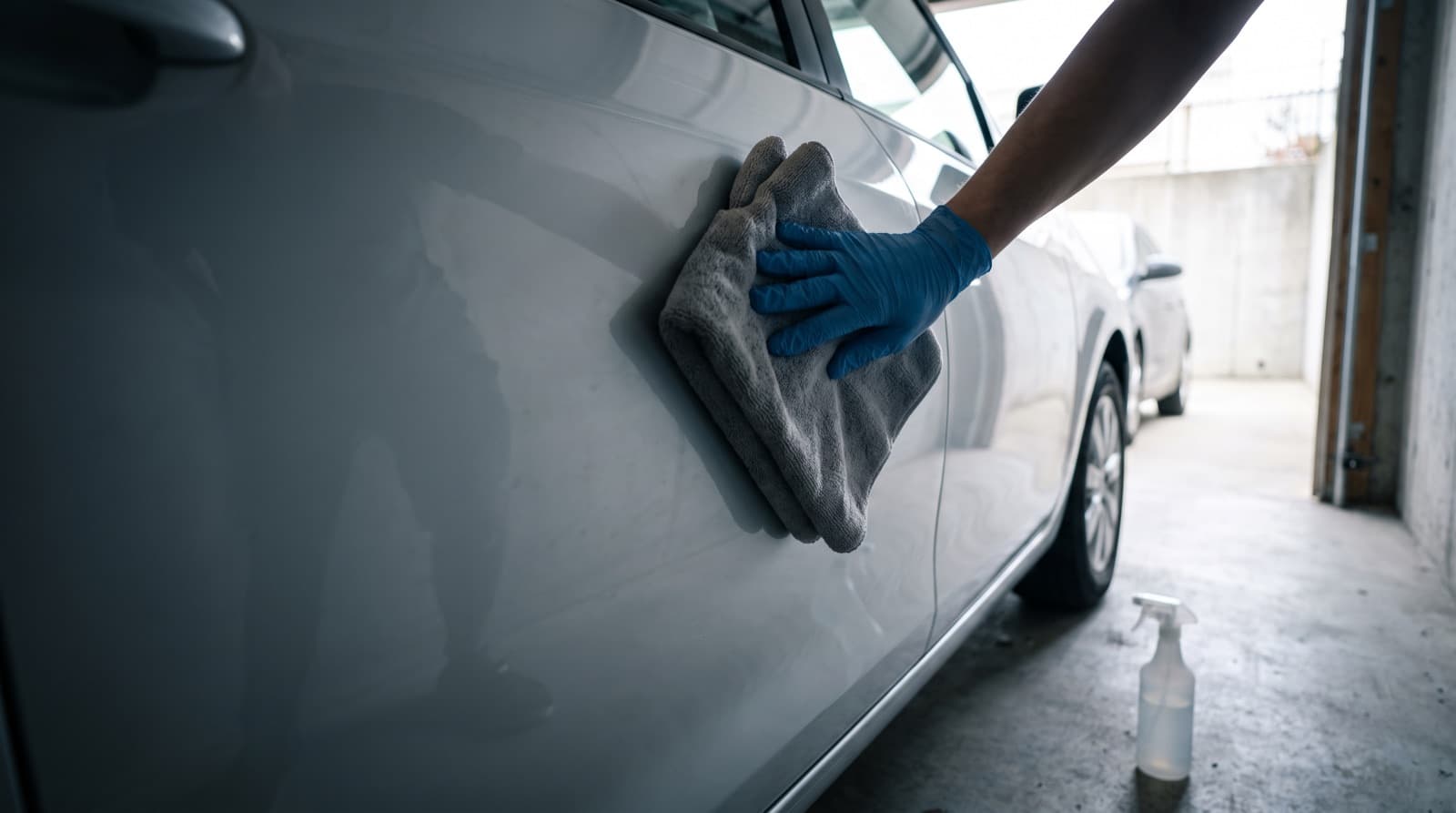
- Dry immediately with a plush microfiber towel rather than letting it air dry, especially with San Francisco tap water.
- Polish only if the trim is true metal, using a small foam applicator and light pressure.
- Wipe with a panel prep or 50/50 isopropyl alcohol to strip polish oils, then seal.
Pro tip: Tape off the paint edge next to the trim with low-tack automotive tape. Metal polish dries white in panel gaps and around rubber seals, and digging it back out takes longer than the polishing did.
Is your trim real chrome or chrome-look plastic?
This is the whole ballgame. Genuine chrome plating over steel or brass takes abrasive polish happily. Chrome-plated ABS plastic, which covers most modern grilles, mirror caps and badges, has a micron-thin bright layer over a clear coat. Any abrasive cuts straight through it and leaves a dull gray smear that no product will bring back.
Use three quick tests together. A magnet sticks to chrome-plated steel but not to plastic, aluminum or stainless. Real metal feels noticeably colder than plastic on the same morning. And a fingernail tap on metal rings, where plastic sounds dull and hollow. Look at the edges too, since plated plastic often shows a faint mold seam.
The magnet test alone is not foolproof, because chrome over brass on a classic and polished stainless beltline trim are both real metal that a magnet ignores. When you cannot tell, treat the trim as plastic and skip the abrasives entirely.
| Trim type | How to spot it | Safe to polish? | What to use |
|---|---|---|---|
| Chrome-plated steel (bumpers, older grilles) | Magnet sticks, feels ice cold, taps with a ring | Yes | Chrome or metal polish, 0000 steel wool if needed |
| Chrome-plated plastic (modern grilles, mirror caps, badges) | No magnet, room temperature, faint mold seam on the edge | No | pH-neutral cleaner, plastic-safe spray sealant |
| Anodized or polished aluminum (window surrounds) | No magnet, softer silver tone, white cloudy staining | No abrasives | Aluminum-safe cleaner, light sealant |
| Polished stainless (classic beltline trim) | Little to no magnet pull, scratches read as fine lines | Yes, gently | Metal polish only, no steel wool on brushed finishes |
| Satin, black or PVD chrome | Matte or dark reflection, factory coated | No | Wash and seal only |
How do you remove water spots from chrome?
Most spotting on chrome is mineral scale from dried water, not damage. Building washdowns, sprinkler overspray and rinse water left on street-parked cars all leave minerals behind when they dry in the sun.
Mix distilled white vinegar with distilled water at 50/50, soak a microfiber towel, and lay it on the spots for three to five minutes so the acid has time to dissolve the minerals. Wipe, rinse with clean water, then dry. Repeat once before you escalate to anything abrasive.
If spots survive that, they have etched into the plating. A dedicated chrome polish such as Mothers Mag and Aluminum Polish, Flitz or Autosol on a foam applicator will level light etching on real metal. On plated plastic, stop after the vinegar step and accept what is left rather than sanding through the finish.
- Never let vinegar dry on the surface, and keep it off bare aluminum and matte black trim.
- Follow any acid step with a plain water rinse so nothing keeps working after you walk away.
- Dry with a fresh towel, since a spotting towel just redeposits minerals.
Pro tip: Keep a gallon of distilled water in the trunk for final wipe-downs on chrome and glass. It costs about two dollars and it is the cheapest spot prevention that exists.
Can you use 0000 steel wool on chrome?
Yes, on true chrome plating only, and only grade 0000. That is the finest grade sold, and it is softer than chrome, which is why it lifts rust flecks and light pitting without scratching the plating. Grades 000 and coarser will scratch, so do not substitute.
The technique is what keeps it safe. Keep the pad saturated in chrome polish or soapy water at all times, since dry steel wool on dry chrome scratches. Use almost no pressure, work in straight lines along the length of the trim rather than circles, cover two or three inches at a time, then wipe and inspect before moving on.
Start on a low, hidden section such as the bottom of a bumper so you can judge results before working somewhere visible. Swap in a fresh piece for each panel, because the pad loads up with rust and starts dragging it around. If you want a gentler option, Nevr-Dull wadding polish gives similar results with more margin for error.
- Never use steel wool on chrome-plated plastic, anodized aluminum, painted surfaces or wheels.
- Keep it off glass with rear defroster grids, tint or a ceramic coating.
- Rinse thoroughly afterward, because stray steel fibers left in panel gaps will rust and stain the paint.
What can you do about rust and deep pitting?
Pitting means the plating has failed and the steel underneath is corroding and pushing outward. Polish removes the rust staining, not the missing metal, so set expectations before you start.
For rust flecks on a real chrome bumper, the aluminum foil trick genuinely works. Crumple a piece of household foil, dip it in water, and rub the rust with moderate pressure. Foil is softer than chrome, and the aluminum oxide that forms as you rub scours the iron oxide away without cutting the plating. Follow up with an oxalic-acid rust remover for anything stubborn, then seal the same day, because open pits hold moisture and restart the process fast.
Run a fingernail across the pitting. If it catches, the chrome is gone in that spot and your real options are living with it, sending the part to a plating shop, or replacing it. On modern cars, what people call pitted chrome is usually corroded plated plastic or oxidized aluminum window trim. Neither can be re-plated, so the practical fixes are polishing the aluminum back and sealing it, or wrapping the trim in gloss black vinyl.
Why does chrome pit so fast in San Francisco?
Corrosion needs two things: salt and moisture. This city hands cars both, every single night. Airborne chlorides drift in off the Pacific and the Bay, and the marine layer keeps the metal damp until mid-morning, so the salt stays active for hours instead of drying out.
Cars parked in the Sunset, Richmond, Marina, Ocean Beach and along the waterfront take the worst of it, and street parking without a garage means there is no dry break. Add tree sap, brake dust and mineral spotting from sidewalk washdowns and you get trim that pits years earlier than the same car would inland.
The habits that fight it are simple. Rinse the lower trim and bumpers weekly if you park west of Twin Peaks or near the water, always rinse after a Great Highway or Ocean Beach trip, and keep a sealant on the brightwork so salt sits on a sacrificial layer instead of the plating. Because we work mobile with our own water and power, we handle this at the curb where the car already lives, all over SF, the Peninsula down to San Mateo and Foster City, and Marin through San Rafael.
Pro tip: After any beach drive, spend two minutes rinsing the bumpers, wheel arch trim and lower door brightwork. Salt you rinse off tonight is not pitting you pay to fix next year.
How do you seal chrome after cleaning it?
Bare polished chrome is wide open to moisture, which is why trim that looked perfect in April is spotted again by June. Always finish with protection, and strip the polish oils with a panel prep wipe first so the sealant actually bonds.
Pick based on how often you want to redo it. Spray sealants are the easiest upkeep, wax suits classic bumpers, and a professional coating is the set-and-forget answer for a daily driver parked outside.
| Protection option | Roughly how long it lasts | Best for |
|---|---|---|
| Spray sealant such as CarPro Reload | 4 to 8 weeks | Fast upkeep on any trim type |
| Liquid insulator wax such as Collinite 845 | 2 to 3 months | Chrome bumpers and classic brightwork |
| Consumer ceramic spray | 3 to 6 months | Plated plastic grilles and mirror caps |
| Professional coating such as System X | 2 years or more | Metal trim coated at the same time as the paint |
When should you DIY, and when should you call a pro?
Plenty of this is genuinely DIY. Washing, vinegar spot removal, a hand polish on real chrome, the foil trick on a bumper and sealing afterward all take basic tools and an afternoon. If you enjoy the work, do it.
Bring in a pro when you cannot identify the trim, when anodized window surrounds have gone chalky white, when pitting covers a whole strip, or when the trim sits tight against paint you do not want stained or scuffed. Those are the jobs where a wrong product choice costs a part instead of an hour.
On our side, brightwork is part of the exterior detail at $149 and the full detail at $399. We identify every piece of trim before touching it, and when we are already applying a System X ceramic package we can coat the metal trim along with the paint so it stops spotting between washes.
Frequently Asked Questions
Can I use household cleaners like Bar Keepers Friend on car chrome?
We would not. It is an oxalic acid plus a mild abrasive, and while it can work on thick old chrome bumpers, it is too aggressive for the thin plating on modern cars and it will haze chrome-look plastic instantly. Automotive chrome polishes are formulated for plated finishes and cost about the same. Also keep acidic wheel cleaners away from aluminum window trim, since they stain it permanently.
Does WD-40 remove rust from chrome?
It helps, but it is not a rust remover. WD-40 loosens light surface rust and works well as a lubricant when you are using 0000 steel wool on a real chrome bumper. It will not do anything about pits, and it leaves an oily film that traps dust, so clean it off with a degreaser and apply a proper sealant afterward.
How can I tell if my grille is real chrome without a magnet?
Touch it early in the morning. Real metal feels distinctly colder than the plastic panel next to it because it sheds heat faster. Then tap it with a fingernail, since metal rings and plated plastic sounds dull, and look along the edges for a molding seam. If two of those three tests point to plastic, treat it as plastic.
How often should I clean chrome trim in San Francisco?
Rinse it weekly if you park outside, especially near the ocean or the Bay, because that removes salt before it has time to work. Do a full decontamination and reseal every two to three months. Cars kept in garages inland can stretch that to twice a year without issues.
Can pitted chrome be restored without re-plating it?
Light pitting can be improved a lot. Removing the rust and polishing makes the surface reflect evenly again, so from a few feet away it reads as clean chrome. Deep pitting that catches a fingernail is missing metal, and no polish or coating rebuilds it, so the honest choices are re-plating at a specialty shop or replacing the part.
Does Golden Bay Detailing clean and restore chrome trim as part of a detail?
Yes. Brightwork is included in our exterior detail at $149 and our full detail at $399, and we identify each piece of trim before choosing a product so nothing gets hazed. We are mobile and bring our own water and power, so we can work on your car in a driveway, at your office or on the street anywhere in San Francisco, the Peninsula and Marin. If you are also booking a System X ceramic package, we can coat the metal trim along with the paint.
Keep reading from Golden Bay
Tired of Cloudy, Pitted Chrome on Your Car?
Tell us what you are driving and we will send a free quote. We come to you anywhere in San Francisco, the Peninsula or Marin with our own water and power, and we know which trim takes polish and which does not. Call (415) 483-5686.