Maintenance & Care
Waterless Car Wash: Is It Safe for Paint? Method and Risks
Key Takeaways
- A waterless car wash is a spray-on, wipe-off cleaner that is safe only on light dust, pollen and fingerprints.
- No waterless car wash is scratch-free, because the towel can drag sand, salt or mud into swirl marks.
- A rinseless wash uses one bucket of water and handles more dirt than a waterless spray.
- The safest waterless car wash method is lots of spray, light one-way wipes and a clean towel face per pass.
- Golden Bay Detailing brings its own water and power to hand wash cars across San Francisco, the Peninsula and Marin.
A waterless car wash is a spray-on, wipe-off cleaner that is safe only on lightly dusty paint. Use lots of spray and a clean towel face for every wipe. On a gritty, salty or sandy car, it can leave fine scratches.
There is no hose, no bucket and almost no drips. That makes it popular in San Francisco apartments, where many people have no driveway and no hose.
What is a waterless car wash?
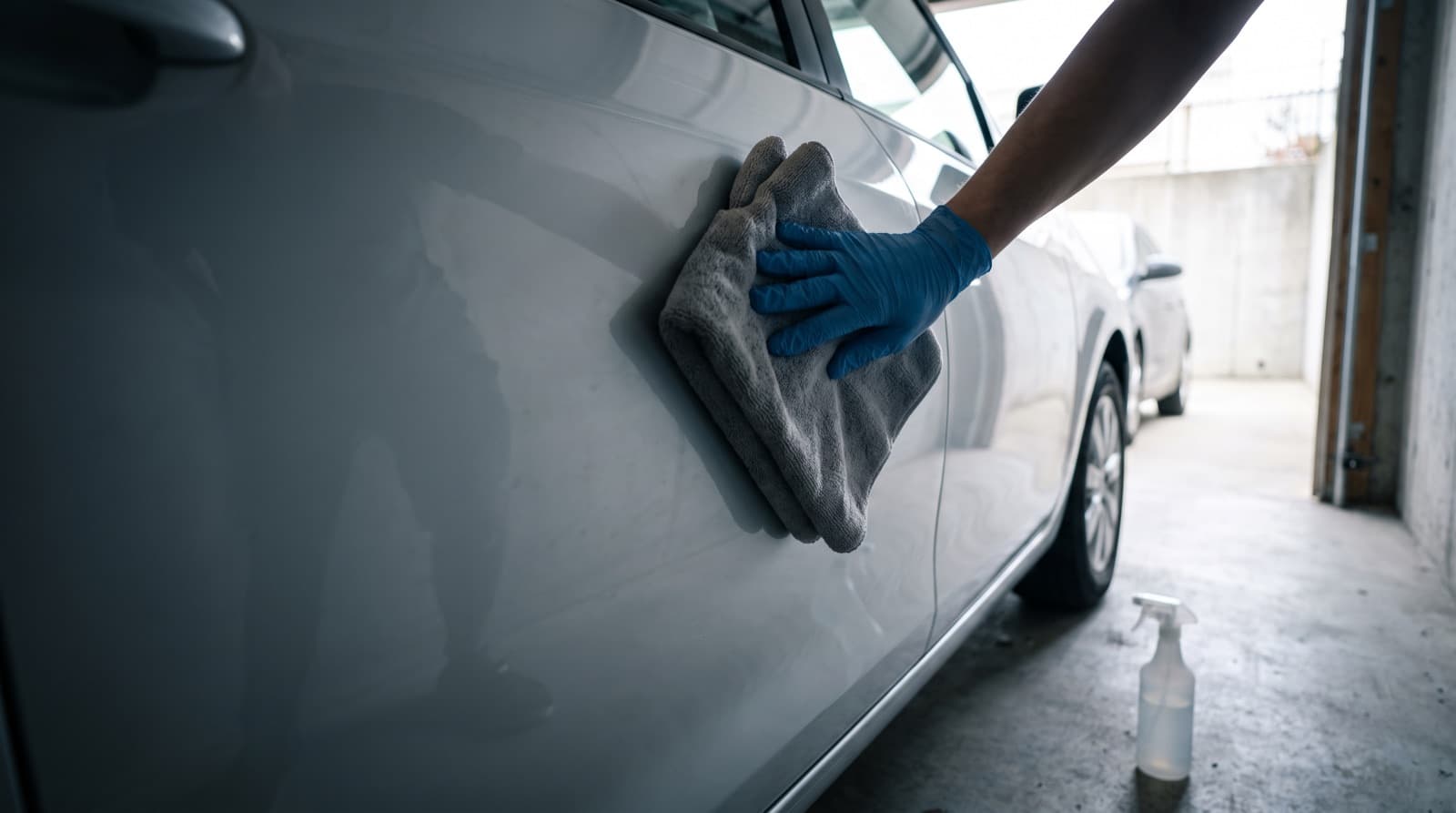
A waterless car wash is a ready-to-use spray. You mist it on a panel, and it soaks into the dust. Then you wipe it off with a microfiber towel (a soft towel whose fine fibers trap dirt).
The spray has two jobs. It loosens the dirt. It also makes the paint slick, so dirt slides into the towel instead of across the paint.
It is wetter and slicker than a quick detailer spray, which is only for touch-ups on clean paint. Waterless works best on:
- Light dust and pollen
- Fingerprints and smudges
- Fresh bird droppings, after you soak them with spray for a minute
- A quick clean between real washes
Does a waterless car wash scratch paint?
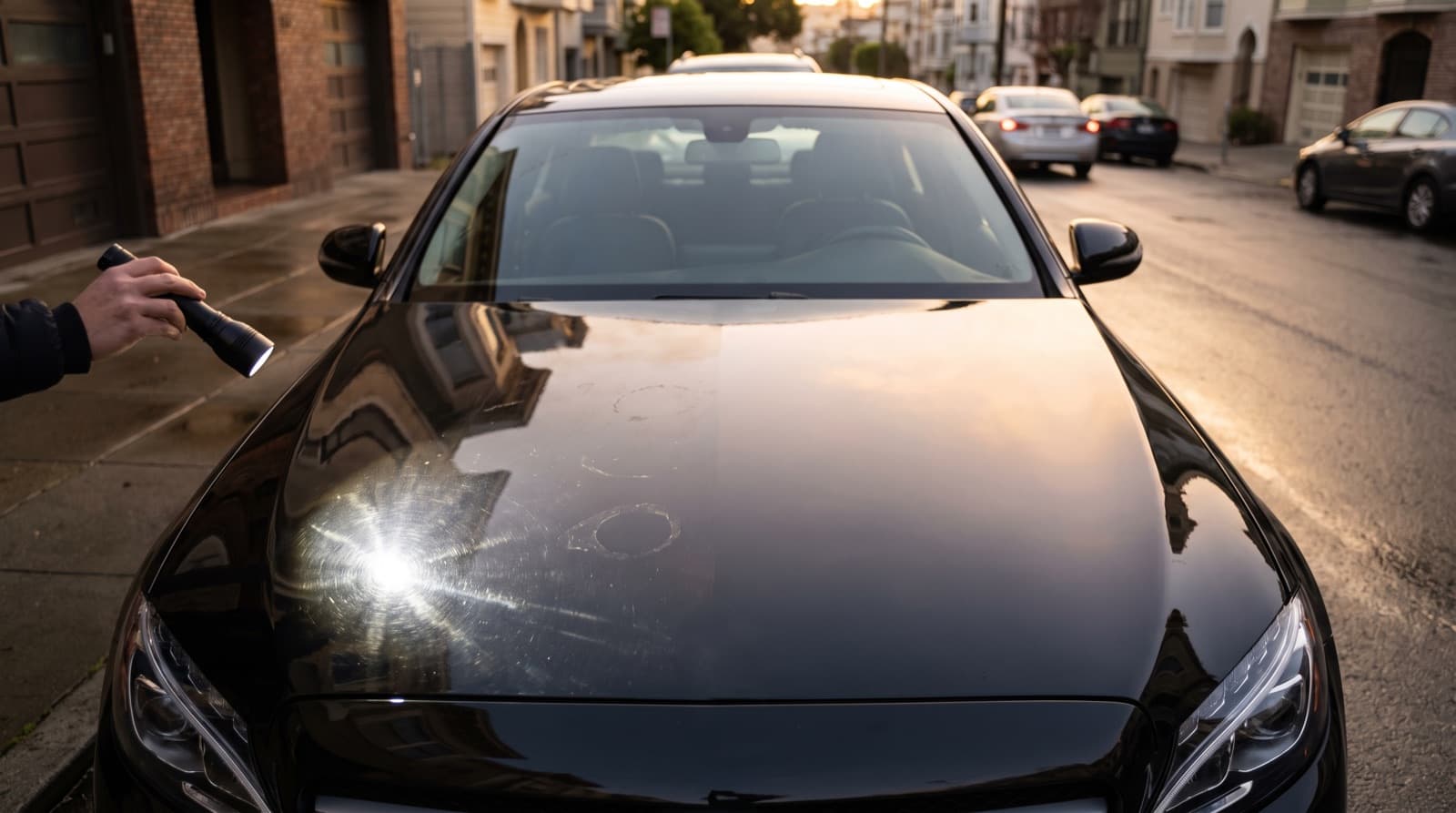
It can. No waterless wash is scratch-free. Any time you wipe dirty paint, you risk swirl marks (thin, circle-like scratches you see in bright sun).
The spray lowers the risk. It does not remove it. The real danger is grit, like sand, road grime and dried mud. If a grain gets trapped under the towel, it acts like sandpaper.
So the real question is how dirty the car is. Do this quick check before you start:
- Look at the lower doors and behind the wheels. Brown film, mud or road spray means skip it.
- Do a pat test. Press a clean white towel flat on a lower door. Do not rub. Lift it. Sandy specks mean the car is too dirty.
- Think about the last week. Beach sand, rain, dirt roads or playa dust from Burning Man all mean skip it.
- Dirt you can see from 10 feet away is too much for a waterless wipe.
Pro tip: If only the lower panels fail the check, you can still do the roof, glass, hood and trunk. Leave the gritty bottom third for a real wash.
Waterless vs rinseless vs hand wash: which is safest?
A two-bucket hand wash with a hose is the safest. A rinseless wash comes next. A waterless wash is only safe on light dust.
A rinseless wash mixes a no-rinse soap into one bucket of water. You wipe each panel with a soaked towel, then dry it.
A two-bucket hand wash adds a hose rinse and a second bucket of clean water for the mitt. Here is how the three compare:
| Method | Water used | Scratch risk | Use it when | Skip it when |
|---|---|---|---|---|
| Waterless | Spray bottle only | Low on light dust, high on grit | The car is lightly dusty and you want a quick clean | Sand, salt, mud, rain grime or playa dust |
| Rinseless | One bucket, about 2 gallons | Low to medium | Light road film and no hose | Caked mud or heavy sand |
| Two-bucket hand wash | Hose plus two buckets | Lowest when done right | Any dirt, if you have a hose | No hose, or your building bans washing |
How do you do a waterless car wash without scratching?
Technique matters more than the brand of spray. The goal is to lift dirt away, never grind it in. Here is the method:
- Park in the shade. The panel should feel cool, or the spray dries fast and streaks.
- Get 8 to 12 clean microfiber towels for a sedan, more for an SUV. Wash them without fabric softener, which clogs the fibers.
- Fold each towel in half, then in half again. That gives you 8 clean faces per towel.
- Work from the top down: roof, hood, trunk, then upper sides. Do the lower panels last, or skip them if gritty.
- Use glass cleaner and its own towel on the windows. Many waterless sprays smear on glass.
- Clean one small area at a time, about 2 feet by 2 feet.
- Spray a lot. The panel should look wet. Let it soak for a few seconds.
- Wipe in one straight line with almost no pressure. Let the towel glide, then lift it off.
- Turn to a clean face after every pass. Never scrub or wipe in circles.
- Buff the area dry with a second clean, dry towel.
- Bag a towel once its faces are used up, or if you drop it. Floors hold grit that no shake can remove.
- Do the wheels last with their own towels. Brake dust (tiny bits of metal and pad from your brakes) is gritty and should never touch paint towels.
Pro tip: Seeing streaks or haze? The panel may be warm, you used too little spray, or your buffing towel is damp. Re-mist the spot and buff it with a fresh, dry towel.
What should you look for in a waterless wash spray?
Read the label, not the hype. You need a slick spray, not a pricey one. Look for these points:
- Slick formula. Look for words like high lubricity, which means slickness. More slick means less drag on the paint.
- pH-neutral. That means it is not harsh, so it will not strip your wax or sealant.
- Safe for coatings. If your car has a ceramic coating, pick a spray labeled coating-safe.
- No wax for matte. Matte paint and matte wraps need a matte-safe spray, or they can look blotchy.
How do you wash a car without a hose?
Use a waterless spray for light dust, or a rinseless bucket wash for more dirt. Some buildings ban car washing in the garage, so check your rules first. Here are your no-hose options:
- Waterless spray: best for light dust. No bucket, and almost nothing drips on the floor.
- Rinseless wash: fill a bucket at your sink. Pre-spray each panel with the mix, then wipe and dry.
- Garden pump sprayer: fill it with rinseless mix to pre-soak a dirtier panel before you wipe.
- Mobile detailing: a pro brings water and power for a real hand wash at the curb or in your garage.
Why is a foggy San Francisco car dirtier than it looks?
Fog makes waterless washing harder here. The marine layer (the low, wet fog off the ocean) leaves a damp film on parked cars. It happens on many nights, mostly in summer and on the west side.
Dust, soot and road grime stick to that wet film. Then the sun dries it into a thin, gritty crust. The car looks only a little dusty, but your towel is wiping fine grit.
It is worse near the water. In the Sunset, the Richmond and Pacifica, wind blows sand and salt air onto the paint. Dried salt is gritty, and you cannot always see it.
Street parking adds tree sap and bird droppings. In the rainy months, road spray coats the lower half of the car. So adjust for Bay Area life:
- In foggy stretches, use more spray and more towels than you think you need.
- After a beach day, a rainy week or street parking by the ocean, skip waterless on the lower panels. Or skip it altogether.
Is a waterless wash safe on a ceramic coated car?
Yes, on light dust. A ceramic coating (a hard, clear layer bonded to the paint) makes the surface very slick. Dust lets go more easily.
But a coating is not scratch-proof. Grit can still mark it. The same rules apply: light dust only, lots of spray and clean towels.
If we coated your car, follow these rules too:
- Keep it dry the first night, and do not wash it for 10 to 14 days while the coating cures.
- For real washing, use a hand wash or a touchless wash only. A brush tunnel wash voids our coating warranty.
- Book the yearly Ceramic Maintenance Detail to keep your warranty. It starts at $250 for a sedan and $300 for an SUV.
- Pick a coating-safe spray with no heavy wax. Thick wax can change how the coating beads water for a while.
- Not sure a product is safe for your coating? Text us before you use it.
When should you call a pro instead?
Waterless is a touch-up tool, not a deep clean. Once grit, tar or months of grime build up, you need water and the right tools.
Our technicians come to your home, office, apartment garage or a legal street spot. We bring our own water and power, so no hose is needed. An Exterior wash + spray wax starts at $149 for a sedan and $199 for an SUV.
Want it clean every month? After a first Full Detail, our Maintenance Detail starts at $149 for a sedan and $199 for an SUV.
A wash will not remove swirl marks that are already there. That takes paint correction (machine polishing that smooths out fine scratches), from $399 for one stage. Call a pro when any of these are true:
- The car is sandy, salty, muddy or covered in playa dust.
- Tar, tree sap or bug splatter will not come off with light wipes.
- The paint has not had a real wash with water in months.
- You already see swirl marks and want the paint looked at.
Frequently Asked Questions
What is the difference between a waterless and a rinseless wash?
A waterless wash is just a spray bottle and towels. A rinseless wash uses one bucket of water with a no-rinse soap. The water helps carry grit away, so rinseless handles more dirt.
How many towels do I need for a waterless car wash?
Plan on 8 to 12 clean microfiber towels for a sedan, and more for an SUV. Fold each one into quarters and use a fresh face for every pass. Scratches happen when you run out of clean towels.
Can I make my own waterless car wash with dish soap?
No. Dish soap is not slick enough to carry grit off the paint without a rinse. It can also strip wax and leave a film. Use a spray made for waterless washing.
Is a waterless wash safe on matte paint, a wrap or PPF?
Yes, on light dust, with the right spray. Matte paint and matte wraps need a matte-safe spray with no wax, or they can look blotchy. On gloss wraps and PPF (clear paint protection film), a gentle pH-neutral spray is fine.
How often can I use a waterless car wash?
Use it whenever the car is lightly dusty. It does not replace a real wash with water. Lower panels and wheel wells still build up grime that a spray cannot safely remove.
Can Golden Bay Detailing wash my car if I have no hose?
Yes. We bring our own water and power for a real hand wash. Our technicians come to you across San Francisco, the Peninsula and Marin. An Exterior wash + spray wax starts at $149 for a sedan and $199 for an SUV.
Keep reading from Golden Bay
Too Dirty for a Waterless Wipe? We Bring the Water
Our technicians come to your home, office or apartment garage with our own water and power for a safe hand wash. Get your free quote today.