How-To
How to Clean an Engine Bay Without Water (Safe Steps)
Key Takeaways
- You can clean an engine bay without water using a diluted all-purpose cleaner or degreaser, detail brushes, and microfiber towels—no hose required.
- The waterless method is safer for electronics because it keeps standing water away from connectors, sensors, alternators, and fuse boxes.
- Cover exposed electrical parts with plastic even when going waterless, and never spray cleaner directly onto battery terminals or the alternator.
- A waterless clean handles light dust and grime well; heavy, caked-on grease usually needs a controlled rinse or a professional.
- Finish by dressing plastic and rubber with a water-based protectant like 303 Aerospace Protectant to restore a factory-satin look.
You can clean an engine bay without water by spraying a diluted degreaser, agitating grime with detail brushes, and wiping everything down with microfiber towels. This waterless method skips the hose entirely, which keeps moisture away from sensitive electrical connectors, sensors, and fuse boxes.
For cautious owners—especially anyone driving an EV or a newer car packed with control modules—going waterless is the low-risk way to get a clean, presentable engine bay. It takes a little longer than a rinse, but you control every drop.
Here is the exact process our mobile technicians use in San Francisco, plus how to tell when a dry clean is enough and when a light rinse actually makes more sense.
Can you clean an engine bay without water?
Yes. Modern engines are built to handle rain and road spray, but the vulnerable parts are the electrical connectors, sensors, and control modules tucked into the bay. Standing water forced into those spots by a pressure washer is what causes trouble, not a damp microfiber towel.
A waterless clean removes that risk. You never introduce enough moisture to pool anywhere, so there is nothing to seep into a connector or short out a sensor. For routine upkeep on most cars, a dry clean gets the bay looking sharp without the gamble.
The trade-off is elbow grease. Without a rinse to blast grime away, you rely on the cleaner to break it down and the towel to lift it off. That is fine for dust and light film, which is what most engine bays actually accumulate.
What you need for a waterless engine bay clean
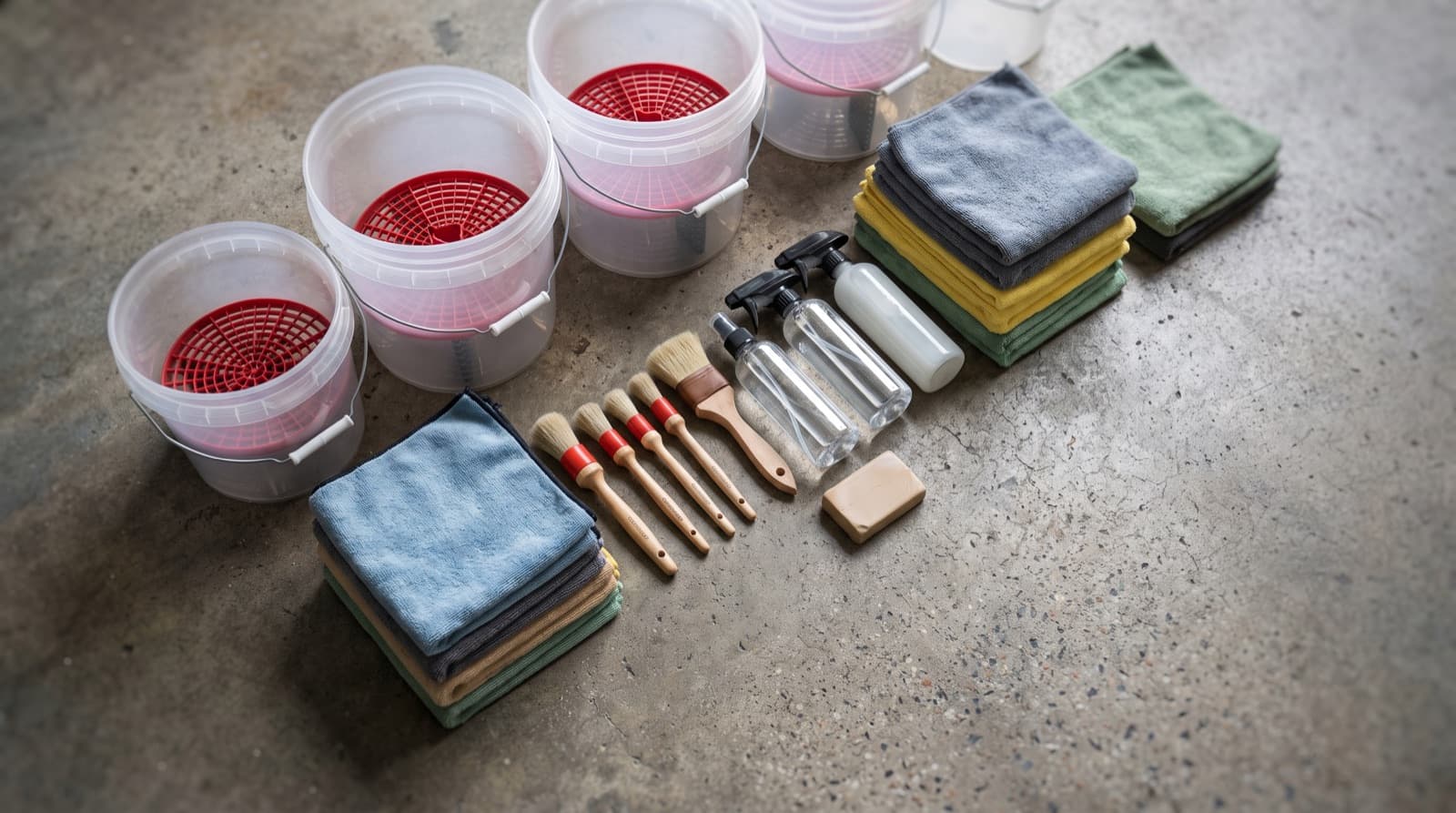
The kit is short and cheap. You likely have most of it already, and everything here is beginner-friendly.
| Item | What it does |
|---|---|
| All-purpose cleaner or degreaser (Meguiar's Super Degreaser, Adam's Eco APC, Chemical Guys Orange) | Breaks down grease, dust, and road film |
| Detail brushes (soft boar's-hair plus a stiffer nylon) | Agitate grime in tight seams and around covers |
| Stack of microfiber towels | Wipe and lift dirt; swap them often |
| Plastic bags or covers | Shield the alternator, fuse box, and air intake |
| Water-based dressing (303 Aerospace Protectant, CarPro PERL) | Protect plastic and rubber with a satin finish |
| Compressed air or a small blower | Clear debris from crevices and speed drying |
Step-by-step: cleaning your engine bay dry
Work in the shade with the engine cool. A hot bay flashes the cleaner off before it can do its job and puts you near burn-hot metal.
- Make sure the engine is off and fully cool, and pop the hood open.
- Optional but safest: disconnect the negative battery terminal.
- Cover exposed electronics—alternator, fuse box, open connectors, air intake—with plastic bags.
- Dry-remove loose leaves and grit with a blower or soft brush first.
- Mist degreaser onto the plastic and metal surfaces, not directly onto electronics; work one section at a time.
- Let it dwell about a minute, then agitate with your brushes to loosen the grime.
- Wipe each section with microfiber, folding to a clean side or grabbing a fresh towel often.
- Hit any stubborn spots with a second pass rather than more water.
- Uncover the electronics, blow out any residue, and let the bay air-dry.
- Finish with dressing on the plastic and rubber.
Waterless vs. rinse method: which should you use?
Waterless is not always the answer. If your bay is coated in years of caked, oily grease, a controlled low-pressure rinse will do in minutes what a towel struggles with. The table below shows where each method wins.
| Factor | Waterless method | Light rinse method |
|---|---|---|
| Best for | Light dust, maintenance, EVs | Heavy, caked-on grease |
| Electronics risk | Very low | Moderate—demands careful covering |
| Time | 45–90 minutes | 30–45 minutes |
| Drying | Minimal | Longer; needs a blow-dry |
| Skill needed | Beginner-friendly | More care required |
How to dress the engine bay after cleaning
Dressing is what turns a clean bay into a showroom bay. A water-based protectant darkens faded plastic, adds a low satin sheen, and helps repel the next round of dust. Skip tire-shine gels and heavy solvent dressings here—they attract grime and can sling onto hot parts.
Let the bay dry completely first, then apply a thin, even coat. Less is more; a greasy over-application looks cheap and collects dirt faster.
Pro tip: Owner tip: put dressing on a microfiber applicator first, then wipe it onto the plastic—never spray dressing straight into the bay. Overspray drifts onto belts and pulleys, where it can cause squeal and fling onto hot metal.
Why waterless suits SF drivers and EV owners
San Francisco throws a specific mix at engine bays: marine-layer moisture, salt air off the bay, and street-parking grit that settles under the hood. A waterless clean lets you stay on top of that film without adding more moisture to a car that already lives in the fog.
EV owners have the strongest case for going waterless. An electric car has no traditional engine, but its front compartment holds high-voltage components and bright-orange high-voltage cabling. The safe move is to wipe those areas gently with a barely damp towel and never spray or hose them at all.
This is also why the method fits mobile detailing so well. When we come to your driveway, office, or curb in the city, we bring our own water and power—but for engine bays we often go waterless on purpose to keep runoff off the street and moisture off your electronics.
When to DIY and when to call a pro
A waterless engine bay clean is a great DIY job for regular maintenance. If your bay is just dusty or lightly filmed, you can absolutely handle it in an afternoon with the steps above.
- DIY is fine for: routine dust, light road film, quick pre-sale tidy-ups, and EV compartments you only want wiped.
- Call a pro for: thick baked-on grease, a first deep clean on an older car, oil leaks you want inspected, or any time you are unsure about high-voltage EV parts.
- Not sure which camp you are in? Send a photo with your quote request and we will tell you honestly whether it is a DIY job or worth booking.
Frequently Asked Questions
Do I need to disconnect the battery to clean an engine bay without water?
You do not have to, since a waterless clean introduces almost no moisture. Disconnecting the negative terminal is still the safest habit, especially if you are new to this or working near the fuse box. It only takes a minute and removes any chance of an accidental short.
Can you clean an EV engine bay without water?
Yes, and waterless is the recommended approach for EVs. Electric cars have no combustion engine, but the front compartment carries high-voltage components and orange high-voltage cables that should never be sprayed or rinsed. Wipe the accessible plastic with a barely damp microfiber towel and leave the high-voltage areas alone.
How often should you clean your engine bay?
Once or twice a year is plenty for most drivers. If you park on the street in a foggy, salt-air city like San Francisco, a light waterless wipe-down every few months keeps grime from building into anything stubborn. Regular quick cleans are far easier than one big degrease later.
What is the best degreaser for a waterless engine bay clean?
A diluted all-purpose cleaner or a dedicated engine degreaser both work well—Meguiar's Super Degreaser, Adam's Eco APC, and Chemical Guys Orange are common, reliable picks. Dilute a strong degreaser rather than using it neat, and always spray it onto surfaces instead of directly onto electronics.
Does Golden Bay Detailing clean engine bays?
Yes. We can add an engine bay clean to a full detail or handle it on its own, and we come to your driveway, office, or curb anywhere in San Francisco, the Peninsula, and Marin. For most bays we go waterless to protect your electronics and keep runoff off the street. Request a free quote and we will confirm the right approach for your car.
Keep reading from Golden Bay
Want your engine bay done right, without the risk?
Golden Bay Detailing comes to you anywhere in San Francisco, the Peninsula, and Marin. Request your free quote and we will handle it, waterless and worry-free.