Maintenance & Care
How to Clean a Leather Steering Wheel the Right Way
Key Takeaways
- To clean a leather steering wheel, wipe off loose dirt, then work a pH-neutral leather cleaner into the surface with a soft brush and light pressure — never soak it.
- Skip glossy conditioners and silicone dressings; they leave a slick film that makes the wheel dangerous to grip.
- The steering wheel is the highest-touch surface in a car, collecting skin oils, lotion, sunscreen, and hand-sanitizer residue that break down the leather's finish.
- Condition sparingly — two to four times a year — with a water-based matte product to keep leather supple without adding slip.
- In San Francisco, UV passes through fog and salt air still dries leather, so frequent gentle cleaning beats aggressive restoration later.
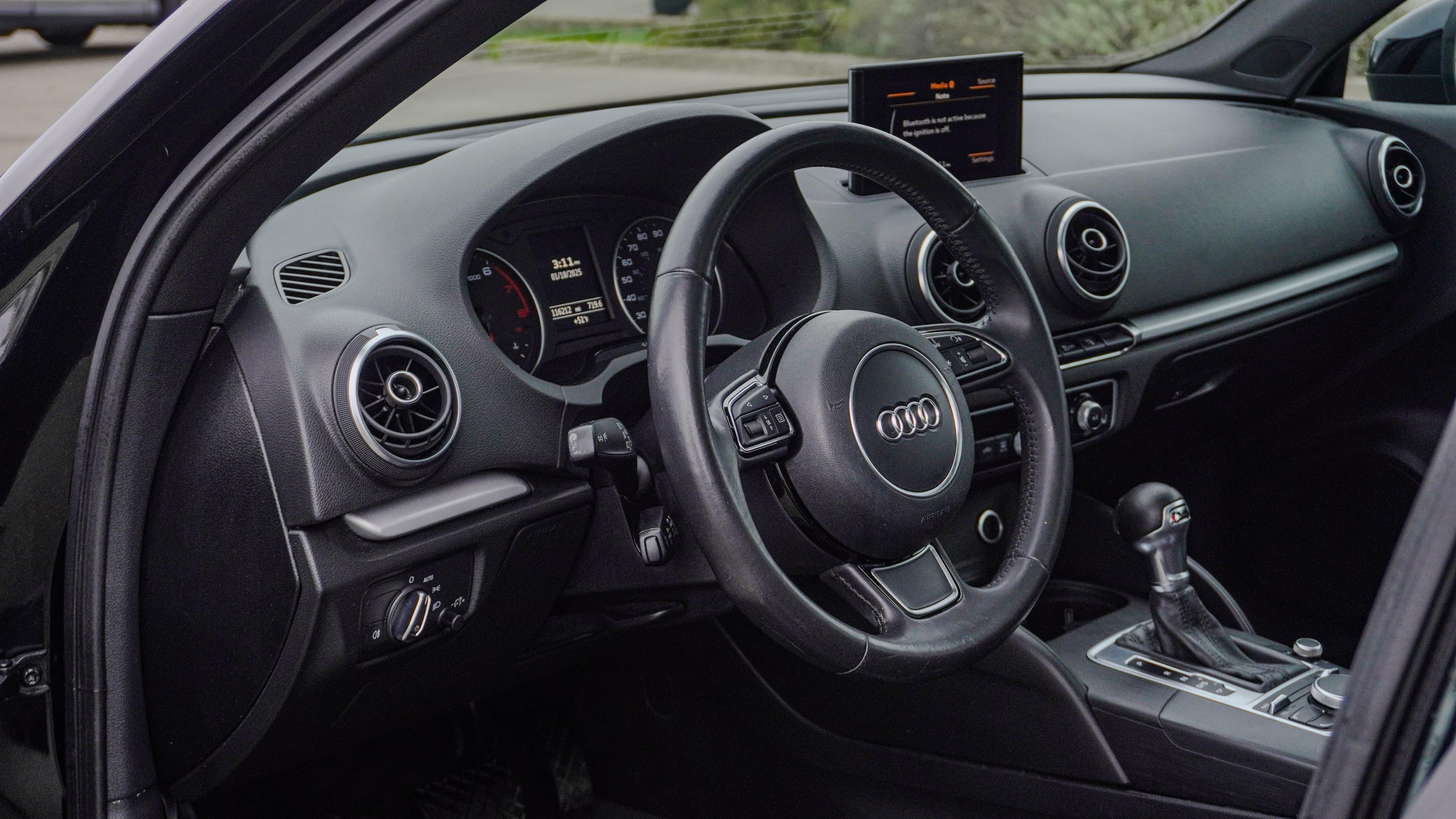
To clean a leather steering wheel, wipe away the loose dirt first, then work a pH-neutral leather cleaner into the surface with a soft brush and light pressure — no soaking, no harsh chemicals. That simple routine handles the grimiest, most-touched surface in your entire car.
Your steering wheel absorbs skin oils, lotion, coffee, and hand-sanitizer residue on every single drive. Over time that builds into a dark, slightly sticky shine most people mistake for worn-out leather when it is really just trapped grime.
This guide walks through the exact products and steps we use as mobile detailers in San Francisco, plus the one mistake — over-conditioning — that quietly turns a wheel slippery and unsafe.
Why is the steering wheel the dirtiest part of your car?
The steering wheel is the highest-touch surface in any vehicle. Your hands carry natural oils, food residue, lotion, sunscreen, and sanitizer, and all of it transfers to the leather ten-and-two, drive after drive.
Most car wheels use finished leather, which has a thin protective topcoat. Grime sits on that coat and slowly breaks it down, which is why a neglected wheel feels tacky and looks glossy-black on the sides where your palms rest — that shine is dirt, not conditioning.
Cleaning is not just cosmetic. Left alone, buildup traps moisture and skin acids against the finish and speeds up cracking at the seams, which is the one kind of damage no product can reverse.
What you need to clean a leather steering wheel
You do not need much, and you almost certainly have most of it already. The key is choosing gentle tools that lift grime without scouring the finish.
- A pH-neutral or dedicated leather cleaner (Lexol, Sonax, Koch Chemie, or Chemical Guys Leather Cleaner)
- A soft detailing brush — horsehair or soft nylon, never a stiff scrub brush
- Two clean microfiber towels, one for cleaning and one for drying
- A water-based matte leather conditioner to keep on hand for later
- A little warm water to dampen a towel — dampen, never soak
Pro tip: Spray cleaner onto the brush or towel, never straight onto the wheel. Flooding the perforations and stitching is how water gets trapped and the leather starts to lift at the seams.
How to clean a leather steering wheel step by step
Work in good light so you can see the grime lift. The whole job takes about ten minutes once you have your supplies out.
- Wipe the wheel with a dry or barely damp microfiber first to lift loose dust and crumbs.
- Spray cleaner onto your brush or towel — not the wheel — so you control how much product reaches the seams.
- Agitate gently in small circles. Let the brush and cleaner do the work; hard scrubbing burnishes and dulls the finish.
- Focus on the 10-and-2 zones and the back of the rim, where the heaviest grime hides.
- Wipe the lifted dirt away with a clean, dry microfiber. It will turn gray — that is the buildup leaving.
- Repeat once if the wheel still feels tacky, then let it air-dry before you drive.
Which cleaner should you use on a leather wheel?
Not every product belongs on a surface you grip at highway speed. Here is how the common options stack up, from everyday-safe to leave-it-on-the-shelf.
| Product type | Use it for | Watch out for |
|---|---|---|
| pH-neutral leather cleaner | Routine cleaning of finished leather | Test a hidden spot on older wheels first |
| Heavily diluted all-purpose cleaner | Caked-on, sticky grime that resists leather cleaner | Too strong strips the protective finish |
| Water-based matte conditioner | A few times a year to fight cracking | Over-use leaves the wheel slick |
| Silicone or glossy dressing (Armor All) | Nothing on a steering wheel | Dangerously slippery grip |
| Magic eraser or alcohol wipes | Rare spot-removal of ink or tar | Abrasive and drying; dulls the leather |
Why you shouldn't over-condition a leather steering wheel
The biggest mistake we see is drowning the wheel in conditioner or a glossy dressing. Anything oily or silicone-based leaves a film that makes the wheel slick — a genuine safety problem the moment you need firm grip in an emergency.
Condition sparingly, two to four times a year at most, and only with a water-based, matte product. Apply a thin coat, let it absorb for a few minutes, then buff off every trace so nothing stays greasy under your hands.
If your wheel already feels slippery from past products, clean it with leather cleaner (or lightly diluted all-purpose cleaner) until the slick film is completely gone before you condition again.
How do you stop a leather steering wheel from cracking?
Cracking starts when leather dries out and loses flexibility, usually from a mix of UV, cabin heat, and grime left to sit. Prevention is easy; restoration mostly is not.
- Clean it every two to four weeks so oils and skin acids never get a chance to sit.
- Condition lightly a few times a year to keep the leather supple.
- Use a windshield sunshade to cut cabin heat and UV exposure.
- Wipe your hands or skip heavy lotion and sanitizer right before driving.
- Act on early stiffness fast — once leather splits at a seam, no product un-cracks it.
Why San Francisco is hard on steering wheels
Fog does not mean your interior is safe from the sun. UVA passes right through the marine layer and still dries out and fades leather, and salt air adds moisture that works into the seams. Add street parking with no garage, and the cabin bakes and cools every single day.
SF drivers also lean hard on hand sanitizer and lotion, and EV owners tend to spend more time in the car with commute and ride-share miles. Combine that with no-garage living and wheels here age faster than most people expect.
We see it constantly on mobile jobs across the city, the Peninsula, and Marin — a five-minute wheel clean at every maintenance visit keeps the leather from ever reaching the cracked, sticky stage.
Should you DIY or call a mobile detailer?
Routine cleaning is absolutely a DIY job. A leather cleaner, a soft brush, a microfiber, and ten minutes will keep your wheel looking and feeling right — so do it yourself, and do it often.
Call a pro when the wheel is deeply glazed with old dressing, when cracks are starting to form, or when you want the whole interior brought back at once. A detailer can safely strip built-up silicone and match a proper matte finish that grips the way it should. Because we are mobile, we handle it in your driveway or at your office anywhere in San Francisco, the Peninsula, or Marin — no shop trip required.
Frequently Asked Questions
Can I use baby wipes on a leather steering wheel?
In a pinch, yes, but most baby wipes contain lotions and alcohol that either leave a residue or dry the finish over time. They are fine for a rare quick clean, but a dedicated pH-neutral leather cleaner is much safer for regular use.
How do I fix a sticky or tacky steering wheel?
Tackiness is almost always old dressing or built-up grime, not damaged leather. Clean it with a leather cleaner, or a lightly diluted all-purpose cleaner, using a soft brush until the film lifts. Then avoid glossy or silicone products going forward, since those are usually what caused it.
Is my steering wheel real leather or leatherette?
Many modern wheels are finished leather or polyurethane leatherette, and it can be hard to tell by feel. The good news is cleaning is nearly identical — a pH-neutral cleaner and a soft brush. Conditioner will not soak into synthetic material, so if you are unsure, use even less of it.
How often should I clean my leather steering wheel?
Aim for every two to four weeks on a daily driver, since the wheel is touched more than any other surface in the car. A quick weekly wipe with a barely damp microfiber keeps buildup from ever getting started between deeper cleans.
Does Golden Bay Detailing clean steering wheels as part of a detail?
Yes. Every Golden Bay Detailing interior and full detail includes a proper leather-safe wheel cleaning, and our monthly maintenance plans keep it that way year-round. We are fully mobile, so we come to you anywhere in San Francisco, the Peninsula, or Marin.
Keep reading from Golden Bay
Want that clean-wheel feel without lifting a finger?
Golden Bay Detailing comes to your driveway or office anywhere in SF, the Peninsula, or Marin. Get a free quote and let us handle the leather the right way.