How-To
Best Way to Dry a Car Without Swirls or Water Spots
Key Takeaways
- The best way to dry a car is to blot it with a plush microfiber or waffle-weave towel while it's still wet, working from the roof down, and never let it air-dry.
- Air-drying leaves water spots because tap water carries dissolved minerals like calcium and magnesium that stay behind as the water evaporates and can etch into the clearcoat.
- A drying aid or quick detailer sprayed on each panel lets the towel glide, which cuts the friction that causes fine swirl marks.
- Waffle-weave towels hold the most water for open panels, while plush 400-600 GSM microfiber is best for mirrors, badges, and tight trim.
- A leaf blower or car dryer removes most of the water without touching the paint, making it the safest first step on dark or soft finishes.
The best way to dry a car is to blot the water off with a plush microfiber or waffle-weave towel while the paint is still wet, working top to bottom, and never letting it air-dry. Spray a drying aid or quick detailer on each panel as you go so the towel glides and lifts water instead of dragging grit across your clearcoat.
Drying is the step most people rush, and it's where the majority of swirl marks and water spots actually come from — not the wash itself.
At Golden Bay Detailing, our technicians hand-dry hundreds of cars a year across San Francisco, where fog and marine layer make spotting brutal. Here's the exact, safe method they use.
What's the best way to dry a car without swirls?
The best way to dry a car is to lift the water off gently while the paint is still wet, before it has a chance to evaporate. Use a clean, plush microfiber or waffle-weave towel, mist a drying aid onto each panel so the towel glides, and work from the highest, cleanest surfaces down to the dirtiest.
Drying is a small step with an outsized effect on your paint. Do it with the wrong towel, or a dry and dirty one, and you'll grind fine dust into the clearcoat and leave the swirl marks you can only see in direct sun.
- Start while the car is still fully wet — evaporation is the enemy.
- Use only clean, dedicated drying towels, never a shop rag or bath towel.
- Spray a drying aid so the towel glides instead of grabbing.
- Work top to bottom; the lower panels hold the most road grime.
Why does air-drying leave water spots?
Air-drying causes water spots because tap water isn't pure. It carries dissolved minerals — mainly calcium and magnesium — plus whatever else is in your local supply. When a droplet evaporates on your paint, the water leaves but the minerals stay behind as a chalky ring. That ring is the water spot.
Leave those spots long enough, especially baking in the sun, and the minerals can etch into the clearcoat. At that point wiping won't remove them — they've physically marked the surface and need a machine polish or paint correction to level out.
The harder your water, the faster and worse this happens. It's the reason a car left to drip-dry in the driveway can end up looking worse than it did before the wash.
Pro tip: If you see spots forming while you work, stop and dry that panel immediately. Fresh mineral spots wipe off with a quick detailer — etched ones don't.
What should you dry a car with? Towels compared
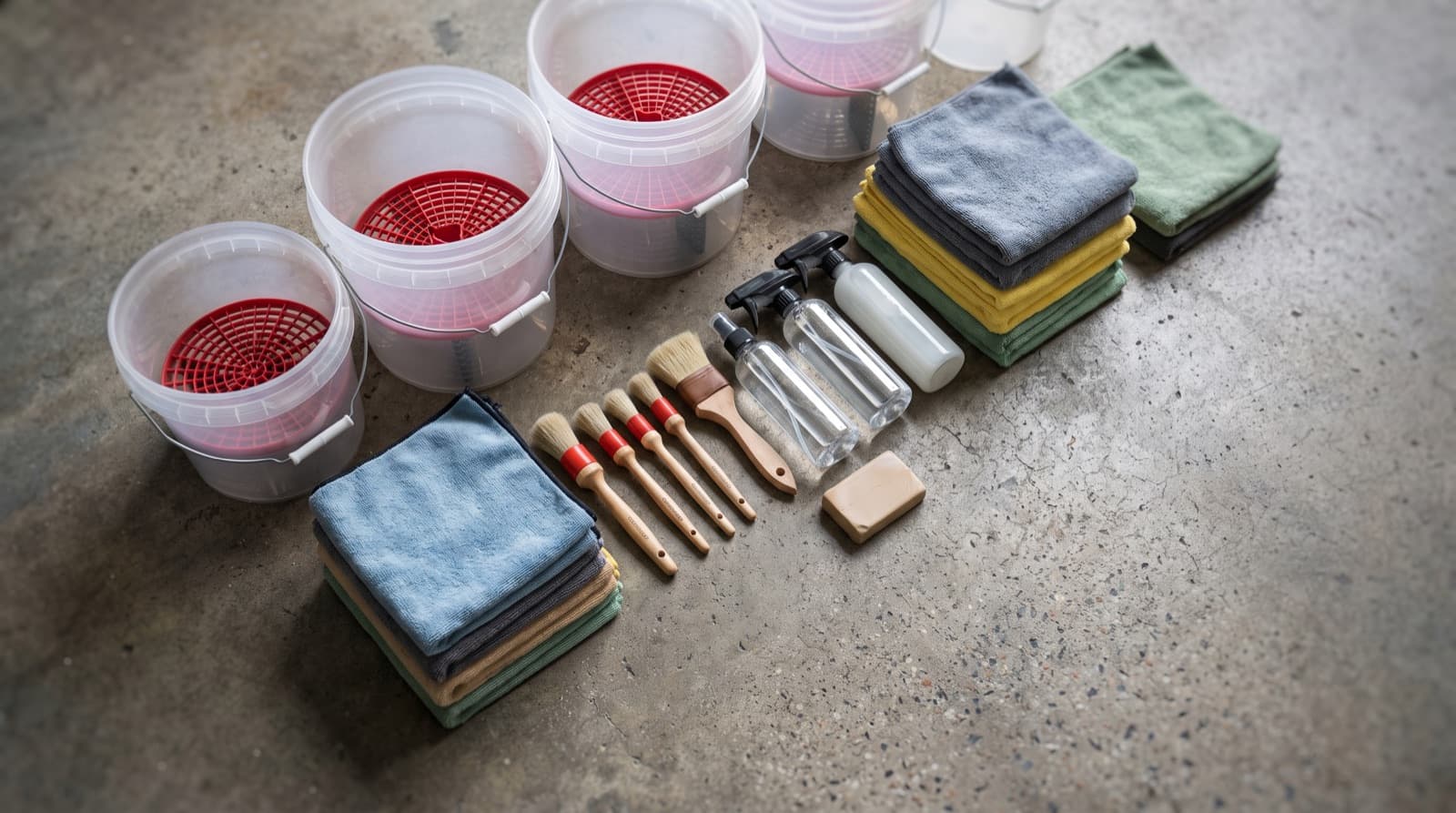
Not all towels are equal, and the wrong one does real damage. Here's how the common options compare for drying car paint safely.
| Drying tool | Best for | Water capacity | Swirl risk |
|---|---|---|---|
| Waffle-weave microfiber | Open panels: roof, hood, doors, glass | High | Low with a drying aid |
| Plush microfiber (400-600 GSM) | Mirrors, badges, grille, tight trim | Medium-high | Very low |
| Leaf blower / car dryer | Emblems, mirror gaps, panel seams | No contact | None |
| Chamois or synthetic 'shammy' | Quick jobs, but drags on grit | High | Medium-high |
| Old bath or terry towel | Not recommended on paint | Low | High |
How do you dry a car step by step?
Here's the exact order we dry a car in the field. It keeps the cleanest towel on the cleanest paint and pulls water out of every trap before it drips back down onto a finished panel.
- Blow or shake off the heavy water first — a leaf blower or car dryer clears mirrors, badges, and seams without touching the paint.
- Mist a drying aid onto the roof, then lay a waffle-weave towel flat and pull it across to blot the water.
- Move down in order: roof, then glass, hood and trunk, upper doors, lower doors, and bumpers last.
- Switch to a plush microfiber for mirrors, grille, emblems, and any tight trim where water hides.
- Open the doors, hood, and trunk and dry the jambs — trapped water there drips onto clean panels minutes later.
- Flip to a dry side of the towel often, and swap towels once one gets damp; a saturated towel just moves water around.
Pro tip: Two towels minimum for a sedan, three for an SUV. A soaked towel is basically a squeegee that leaves streaks — keep a dry one within reach.
Should you use a leaf blower or car dryer?
A leaf blower or a dedicated car dryer is the single best upgrade to your drying routine, and it's what pros lean on. Because nothing touches the paint, there's zero chance of adding swirls.
It shines where towels struggle: side-mirror gaps, emblem edges, grille slats, badge outlines, and panel seams that hold water and dribble out the moment you think you're done. A cordless leaf blower works fine; dedicated units like a Metro Vac Master Blaster push warm, filtered air and are gentler than a shop compressor.
You still finish the flat panels with a towel, but blowing off most of the water first means far less contact — and far less risk.
Why is drying harder in San Francisco?
San Francisco makes drying a higher-stakes job than it is in most places, and it comes down to water and weather. Bay Area tap water runs moderately hard, so every droplet left on your paint has minerals waiting to spot.
Then there's the marine layer. Fog and morning dew re-wet a car overnight, and when that moisture dries under the midday sun it leaves its own faint spotting — even on a car you dried perfectly the day before. Add salt air near the coast and constant street-parking grime, and paint here takes a real beating.
If you park on the street with no garage, two habits help most: dry the car completely after every wash, and consider a final spot-free rinse using filtered or deionized water, which leaves no minerals behind to dry into spots. A ceramic coating also makes water bead and roll off, so less sits on the paint to begin with.
Pro tip: Wash and dry in the shade or in the cool of the morning. On a warm panel in direct sun, water evaporates before you can reach it, and you'll spot no matter how good your towel is.
Frequently Asked Questions
Can you air-dry a car without leaving spots?
Only if your final rinse uses purified, deionized, or filtered spot-free water, because that water has no minerals to leave behind. With normal tap water, air-drying almost always leaves spots. For everyday washes, drying by hand with a towel is safer and faster.
What's the best towel to dry a car?
A large waffle-weave microfiber towel for the open panels, plus a plush 400-600 GSM microfiber for mirrors, badges, and trim. Both are soft enough to avoid swirls when you use a drying aid. Skip old bath towels, terry cloth, and chamois 'shammies' on paint — they drag grit and mark the finish.
Do I really need a quick detailer or drying aid?
It isn't strictly required, but it makes a real difference. A drying aid lets the towel glide instead of grabbing, which cuts the friction that causes fine swirl marks, and it adds a little slickness and gloss. On dark or soft paint, it's worth every penny.
How do I get rid of water spots that won't wipe off?
If a spot won't come off with a quick detailer, the minerals have etched into the clearcoat. A dedicated water-spot remover or a light machine polish usually clears fresh etching, while deeper marks need paint correction. It's a fixable problem — just not with a towel.
Does Golden Bay Detailing dry cars by hand?
Yes. As a mobile detailer, we come to your driveway, office, or street parking anywhere in San Francisco and the Peninsula with our own water and power, and every car is hand-dried with clean microfiber and a blower — never left to air-dry. If your paint already has water spots or swirls, we can correct those too. Get a free quote to book.
Keep reading from Golden Bay
Skip the spots — let us dry it right
Golden Bay Detailing comes to you anywhere in San Francisco and the Peninsula, with our own water and power. Get a free quote today.