How-To
How to Detail an Engine Bay for a Factory-Fresh Look
Key Takeaways
- Engine bay detailing means cleaning the bay and then dressing the plastics, hoses, and trim so it looks factory-fresh instead of wet or greasy.
- Always work on a fully cool engine, cover the alternator, fuse box, air intake, and connectors, and rinse at low pressure — never with a pressure washer.
- After degreasing and drying, apply a water-based dressing to a microfiber applicator first, then wipe it onto trim so nothing flings onto belts, pulleys, or paint.
- A matte or satin dressing like 303 Aerospace Protectant or CarPro PERL looks more natural under the hood than a high-gloss shine.
- A clean, dressed engine bay lasts weeks, protects plastics from cracking, and makes leaks easier to spot — a real advantage in salty, foggy San Francisco.
Detailing an engine bay means cleaning it and then finishing it so the plastics, hoses, and metal look clean and factory-fresh — not wet, not greasy. The process is simple: cover the electronics, degrease, brush, rinse at low pressure on a cool engine, dry it fully, then dress the trim.
Cleaning gets the grime off. Detailing is the extra step that makes the bay look cared-for, protects the plastic from the sun, and leaves a satin finish that photographs well before a sale. Done right, it takes about half an hour and needs no special equipment.
This guide focuses on the finishing craft — the tools, the dressing technique, and the mistakes that make a bay look worse instead of better.
What Does Engine Bay Detailing Actually Involve?
Detailing an engine bay is a two-part job. First you clean it: degrease, brush, rinse, and dry. Then you detail it: dress the plastic covers, hoses, and rubber so they look rich and even, and wipe down bare metal and painted parts so they shine without residue.
The goal is a factory-fresh look, not a glossy show-car soak. A clean satin finish says the car is well kept. A dripping, high-gloss engine bay just looks like someone sprayed product everywhere — and it flings oil onto your paint the first time you drive.
- Cleaning removes grease, dust, leaves, and road grime.
- Detailing restores color and protects plastic, rubber, and trim.
- The finish should look natural and even — clean, not wet.
The Tools and Products for a Clean Finish
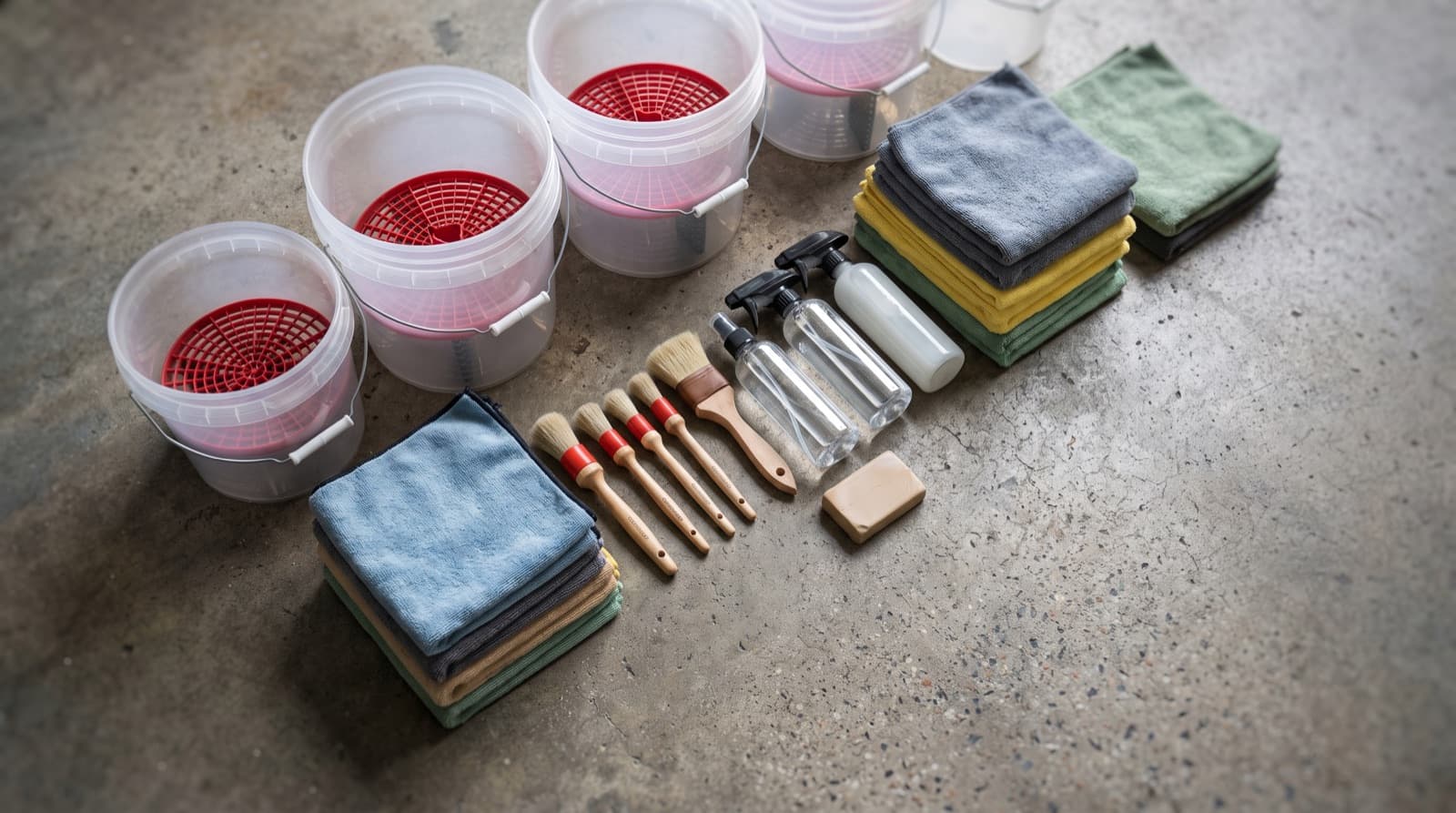
You do not need much. Most of a great engine bay detail comes from a few brushes, a safe degreaser, and the right dressing applied carefully.
- A water-based, all-purpose degreaser such as Meguiar's Super Degreaser, Chemical Guys Signature Series Orange, or a diluted APC.
- Two or three soft detailing brushes in different sizes for covers, corners, and hoses.
- A pump sprayer or garden hose on a gentle setting — never a pressure washer.
- A leaf blower or compressed air, plus a couple of clean microfiber towels for drying.
- A water-based trim dressing like 303 Aerospace Protectant or CarPro PERL for the finishing step.
- Plastic sandwich bags and a few rubber bands to protect electronics.
Pro tip: Pro tip: keep one brush just for degreasing and a separate, clean one for dressing. Cross-contaminating them drags grime into your finish and wastes product.
Prep, Degrease, and Rinse Without the Damage
The cleaning stage sets up the finish, and two rules keep it safe: start with a fully cool engine, and keep water pressure low. A cold degreaser on a hot manifold can crack it, and high pressure forces water past seals into connectors that were never built for a direct jet.
Cover the sensitive parts first, then work top to bottom so grime rinses down and away from the areas you have already cleaned.
- Let the engine cool completely, then pop the hood and photograph the layout.
- Bag the alternator, fuse box, air intake, battery terminals, and any exposed connectors.
- Brush off loose leaves and dust while the bay is still dry.
- Mist degreaser onto greasy areas, let it dwell two to three minutes, and agitate with a soft brush.
- Rinse gently from the top down, keeping water off the covered parts.
- Blow out the water or blot it with microfiber so nothing pools on connectors.
Dressing Plastics, Hoses, and Trim the Right Way
This is the step that turns a clean bay into a detailed one. Once everything is dry, spray your dressing onto a microfiber applicator — never straight onto the engine — and wipe it over the plastic covers, hoses, and rubber trim.
Applying to the towel first keeps dressing off belts and pulleys, where it can cause slipping, and off the underside of your hood, where it flings onto paint at speed. Work in thin, even passes and buff off any excess so nothing stays tacky. The plastic goes from faded gray back to a deep, even tone.
Restraint is the whole trick. One controlled coat wiped in by hand looks far better and lasts longer than a heavy soak that drips for a week.
Pro tip: Pro tip: a matte or satin dressing looks more natural under the hood than a wet, high-gloss one. A shiny engine bay screams 'just sprayed' — a clean satin finish just looks like a car that gets taken care of.
Matte vs Gloss: Choosing an Engine Bay Dressing
Not every dressing behaves the same under the hood. Water-based products are the safe default: they wipe on evenly, resist slinging, and do not attract as much dust as oily solvent-based dressings. Here is how the common options compare.
| Product | Finish | Best for |
|---|---|---|
| 303 Aerospace Protectant | Matte / satin | A natural factory look with UV protection |
| CarPro PERL (diluted) | Adjustable satin to gloss | Control over shine by dilution ratio |
| Chemical Guys VRP | Low to medium sheen | Plastic covers and general trim |
| Solvent-based tire gel | High gloss | Avoid under the hood — too oily, slings onto paint |
Mistakes That Ruin an Engine Bay Detail
Most bad results come from a few avoidable errors, not from bad luck. Skip these and your detail will look clean instead of botched.
- Spraying a pressure washer into the bay — the fastest way to short a connector or the alternator.
- Cleaning a hot engine, which risks burns and can crack an aluminum head.
- Dressing straight from the bottle onto belts, pulleys, or the underside of the hood.
- Over-applying dressing so it drips, slings onto paint, and traps dust.
- Letting degreaser dry on the surface, which leaves streaks and can stain plastic.
- Soaking labels, stickers, and painted covers instead of wiping them by hand.
Detailing an Engine Bay in San Francisco
The city is hard on engine bays. Salt air off the Pacific and constant marine-layer moisture speed up corrosion on terminals, clamps, and bare metal, so a clean, dressed bay is genuinely protective here, not just cosmetic.
Fog is also why drying matters more in SF than in a dry climate. Water that would evaporate in an afternoon can sit for hours in a shaded Sunset or Richmond driveway, so blow the bay dry rather than trusting the air.
EVs are everywhere in the city, and they change the job. There is no oily engine to degrease, but there are high-voltage systems and a sealed frunk that should never be hosed down. On a Tesla, Rivian, or hybrid, a damp wipe and a careful dressing is usually all it needs.
Pro tip: Pro tip: parked on the street with no garage? A quick brush-off and a wipe of dressing every few months keeps salt and brake dust from packing in around the battery and hoses.
Can You Do This Yourself, or Call a Pro?
For most gas cars, engine bay detailing is a satisfying DIY job — take your time covering the electronics, keep the pressure low, and the finish will look great. It is worth calling a pro when the risk or the buildup gets higher:
- You are not sure which connectors are exposed or where the air intake sits.
- The bay has heavy, caked-on grease that needs safe, thorough degreasing.
- You drive an EV or hybrid with high-voltage components.
- You want it show-ready right before a sale, trade-in, or lease return.
Pro tip: A good detailer covers everything, uses controlled low pressure, dries it fully, and dresses it by hand — no guesswork and no no-start surprise. As a mobile shop we bring our own water and power to your driveway, so the car never has to move.
Frequently Asked Questions
What is the difference between cleaning and detailing an engine bay?
Cleaning removes grease, dust, and grime. Detailing adds the finishing steps: dressing the plastics, hoses, and rubber, and wiping down metal and painted parts so the whole bay looks even and factory-fresh. Detailing is what makes a clean bay look genuinely cared-for rather than just washed.
What is the best dressing for an engine bay?
A water-based dressing with a matte or satin finish looks the most natural and slings the least. 303 Aerospace Protectant, CarPro PERL, and Chemical Guys VRP are all good choices. Avoid oily, solvent-based tire gels under the hood — they stay greasy, attract dust, and can fling onto your paint.
How long does an engine bay detail last?
A properly dressed bay usually looks good for several weeks to a couple of months, depending on how the car is driven and stored. A garaged car holds the finish longer than one parked on the street in salt air. A quick wipe of dressing between cleans keeps the plastic from fading.
Can you make an old, faded engine bay look new again?
Often, yes. A careful degrease removes years of grime, and a good dressing restores color to gray, sun-faded plastic. Heavily corroded metal or cracked plastic may not fully recover, but most tired-looking bays clean up dramatically and look close to factory-fresh again.
Can Golden Bay Detailing detail my engine bay at home in San Francisco?
Yes. Golden Bay Detailing is fully mobile — we come to your driveway, street, or office anywhere in SF, the Peninsula, and Marin with our own water and power. We cover the electronics, degrease by hand, dry it properly, and dress the trim, so you never move the car or risk your own wiring.
Keep reading from Golden Bay
Want a factory-fresh engine bay without the risk?
We come to your driveway anywhere in SF, the Peninsula, and Marin — own water and power, electronics covered, dressed by hand. Get your free quote today.