Compare & Choose
Fleet Washing Options: Drive-Thru, In-House or On-Site?
Key Takeaways
- Fleet washing is the scheduled cleaning of a company's cars, vans and pickups at a drive-thru, in-house or on site.
- Express drive-thru washes cost driver time and skip the inside; full-service washes add just a quick vacuum and wipe.
- In-house washing needs space, water, supplies and a trained person, and results often vary week to week.
- On-site mobile service cleans each vehicle where it parks, so drivers keep working and the inside gets done too.
- Golden Bay Detailing cleans company cars, service vans and small fleets on site across San Francisco, the Peninsula and Marin.
For most small business fleets, on-site service is the best fleet washing option. A mobile detailer cleans your cars and vans right where they park. Drivers keep working, and the inside gets cleaned too.
Fleet washing means the regular, scheduled cleaning of a business's vehicles. A drive-thru wash or in-house washing can still work. But each has costs that don't show up on a receipt. This guide compares all three on driver time, steady results, clean insides and how your vehicles look to clients.
It covers sedans, SUVs, pickups and vans, not semi-trucks. You will also see what drives the price of fleet cleaning.
What are the three main ways to wash a fleet?
Almost every fleet uses one of three setups, and some mix two.
- Drive-thru wash: drivers use a brush tunnel or a touchless wash (spray and soap only, no brushes). It is fast, but the driver is off the job to drive there, wait in line and drive back.
- In-house washing: someone on your team washes vehicles at your lot with a hose, buckets and towels. You control the timing, the supplies and the results.
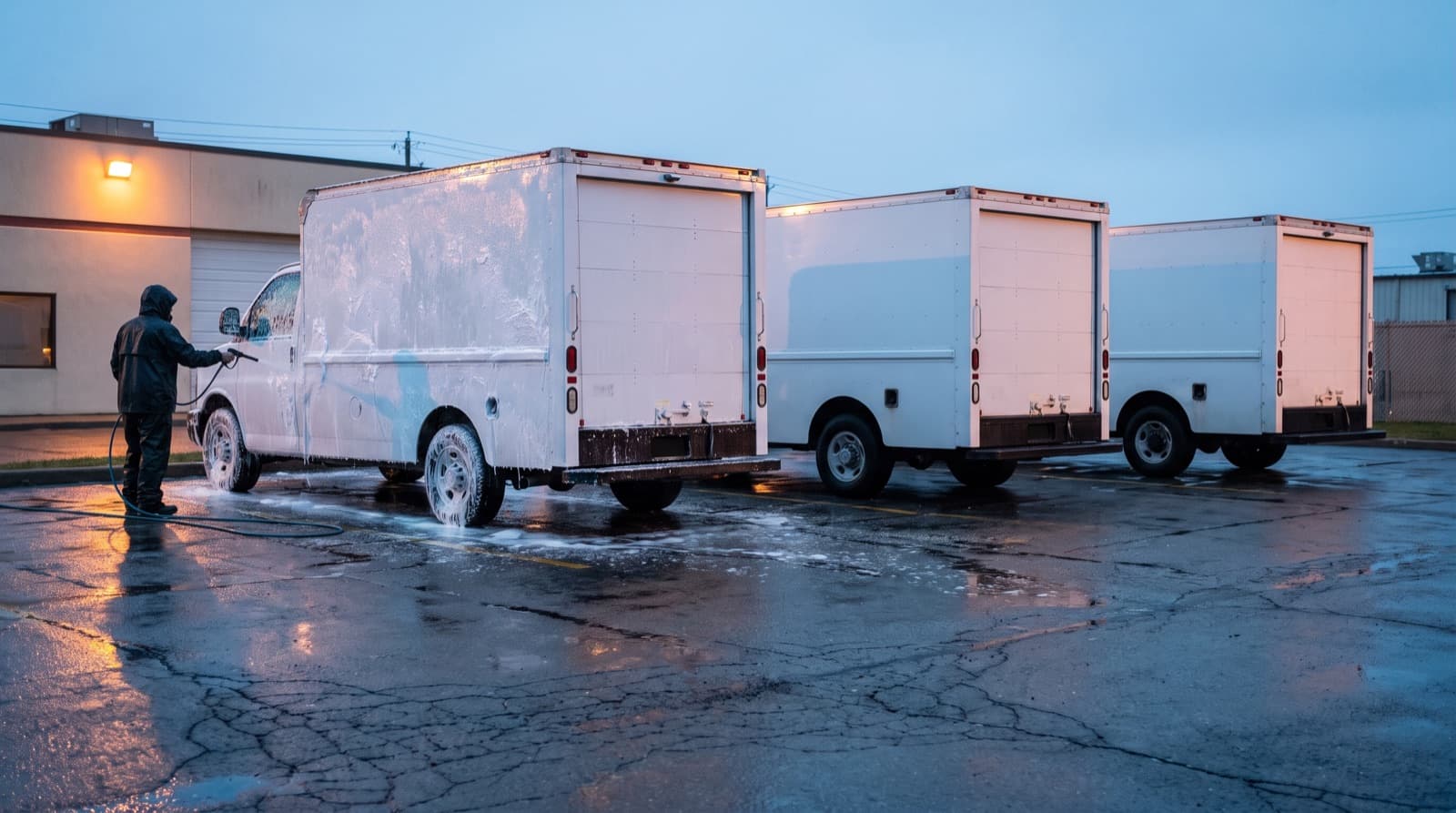
- On-site mobile service: a detailer comes to your lot, your office or the driver's home. Drivers stay on the job, and the inside can be done on the same visit.
Drive-thru, in-house or on-site: which is best for your fleet?
The right pick depends on your fleet size, your schedule and how the insides need to look.
A drive-thru wash looks cheap per visit, and a monthly unlimited plan looks even cheaper. Then add the paid time each driver spends in line and on the road. In-house washing looks free, until you count the hours and supplies.
Here is a simple way to see the hidden cost. Take the hours each driver is away per wash. Multiply by the number of drivers. Then multiply by hourly pay and by washes per month. That is what drive-thru trips really cost each month, on top of the wash price.
A touchless drive-thru is gentler on paint than brushes, but it often leaves a thin film of road grime. An express wash skips the inside. A full-service wash adds a quick vacuum and wipe, but the driver waits longer.
| What matters | Drive-thru wash | In-house washing | On-site mobile service |
|---|---|---|---|
| Driver time lost | High: drive, wait, drive back | Medium: staff wash instead of working | Low: done while parked |
| Inside cleaned | Express: no. Full-service: quick vacuum and wipe | Often skipped | Yes, on the same visit |
| Steady results | Same machine, same limits | Depends on who washes that day | Steady if the vendor uses a set checklist |
| Paint safety | Brushes can leave fine scratches | Good if trained, risky if rushed | Hand wash is gentle; ask how they wash |
| Brand look (wraps and logos) | Brushes and strong spray can lift wrap edges | Depends on who washes | Hand wash can work around wraps and lettering |
| Tall vans and racks | Some tunnels can't fit them | Fine if you have room | Fine, done in place |
| Setup for you | None | Space, water, hose, supplies | Access to vehicles and keys |
| Best fit | A few cars, outside only | A big yard with a wash area | Busy teams that need insides done |
Why does the inside matter so much for fleet vehicles?
A clean outside gets noticed from the curb. But the inside is where clients and riders sit, and where drivers spend the whole shift.
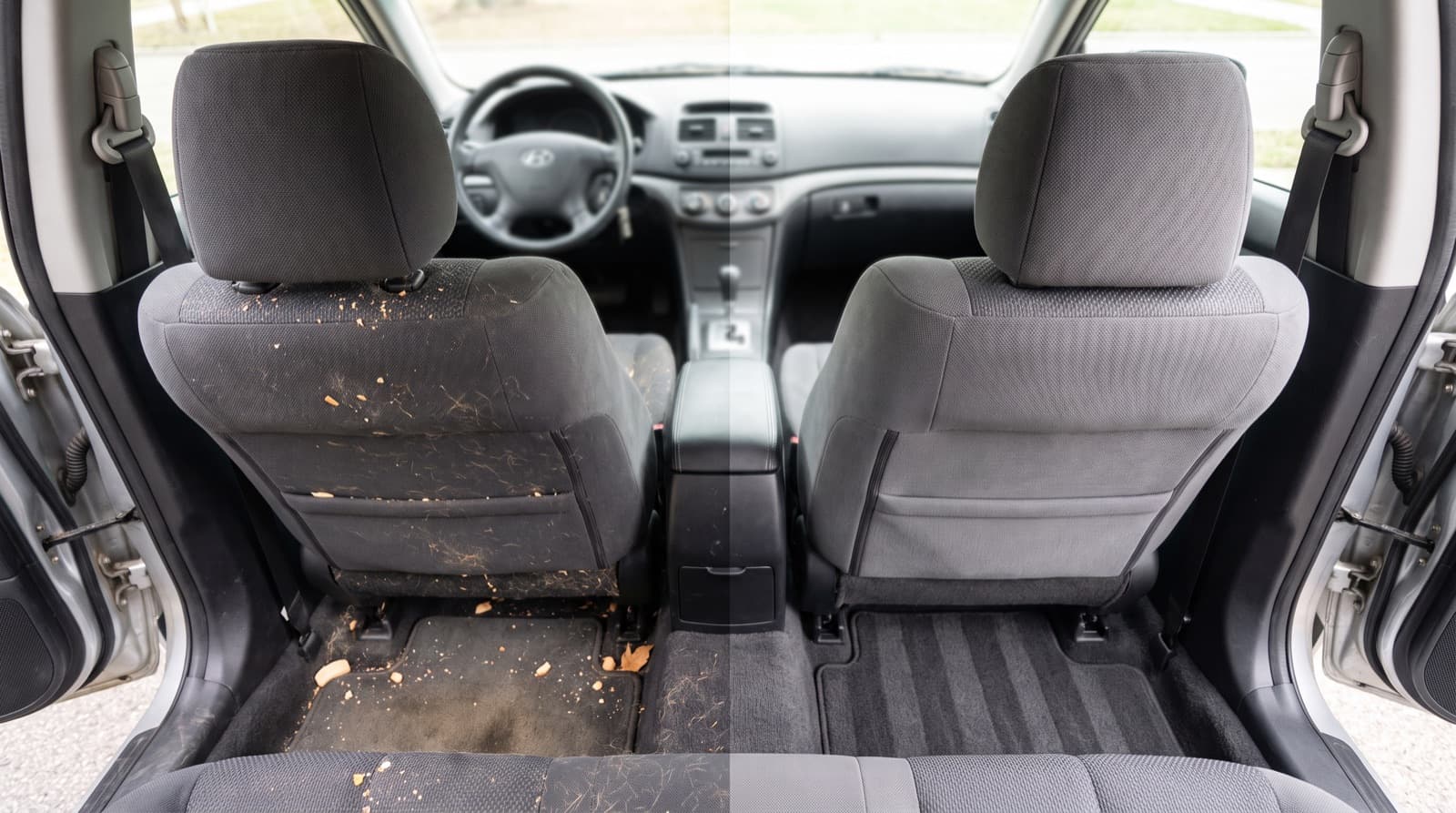
Work vans collect mud, sawdust, coffee spills and food bags. Company cars pick up crumbs and stale smells. Rideshare and rental cars get spills, pet hair, beach sand and smells left by strangers.
An express wash doesn't touch any of that. A full-service wash or self-serve vacuum mostly grabs the loose dirt on top. A real inside clean covers:
- Vacuum seats, carpets, mats and cargo areas
- Wipe down the dash, doors, steering wheel and other touch points
- Clean the glass inside and out
- Pull pet hair out of seats and carpet
- Treat stains and odors with steam and an enzyme cleaner (a cleaner that breaks down what causes smells)
Pro tip: Put rubber floor liners in every work van. Mud and sawdust stay on the liner, not in the carpet. Each clean then goes faster.
How much does fleet cleaning cost, and what changes the price?
Fleet cleaning is quoted per vehicle, based on your count, locations and schedule. For scale, our single-car exterior wash with spray wax starts at $149 for a sedan and $199 for an SUV. A Full Detail, inside and out, starts at $399 for a sedan and $449 for an SUV.
Your real number depends on a few things:
- How many vehicles: more vehicles means a longer visit and more planning.
- How close together they park: ten vans in one yard are one stop. Ten cars at ten homes means ten stops.
- How often: a clean every week or two keeps dirt from building up, so each visit goes faster.
- Condition: the first clean on a neglected van takes the longest.
- Inside, outside or both: an outside wash is the lightest job. A deep inside clean with steam takes the most time.
- Vehicle size: a sedan takes less time than an SUV, a pickup or a high-roof van.
- Time windows: short slots shape the plan. We work 8 AM to 8 PM, seven days a week, so early evenings and weekends can work too.
How do Bay Area weather and streets affect fleet vehicles?
Fleets here face their own mix of grime. Knowing it helps you pick how often to clean, whatever fleet car washing setup you use.
Space is tight too. Many lots and garages have no hose and no room to wash. That is one reason on-site service fits the city so well.
- Salt air: vans parked near the Embarcadero, the Marina or Sausalito pick up a salty film. Left on, it can speed up rust on chips and bare metal.
- Fog and marine layer: damp mornings hold dust on the paint. When the sun comes out, the drops dry into spots.
- Rain season: roughly November through March, road grime coats the lower panels. Muddy boots soak the floor mats.
- Hills: stop-and-go driving builds up brake dust (black grit from the brake pads) on wheels fast.
- Street parking: tree sap and bird droppings can etch the paint if they sit for days.
- Beach sand: vans that work near Ocean Beach, Pacifica or Half Moon Bay track sand into every seam.
Can you do fleet washing in-house the right way?
Yes, if you have space, water and one person who owns the job. Train them once and give them a checklist. Here is a safe routine for cars and vans.
- Park in the shade, and let hot panels cool first.
- Clean wheels and tires first, with their own brush and bucket.
- Rinse from top to bottom to lift loose grit.
- Use a two-bucket wash: one bucket of car soap, and one of clean water to rinse the mitt.
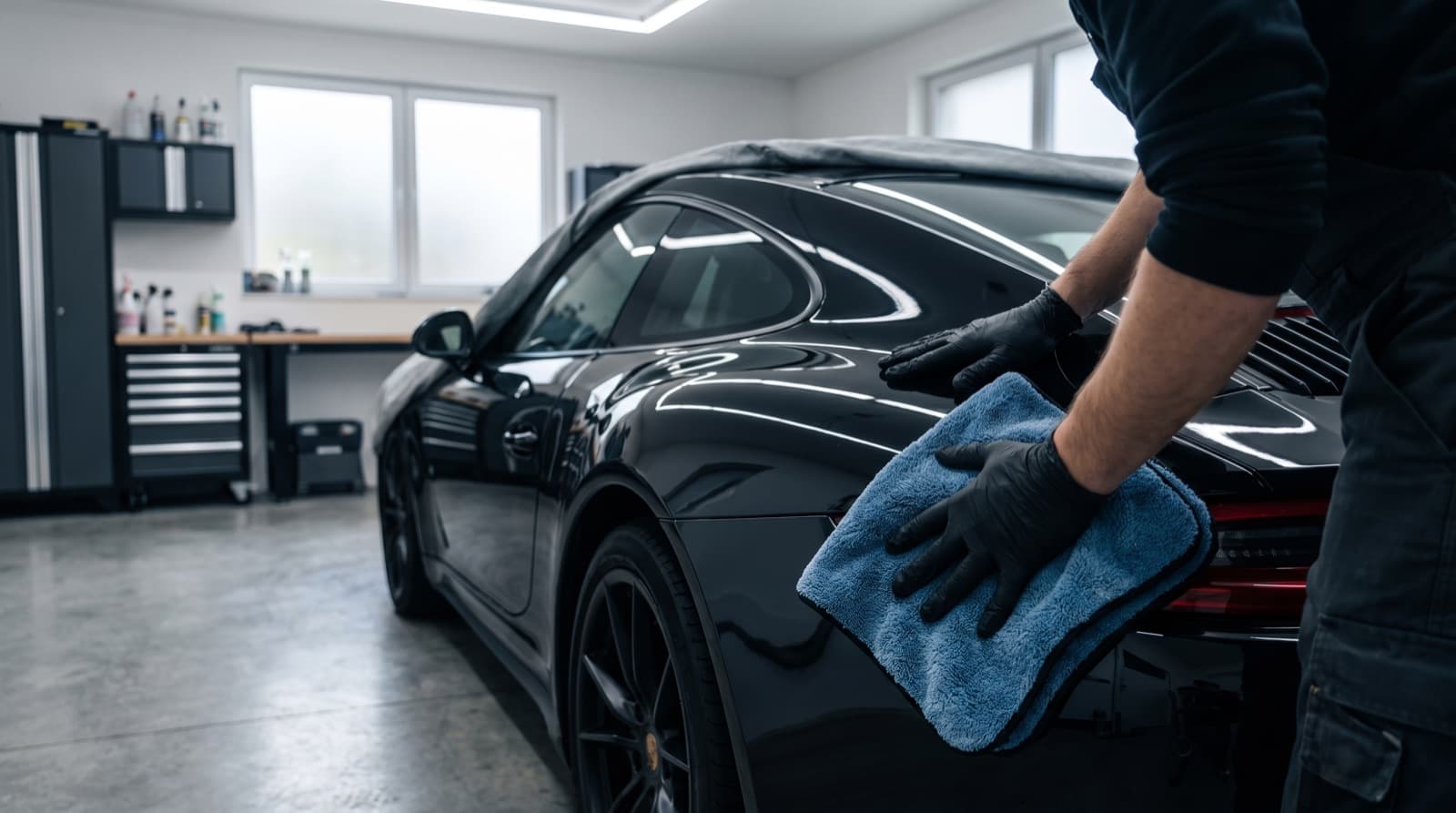
- Wash from the roof down with a microfiber mitt (a soft cloth that traps grit).
- Skip dish soap. It strips wax and can dry out rubber and plastic trim.
- If you use a pressure washer, pick a wide fan tip and keep it well back from the paint. Stay away from chips and peeling edges.
- On wrapped vans, keep the spray off wrap edges and vinyl lettering. Skip harsh solvents, which can dull or lift a wrap.
- Dry right away with clean microfiber towels, so drops don't turn into spots.
- Vacuum the mats and seats, wipe the touch points, and log the date for each vehicle.
Pro tip: Give each washer their own set of towels and mitts. If a towel hits the ground, it goes in the laundry, not back on the paint.
When should you call a pro for fleet washing?
In-house washing tends to break down in the same few ways. If these sound familiar, it may be time to hand it off.
- Washing keeps getting pushed to next week because staff are busy.
- Some vans shine while others look neglected.
- Clients or riders mention smells, stains or pet hair.
- You spot swirl marks (fine circle scratches that show in the sun) from rushed washing.
What should you look for in a fleet washing service?
Not every service works the same way. Before you sign up, ask about these points.
Here is how we handle them. Our master technicians come to you, and we are insured. We give a 1-hour arrival window and text you when we are on the way. If you find a missed spot within 48 hours, send a photo and we come back to fix it.
- Insurance: ask if they are insured before they touch your vehicles.
- Self-contained: they carry what they need, so you need no hose or outlet.
- Training: ask who does the work and how they were trained.
- Same steps every time: a set checklist keeps results steady across the fleet.
- Clear timing: a set arrival window and a text before they show up.
- Missed spots: ask what happens if you find one after they leave.
Fleet manager checklist: what to have ready for a quote
Gather these details before you reach out, and you will get a clear answer faster.
Send it all through our quote form, or text it to (415) 483-5686.
- Count and type: how many sedans, SUVs, pickups and vans you run.
- Where they park: your yard, office lot, garage or the drivers' homes. Note where they sit overnight, too.
- Access: who has keys, plus any gate codes or garage rules.
- Schedule: how often, which days, and when the vehicles are free.
- Inside or outside: outside only, a quick inside, or a deep clean with steam.
- Problem vehicles: note any with heavy stains, smells or pet hair, and add a few photos.
- Billing and contact: how you want to be invoiced, and one person we can text on service days.
Frequently Asked Questions
How often should fleet vehicles be washed?
For most city work vans, a wash every one to two weeks is a good start. Add an inside clean once a month. Rideshare cars and vans parked near the ocean may need more.
Are drive-thru car washes bad for fleet vehicles?
They are not bad, just limited. Brush tunnels can leave fine scratches over time, and express washes skip the inside. Some tunnels also can't fit tall vans or ladder racks.
Can a mobile service wash our vehicles at our office or yard?
Yes, if the lot owner allows it and the vehicles can be reached. We bring our own water and power, so you don't need a hose. For inside work, someone needs to hand over keys or unlock the vehicles.
Can you wash fleet vehicles overnight or after hours?
We work 8 AM to 8 PM, seven days a week, so we don't wash overnight. Early-evening and weekend slots can work while vehicles sit parked. Cars kept at drivers' homes can be done on a driver's day off.
Does Golden Bay Detailing offer fleet washing?
Yes, we clean company cars, service vans and small fleets on site across San Francisco, the Peninsula and Marin. Fleet plans are quoted per vehicle, based on count, location and schedule. Send your details through our quote form, or text (415) 483-5686.
Keep reading from Golden Bay
Get a Free Fleet Washing Quote
Tell us how many vehicles you run and where they park. We come to you with our own water and power, 8 AM to 8 PM, seven days a week.