How-To
Car Wash Power Washer Guide: Tips, Distance, No-Spray Zones
Key Takeaways
- A car wash power washer is safe on healthy paint with a wide 40-degree tip, held well back and kept moving.
- Never use a 0-degree or turbo tip on a car. Keep the jet off rock chips, peeling clear coat, badges, film edges, seals, tires and sensors.
- Pressure only knocks off loose grit. Road film still needs car wash soap, a short soak and a soft mitt.
- Never point a power washer wand at skin, people or pets, because the jet can cause serious injuries.
- Golden Bay Detailing is a mobile detailer in San Francisco, the Peninsula and Marin. Its exterior wash with spray wax starts at $149 for a sedan.
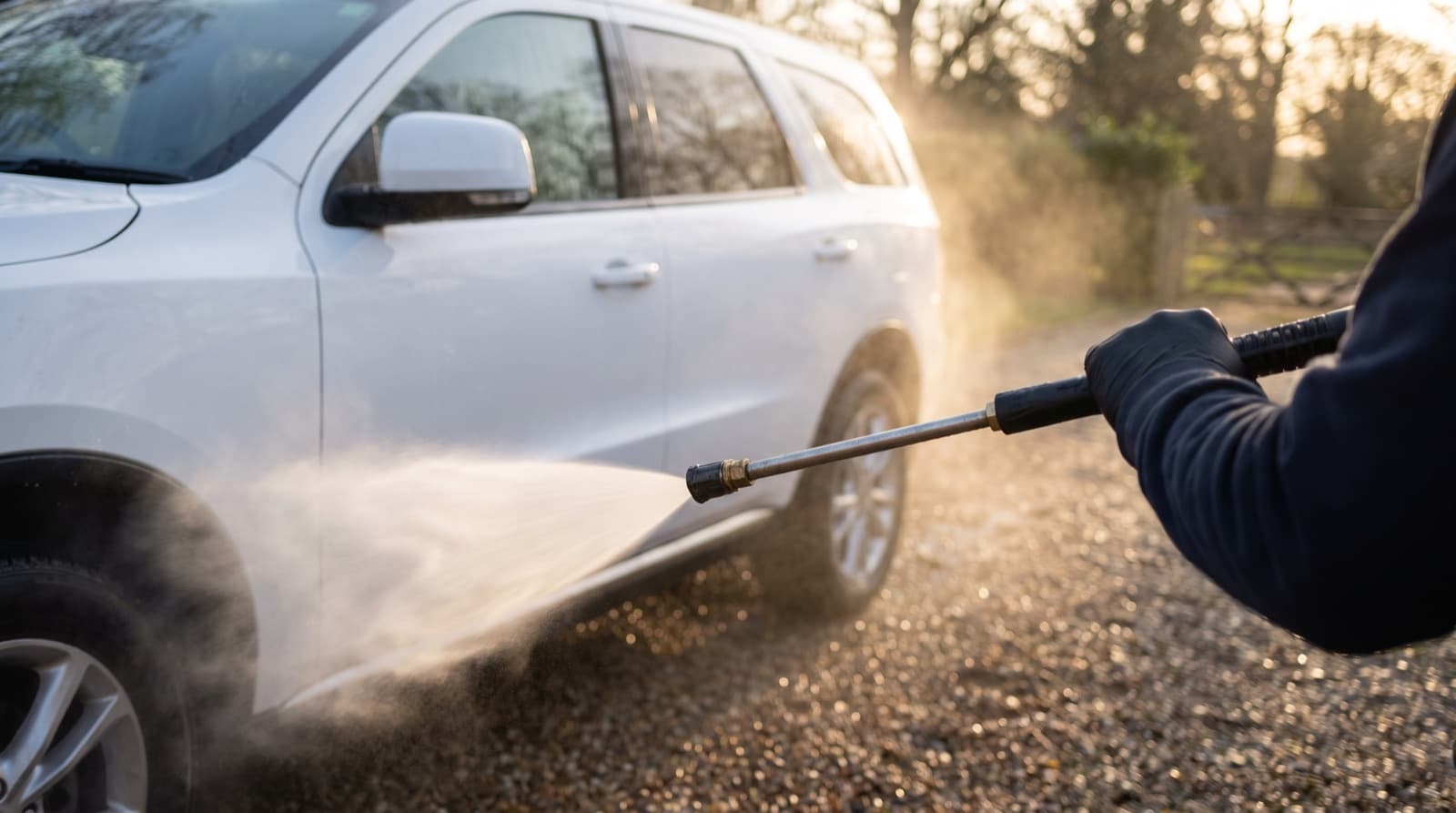
A car wash power washer is safe on healthy car paint. Use a wide fan tip, stand well back and keep the wand moving. Keep the jet off chips, peeling paint, badges, seals and film edges. Used that way, it rinses grit off before anything touches the paint.
Trouble starts with the wrong tip. A thin jet held close can lift paint, cut rubber and force water inside. And pressure alone won't get a car clean. You still need soap and a soft mitt.
Can a pressure washer damage car paint?
It can, but it rarely does when used the right way. Car paint is made to handle rain, road spray and rinsing.
Damage almost always comes from how the wand is used, not from the machine. The usual causes are a thin tip, standing too close or holding the jet on one spot.
Weak spots are the real risk. Paint that is already chipped, peeling or badly repainted can lift. So can badges, stripes and the edges of film.
Most people use the names power washer and pressure washer for the same tool. We use both in this guide.
What should you look for in a power washer for car detailing?
You do not need a special car cleaning pressure washer. Most home electric washers have plenty of power for a car. Gas models often have more punch than paint needs.
The box lists two numbers. PSI is how hard the water pushes. GPM (gallons per minute) is how much water flows. For paint, the tip and your distance matter more than either number.
More power is not better here. Control is what counts, so look for these features:
- A set of quick-connect tips that includes a 40-degree tip and a soap tip
- A pressure dial or a low setting, so you can turn it down
- A long, soft hose, so you don't drag it against the car
- A trigger lock, so the wand can't fire by mistake
- A way to add a foam cannon later (a bottle that turns soap into thick foam)
Which nozzle tip should you use to wash a car?
Each tip is stamped with a degree number that shows how wide the spray fans out. A smaller number means a thinner, harder jet.
Many kits also color their tips. Red is often 0 degrees, yellow 15, green 25, white 40 and black is for soap. Always check the number, not just the color.
| Tip | Spray shape | Use it on a car? |
|---|---|---|
| 0-degree (often red) | A thin, pencil-like jet | Never. It can cut paint, rubber and skin. |
| Turbo or rotary | A spinning pencil jet | Never. It is made for concrete. |
| 15-degree (often yellow) | A narrow, hard fan | No. It is too strong for paint and trim. |
| 25-degree (often green) | A medium fan | Only for wheel wells and muddy lower panels, from farther back. |
| 40-degree (often white) | A wide, flat fan | Yes. This is the best tip for rinsing paint. |
| Soap tip (often black) | A soft, low-pressure spray | Yes, for putting on soap. It is too weak to rinse well. |
How far away should you hold a power washer from your car?
Start farther back than you think. Hold the tip at least an arm's length from the paint. If dirt won't move, step in only a little. Never get so close that the wide fan shrinks to a short, hard line.
No single distance fits every car. Your washer's manual may list a safe distance for your model. If your car has a coating, wrap or film, the installer's care sheet may list one too.
Keep the wand moving in smooth, sweeping passes. Spray at a slant, so the water rolls dirt off the panel. Never park the jet on one spot.
Stay safe while you work:
- Never point the wand at skin, people or pets. The jet can cause serious injuries.
- Wear eye protection and closed shoes.
- Keep plugs, cords and the machine out of puddles.
- Turn the machine off and squeeze out the pressure before you swap tips.
- Lock the trigger when you set the wand down.
Where should you never spray a power washer on a car?
Some parts of a car can't take a direct jet, even from a wide tip. Rinse near them from farther back, or skip the jet and use a soft mitt.
- Rock chips. Water can get under the chip edge and pop off more paint.
- Peeling clear coat (the clear top layer over the color). A jet will lift more of it.
- Badges and emblems. Many are held on with tape, and a close jet can loosen them.
- Vinyl wraps, stripes and paint protection film (a clear plastic skin on the paint). Keep the spray off every edge and seam.
- Matte paint and matte wraps. Stay well back and follow the care sheet from the maker or installer.
- Window, door and sunroof seals, plus convertible tops. A direct hit can push water inside.
- Tire sidewalls. A close, thin jet can gouge the rubber.
- Sensors, cameras and charge ports, often found in the bumpers, grille and mirrors.
- The engine bay. Skip the power washer there. Wires and plugs need a gentle, low-pressure rinse or no water at all.
Pro tip: Walk around the car before you plug in the washer. Look for chips, peeling spots and film edges that lift. Those are your no-spray zones for the day.
Why doesn't a power washer get a car fully clean?
Pressure only knocks off loose sand, dust and mud. It can't lift traffic film (the thin, greasy gray layer from road spray and exhaust).
That film clings to paint like grease on a pan. It needs soap, a short soak and a soft touch. That is why a car can look clean when wet and dull once it dries.
Think of the power washer as your first and last step. It rinses grit off before the mitt touches the paint. Then it rinses the soap away.
How do you use a car wash power washer, step by step?
Here is a simple, safe routine for a home wash. It works on most cars with healthy paint.
- Park in the shade, with the paint cool to the touch. Soap and water dry fast on warm paint and leave spots.
- Wash on grass or gravel if you can, and keep soapy water out of the storm drain.
- Fit the 40-degree tip and pick the lowest setting that moves dirt.
- Clean the wheels and tires first, with their own brush and bucket. Rinse wheel faces and wheel wells from well back, and keep the jet off tire sidewalls.
- Rinse the body from the roof down, in slow, sweeping passes.
- Put on car wash soap with the soap tip, a foam cannon or a bucket. Skip dish soap and strong degreasers, which can strip wax or sealant.
- Let the soap soak briefly, but never let it dry on the paint.
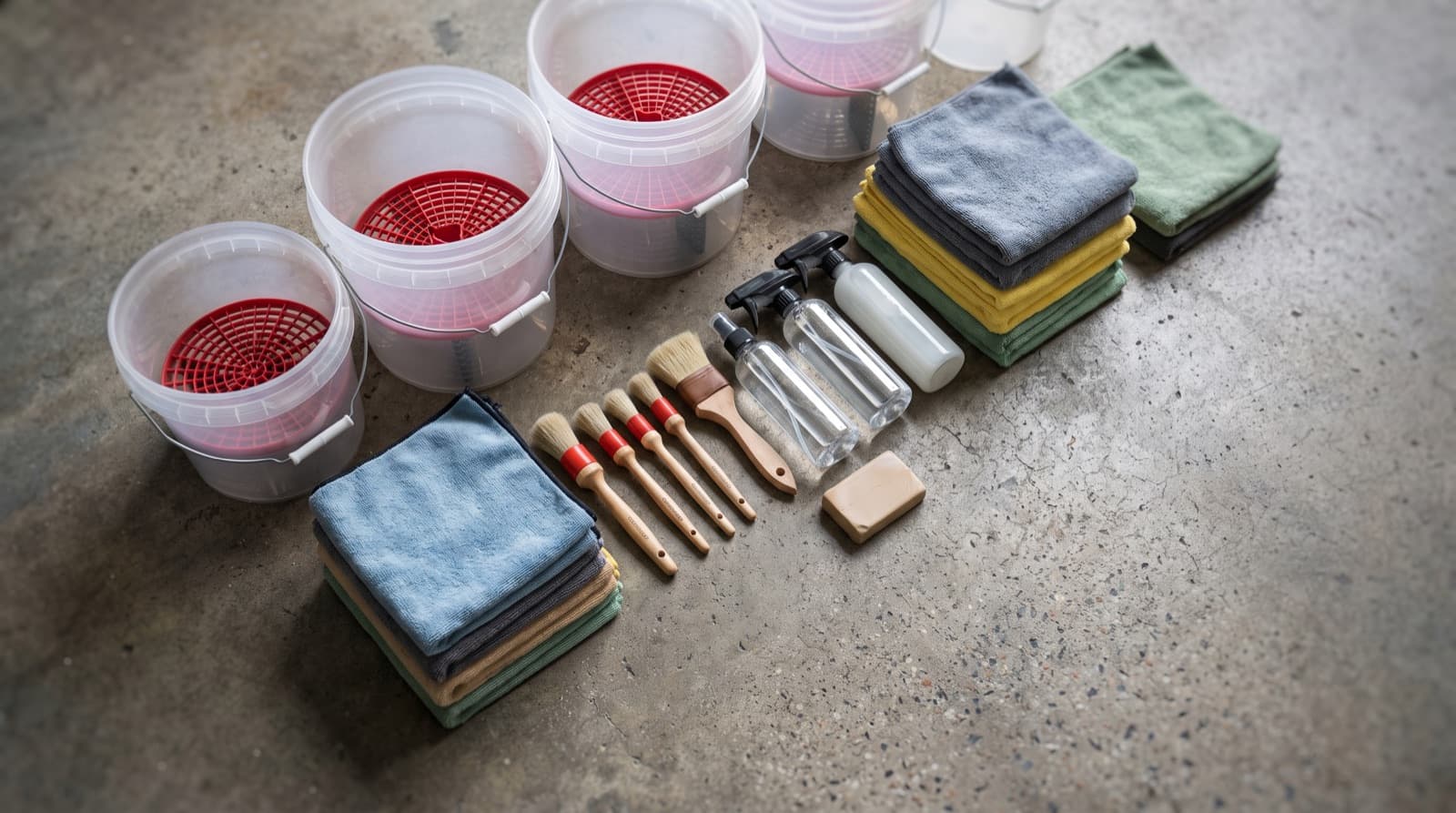
- Hand wash from the top down with a soft mitt. Use two buckets, one for soap and one to rinse the mitt.
- Rinse again from the roof down with the 40-degree tip.
- Dry right away with a soft microfiber towel or a car blower.
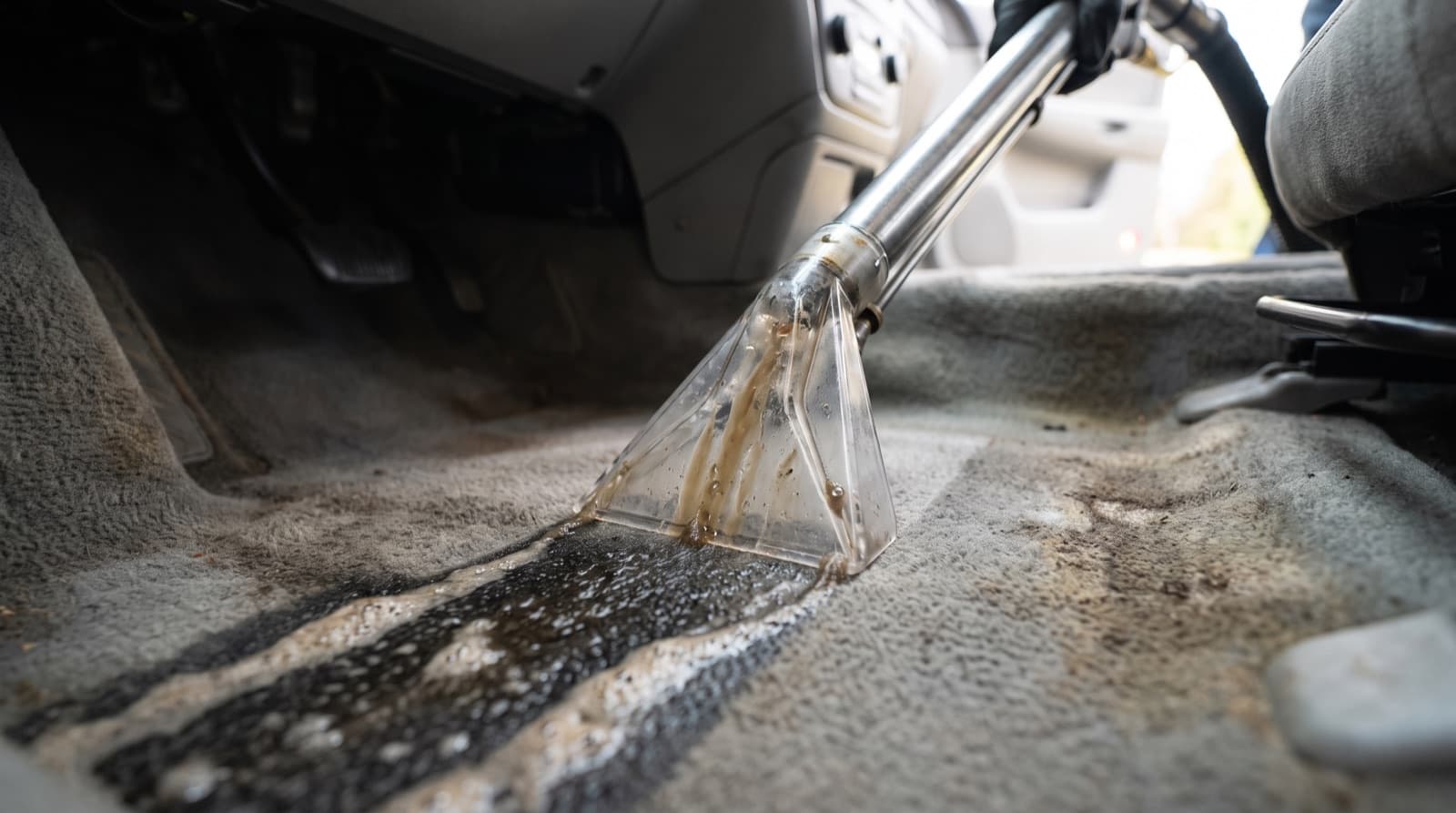
- Rubber floor mats can take the same wide-tip rinse. Fabric mats need a vacuum and a different method.
Pro tip: Start each wash with a test pass on a lower door, from well back. Watch the trim, badges and film edges as the water hits. If anything flutters or lifts, step back or skip that spot.
What if you can't use a power washer where you park in the Bay Area?
Lots of Bay Area drivers can't run a washer at all. Many apartment garages don't allow washing. Street parking means no outlet and no hose.
Fog and the marine layer leave a damp film on the car. When the sun breaks through, the drops dry into spots. Salt air near Ocean Beach, the Marina and Sausalito leaves a salty film.
Beach days pack sand into wheel wells and door jambs. Rain season throws oily grime up the lower panels. A gentle rinse helps with salt and sand. You still need soap and a mitt for the film.
With no hose or outlet, a waterless wash works for light dust. Or we come to you, and our van brings its own water and power. We can work at your home, your office or a legal street spot. We can also use your apartment garage if the building allows it.
An exterior wash with spray wax starts at $149 for a sedan and $199 for an SUV.
When should you call a pro instead of power washing it yourself?
Power washing is a fine DIY job on a car with healthy paint. Call a pro when the risk goes up:
- Your paint has chips, peeling clear coat or an old repaint.
- Your car has a wrap, stripes, matte paint or paint protection film.
- Your car has a ceramic coating, and you want it washed the right way.
- Road film or tar won't come off with a normal wash.
- You have no space, no hose or no outlet where you park.
Pro tip: Our technicians use a foam pre-wash and a two-bucket hand wash with soft mitts. They check for chips and film edges first, so the rinse stays off weak spots.
Frequently Asked Questions
What PSI is safe for washing a car?
There is no one safe number for every car. PSI is how hard the water pushes, but the tip and your distance matter just as much. Use the widest fan tip, the lowest setting that moves dirt and any distance your washer's manual gives.
Is a power washer better than a garden hose for washing a car?
It rinses faster and knocks off more loose grit. But neither one removes road film alone, so both need soap and a soft mitt.
Can a power washer strip paint off a car?
It is unlikely on healthy factory paint with a wide tip and a safe distance. It can lift paint that is already chipped, peeling or badly repainted. A 0-degree or turbo tip held close can harm almost any finish.
Can I power wash a car with a wrap or paint protection film?
Yes, with care. Use a wide fan tip, stay well back and never aim at edges or seams. Follow your installer's care sheet too.
Can you power wash a ceramic coated car?
Yes, once it has cured. After we install a coating, don't wash it for 10 to 14 days. Then a gentle wide-tip rinse is fine. Brush tunnel washes void our warranty, and a yearly Ceramic Maintenance Detail (from $250) keeps it valid.
Is the car wash pressure washer at a self-serve bay safe for my paint?
Usually, yes. Keep it moving and stand farther back than at home, since you can't pick the tip. Skip the foam brush, which may hold grit from the last dirty car.
Can Golden Bay wash my car if I can't use a power washer at home?
Yes. Our van brings its own water and power to your home, office or a legal street spot. We serve San Francisco, the Peninsula and Marin. An exterior wash with spray wax starts at $149 for a sedan and $199 for an SUV.
Keep reading from Golden Bay
No hose or outlet? We'll wash it for you.
Get a free quote for a gentle hand wash with spray wax. We come to you in San Francisco, the Peninsula and Marin, with our own water and power.