Problem Solvers
How to Remove Stains From Car Seats: By Type & Fabric
Key Takeaways
- To remove a stain from a car seat, blot up the spill, match a cleaner to the stain type, work it in gently, then blot it back out. Never rub, and never soak the foam padding.
- Rubbing spreads a stain sideways into the weave and frays the fabric, so always blot straight down and work from the outside edge toward the center.
- Protein stains like blood and vomit must be treated with cold water and an enzyme cleaner, because hot water cooks them permanently into the fabric.
- Cloth seats are porous and need flushing and extraction, while leather and vinyl are sealed, so most stains wipe off the surface with a pH-balanced cleaner.
- Old, set-in, or smelly stains that have soaked into the padding usually need a hot-water extractor, which a mobile pro can bring to your driveway.
To remove stains from car seats, blot up the mess first, match a cleaner to the stain type, work it in gently, then lift it back out. Never rub, and never soak the padding. That order matters more than which product you grab off the shelf.
Two mistakes ruin most seats. Rubbing grinds the stain deeper and frays the fabric, and over-wetting leaves water trapped in the foam, which turns musty fast in a damp climate. Get the technique right and cheap cleaners work fine.
At Golden Bay Detailing, our technicians pull coffee, grease, ink, and worse out of San Francisco interiors all week. Here's the exact cleaner and method we use for each common stain, on both cloth and leather, plus when a stain is beyond a home fix.
What's the fastest way to lift a fresh stain?
Speed beats any product. The second something spills, blot it with a clean microfiber or paper towel, pressing straight down to soak up as much as you can before it sinks into the foam. The less liquid that reaches the padding, the easier the whole job gets.
Once the surface mess is up, do not scrub. Rubbing pushes the stain sideways into the weave and roughs up the fabric. Instead, apply your cleaner, give it a minute to work, then blot again to draw the loosened stain up and out. Blot, dwell, blot — that's the whole rhythm.
- Blot, don't rub. Press straight down, lift, and switch to a clean part of the towel.
- Work from the outside edge toward the center so you don't spread the ring.
- Test any cleaner on a hidden spot first, like under the seat or behind the bolster.
- Reach for the mildest cleaner that works before you try solvents like alcohol.
- Dry as you go. A soaked seat becomes a slow, musty problem days later.
Cloth vs. leather: the stain rules are different
Cloth seats are porous, so stains sink in and cleaning means flushing them back out with water and agitation. Leather and vinyl are sealed, so most stains sit on the surface. The risk with leather isn't the stain, it's using something harsh that strips the finish or dries the hide until it cracks.
On cloth you can be firmer with moisture and a brush, then blot or extract. On leather, stay gentle: a pH-balanced leather cleaner and a soft cloth handle most marks, and you follow with a conditioner so it stays supple. Denim dye transfer and ink are the two leather stains worth catching fast, because they creep into the pores and set.
The right cleaner for coffee, grease, ink, blood, and more
Different stains need different chemistry. Oil-based messes need a degreaser, and protein stains like blood and vomit need cold water plus an enzyme cleaner, because heat cooks them into the fabric for good. Here's the quick reference our technicians work from.
| Stain | Best cleaner | Method | DIY or pro? |
|---|---|---|---|
| Coffee / tea | Warm water with interior all-purpose cleaner or a drop of dish soap | Blot, apply, agitate lightly, blot dry | DIY |
| Grease / food oil | Cornstarch first if fresh, then degreaser or dish soap | Absorb the oil, then clean and blot out | DIY, pro if set |
| Ink / pen | 70%+ isopropyl alcohol on a cloth, not sprayed on the seat | Dab, don't drag; work the edge inward | DIY, test first |
| Blood | Cold water, then an enzyme cleaner | Blot with cold, never hot; let enzyme dwell | DIY |
| Vomit / pet accident | Enzyme cleaner plus extraction | Remove solids, treat, extract, deodorize | Pro |
| Kids / juice / food | Interior all-purpose cleaner and a soft brush | Blot, agitate, blot or extract | DIY |
| Old, set-in stain | All-purpose cleaner with a hot-water extractor | Repeat wet-and-extract passes | Pro |
How to blot, agitate, and extract a stain step by step
Most stains come out with the same simple loop. The trick is patience over pressure — two or three gentle passes beat one hard scrub every time.
- Blot up everything on the surface with a dry towel first.
- Lightly mist the stain with your matched cleaner — damp, not flooded.
- Let it dwell one to three minutes so it can break the stain down.
- Agitate gently with a soft upholstery brush in small circles.
- Blot with a clean, dry towel to lift the loosened stain.
- Repeat the mist-dwell-blot cycle until it fades; most take two or three rounds.
- Rinse by blotting with a barely damp clean-water towel, then dry with airflow.
Pro tip: Keep two towels going — one to apply cleaner, one to lift. When the lifting towel stops picking up color, the stain is coming out. When it keeps grabbing color pass after pass, you've reached the padding and it's time for an extractor, not more scrubbing.
Why San Francisco seats stain the way they do
San Francisco interiors take a specific kind of abuse. Fog and the marine layer keep humidity high, so a stain that stays damp turns musty fast — drying fully matters more here than in a dry climate. Park on the street with no garage and that dampness never really leaves the cabin.
Then there's the daily wear: commute coffee on the 101, Ocean Beach and Baker Beach sand ground into the seat base, farmers-market spills, and a city full of rideshare and EV owners loading strangers and groceries into the back seat. Sand is the sneaky one. It acts like sandpaper and drives stains deeper every time you sit, so vacuum it out before you wet anything.
Because we come to you, mobile detailing fits how the city actually lives — no garage, tight parking, packed schedule. We bring our own water and power to your driveway, curb, or office lot and handle the whole job on-site.
When DIY is enough — and when to call a pro
Most fresh, surface-level stains are a DIY win. Coffee, juice, a dropped fry, a kid's snack — catch it in the first day or two and a towel, a decent interior cleaner, and a little patience will get it out. Save your money.
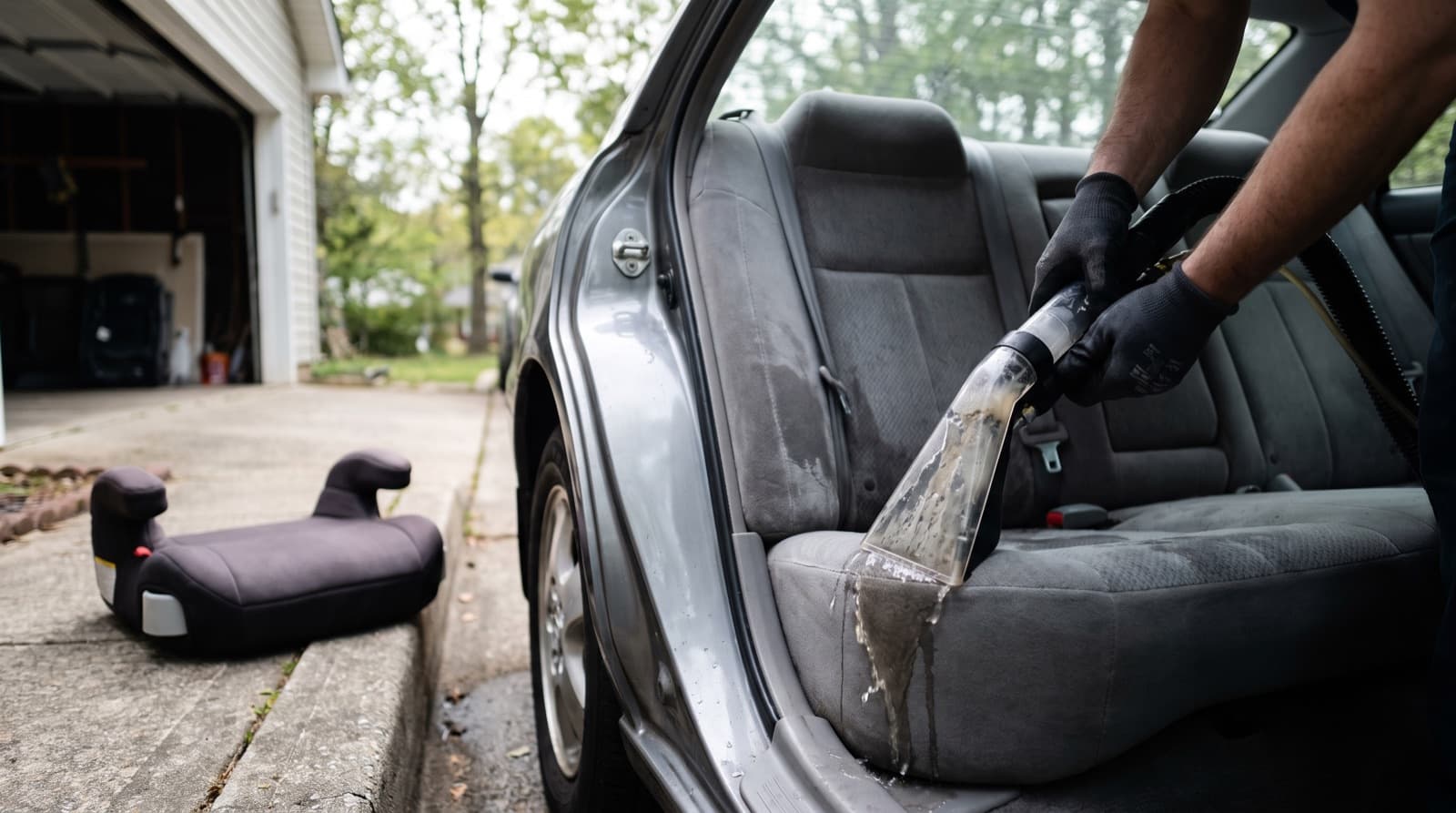
Call a pro when the stain is old and set, when it's protein-based and starting to smell (vomit, pet accidents, spoiled milk), or when it has soaked into the foam. Those need a hot-water extractor, a machine that injects cleaning solution deep into the padding and vacuums the dirty water back out. That's the line between cleaning the surface and actually cleaning the seat. Without one, you're just re-wetting the problem and sealing in the smell.
One dried-in stain isn't worth a full detail. But if the whole interior needs help, a deep interior clean covers every seat, the carpet, and the mats in a single visit.
How to stop stains before they start
The cheapest stain fix is the one you never have to do. A few habits keep your seats out of the extractor entirely.
- Keep two microfiber towels in a door pocket so you can blot spills the second they happen.
- Use a seat cover on the seat that takes the most abuse — the kid seat or the dog spot.
- Vacuum out sand and crumbs weekly so they don't grind into the fabric.
- Fabric-guard your cloth seats after a deep clean so liquids bead instead of soaking in.
- Handle spills same-day. A fresh stain is a five-minute job; a two-week-old one is an extractor job.
Frequently Asked Questions
Is it really better to blot than rub a car-seat stain?
Yes. Rubbing pushes the stain sideways into the weave and roughs up the fibers, which spreads the mark and can leave a permanent fuzzy patch. Blotting presses straight down and lifts the stain up and out of the fabric. Switch to a clean part of the towel each time so you're not pressing dirt back in.
Can I use household stuff like dish soap or vinegar on car seats?
For many stains, yes. A drop of dish soap in warm water handles coffee and general grime on cloth, and diluted white vinegar helps with light stains and odor. Skip bleach and harsh degreasers on fabric and leather, and always test on a hidden spot first, because some cleaners can lighten dyed upholstery.
How do I get an old, dried-in stain out?
Old stains need moisture and patience. Re-wet the stain with your cleaner, let it dwell several minutes to reactivate it, agitate gently, then blot — and repeat that cycle several times. If it won't budge after a few passes, it has set into the padding and needs a hot-water extractor to flush it out.
Will cleaning a seat leave a water ring?
It can, if you over-wet one spot and let it dry on its own. Clean the whole seat panel instead of a single patch, keep the fabric damp rather than soaked, and dry it with airflow so moisture doesn't wick outward and dry as a ring. On leather, wipe evenly and condition afterward.
Can Golden Bay remove a stain I already gave up on?
Often, yes. We bring a hot-water extractor and enzyme treatments to your location anywhere in San Francisco, which pull set-in coffee, grease, and protein stains that surface cleaning can't reach. If a stain has permanently dyed or bleached the fabric we'll tell you straight, but most stains people call ruined still come out. Send a photo with your free quote.
Keep reading from Golden Bay
Got a stain you can't lift?
Send us a photo and get a free quote. We bring the extractor, enzymes, and 500+ cars of experience straight to your driveway anywhere in San Francisco and the Peninsula.