How-To
How to Clean Alloy Wheels Without Ruining the Finish
Key Takeaways
- A pH-neutral, iron-removing wheel cleaner is safe on every alloy wheel finish, including bare polished aluminum, chrome, machined faces, and matte powder coat.
- Acid-based wheel cleaners strip baked-on brake dust faster but can permanently etch polished, anodized, and chrome wheels, so they belong only on painted or clearcoated wheels, diluted.
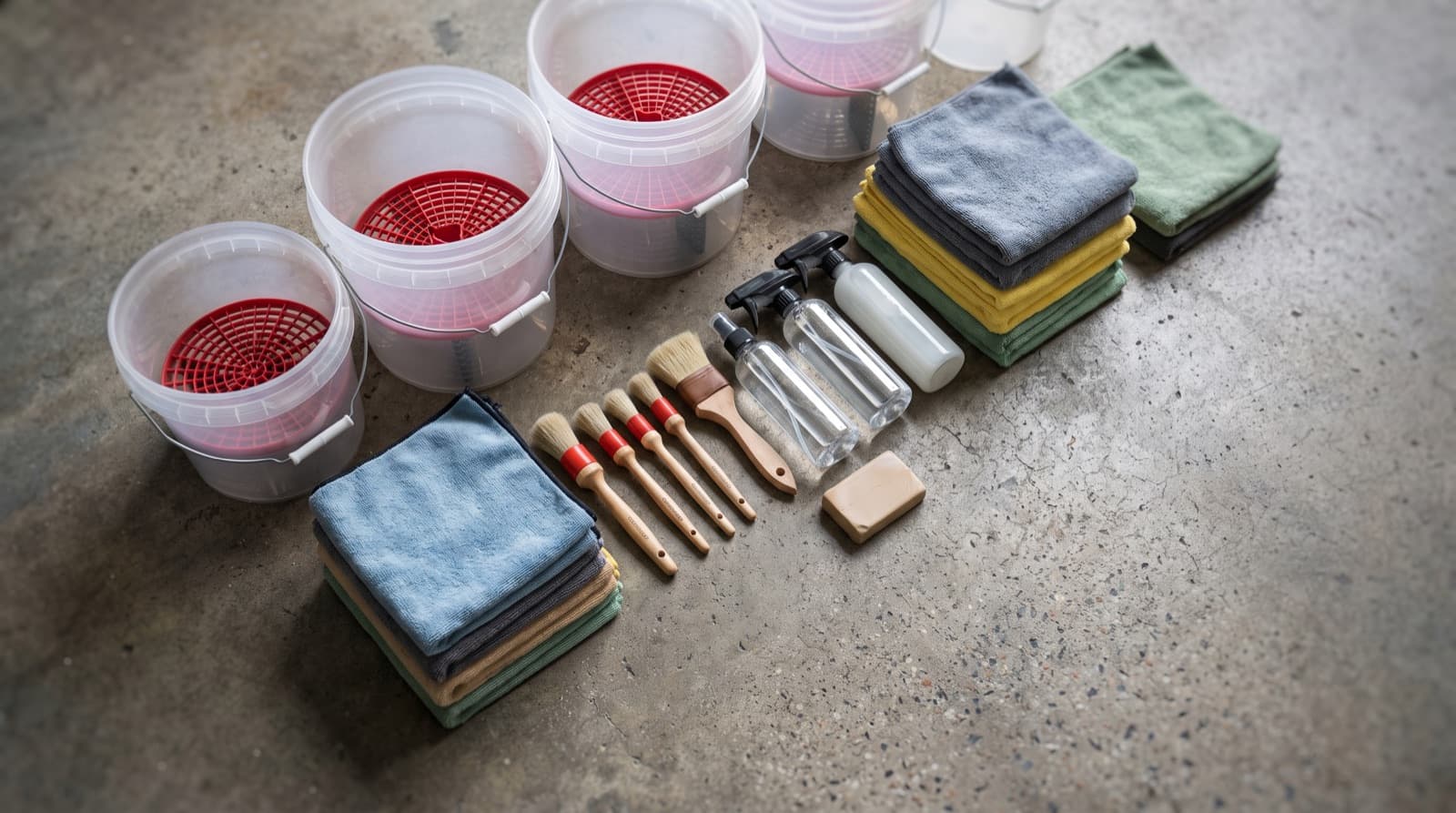
- Cleaning wheels properly takes four dedicated tools: a soft face brush, a long barrel brush, a small lug-nut brush, and a stiff tire brush, plus a bucket that never touches the paint.
- Wheels must be cool and out of direct sun before any chemical is applied, and dried within a few minutes so mineral water spots do not set.
- A dedicated wheel sealant or ceramic wheel coating keeps brake dust from bonding, so later cleanings become a rinse and a light brush instead of a full chemical decontamination.
To clean alloy wheels without wrecking the finish, work on cool wheels one at a time: rinse, spray a pH-neutral iron-removing cleaner, agitate the face, barrel, and lug recesses with three separate brushes, rinse from the top down, dry completely, then seal. The order and the tools matter more than which bottle you buy.
Almost every ruined wheel we see falls into one of two buckets. Someone used a strong acid cleaner on a bare polished or machined finish, or someone cleaned the wheels with the same mitt they used on the paint and dragged brake dust across the whole car.
At Golden Bay Detailing, our technicians have cleaned wheels on 500+ cars around San Francisco, from garage-kept Teslas to Outbacks that live on the street in the Sunset. Here's the exact process they use, and where DIY is genuinely fine.
Why do wheels need their own brushes and buckets?
Brake dust is not dirt. It is hot iron shed by the pads and rotor, and those particles embed themselves into the wheel's clear coat as they cool. That is why they resist a normal soapy wash.
It also makes your wheel brush the dirtiest tool in your kit. Use it or its bucket water on the paint and you are dragging metal shavings across your panels, putting in scratches that only machine polishing can remove.
Keep a separate bucket, separate brushes, and separate drying towels for wheels. Label them so nobody in the house mixes them up. Do the wheels first, before you touch the body, then dump that water and start clean.
pH-neutral or acid: which wheel cleaner is safe?
For nearly every car, a pH-neutral iron remover is the right choice. Products like CarPro Iron X, P&S Brake Buster, Bilt Hamber Auto Wheel, and Gyeon Iron dissolve embedded iron chemically and turn purple as they work. That color change is the reaction, not a gimmick.
Acid-based cleaners such as Meguiar's Wheel Brightener move faster on neglected, baked-on brake dust. They are also the fastest way to destroy a wheel. Acid etches bare polished aluminum, pits chrome plating, and hazes anodized finishes, and none of that polishes out.
- Use pH-neutral iron remover on any finish, any time, at full strength. It is slower but it cannot etch.
- Use acid only on painted or clearcoated wheels, diluted per the label, with a short dwell, and never in direct sun.
- Never put acid on polished, anodized, or chrome wheels, or on machined faces where the clear coat is already chipped.
- Skip household shortcuts. Oven cleaner, Bar Keepers Friend, and Magic Erasers all attack clear coat or leave micro-scratching.
- Rinse brakes and calipers thoroughly afterward. Leftover cleaner sitting on rotors can leave a light flash-rust film.
Painted, machined, polished, or chrome: how do you tell?
Alloy wheels differ in what sits on top of the aluminum, and that decides what is safe. Run a clean finger across the face: a clearcoated wheel feels slick and glassy, while bare polished aluminum feels slightly grabby and leaves a faint gray smudge on a white towel when you polish it.
If you genuinely do not know what you have, treat it as bare and use pH-neutral. You can always escalate later. You cannot un-etch aluminum.
| Finish | How to spot it | Safe cleaner | Avoid | Protection |
|---|---|---|---|---|
| Painted or clearcoated (most OEM) | Glossy uniform color; chips show gray metal | pH-neutral iron remover | Strong acid, wire brushes, abrasive pads | Spray sealant or ceramic wheel coating |
| Machined or diamond-cut | Fine circular lathe lines under clear | pH-neutral only | Any acid, especially near chips | Coating, and seal chips early |
| Polished aluminum (bare) | Mirror-like, dulls and hazes over time | Car shampoo or pH-neutral | Acid and strong alkaline degreasers | Metal polish, then sealant every few months |
| Chrome-plated | Deep blue-tinted mirror, very hard surface | pH-neutral with a soft brush | Acid, which pits and flakes the plating | Chrome-safe sealant |
| Powder-coated, matte or satin | Slight texture, low or no reflection | pH-neutral, no polish | Acid, compounds, glossy waxes | Matte-safe sealant or coating |
How do you clean alloy wheels step by step?
Work one wheel at a time so no chemical dries on the surface. Once your tools are laid out, this takes about five minutes per wheel.
- Park in the shade and let the wheels cool until you can hold your hand on them. Hot metal flash-dries chemicals and stains.
- Rinse the wheel, tire, and wheel well with a hose or pressure washer to knock off loose grit before any brush touches the finish.
- Spray pH-neutral iron remover across the face and into the barrel. Let it dwell three to five minutes, never until dry.
- Clean the face with a soft synthetic brush like a Daytona Speed Master, working from the center out.
- Clean the barrel with a long brush such as an EZ Detail Brush or Wheel Woolies, pushing in as far as your arm reaches. That hidden area holds the worst buildup.
- Use a small boar's-hair lug brush for the bolt recesses and around the valve stem, where dust cakes hardest.
- Scrub the tire separately with a stiff bristle brush and diluted all-purpose cleaner. Brown foam means old dressing is lifting off.
- Rinse from the top down, then move to the next wheel and repeat before drying.
Pro tip: Buy a cheap electric leaf blower and keep it with your wheel kit. Blowing water out of lug recesses and spoke gaps stops the drips that leave chalky rings ten minutes after you think you are done.
How do you dry wheels without water spots?
Wheels spot worse than paint because water hides where towels cannot reach. It pools in lug recesses, behind spokes, and along the barrel lip, then runs out after you have finished drying.
Dry the face and spoke edges with a dedicated microfiber, then blow the trapped water out with a blower, compressor, or car dryer. San Francisco tap water leaves visible mineral spots on dark wheels, and fog followed by sun makes it worse.
Never let a rinsed wheel air-dry in the sun. Rinse and dry the same wheel before starting the next one, even if that feels slower.
Why do San Francisco wheels get dirty so fast?
City driving here is brutal on wheels, and the front pair takes most of it.
- Hills mean constant braking. Every descent from Twin Peaks, Nob Hill, or Portola loads the front wheels with fresh iron dust.
- No-garage living means wheels sit through sap, bird droppings, and construction dust for weeks before anyone touches them.
- Salt air in the Sunset, Richmond, and near Ocean Beach starts corrosion in lug recesses and behind the spokes, the spots nobody cleans.
- Sidewalk hose water, plus the fog-then-dry cycle, leaves mineral spotting even on wheels that were just washed.
- Playa dust after Burning Man is alkaline and aggressive on bare aluminum. Flush the barrels and lug recesses within a few days of getting home.
Should you seal or ceramic coat your wheels?
Sealing is the step most people skip, and it is the one that saves the most work later. A sealed wheel gives brake dust nothing to bond to, so the next cleaning is a rinse and a light brush instead of a full chemical decontamination.
Protection only bonds to a truly clean surface, so seal right after a decontamination wash, not months later.
- Spray sealants like Griot's Ceramic Wheel Coating or a quality SiO2 spray last roughly four to eight weeks and take five minutes per wheel. Easy DIY.
- Dedicated wheel coatings such as Gtechniq C5 Wheel Armour, CarPro DLUX, or Gyeon Rim are heat-rated and last a year or more, but they demand a fully decontaminated, dry surface.
- The best results come with the wheels off the car, so the barrels and inner faces get coated too, not just what you can see.
When is a wheel problem past cleaning?
Some damage looks like dirt but is not. Knowing the difference saves you from scrubbing a wheel that needs refinishing.
- Cloudy white blotches spreading from chips on machined wheels mean the clear coat has failed and aluminum is corroding underneath. Scrubbing spreads it; refinishing is the fix.
- Rough, pitted, or flaking chrome means the plating itself is gone. That needs re-plating or a replacement wheel.
- Curb rash is a cosmetic repair or powder-coat job, not a cleaning job.
- Dull gray haze on bare polished aluminum is oxidation, and it does come back with metal polish and effort. This one is DIY-friendly.
- Speckling that survives two iron-remover passes and a clay bar is usually etched into the clear coat and permanent.
Frequently Asked Questions
Can I use one wheel cleaner on every car in the driveway?
Yes, if it is a pH-neutral iron remover. That is the whole advantage of pH-neutral products: they are safe on painted, machined, polished, chrome, and powder-coated finishes without you having to identify each wheel first. Acid cleaners are the ones that require you to know exactly what you are spraying.
Will wheel cleaner damage my brakes or calipers?
pH-neutral iron removers are fine on brakes as long as you rinse thoroughly. You may see a light surface rust film on the rotors afterward, which wears off within a few stops. Keep acid cleaners away from painted calipers entirely, since they can dull or discolor the paint.
How often should I clean my alloy wheels?
Clean them at every wash, and in San Francisco aim for every one to two weeks if the car lives on the street. Brake dust that sits longer than a month starts embedding into the clear coat, and at that point a rinse will not lift it. Sealed wheels tolerate longer gaps because the dust stays on the surface.
Why won't the brake dust come off even with iron remover?
Try a second application with a longer dwell while the wheel is cool and shaded, then clay bar the face with plenty of lubricant to shear off what is bonded on top. If the wheel still looks speckled after that, the iron has etched into the clear coat and it is permanent. A coating afterward will at least stop it getting worse.
Can I clean wheels properly without a hose, in an apartment or street spot?
Partly. A rinseless wash solution in a pump sprayer plus a stack of dedicated towels handles light dust well. Embedded iron and the barrels really need flowing water to flush the dissolved contamination out, which is one reason we run fully mobile with our own water and power.
Does Golden Bay Detailing clean wheels as part of a detail?
Yes. Wheels, tires, and wheel wells are part of every exterior detail ($149) and full detail ($399), and we can add a dedicated ceramic wheel coating when we are coating your paint. We come to you across all of San Francisco, the Peninsula down to San Mateo and Foster City, and Marin through San Rafael. Call (415) 483-5686 or request a free quote online.
Keep reading from Golden Bay
Want your wheels handled without the guesswork?
Golden Bay Detailing comes to your driveway, office, or street spot anywhere in San Francisco, the Peninsula, or Marin. Tell us what you drive and get a free quote.