How-To
How to Get Sand Out of Your Car (Every Hidden Spot)
Key Takeaways
- To get sand out of your car, work in this order: remove and beat the floor mats, dry brush the carpet to lift embedded grains, use a crevice tool and compressed air on seams and rails, vacuum again, then finish with a damp microfiber towel.
- Vacuuming alone leaves most beach sand behind because grains wedge into carpet backing, seat rails, seat-belt channels, and trunk trim where suction cannot reach.
- Agitating carpet with a stiff brush before vacuuming lifts embedded sand to the surface and dramatically improves what the vacuum actually picks up.
- A very dilute fabric softener mist on a microfiber towel cuts static, which helps fine dust release from plastic trim instead of clinging to it.
- Burning Man playa dust is alkaline, not just sand, and needs a full decontamination rather than a standard vacuum, because it bonds to surfaces and can etch clear coat once it gets wet.
To get sand out of your car completely, pull the floor mats and beat them out first, dry brush the carpet to lift embedded grains, hit every seam with a crevice tool and compressed air, vacuum a second time, then finish with a damp microfiber towel. The order matters more than the tools. Skip the brushing step and you will still be finding sand in November.
If you live in San Francisco, this is not a once-a-summer problem. Ocean Beach and Baker Beach sand is fine, dry, and windblown, so it travels in on shoes, dog paws, wetsuits, and folding chairs, then works its way into places you cannot see.
Here is exactly how we get sand out of a car, in the order we do it, plus what changes when the sand is actually playa dust from Black Rock City.
Why does sand keep reappearing after you vacuum?
Sand does not sit on top of your carpet. It falls through the fibers and settles against the backing, where a vacuum pulls air past it instead of pulling it up. Every time you get in and out, footsteps work fresh grains back to the surface. That is why the car looks clean, then looks sandy again three days later.
The rest of it hides in hard spots. Seat rails collect a shocking amount because they are open channels sitting right where your feet land. Seat-belt slots swallow sand and dump it back out when the belt retracts. Trunk trim, spare-tire wells, and door pockets all act as traps.
Fine sand also gets pushed into dash vents and defroster slots, then blows back out the first time you run the fan on high.
- Deep in the carpet pile, against the backing
- Seat rails and the tracks the seats slide on
- Under-seat carpet and the transmission tunnel
- Seat-belt channels and B-pillar trim gaps
- Trunk trim, spare-tire well, cargo pockets
- Dash and defroster vents
- Door jambs, door pockets, and cupholder bases
What order actually works?
Work dry to wet and top to bottom. Wet the sand too early and it turns to mud that smears into the fibers, which is a much harder problem than dry sand.
This sequence gets it all in one session instead of three.
- Remove all floor mats and beat them out against a curb or fence
- Dry brush the carpet and cloth seats with a stiff brush to bring embedded grains to the surface
- Blow out seams, rails, and vents with compressed air or a leaf blower, pushing sand toward the door opening
- Vacuum thoroughly with a crevice tool, then a brush attachment on the carpet
- Vacuum a second time after everything settles for a few minutes
- Wipe hard surfaces with a lightly damp microfiber towel, folding to a clean side often
- Shake out the mats and reinstall them last, so you are not walking sand back onto clean carpet
Pro tip: Slide the front seats all the way forward and do the back half, then all the way back and do the front half. Most people never move the seats, and that alone leaves a quarter of the sand in the car.
How do you dry brush carpet the right way?
A stiff-bristle detailing brush or a drill brush on low speed does the heavy lifting. Work in short overlapping strokes in one direction, then cross over at ninety degrees. You are agitating the pile open so gravity and suction can do their jobs.
On cloth seats, switch to a softer brush and lighter pressure so you do not fuzz the fabric. On rubber all-weather mats, a stiff brush plus a rinse outside the car beats anything you can do with a vacuum.
You will see the difference immediately. Vacuum a brushed section and an unbrushed section back to back, then look in the canister.
Which tools are worth it, and which are not?
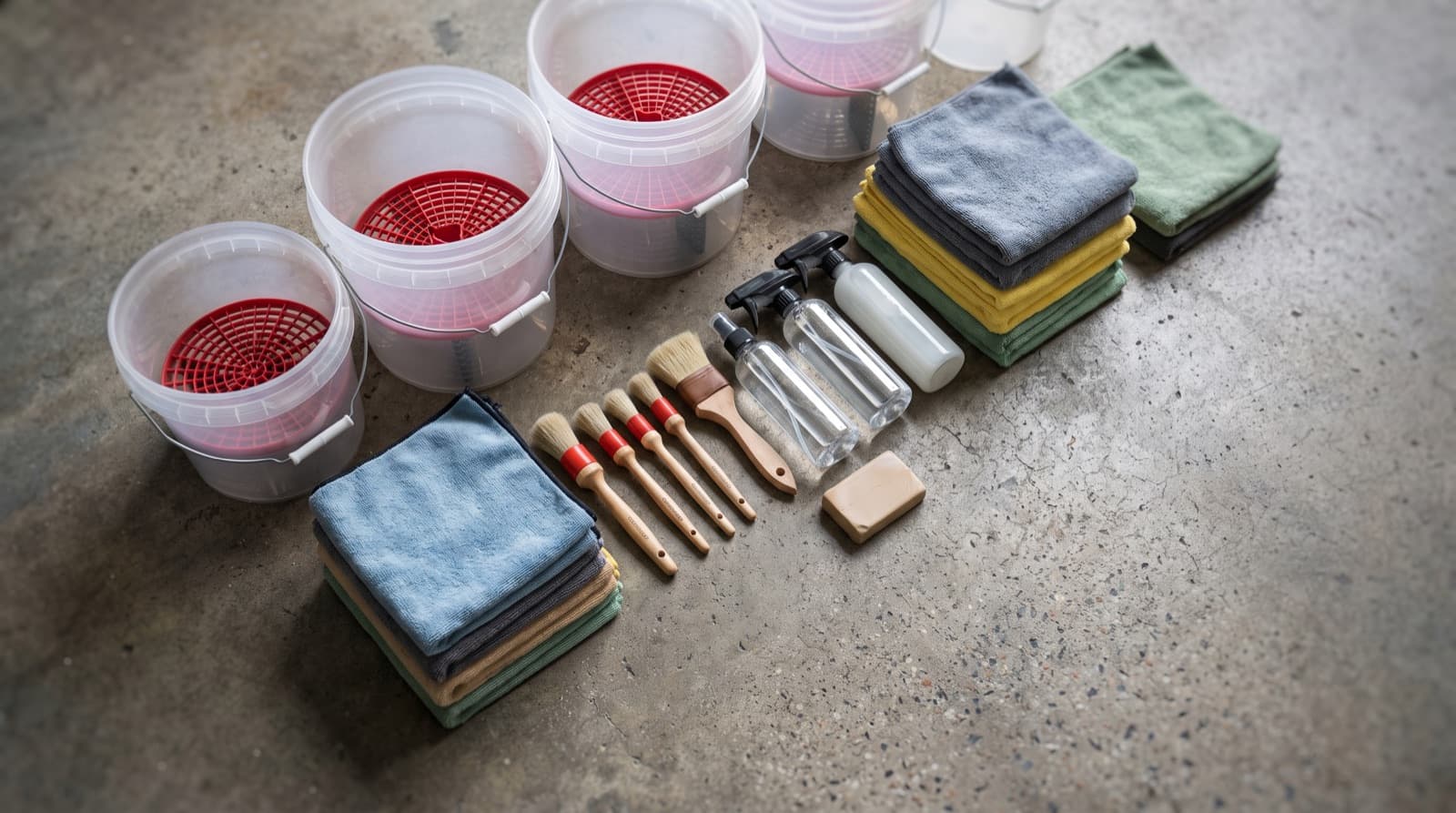
You do not need a professional extractor for sand. You need real suction, a narrow nozzle, and something to agitate with. Here is how the common options compare.
| Tool | What it does well | Where it falls short |
|---|---|---|
| Shop vac with crevice tool | Seams, rails, seat-belt slots, trunk trim | Weak on deep carpet unless you brush first |
| Household stick vacuum | Quick surface pickup and light dust | Low suction, clogs easily, small canister fills fast |
| Stiff detailing brush | Lifts embedded grains out of carpet pile | Does nothing on its own without a vacuum |
| Drill brush | Fast agitation across large carpet areas | Can fuzz delicate fabric if you lean on it |
| Compressed air or leaf blower | Clears vents, seat rails, and tight trim | Makes a mess if you skip vacuuming afterward |
| Damp microfiber towel | Final pickup of fine dust on hard surfaces | Turns loose sand into mud if used too early |
What is the fabric softener trick for fine sand?
Fine dry sand and dust cling to plastic and carpet because of static. Cut the static and it releases. Mix roughly one part liquid fabric softener to ten parts water in a spray bottle, mist a microfiber towel lightly, and wipe hard plastics and trim. The dust lifts onto the towel instead of drifting around the cabin.
A very light mist over carpet before the final vacuum pass works the same way. Light is the key word. The surface should be barely damp, never wet.
Skip this on leather, on Alcantara or suede-style trim, and on screens. Use a dedicated leather cleaner and conditioner on leather, and a screen-safe cloth on displays.
Pro tip: Test the softener mix on a hidden spot first, like under a seat or inside a door pocket. Some interiors pick up a slight sheen from it, and you want to know that before you do the whole dash.
How do you clear sand from vents, seat belts, and seat rails?
Vents come first, because anything you blow out of them lands on surfaces you are about to clean. Set the fan to high on fresh air, then use short bursts of compressed air across the vent slats to push sand out rather than deeper. Follow with a soft detailing brush and hold a vacuum nozzle right behind it.
For seat belts, pull the belt all the way out and hold it extended. Brush both faces, vacuum the webbing, then wipe with a barely damp towel and let it dry fully extended before it retracts. A wet belt that retracts wet will smell.
Seat rails need a narrow nozzle and patience. Slide the seat to each extreme, vacuum the exposed track, and use air to clear what the nozzle cannot reach. Watch for wiring harnesses under the seats and do not tug on them.
How is San Francisco beach sand different?
Ocean Beach and Baker Beach sand is fine and dry, so it goes airborne inside the cabin rather than staying put. It also arrives alongside salt air and marine-layer moisture, which is why it clumps in door jambs and along the bottom of the door seals.
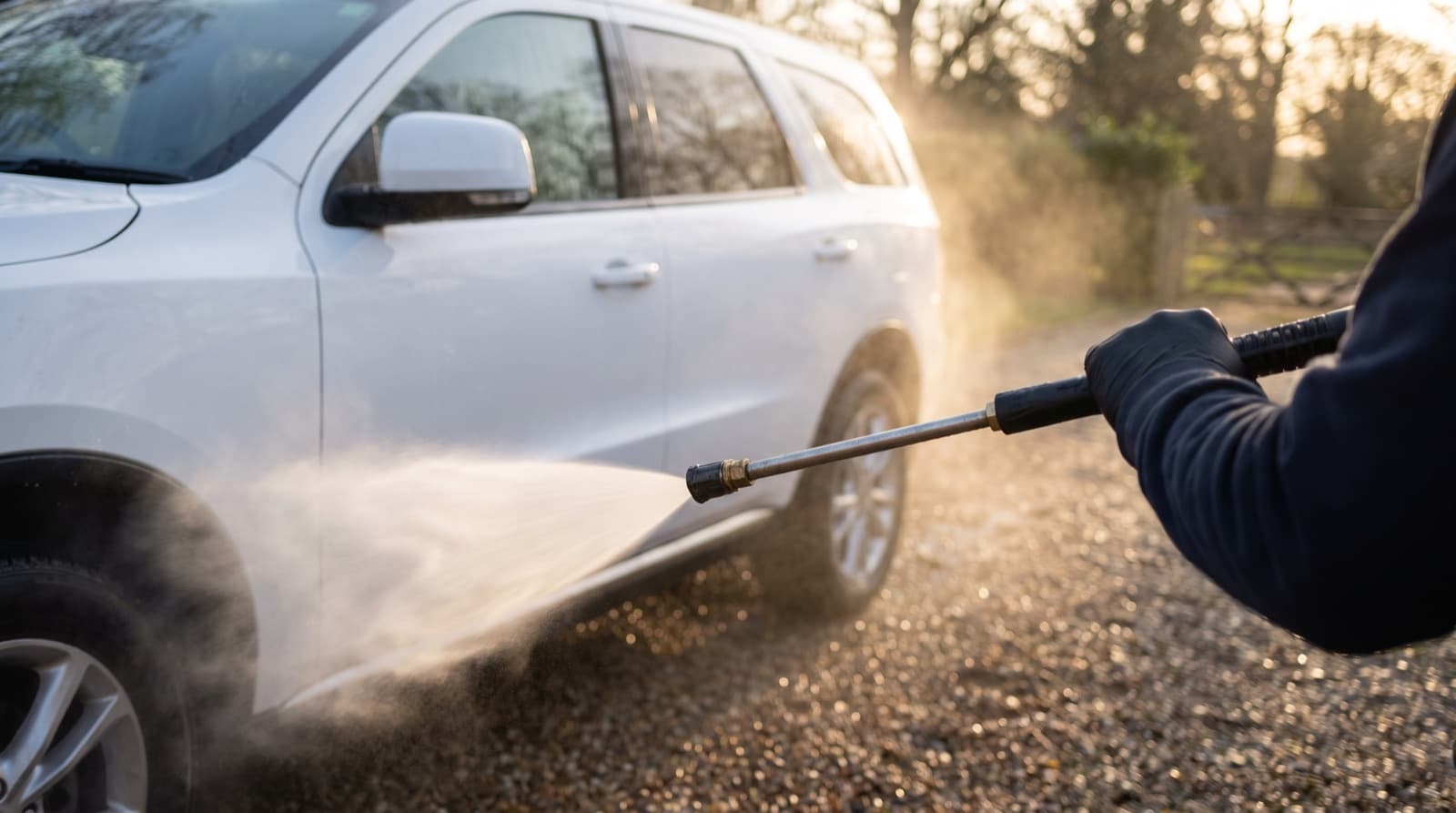
That matters for the outside of the car too. Sand packed into a door jamb holds moisture against paint and against the sill, and grit sitting in the jamb gets dragged across paint every time the door swings. Rinse the jambs and lower panels after beach trips, especially if you park on the street where the car never fully dries out.
Most SF drivers have no garage and no hose, which makes a proper sand removal awkward at home. That is exactly why we run mobile with our own water and power, so the deep vacuum and jamb rinse happen wherever the car is parked.
- Rinse door jambs and the lower few inches of the car after a beach day
- Shake mats out before they go back in, not after
- Keep a cheap towel in the trunk for wetsuits, dogs, and sandy feet
- Rubber all-weather mats beat carpet mats if you hit the beach often
What about Burning Man playa dust?
Playa dust is not sand, and treating it like sand will cost you paint. It is fine alkaline dust, and once it gets damp it bonds to surfaces, can etch clear coat, and leaves a chalky film that will not vacuum off.
A returning playa car needs real decontamination, not a vacuum. That means a thorough rinse before any contact washing, a pH-appropriate wash to neutralize the alkalinity, chemical decon and often a clay bar for what is bonded to the paint, plus a full interior clean because the dust is in every seam, vent, and headliner.
Never dry wipe a dusty playa car. Dragging that grit across paint puts scratches everywhere. Rinse first, always. If the car sat dusty for weeks before you dealt with it, plan on paint correction to remove the marring rather than just a wash.
Pro tip: Book the playa clean before the dust sees rain or fog. Dust that gets wet and dries on the car is a completely different job than dust that is still loose.
When should you just call a detailer?
DIY is genuinely fine for a normal beach day. Mats out, brush, crevice tool, vacuum twice, damp wipe. An hour of honest work gets you most of the way there.
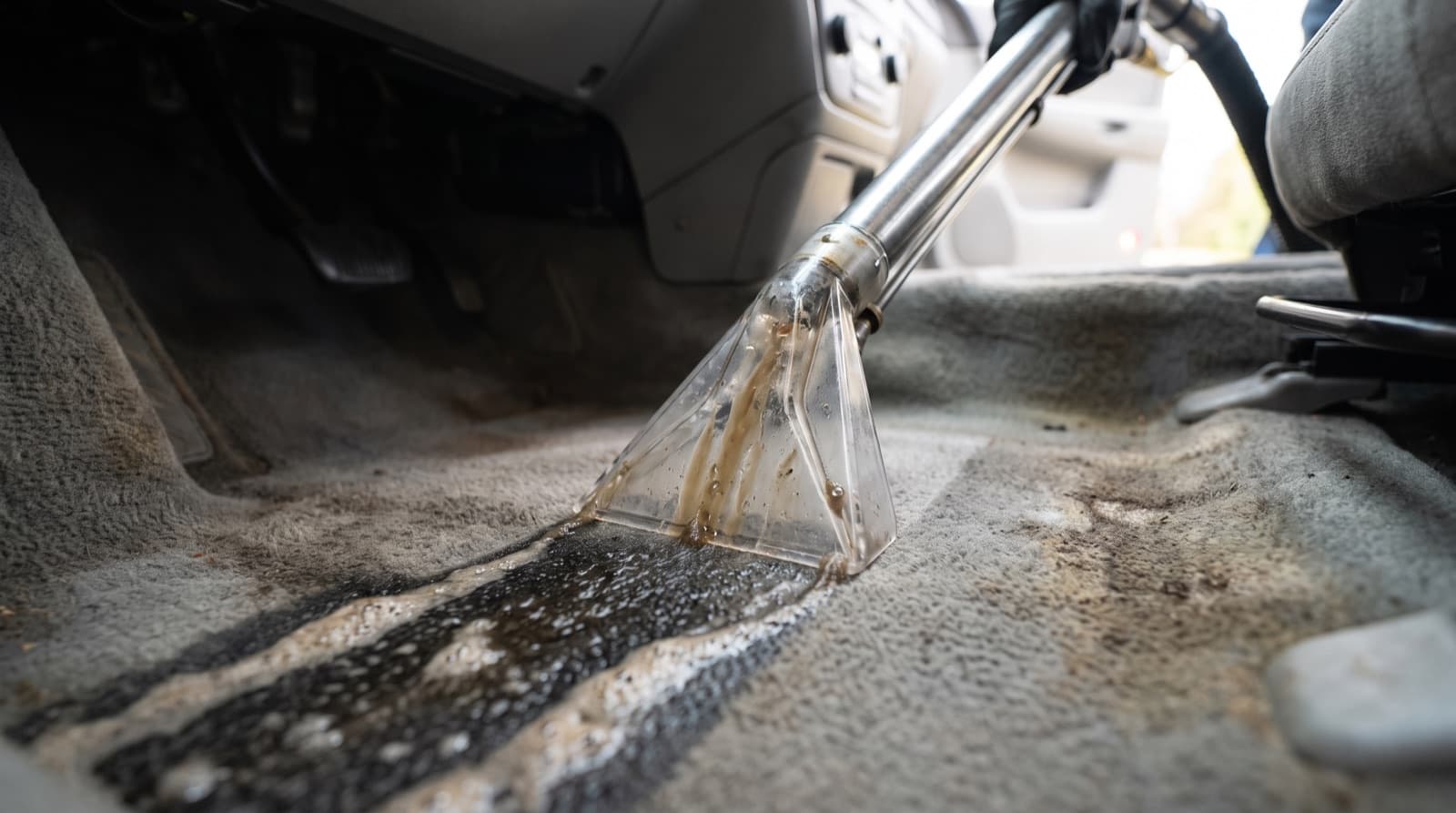
Call a pro when sand has been in the car for months and worked into the carpet backing, when you have sand plus a wet dog or spilled drinks and now need extraction, when you are turning in a lease and worried about interior condition, or when you are dealing with playa dust.
Our interior detail runs $249 and our full detail is $399, both mobile anywhere in San Francisco, the Peninsula from Daly City through San Mateo and Foster City, and Marin through San Rafael. No travel fee in the standard area, and we bring our own water and power, so a street spot works fine.
Frequently Asked Questions
Will a regular vacuum get all the sand out of my car?
Not by itself. Vacuuming removes surface sand but leaves most of what is embedded in the carpet pile and hidden in seat rails, seat-belt channels, and trim gaps. Agitating the carpet with a stiff brush first is what makes the vacuum effective. Plan on brushing, vacuuming, then vacuuming again after everything settles.
Should I wet the carpet to get sand out?
Not at the start. Water turns loose sand into mud that grinds deeper into the fibers and takes far more work to remove. Do all the dry work first, then use a lightly damp microfiber towel at the end for fine dust on hard surfaces. If the carpet is actually stained, that is an extraction job that comes after the sand is gone.
How do I get sand out of my car vents?
Run the fan on high with fresh air selected, then use short bursts of compressed air across the vent slats to push sand outward instead of deeper into the ducts. Follow immediately with a soft brush while holding a vacuum nozzle right behind it. Do the vents before anything else, since whatever comes out will land on surfaces below.
Does fabric softener actually help remove fine sand?
It helps with the static that makes fine dust cling to plastic and carpet. A very dilute mix, around one part softener to ten parts water, misted onto a microfiber towel lets dust transfer to the towel instead of scattering around the cabin. Keep it off leather, suede-style trim, and screens, and always test a hidden area first.
Is Burning Man playa dust the same as beach sand?
No. Playa dust is alkaline and much finer than beach sand, and it bonds to paint and interior surfaces once it gets damp. It can etch clear coat and leave a film that vacuuming will not touch. A returning vehicle needs a proper rinse and decontamination process rather than a standard clean, and sometimes paint correction if the dust sat on the car for weeks.
Can Golden Bay Detailing get sand out if I park on the street?
Yes. We are fully mobile across San Francisco, the Peninsula down through San Mateo and Foster City, and Marin through San Rafael, and we carry our own water and power. That means the full sand removal happens in your driveway, at your office, or in a street spot with no hookups. Our interior detail is $249 and our full detail is $399, with no travel fee in the standard service area.
Keep reading from Golden Bay
Still finding sand three weeks later? Let us handle it.
mobile detailing across SF, the Peninsula, and Marin. We bring our own water and power and come to your driveway, office, or street spot. Get a free quote today.