How-To
Motorcycle Detailing: How to Safely Clean Your Bike
Key Takeaways
- Never pressure-wash a motorcycle: high-pressure water forces grit and moisture past wheel bearings, fork seals, chain O-rings and the electrical connectors that sit exposed on a bike.
- A rinseless wash cleans an entire motorcycle with about two gallons of water and a stack of microfiber towels, which makes it the practical method for street parking and shared garages.
- Clean the chain with an O-ring-safe cleaner and a soft grunge brush, never gasoline, brake cleaner or a wire brush, then lube it warm and let it set 20 to 30 minutes before riding.
- Use a plastic-specific cleaner on a windscreen, because ammonia glass cleaner crazes polycarbonate and acrylic permanently and the damage cannot be polished out.
- In San Francisco fog and salt air, drying is the step that prevents corrosion: blow water out of spokes, fasteners and switchgear, wipe with microfiber, then ride five to ten minutes.
Motorcycle detailing comes down to one rule: keep water out of the places it does not belong, and clean by hand instead of by pressure. A bike wears its bearings, chain, seals and wiring out in the open where a car hides all of it behind sheet metal, so the pressure washer that speeds up a car wash is the fastest way to do real damage.
The good news is that a motorcycle is small. Two gallons of water, a rinseless wash solution, a few brushes and an hour of patience will get a bike cleaner than any wash tunnel ever could.
Here is the order our technicians work in, the products they actually use, and the mistakes that cost riders money, plus where hiring a pro is worth it and where it is not.
Why should you never pressure-wash a motorcycle?
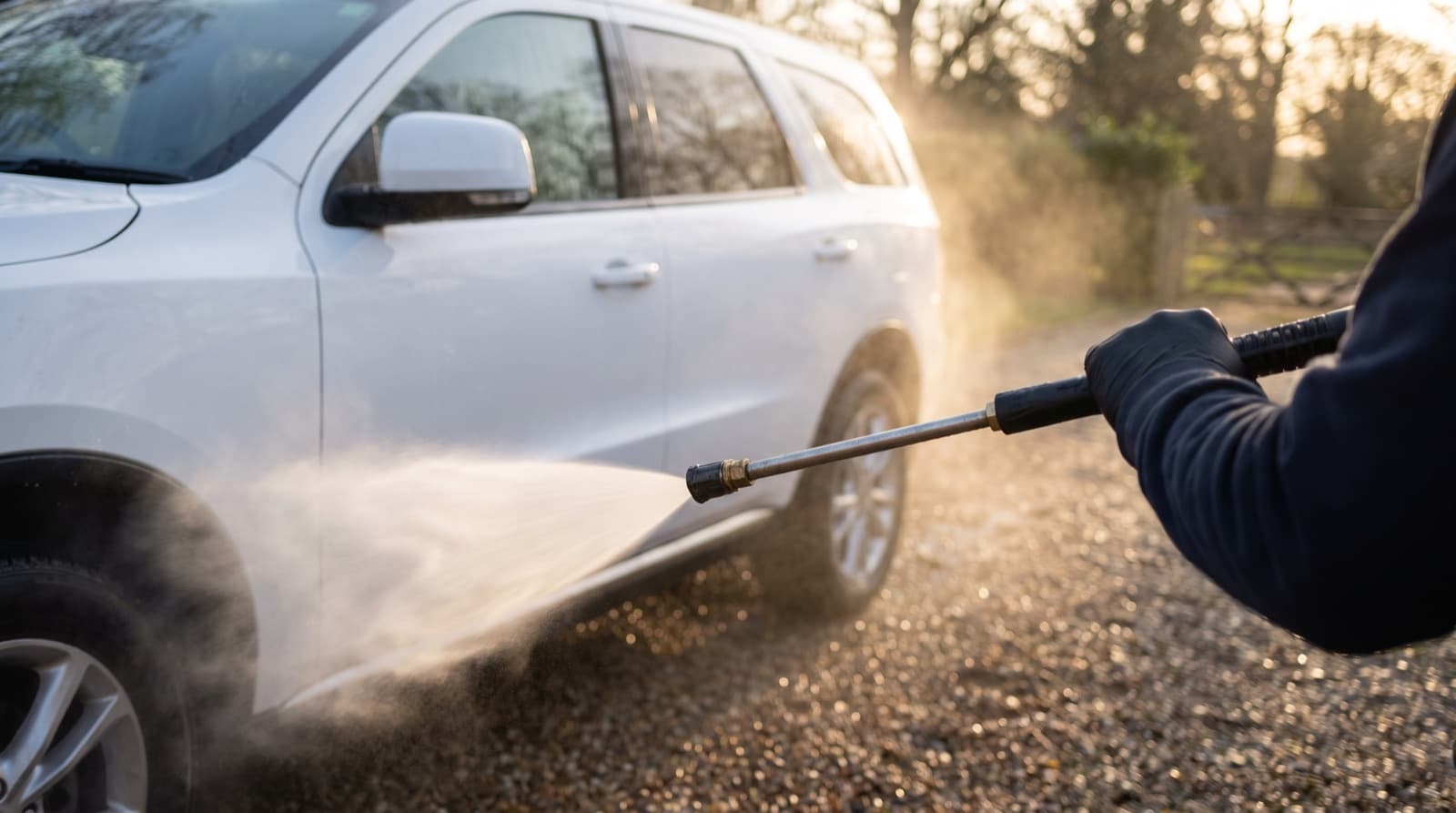
A pressure washer pushes water past seals that were designed to shed rain, not to survive 1,500 PSI from six inches away. On a car, a bad pressure-wash means a wet floor mat. On a bike, it means water sitting inside a wheel bearing or a connector you cannot see until something starts to fail.
Every part of a motorcycle that spins or carries current is exposed.
- Wheel and steering-head bearings: water gets in, grease washes out, and the bearing runs dry until it notches.
- Chain O-rings and X-rings: high pressure flushes the factory grease out from behind the seals, and no amount of chain lube puts it back.
- Fork and shock seals: a direct jet drives grit past the wiper and scores the tube.
- Electrics: the ignition switch, ECU plugs, coil boots and stator connectors all sit under the tank or behind the side covers with nothing over them.
- Gauges and switchgear: bar controls and instrument housings are splash-rated, not jet-rated.
Pro tip: If you use a hose at all, run a gentle fan spray from about two feet back, and never aim it at the chain, the front sprocket cover, the steering head, the airbox intake or anything with a wire coming out of it.
What is the safest way to wash a bike?
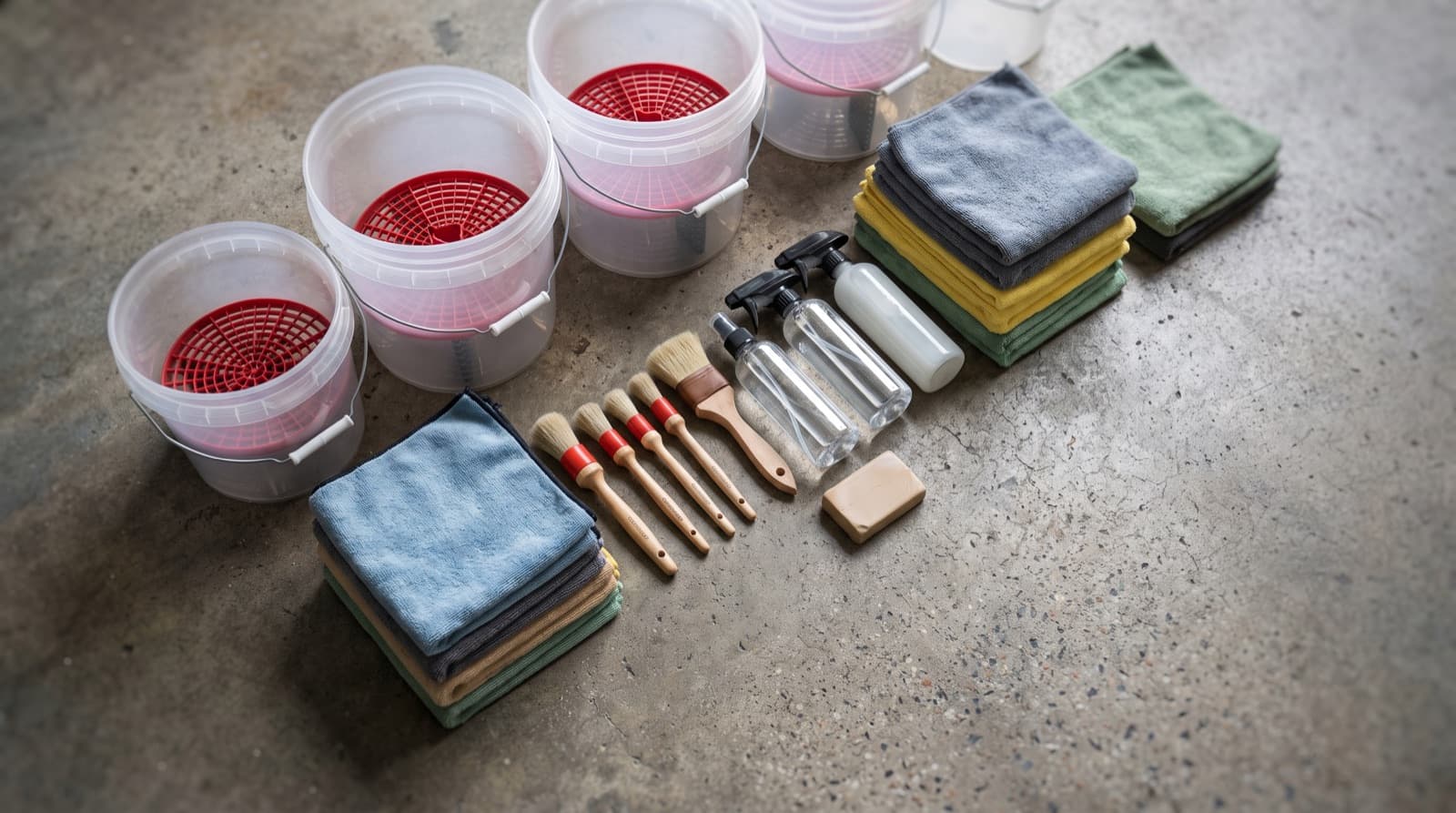
Most motorcycles never need a running hose. A rinseless wash gets a whole bike clean with roughly two gallons of water and a stack of microfiber towels, which is why it works on street parking, in a shared garage, and anywhere there is no drain.
Let the bike cool completely first. Washing a hot engine flashes water to steam, streaks the clear coat and can stain plated headers.
Waterless spray is for a bike that is dusty, not one caked in road grime. Dragging a towel across grit is exactly how swirl marks end up in a tank.
- Rinseless: one capful of Optimum No Rinse or Griot's Rinse and Wax in two gallons, then one clean folded microfiber panel per section.
- Heavy grime: pre-soak with a pH-neutral bike cleaner such as Muc-Off Nano Tech or S100 and let it dwell two to three minutes before you touch anything.
- Bug strikes on the fairing and fork lowers: lay a soaked microfiber over them and let the cleaner soften the shells instead of scrubbing.
- Work top down. Tank and tail first, wheels and lower engine last, with separate towels and buckets for anything below the footpegs.
- Bag a suede or perforated seat, and keep degreaser off every painted and plated surface.
How do you clean and re-lube a motorcycle chain?
The chain is the only genuinely dirty part of most bikes, and it is the part riders get wrong most often. Clean it gently, dry it fully, and lube it warm.
Skip gasoline, brake cleaner and strong caustic degreasers. They attack the rubber O-rings and turn a good chain into a short-lived one, and the failure shows up as tight spots months later.
- Put the bike on a rear paddock stand or center stand so the wheel spins freely.
- Spray an O-ring-safe cleaner such as Muc-Off Drivetrain Cleaner or Motul Chain Clean onto the chain itself, not across the wheel.
- Work it with a three-sided grunge brush or a soft nylon brush. Never a wire brush, never a screwdriver.
- Wipe the chain dry with a rag held in a gloved hand while you rotate the wheel by hand, not with the engine running.
- Lube while the chain is warm from a short ride, one thin pass along the inside of the lower run, then let it set 20 to 30 minutes before you ride.
Pro tip: Chain wax or a dry lube slings far less onto your rear wheel and swingarm than heavy sticky lube, which means less scrubbing at the next wash. If your rear rim is coated in black fling, you are using too much lube, not too little.
How do you clean spoked wheels and engine fins?
Wheels, spokes and engine cases are where the hours actually go on a bike. There is no shortcut other than small brushes and patience.
Use a pH-neutral wheel cleaner. Acidic cleaners eat anodized rims, polished lips and raw aluminum, and the damage shows up as a cloudy grey haze that no polish will bring back.
- Spokes: a soft detail brush down each spoke and a bottle-style brush at the nipples. Boar's-hair bristles are safe on chrome.
- Fins and cases: a one-inch soft brush plus foam swabs, then a damp rinseless towel to lift the dirt out rather than push it deeper.
- Rear rim and swingarm: pre-soak chain fling with an all-purpose cleaner around 10:1 and let it dwell instead of scrubbing hard.
- Blow or wick water out of every corner as you go so nothing dries in place while you finish the other side.
How do you polish chrome and bare aluminum?
Chrome and raw aluminum are the two finishes on a bike that need actual polish rather than wax. Both oxidize, and near the coast both do it quickly.
Chrome takes a mild metal polish on a folded microfiber. Aluminum takes a dedicated aluminum polish and more passes. Once either one is bright, seal it, because polish alone leaves the metal bare.
Washing, chain care and plastic cleaning are all fine to do yourself. Machine polishing a tank, correcting paint before a coating, and applying a warrantied ceramic are where a pro pays for itself, because bike panels are small, curved and full of edges where it is easy to burn through clear coat.
| Surface | What to use | What to avoid |
|---|---|---|
| Chrome pipes and covers | Mild chrome polish such as Autosol or Flitz on microfiber | Steel wool, acid wheel cleaner, abrasive pads |
| Raw or polished aluminum | Mothers Mag and Aluminum Polish worked in small sections | Alkaline degreaser, acid wheel cleaner |
| Anodized rims and levers | pH-neutral soap and water only | Any metal polish or acid, which strips the anodizing |
| Painted tank and fairings | Fine polish, then sealant or ceramic coating | Household cleaners and dish soap |
| Windscreen and plastic lenses | Plastic cleaner such as Plexus or Novus 1 with plush microfiber | Ammonia glass cleaner and paper towel |
How do you clean plastics and the windscreen without hazing them?
Never put household glass cleaner on a motorcycle windscreen. Ammonia crazes polycarbonate and acrylic into a spiderweb of fine cracks that shows up in oncoming headlights and cannot be reversed.
Use a plastic-specific cleaner and only plush microfiber, folded, with almost no pressure. Paper towels and shop rags are abrasive enough to haze a screen in a single wipe.
If a screen is already lightly scratched, Novus 2 worked by hand will clear the top layer. Deep gouges mean a new screen, since polishing thin plastic aggressively enough to remove them distorts your view through it.
- Textured plastics: soft brush plus a diluted interior cleaner, then a matte protectant so nothing ends up slippery under your knees.
- Gauges: mist the towel, never the cluster, so nothing wicks into the housing.
- Faded black plastic responds well to a trim restorer, but degrease it first or the dressing will not hold.
Is ceramic coating worth it on a motorcycle?
Ceramic coating makes more sense on a bike than on a car in one specific way: it makes the parts you can barely reach easy to clean. Coated wheels, swingarms, engine covers and fairings shed chain fling, brake dust and bug guts with a wipe instead of a brush.
A motorcycle also has far less surface area than a car, so a coating covers most of the machine. What it will not do is stop rock chips or reverse pitting that has already started in old chrome, and the hottest section of an exhaust header is better polished and sealed than coated.
Coat after correction, not before. A coating locks in whatever the paint looks like on the day it goes on, which is why a one-step correction is included with every System X ceramic tier we install.
| Protection | How long it lasts | Best for |
|---|---|---|
| Spray sealant | 4 to 8 weeks | Quick top-ups between details |
| Paste wax | 6 to 10 weeks | Show bikes and fair-weather riders |
| Ceramic coating | 2 to 6 years depending on tier | Daily riders, coastal parking, far easier cleanup |
| Chain wax or dry lube | Until the next wash or wet ride | Drivetrain only, and never on the tire or brake rotor |
Why does San Francisco air make drying the most important step?
Fog and salt air are a corrosion problem, not a cosmetic one. Water left in a bolt head, a spoke nipple or a chain link overnight out toward Ocean Beach or the Sunset starts surface rust within days, and water from a city hose dries into mineral spots that etch clear coat once the sun hits them.
Drying a bike is really three jobs: blow, wipe, ride.
This is also why we bring the work to the bike. Golden Bay is mobile, we arrive with our own water and power, and we detail in your driveway, garage or at the curb across San Francisco, the Peninsula down to San Mateo and Marin through San Rafael. Your motorcycle never has to be ridden dirty or cold-started just to get cleaned, and there is no travel fee in the standard area. Bikes are quoted individually, so send a few photos and we will price yours.
- Blow water out of the switchgear, spokes, chain, fasteners and radiator fins with a blower or low-pressure air.
- Wipe with a plush drying towel, then a second dry towel for panel seams and under the tank.
- Ride five to ten minutes to evaporate whatever is still trapped, then lube the chain while it is warm.
- Finish with a spray sealant on painted and chrome surfaces so the marine layer has something to sit on besides bare metal.
Frequently Asked Questions
How often should you detail a motorcycle?
A rinseless wash every two or three weeks keeps grime from bonding, and a full detail with polish and protection twice a year is plenty for most street bikes. Chain cleaning and lube follow the interval in your owner's manual, plus any ride in rain. If your bike lives outside under an SF marine layer, wash more often in winter, because salt-laden moisture is what starts the corrosion.
Can I take my motorcycle through an automatic car wash?
No. Tunnel washes combine spinning brushes, high-pressure jets and strong alkaline chemicals, which is the worst possible mix for exposed bearings, chain seals, plated metal and plastic windscreens. Even touchless tunnels use pressure and chemistry that are aimed at painted sheet metal, not at a bike.
Is it safe to wash a motorcycle without a hose?
Yes, and for most bikes it is safer than using one. A rinseless wash solution encapsulates dirt so a folded microfiber lifts it away without scratching, and two gallons is enough for an entire motorcycle. Use a waterless spray only on light dust, never on caked road grime.
What is the fastest way to get chain fling off a rear wheel?
Soak the wheel and swingarm with an all-purpose cleaner diluted around 10:1 and let it dwell for two to three minutes so the lube softens. Then agitate with a soft wheel brush and wipe it off, rather than scrubbing dry black lube across the finish. If the wheel is ceramic coated, most of it comes off with a single wipe.
Will a ceramic coating protect my chrome exhaust?
A coating on cooler chrome covers helps a lot with water spotting and makes cleanup easier, but it will not fix pitting that has already begun and it does not belong on the hottest section of a header. Polish and seal those sections instead, and reapply after a few rides.
Does Golden Bay detail motorcycles in San Francisco?
Yes. We are a mobile detailing company with our own water and power, so we detail bikes wherever they sit anywhere in San Francisco, the Peninsula from Daly City to San Mateo and Foster City, and Marin through San Rafael. Motorcycles are quoted per bike rather than off the car menu, so send photos through our quote form and we will give you a real number.
Keep reading from Golden Bay
Get your bike detailed without a pressure washer
Free quote, no travel fee in our standard area, and we come to your motorcycle with our own water and power anywhere in SF, the Peninsula or Marin.