Problem Solvers
Wet Car Carpet? How to Dry It Fast and Find the Leak
Key Takeaways
- To fix a wet car carpet, suck up the water with a wet/dry vac. Then dry the carpet and pad within 24 to 48 hours.
- The pad under car carpet holds most of the water. Carpet can feel dry on top and still be soaked underneath.
- Where the water sits points to the leak. A wet front passenger floor often means a clogged AC drain or cowl drain. A wet headliner or windshield pillar often means clogged sunroof drains.
- Never remove seats or unplug connectors to dry a car. Many cars have wiring, control modules and airbag sensors under the seats and carpet.
- A mechanic or body shop fixes the leak. Golden Bay Detailing extracts the water, then cleans with steam and enzyme cleaner. We come to you in San Francisco, the Peninsula and Marin.
If your car carpet is wet, get the water out and dry the carpet and pad fast. Aim for 24 to 48 hours. Then find the leak before the next rain, or the carpet will just get wet again.
A wet car carpet is more than soggy shoes. The pad under it acts like a sponge. If it stays damp, it starts to smell, and mold can follow. Over time, trapped water can also rust the floor and corrode wiring plugs.
Here are our technicians' safe drying steps and a simple leak finder. The leak repair itself belongs with a mechanic, body shop or glass shop.
What should you do first when your car carpet is wet?
Work fast, but work in order.
- Stop more water. Close every window and the sunroof. Park under cover if rain is still falling.
- Check the liquid. Clear water with no smell is most likely rain or AC water. A sweet smell or greasy feel can mean coolant. Have a mechanic check it before you drive. Keep kids and pets away, since coolant is toxic.
- Pull out the floor mats. Dry them inside. Rubber mats just need a rinse and a wipe.
- Take photos of where the water is and how deep it goes. They help your mechanic find the leak and help us quote the cleanup.
How do you dry wet car carpet fast?
Pull water out first. It saves days of waiting.
The pad is the hard part. It is the thick layer of foam or felt under the carpet. It holds far more water than the carpet on top.
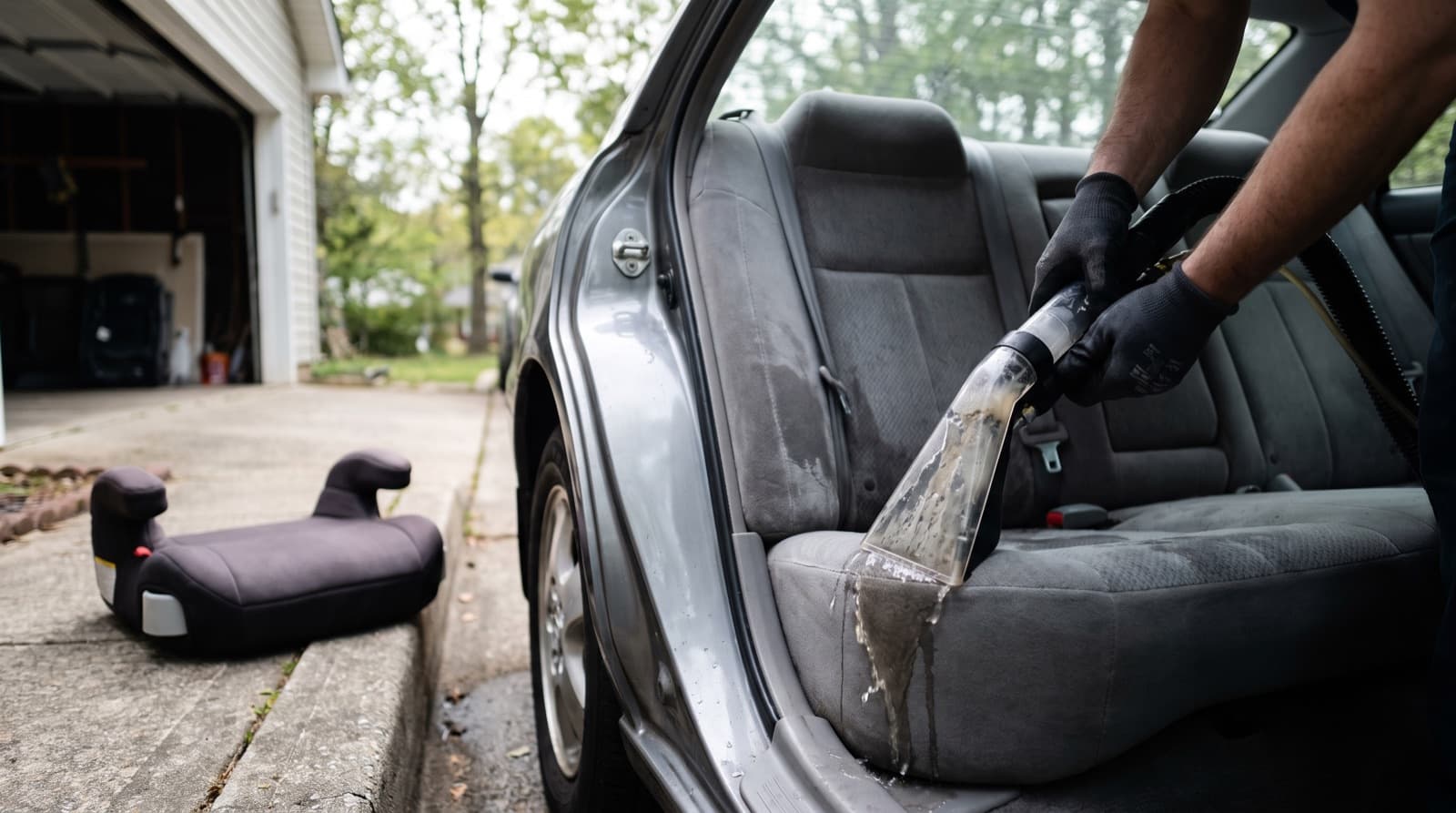
- Suck up standing water with a wet/dry vac (a shop vacuum made for water). Press the nozzle down hard and go slowly. Make many passes.
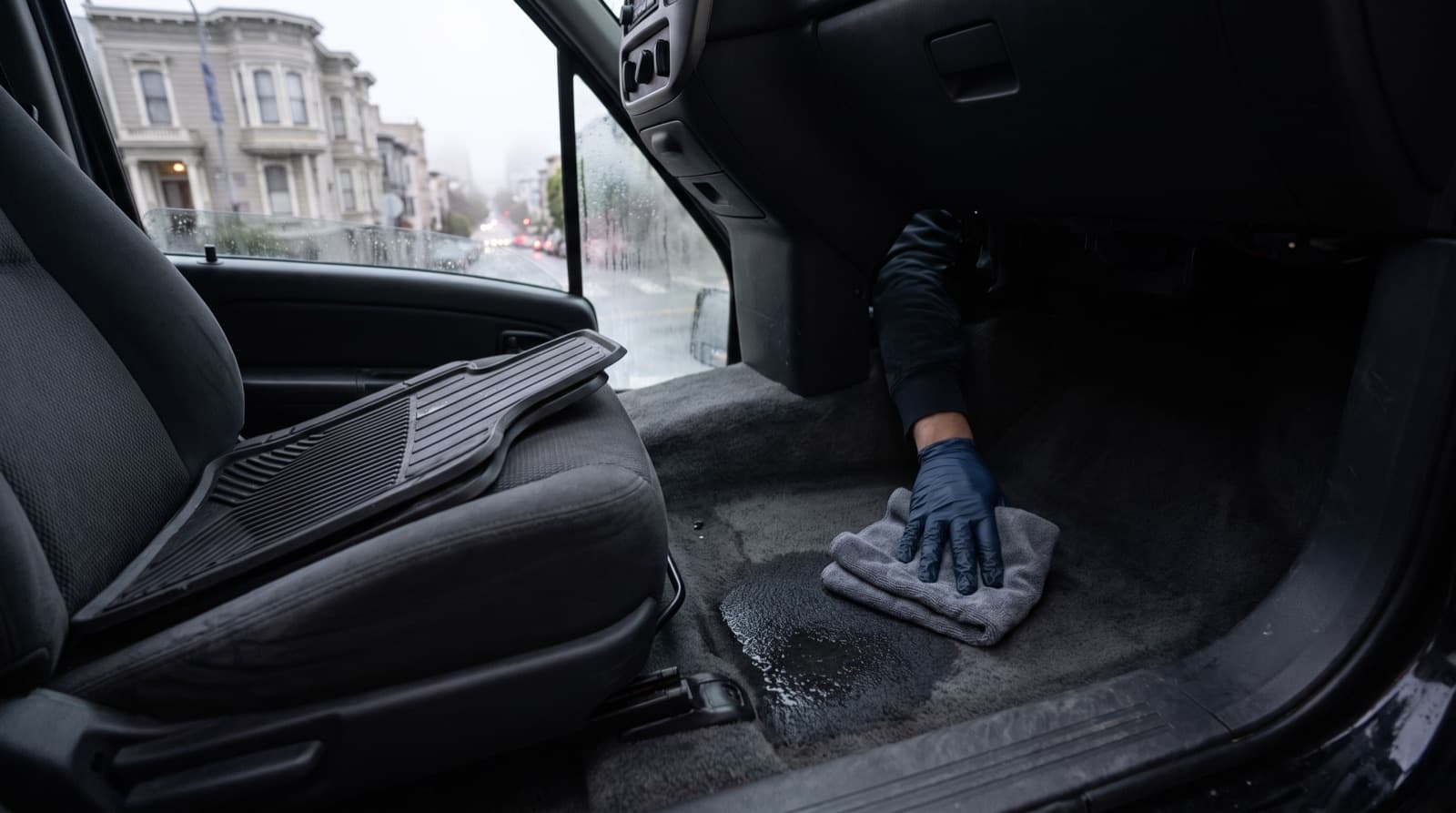
- Blot what is left. Lay old towels down and stand on them. Swap in dry towels until they come up only a little damp.
- Lift only easy edges. Prop a loose carpet edge up with a plastic cup so air gets under it. Never pry off trim or pull carpet from under the seats.
- Move the air. Point a box fan or two at the wet spots, with the doors open while you are nearby.
- Keep cords safe. Keep plugs and extension cords off wet floors and out of the car. Use a GFCI outlet (the kind with a test button) if you have one.
- Pull moisture out of the air. In a closed garage, run a dehumidifier (a machine that takes water out of the air) by the open doors.
- Check the pad after a day. Press a dry paper towel hard into the carpet. If it comes up damp, keep drying.
Pro tip: Our technicians press a flat palm hard into the carpet for ten seconds. If your palm feels cool or damp, the pad is still wet. It needs more time or real extraction.
What should you never do when drying a car?
Many cars have wiring, control modules and airbag sensors under the carpet and seats. Pulling things apart can cause warning lights and costly repairs.
- Never remove the seats. The front passenger seat often has a sensor that tells the airbag if someone is sitting there.
- Never unplug connectors to dry them. If a warning light comes on, see a mechanic or the dealer.
- Take extra care with hybrids and EVs. In some models, high-voltage parts sit under the rear seat or floor. If water reached there, call the dealer before you drive.
- Never run the engine in a closed garage to use the heater. Exhaust fumes build up fast and can be deadly.
- Skip heat guns and space heaters. A heat gun can melt carpet and warp trim. A space heater left alone in a car is a fire risk.
- Don't count on rice, kitty litter or moisture-absorber tubs. They can't dry a soaked pad, and open tubs can spill.
- Skip baking soda on wet carpet. It turns into paste. Save it for light odors once the carpet is dry.
Why is water leaking into my car?
A car leaking water inside most often has a clogged drain or a worn seal. Where you find water in the car floor is your best clue. But water runs downhill, so it may pool away from the real leak.
Sunroofs are a common source. Most have drain tubes at the corners that run down the pillars. If one clogs or slips loose, a sunroof leaking water can soak the headliner or the front footwell.
Use this table as a starting point, then have a pro confirm it. We do not repair leaks or clear drains.
| Where it is wet | Likely source | Clue | Who fixes it |
|---|---|---|---|
| Front passenger floor | Clogged AC drain | Wet after running the AC, even on dry days | Mechanic |
| Front floor, either side | Clogged cowl drain (the tray under your wipers) | Wet after rain, leaves under the wipers | Mechanic |
| Front floor, sweet smell | Heater core leak | Foggy, greasy film on the inside glass | Mechanic |
| Headliner, windshield pillar, or front footwell near the kick panel (the side panel by your feet) | Clogged or loose sunroof drain tubes | Drips after rain on a car with a sunroof | Mechanic or body shop |
| Top of dash or front corner | Windshield seal | Water marks at the glass edge | Glass shop |
| Rear footwell | Door seal or torn plastic sheet inside the door | Wet near the door sill after rain | Body shop |
| Trunk or spare tire well | Tail-light gasket, trunk seal or rear sunroof drain | Water in the spare tire well | Body shop |
| Wet only after a car wash | High-pressure spray forced past a door or sunroof seal | Stays dry in rain, wet after a wash | Often nothing; a body shop if it gets worse |
| Under one window only | Window left cracked | Wet seat and door panel on that side | No repair needed |
How can you test for a car leak at home?
A simple water test can show a shop where to look. You need a helper, a flashlight and a hose or watering can. Dry the area first so new water is easy to spot.
- Sit inside with the flashlight while your helper wets one area at a time.
- Start low and work up. Do the door bottoms, then the windshield base, then the roof.
- Use a gentle flow, like rain. A strong spray can force water past a good seal and fool you.
- Give each spot a few minutes. Watch the pillars, the headliner and under the dash.
- Test the AC drain on a rain-free day. Run the AC on max for 10 minutes, then look under the car. A steady drip near the front passenger side is normal. No drip, plus a wet passenger floor, points to a clogged AC drain.
Why do Bay Area cars get wet carpet after the first storm?
The first big storm of the season finds every clogged drain at once. Street trees drop leaves for months, and those leaves pile up in cowls and sunroof drains. Then the rain has nowhere to go.
Drying is slow here, too. Fog and the marine layer keep the air damp, so a closed car stays wet for days. A cool apartment garage with no airflow is not much better.
Street parking adds a problem. You can't run a fan cord to the curb, and windows left cracked overnight invite a break-in. Dry the car in the daytime while you are close by.
Hills matter as well. A car parked nose-down on a steep street can pool water in the front footwells, far from the real leak.
Is it just wet carpet, or a flooded car?
A wet footwell is a cleaning job. A flooded car is not. If water rose into the seat bases or up to the dash, stop there.
Do not try to start a car that sat in deep water. Call your insurer and a mechanic first, and ask what your policy covers.
Floodwater can carry mud, oil and sewage, so wear gloves if you must reach inside. A detail cannot undo flood damage to wiring, modules or the engine.
When should you call a pro to dry car carpet?
DIY works for a small wet spot you catch fast. Call a pro when the water went deeper than your tools can reach.
- The pad is still damp after a full day of drying.
- Water spread under the seats or into spots you can't reach safely.
- You see water lines or stains on the carpet.
- The car smells stale or sour once it is dry.
- You don't own a wet/dry vac, or you have no safe place to run fans.
What does a pro do to dry wet car carpet?
Our technicians use extractors. An extractor sprays clean water into the carpet and sucks it back out with strong suction. It pulls water from the pad that towels and fans leave behind.
Then we clean with steam and an enzyme cleaner. Enzymes are natural proteins that break down the source of smells, which helps keep the carpet from turning musty. The pad still needs a day or so of airflow after our visit.
Deep Interior starts at $249 for a sedan and $299 for an SUV. We come to your home, office, apartment garage or a legal street spot. The van brings its own water and power. Same-day visits are sometimes available, so text photos to (415) 483-5686.
Start drying now, then get the leak fixed before the next rain so the carpet doesn't get soaked again.
If the pad stayed soaked for days or mold has spread, the carpet may need to come out. That is a job for an upholstery or water-damage specialist.
Frequently Asked Questions
How long does wet car carpet take to dry?
A small wet spot can dry in a day with a wet/dry vac and fans. A soaked pad can take several days, longer in foggy weather. Pulling the water out first speeds it up.
Will wet car carpet dry on its own?
The top may dry, but the pad can stay wet for days in a closed car. The U.S. EPA advises drying wet materials within 24 to 48 hours to help prevent mold, so don't wait.
Why is there water on the passenger side floor of my car?
Often it is a clogged AC drain. A clogged cowl drain under the wipers is another common cause. If the water smells sweet, it may be coolant from a heater core leak, so see a mechanic.
Why is my car carpet wet when it hasn't rained?
A clogged AC drain is a common cause. The AC makes water as it cools, and a blocked drain sends it onto the passenger floor. A sweet smell points to a heater core leak, which needs a mechanic.
Can I drive my car with wet carpet?
Usually, yes, if it is plain rain water and no warning lights come on. Don't drive if the water smells sweet, which can mean coolant, or if the car sat in deep water. If the passenger floor is wet, skip the AC until a mechanic clears the drain.
Can Golden Bay Detailing dry my wet car carpet?
Yes, our technicians pull water out of the carpet and pad with extractors, then clean with steam and enzyme cleaner. Deep Interior starts at $249 for a sedan and $299 for an SUV. We come to you in San Francisco, the Peninsula and Marin.
Keep reading from Golden Bay
Wet carpet in your car? We'll pull the water out.
Text photos to (415) 483-5686 or request a free quote online. Our technicians come to you with extractors, steam and enzyme cleaner in San Francisco, the Peninsula and Marin.