Cost & Pricing
Boat Detailing Cost: How Pros Price by Foot and Condition
Key Takeaways
- Boat detailing cost has no flat price. The boat's length sets the starting point, and its condition moves the price the most.
- Boat detailing prices climb in steps. A wash costs least, then a full detail, then oxidation removal, then a ceramic coating.
- A chalky hull needs a polish before wax or a coating goes on. Heavy chalk needs a compound first, and that adds the most time.
- A fresh water rinse after every trip is the cheapest way to keep future boat detailing costs down.
- Golden Bay Detailing gives custom boat quotes in San Francisco, the Peninsula and Marin. Text the length and a few photos, and we reply in under 10 minutes.
Boat detailing cost has no flat price. The boat's length sets the starting point, and its condition moves the price the most. The service you pick and where the boat is kept matter too.
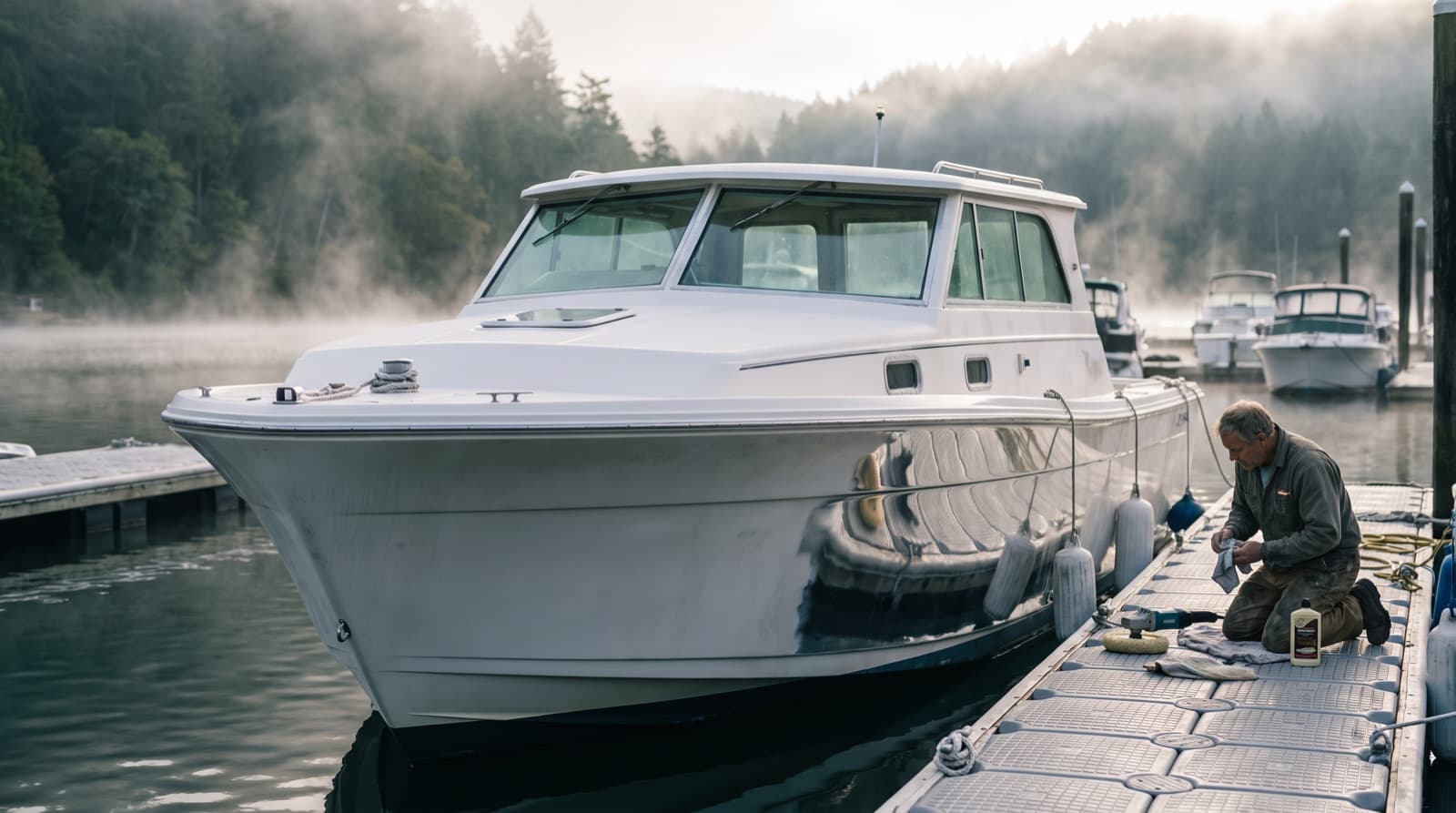
That is why two boats of the same size can get very different quotes. A shiny 22-foot boat on a trailer is a quick job. A 22-footer with chalky gelcoat (the hard, shiny outer skin of a fiberglass boat) takes far more work. If it sits in a slip (a boat's parking space at a dock), the job can take longer still.
At Golden Bay Detailing, every boat gets a free custom quote. Text the length and a few photos, and we reply in under 10 minutes.
How is boat detailing priced per foot?
A common way to price a boat is simple math. Take the length in feet. Multiply it by a per-foot rate for the service. Then add extras for condition.
The per-foot rate goes up as the work gets deeper. A wash on a clean boat costs the least. Oxidation removal (cutting off the chalky layer that sun leaves on gelcoat) costs far more. So does a coating. The length did not change, but the hours did.
Also ask how the boat is measured. Some detailers count the swim platform (the flat step at the back, near the water). Some also count the bow pulpit (the rail that sticks out past the front). Others use the length on your registration. Ask which one, so you can compare quotes fairly.
Length is only a rough guide to size. The type of boat changes how much surface there is to clean.
- Center consoles: an open deck with few hidden spots. The console and seats still need work.
- Pontoons: a flat boat that rides on metal tubes. The aluminum tubes often need a metal polish, which adds time.
- Sailboats: the mast and rigging (the wires and ropes that hold the mast up) take hand work. So do wide non-skid decks.
- Cabin cruisers and yachts: tall hull sides and a cabin. Many also have a flybridge (an upper deck with a second set of controls).
What do boat detailing packages include?
Names change from shop to shop. But many shops group the work into four levels. Each level does more work, so each one costs more per foot.
A full detail makes a clean boat shine. It will not fix a chalky hull. For that, you need oxidation removal. It uses a compound (a gritty polish that cuts off the dead, chalky layer), then a finer polish. That is where most of the cost sits.
You do not always need a full package. You can often book just one part, like the hull polish, the interior or the metal. Ask for it by name when you request a quote.
Some work is not part of a detail at all. Cleaning the bottom of a boat that stays in the water is a job for a diver. New bottom paint is done at a boatyard, after the boat is lifted out.
| Service | What it covers | When you need it | Cost level |
|---|---|---|---|
| Wash | Fresh water wash of the hull sides, deck, glass and metal, then a hand dry | Regular care between trips | Lowest |
| Full detail | A wash plus the cabin, seats, vinyl, metal polish and a coat of wax | Start or end of the season, or before a sale | Medium |
| Oxidation removal | Compound and polish to cut off chalky gelcoat and bring back color and shine | The hull looks faded or leaves chalk on your finger | High |
| Ceramic coating | A polish first (plus oxidation removal if the hull is chalky), then a hard, glassy layer that sheds salt | You plan to keep the boat for years and want less waxing | Highest |
| Add-ons | Canvas (the fabric tops and covers), clear vinyl windows, teak wood, waterline stain and heavy mildew | Only when the boat needs them | Priced by the job |
What makes a boat detail cost more?
Condition causes the biggest swings in price. These are the things that add the most time.
On a boat left alone for years, the hull polish is often the biggest part of the job.
- Chalky gelcoat. Sun turns gelcoat dull and chalky. Light chalk needs a polish. Heavy chalk needs a compound first, then a polish.
- Waterline stain. That yellow-brown line near the water needs a hull cleaner made for the job, plus careful rinsing.
- Stainless metal. Rails and cleats get small rust spots in salt air. Each spot has to be polished off.
- Canvas and clear vinyl windows. Mildew, bird mess and cloudy windows need gentle hand work. The wrong cleaner can cloud or scratch clear vinyl.
- Cabin and seats. Mildew on vinyl seats, dirty carpet and a musty cabin all add hours.
- Non-skid deck. This bumpy, grippy surface traps dirt, so it needs a brush and more time.
- Dark hulls. Navy, black and red gelcoat show every swirl, so polishing takes extra care.
Pro tip: Do the finger test before you ask for a quote. Rub a clean fingertip on the hull side. If it comes away white or colored, the gelcoat is oxidized. Snap a photo of your finger. It helps us price the polish work right.
Does it matter where your boat is kept?
Yes. Access changes how long the job takes, and time is what you pay for. Here is how each spot compares.
Some marinas and yards have rules for outside workers. Check with your harbor office before you book anyone. Then mention those rules when you ask for a quote.
- In a slip: the work is done from the dock. Only the hull above the water can be reached. The side away from the dock is harder to get to.
- In dry storage: the whole hull is out of the water, which makes hull polishing easier. A boat stored high on a rack has to be brought down to a work area first.
- On a trailer at home: this is often the easiest setup. The whole hull is close at hand, with room to work all the way around.
Is wax or a ceramic coating cheaper over a season?
For one season, wax usually costs less. If you keep the boat for years in a sunny slip, a coating can cost less over time. That is because it needs far fewer redos.
Wax is cheaper each time, but sun and salt wear it off, so it gets redone again and again. A coating costs more up front and needs polished gelcoat first. In return, it lasts much longer, and salt rinses off more easily. Our boat ceramic coating guide covers this choice in depth.
- Wax fits best if you may sell soon, keep the boat covered, or like to wax it yourself.
- A coating fits best if you keep the boat for years in a sunny slip and want less upkeep.
How does Bay salt air raise boat detailing costs?
Bay boats live in salt air every day. Salt spray lands on the hull, deck and metal. When it dries, it leaves a crusty film that dulls gelcoat and spots glass.
Fog makes it worse. On many summer mornings, the marine layer wets the boat. Then the afternoon sun dries it, and the salt stays behind. That cycle repeats week after week.
Wind pushes spray across the deck, even when the boat never leaves the slip. In the rainy season, damp cabins and canvas grow mildew fast.
Boats in Sausalito, Tiburon, the San Francisco Marina and Pillar Point Harbor all face this. Salt, fog and mildew all add hours to the next detail. A boat rinsed after each trip holds up better, so the next bill is smaller.
How can you lower your boat detailing cost?
The cheapest detail is the one you never need. A few habits slow down chalk, stains and mildew. Our boat cleaning guide walks through the full wash, step by step.
- Rinse the whole boat with fresh water after every trip. Start at the top and work down.
- Wipe off bird droppings the same day. Left alone, they stain gelcoat and canvas.
- Add a spray wax when water stops beading on the hull.
- Use a vented cover when the boat sits. It blocks sun and salt but still lets damp air out.
- Book regular washes at the slip. Less salt crust and mildew build up, so the yearly detail takes fewer hours.
Pro tip: Stay safe when you clean. Wear gloves and eye protection with hull and waterline cleaners, since many contain acid. Never mix cleaners. Keep bleach off vinyl seats and canvas thread, and follow your marina's rules on what can run into the water.
When should you call a pro instead of doing it yourself?
Washing a boat yourself is cheap and safe. Machine polishing is where DIY gets costly. You need a polisher, compounds, pads and a stack of towels. A chalky hull can also eat up a full weekend or more.
It is hard work, too. On a dock, you are on a moving surface, near water, with a power tool. A polisher held too long on a sharp edge can wear through the gelcoat. That job is best left to trained hands.
Call a pro when you see the signs below. Our technicians clean and treat surface mildew on seats and in cabins. Widespread mold or water damage may need a specialist.
- Your finger comes away chalky, or the hull color looks faded.
- The waterline stain will not lift with boat soap.
- Rust spots on the stainless come back after you wipe them.
- Mildew on the seats or in the cabin keeps coming back.
- You want a ceramic coating. It needs a full polish first.
- You plan to sell the boat, or the season is about to start.
How do you get an accurate boat detailing quote?
A good quote starts with good info. Send these things, and you will get a price that fits the real job.
Text it all to (415) 483-5686. We reply with a free custom quote in under 10 minutes. Our hours are 8 AM to 8 PM, seven days a week.
- The boat's length, plus the make, model and year.
- Where it is kept: the marina, a dry storage yard, or a trailer at home. Add any rules the marina or yard has for outside workers.
- A daylight photo of each full hull side.
- Close-ups of the gelcoat, the waterline, the deck and the metal.
- Photos of the canvas, clear windows, seats and cabin.
- A photo of your finger after the chalk test.
- The work you want, and any date you need it done by.
Pro tip: Take one wide photo and one close photo of each area. The wide shot shows size. The close shot shows condition. Together, they let us quote without guessing.
Frequently Asked Questions
How much does boat detailing cost per foot?
There is no single rate. Each service has its own per-foot rate. A wash sits at the low end and a ceramic coating at the top. Condition add-ons come on top, so ask for a full quote, not just the rate.
Why do two boat detailing quotes differ so much?
The shops may measure length in different ways or include different work. One quote may include oxidation removal while the other does not. Compare what each quote covers, line by line.
Is it cheaper to detail a boat out of the water?
Not always. Out of the water, the whole hull is easy to reach, which saves time. But there is more hull to polish, so the job can be bigger. Compare what each quote covers.
What is not included in a boat detail?
Cleaning the bottom of a boat that stays in the water is a diver's job. New bottom paint is done at a boatyard after a haul-out. Ask each shop what its quote leaves out.
Do regular washes lower the cost of the yearly detail?
Usually, yes. A boat washed often has less salt crust, fewer stains and less mildew. That means fewer hours when the big detail comes around.
How long does a boat detail take?
A wash on a small, clean boat can take part of a day. Heavy oxidation removal on a larger boat can take more than one day. Ask for a time estimate with your quote.
Does Golden Bay Detailing detail boats?
Yes, in San Francisco, the Peninsula and Marin. Our technicians work at home on the trailer, or at a slip or storage yard that allows outside detailers. Text the length and a few photos for a free custom quote in under 10 minutes.
Keep reading from Golden Bay
Get Your Boat Detailing Quote in Minutes
Text your boat's length and a few photos for a free custom quote in under 10 minutes. We come to you: your driveway, or a slip or yard that allows outside detailers.