RV & Marine
Boat Ceramic Coating: Is It Worth It? Cost, Prep and Care
Key Takeaways
- A boat ceramic coating is a hard, glassy layer that helps salt, scum lines and bird droppings rinse off. It also slows the chalky fade of gelcoat.
- A boat ceramic coating only goes on clean, corrected gelcoat. A chalky hull must be compounded and polished first, or the coating seals in the dull finish.
- A boat ceramic coating goes on the hull sides above the waterline, smooth deck fiberglass, stainless metal and glass. It never goes on bottom paint, and non-skid is coated only if the owner asks.
- A coated boat still needs a fresh water rinse after every outing. The coating makes that rinse faster, not optional.
- Golden Bay Detailing polishes and coats boats in San Francisco, the Peninsula and Marin. Each boat gets a custom quote from its length and a few photos, sent in under 10 minutes.
A boat ceramic coating is worth it for most boats that sit outside, in salt or fresh water. It helps salt, the scum line and bird droppings rinse off. It also slows the chalky fade on gelcoat. But it only goes on after dull, oxidized gelcoat is polished back. And you still need a fresh water rinse after every trip.
A marine ceramic coating is a liquid that hardens into a thin, glassy shell. On a boat, it bonds to the gelcoat (the hard, shiny outer skin on fiberglass). It lasts much longer than wax. But the prep matters more than the bottle.
This guide covers wax vs coating, where it goes, the prep, the price and the care.
What does a ceramic coating do on a boat?
It acts like a thin shield on top of the gelcoat. It takes the hits from sun, salt and grime, so dirt washes off with less scrubbing.
It has limits. It will not fix a dull hull or stop growth below the waterline. It will not stop scratches from docks and fenders, either. Here is what it does well:
- Salt spray rinses off instead of drying into a crust.
- The scum line (the yellow-brown stain at the waterline) wipes off with less effort.
- Bird droppings and fish blood let go before they stain.
- Exhaust soot on the transom (the flat back of the boat) comes off more easily.
- UV light (the part of sunlight that fades things) does less harm, so chalking comes on more slowly.
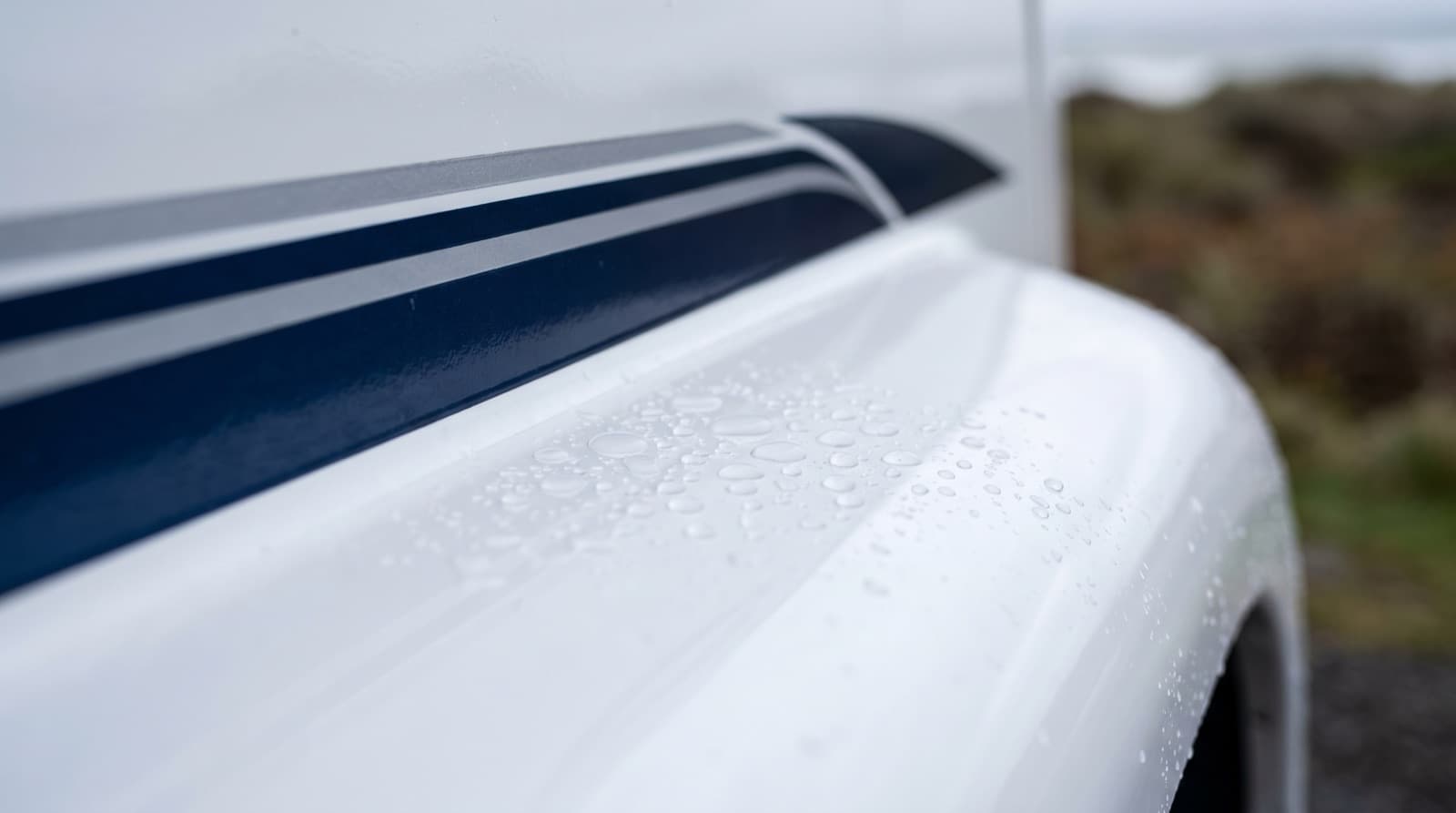
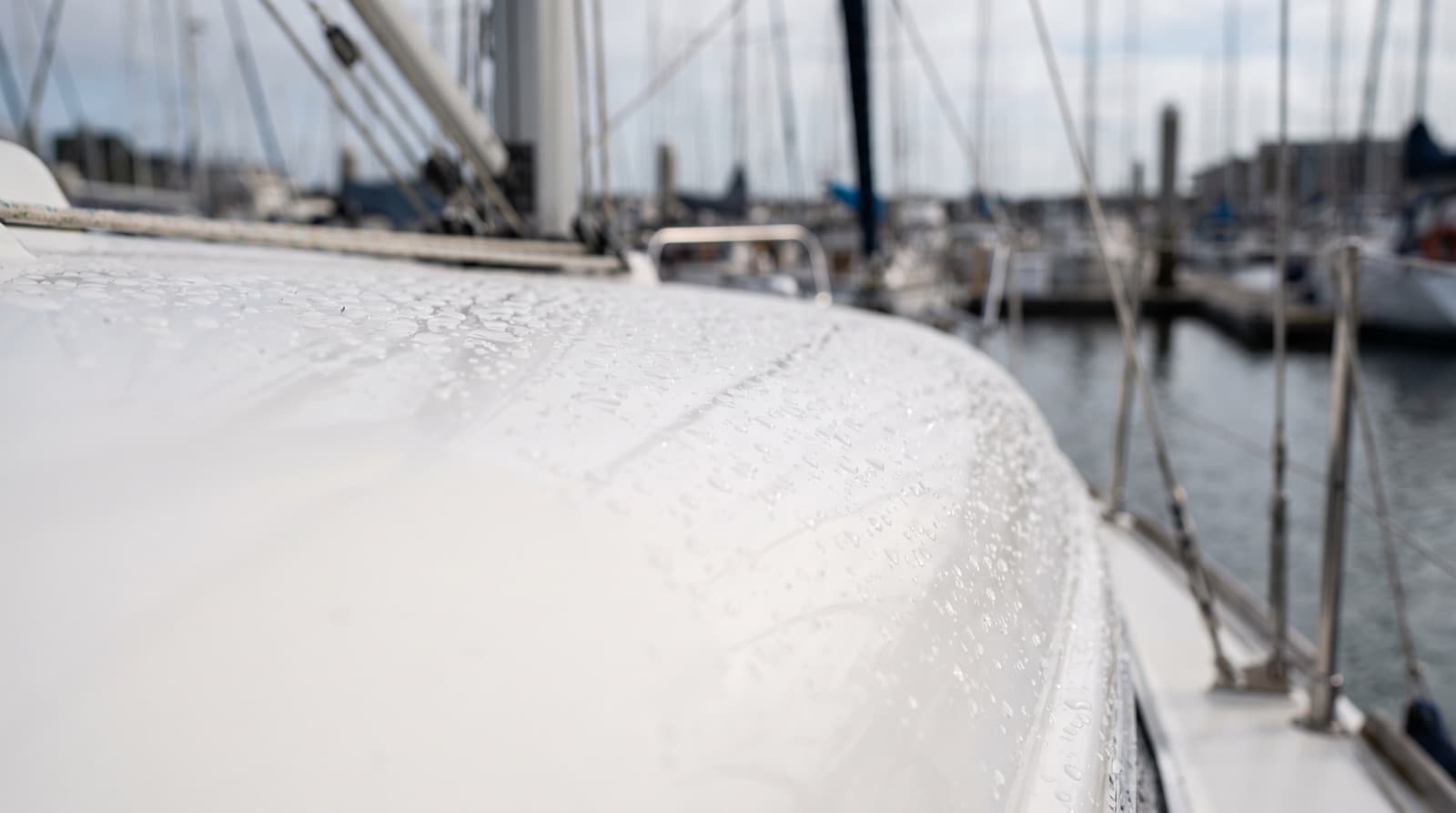
- Water beads up and runs off, so there is less to dry.
Is ceramic coating worth it on a boat?
For most boats kept in salt water, yes. The biggest win is time. Washing goes faster, and the gelcoat holds its shine longer between polish jobs.
Lake and river boats still get sun fade, water spots and a scum line. A coating saves washing time there too. The gain is just smaller than in salt water.
Jet skis follow the same rule. Fix the finish first, then protect it, then rinse after every ride. Our jet ski cleaning guide covers that rinse.
Use this quick check to decide:
- Worth it: the boat sits in a slip in full sun most of the year.
- Worth it: the boat is new or still glossy. It needs only light prep, so this is the best time to coat.
- Worth it: you plan to keep the boat for years, not months.
- Worth it: you are tired of waxing again and again each season.
- Wait: you plan to sell the boat soon.
- Wait: the hull is badly chalked, and you do not want to pay for the polish first.
- Wait: the boat lives indoors and rarely sees sun or salt.
Boat wax vs ceramic coating: which is better?
Wax is cheap and easy, but sun and salt wear it off fast. A coating costs more up front, but it lasts much longer. A sealant (a man-made liquid protectant that lasts longer than wax) sits in the middle.
How long each lasts depends on sun, salt and how you wash. So compare how often you redo them, not promised years. Sticking with wax? Our boat waxing guide shows how.
| Question | Marine wax | Sealant | Ceramic coating |
|---|---|---|---|
| How it holds on | Sits on top of the gelcoat | Sticks to the gelcoat | Bonds to the gelcoat and hardens |
| How often you redo it | Most often | Less often | Least often |
| Time spent on upkeep | Most | Medium | Least, mostly rinsing |
| Salt and scum release | Good at first, fades fast | Better | Best |
| Prep before it goes on | Wash and a light polish | Wash and polish | Wash, deep clean, full polish, panel wipe |
| Up-front cost | Lowest | Middle | Highest |
| Best for | Tight budgets or a boat you may sell | A step up with little extra work | A boat you keep in sun and salt |
Pro tip: Can't decide? Think back to last season. If you waxed more than once and the hull still chalked, a coating will likely save you time.
Where should you put ceramic coating on a boat?
Coat the smooth, hard surfaces that take sun and salt. Skip the parts that have a different job to do.
- Yes: the hull sides above the waterline. Boaters call these the topsides.
- Yes: smooth fiberglass on the deck, cabin and console.
- Yes: stainless rails, cleats and metal trim. It helps slow the rust-colored spots salt air leaves on stainless.
- Yes: glass windshields. Clear plastic windows need products made for plastic.
- No: bottom paint. This special paint below the waterline keeps growth off. A coating on top can stop it from working.
- Only if you ask: non-skid (the rough, grippy deck surface). A coating can make it slick when wet, so we only coat it when the owner says yes.
- Not this coating: vinyl seats and canvas covers. They need their own protectants, made for vinyl and fabric.
What does ceramic coating a boat involve? Prep is most of the job
The coating is the last step, and the easiest. Most of the work is getting the gelcoat clean and smooth first. A coating locks in whatever is under it, good or bad.
Our boat gelcoat oxidation guide explains the polish steps in detail. Here is the full order:
- Wash: a full hand wash with boat soap to lift salt, dirt and loose grime.
- Decontaminate: remove what soap leaves behind, like the scum line, water spots, old wax and rust specks.
- Test for chalk: rub a dark towel on the hull. White powder means oxidation.
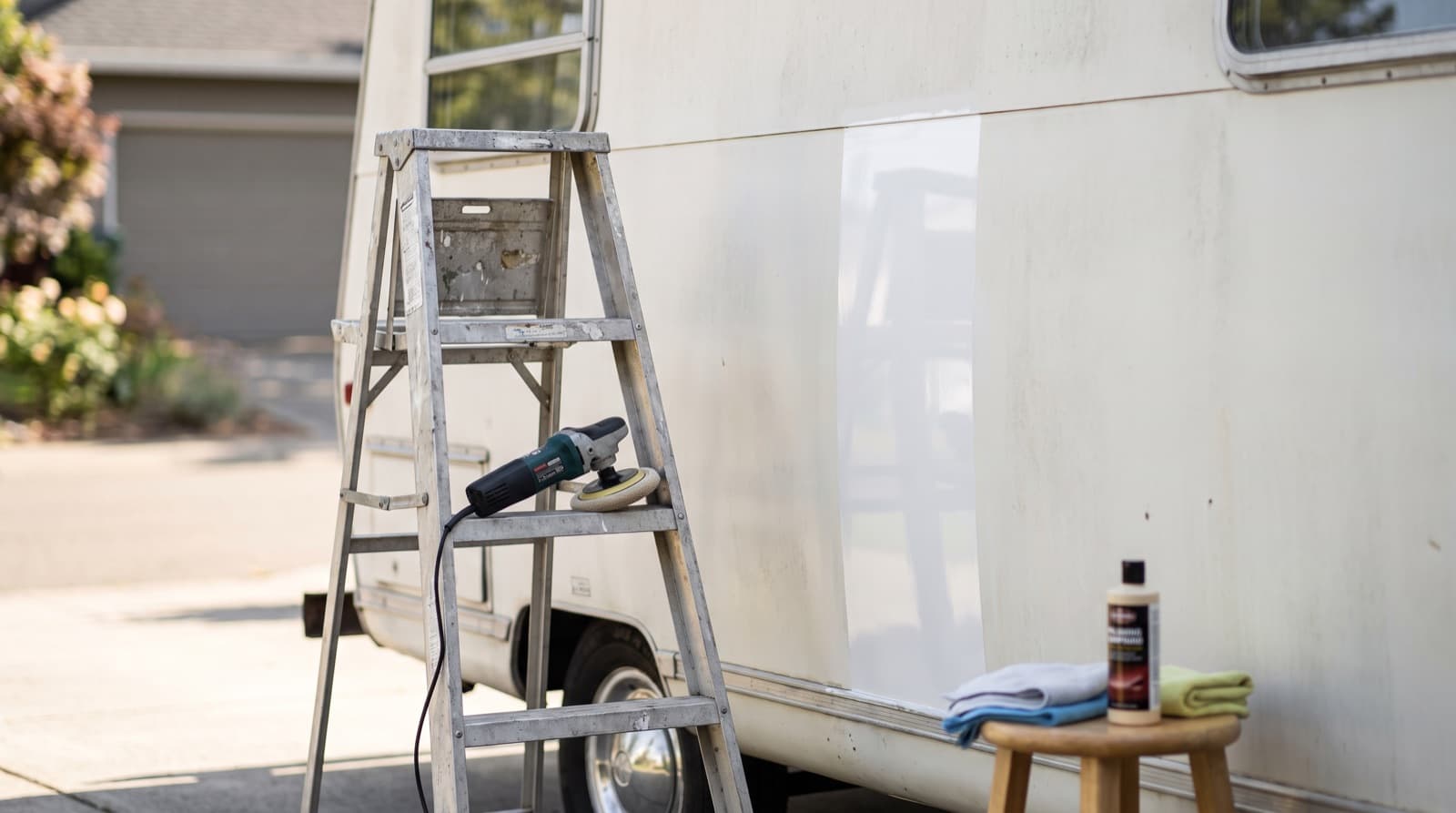
- Compound: a gritty polish, run with a machine, cuts off the dead, chalky layer.
- Polish: a finer polish brings back deep gloss.
- Panel wipe: a special spray strips polish oils so the coating can grab on.
- Coat: apply in small sections, then wipe off the extra before it streaks.
- Cure: keep it dry while it hardens. If you DIY, follow the label. If we do it, we tell you the exact cure and first-wash timing when we quote.
Pro tip: Coat in the shade on a fully dry hull. Morning fog or dew on the gelcoat can weaken the bond. Wipe each panel dry right before you coat it.
How much does a boat ceramic coating cost?
There is no flat price for boats. Two boats of the same length can be very different jobs.
Prep is usually the biggest part of the bill. Shiny gelcoat needs a light polish. A chalky hull needs a full compound and polish, which takes much longer.
At Golden Bay Detailing, you text the boat's length and a few photos to (415) 483-5686. We send a quote in under 10 minutes. These things set the price:
- The boat's length and how tall the hull sides are.
- How chalky the gelcoat is right now.
- How much deck, metal and glass you want coated.
- Where the boat sits: in a slip, on a trailer, or in dry storage.
- Dark gelcoat, which shows every mark and needs more careful polishing.
Can you ceramic coat a boat yourself?
Yes, on a small boat in good shape, if you have the time. The hard part is the prep and the weather, not the coating.
If you try it, follow these steps:
- Pick a marine ceramic coating made for gelcoat. Read all of its directions first.
- Do the full wash and deep clean (decontamination). Then do the dark towel test.
- Machine polish any dull areas. By hand, it takes far too long.
- Go light on sharp edges and corners. Gelcoat is thinnest there and can wear through.
- Work in the shade on a dry, calm day. Wind blows dust onto wet coating.
- Panel wipe, then coat, one small section at a time.
- Check each area under a bright light for high spots (dark, streaky patches of extra coating). Wipe them off before they harden.
- Keep it dry for the coating's full cure time before any wash or launch. The label tells you how long.
- Work outdoors. Coating fumes are strong, so never apply it inside a closed cabin or garage.
- Wear gloves and eye protection. Use a steady ladder or stand, and never lean off a dock to reach.
When should you call a pro?
Call a pro when the job is bigger than your tools or your time. A missed high spot or an edge polished too thin is hard to undo.
- The towel test shows a lot of chalk, so the hull needs heavy compounding.
- The boat is too big to reach safely from the ground or a dock.
- The gelcoat is dark, and every swirl will show.
- You do not own a machine polisher, or you have never used one.
- The boat is in the water, and you would be working from a moving dock.
How do you care for a ceramic-coated boat?
Bay Area boats show why care matters. Wind carries salt spray across the water, and it dries into a gritty film.
Then there is the fog. It leaves the boat wet in the morning, and the sun dries the drops into spots. Slips in Sausalito and Tiburon can get strong afternoon sun, so the sunny side often chalks first.
A coating does not stop this. It makes each rinse do more, so salt comes off before it bakes on. Here is the routine:
- Rinse with fresh water after every outing, even a short one. Dried salt is gritty and wears down any protection.
- Wash with a gentle boat soap. Skip strong degreasers and harsh hull cleaners.
- Use a soft mitt or soft brush. No scrub pads, and no rubbing compound.
- Dry the glass and stainless so rinse drops and fog do not leave spots.
- Top it up now and then with a spray made for coatings. Skip wax, since it hides the coating's slick feel.
- Look it over each season. If water stops beading in one area, that area needs attention.
Frequently Asked Questions
How long does a ceramic coating last on a boat?
It depends on sun, salt and how it is washed, but it lasts much longer than wax. When water stops beading on the sunny side, that area needs a refresh. We explain what to expect for your boat when we quote.
Can you put ceramic coating on an oxidized boat?
Not without prep. The chalky layer must be polished off first. If not, the coating seals in the dull finish and bonds poorly.
Does ceramic coating stop barnacles and growth?
No. A coating is not bottom paint, and it does not go below the waterline. Keeping growth off is the job of antifouling bottom paint.
Can you ceramic coat a painted or aluminum boat?
Yes, if the paint is sound or the aluminum is clean. Paint needs gentler polishing than gelcoat, and bare aluminum needs its own cleaning steps. Send photos first so the right prep can be planned.
Can you ceramic coat a boat while it's in the water?
Yes, for the topsides above the waterline, in calm and dry weather. The boat should stay dry and tied up while the coating cures. We confirm the exact timing with your quote.
Can I wax over a ceramic coating on my boat?
You do not need to. Wax sits on top and hides the coating's slick, water-shedding feel. A spray made to top up coatings is the better choice.
Does Golden Bay Detailing ceramic coat boats?
Yes. Our technicians polish and coat boats at the slip or in dry storage in San Francisco, the Peninsula and Marin. Text the length and a few photos to (415) 483-5686, and we send a custom quote in under 10 minutes.
Keep reading from Golden Bay
Get a free quote for your boat coating
Text the boat's length and a few photos to (415) 483-5686, and we reply in under 10 minutes. Our technicians come to your slip or storage spot in San Francisco, the Peninsula and Marin.