RV & Marine
Boat Cleaning After Saltwater: Rinse, Wash and Dry Routine
Key Takeaways
- To clean a boat after saltwater, rinse it with fresh water and wash it top-down with a pH-neutral boat soap. Then rinse again and dry it before the water can spot.
- Rinse and wash a boat after every saltwater trip. Once a month, give the non-skid, stainless, canvas, clear vinyl, lockers and drains a deeper clean.
- Keep dish soap, bleach, ammonia glass cleaner and stiff brushes off a boat. Never aim high pressure at canvas, clear vinyl, seals or decals.
- Marinas set their own wash rules. Use a soap your marina approves, and use only as much as you need so little suds reach the water.
- Golden Bay Detailing cleans and restores boats across San Francisco, the Peninsula and Marin. Text a few photos and we quote in under 10 minutes.
Boat cleaning after saltwater takes three steps: rinse with fresh water, wash top-down with a gentle boat soap, then dry. Use a pH-neutral soap. That means it is neither acidic nor alkaline, so it is gentle on wax. Do it the same day you get back, before the salt dries and sets.
Salt is the real enemy. Dried salt spray clings to gelcoat, the hard, shiny skin on a fiberglass boat. It clings to metal and canvas too. It holds moisture, dulls the finish and helps rust spots form on stainless.
This guide gives you the after-every-trip routine and a monthly deep clean. It shows what salt does to each surface, and when a pro makes more sense. Keep a lake boat? It needs the same routine, just less often. Watch for a scum line at the waterline instead of salt.
How often should you clean a boat?
Rinse and wash your boat after every trip in salt water. Salt spray dries fast in sun and wind. The longer it sits, the harder it is to get off.
Then add a deeper clean about once a month in boating season. Protection, like wax, runs on a longer schedule.
- After every salt trip: fresh water rinse, soap wash, final rinse, then dry. Flush the hatch gutters (the channels around the hatch lids) and the drains.
- Once a month: scrub the non-skid (the rough, grippy texture on the deck) deeper. Clean the stainless, canvas and clear vinyl, and wipe down the seats.
- On a longer schedule: a boat wash and wax, or care for your coating. Our boat waxing guide covers that job.
- Even when it sits: a boat in a slip still collects salt air and bird droppings. Give it a rinse whenever you visit.
What do you need to wash a boat?
Boat washing does not take much gear. You just need soft tools and a gentle soap.
Leave a few things on the dock. Dish soap strips wax and dries out vinyl. Bleach can weaken canvas thread and harm vinyl. Ammonia glass cleaner can cloud clear vinyl. And never use a stiff brush or scouring pad on gelcoat.
- A hose with a shutoff nozzle. Normal hose pressure is plenty.
- A pH-neutral boat soap. It cleans salt without stripping your wax.
- Two buckets: one for soapy water and one to rinse your brush or mitt. This keeps grit out of the soap.
- A soft wash brush on an extension pole for the hull sides and hardtop.
- A deck brush with medium-soft bristles for the non-skid.
- Microfiber wash mitts and a stack of clean drying towels, or a chamois.
- A separate soft towel kept only for glass and clear vinyl.
How do you wash a boat after saltwater, step by step?
Work from the top down, in the shade if you can. Wash one section at a time, so soap never dries on the surface.
Trailer your boat? After every launch, rinse the trailer frame, brakes and rollers or bunks (the padded boards the hull rests on). Flush the engine with fresh water the way its manual says. Have a jet ski too? The same salt rules apply, and our jet ski cleaning guide covers it.
- Rinse first. Start at the highest point, like the hardtop or T-top (the frame and roof over the helm, where you steer). Let fresh water carry the salt down and off.
- Flood the glass and clear vinyl with water. Never wipe dry salt off clear panels. The crystals scratch like sand.
- Flush the hatch gutters, drains and scuppers (the holes that let deck water run overboard).
- Mix your boat soap by the label. More soap does not clean better. It just leaves a film.
- Wash top-down: hardtop, windshield frame, console and rails, then the decks. Do the hull sides last.
- Scrub the non-skid in two directions. Dirt hides deep in the texture.
- Rinse each section before you move on. Soap that dries leaves streaks.
- Give the whole boat a slow final rinse, top to bottom.
- Dry it right away, starting with the glass and metal.
Pro tip: Our technicians rinse longer than feels needed. Salt hides under the rub rail (the bumper strip along the hull's top edge). It hides around cleats (the metal fittings you tie lines to) and behind hinges. If a spot is hard to reach, that is usually where the salt is waiting.
What does salt do to each part of a boat?
Salt does not hurt every surface the same way. Here is what it does and how to fix it.
To clean boat fiberglass, you are really cleaning the gelcoat on top of it. Is the gelcoat chalky, so it leaves color on your hand? That is oxidation. A yellow or brown line at the waterline is a different problem. It is a stain from the water, not oxidation. A regular wash will not fix either one. Our boat gelcoat oxidation guide covers both.
| Surface | What salt does | The fix |
|---|---|---|
| Gelcoat (hull and deck) | Dries into a white film. With sun, it helps dull and chalk the finish over time. | Rinse and wash after every trip. Keep wax or a coating on it. Chalky spots need a polish. |
| Stainless steel (rails, cleats, hinges) | Causes tea staining, which is light brown rust spots. Left too long, it can pit the metal. | Rinse, wash and dry. Use a metal cleaner made for stainless on stains while they are light. |
| Glass and clear vinyl | Leaves a hazy film. Wiping dry salt off clear vinyl scratches it. | Flood with water first. Clean with a clear-vinyl cleaner and soft microfiber. |
| Canvas (bimini sun top, covers) | Holds moisture and dirt, which feeds mildew. The fabric turns stiff. | Rinse, use a gentle soap and a soft brush. Let it dry fully before you fold it. |
| Seat vinyl | Dries out the vinyl. Mixed with sunscreen, it packs grime into the seams. | Mild soap, a soft brush, a rinse and a dry. Add a vinyl protector with UV blockers. |
| Non-skid deck | Salt and dirt pack into the texture and turn it gray. | Scrub with a medium-soft deck brush in two directions, then rinse well. |
How do you dry a boat without water spots?
Many owners skip drying. That is where a lot of spots come from.
Spots form when water dries on its own in sun or wind. Dried salt spray leaves crusty white marks too. So does fog that settles overnight and then dries in the morning sun.
- Dry the glass, clear vinyl and stainless first. Spots show most on them.
- Use clean microfiber towels or a chamois. Pat or drag them lightly. Do not scrub.
- Blow water out of hinges, cleat bases and rail joints. Use a battery-powered blower, so no cord runs near the water.
- Switch to a fresh towel when one gets soaked. A wet towel just spreads water around.
- Open the hatches and lockers for a while so they can air out.
- Put the covers back on only when the boat and the canvas are fully dry. Trapped water leads to mildew.
What goes into a monthly deep clean?
Once a month, go past the quick wash. This is where you catch small problems before they grow.
Some stainless and deck cleaners contain acid. Wear gloves, follow the label, and never mix two cleaners.
- Scrub the non-skid with a deck cleaner made for boats, then rinse it well.
- Clean the stainless rails and hardware. Treat any tea stains while they are still light.
- Wash the bimini and covers, then let them dry all the way.
- Clean the clear vinyl windows with a cleaner made just for clear vinyl.
- Open the lockers and the anchor locker. Rinse out salt and sand, then let them air out.
- Wipe down the seats and check the seams for mildew. Our boat seat guide covers stains and mildew.
- Look at the waterline. A light scum line comes off with boat soap. A stain that stays is a job for a pro.
- Check the shine. If water stops beading up, it is time for a boat wash and wax.
How do you clean a boat in a Bay Area marina?
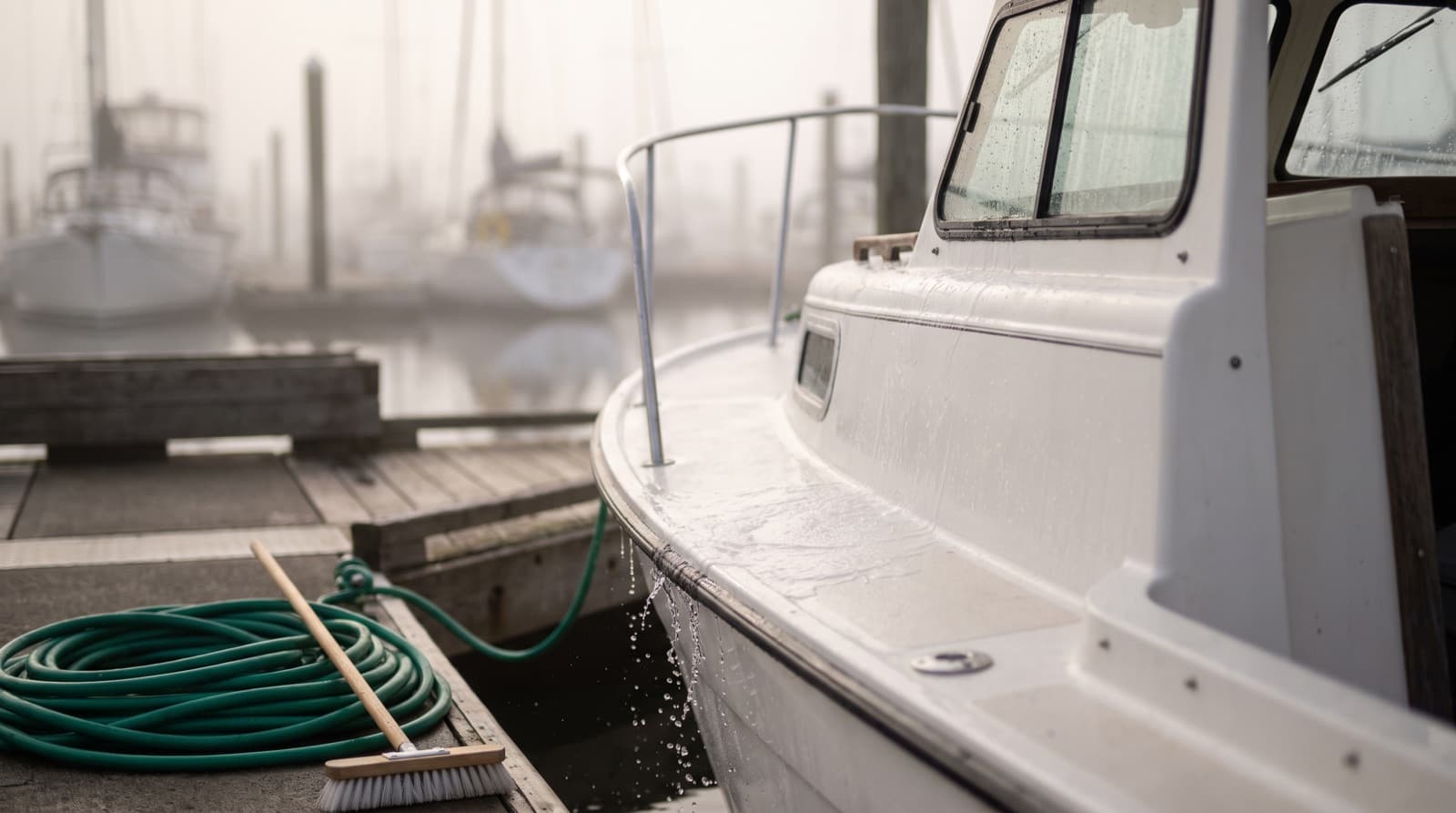
Bay boats collect salt even on days they stay tied up. Wind carries spray across the marina. The marine layer (the low, wet fog that rolls in off the ocean) leaves a damp film. When the fog burns off, that film dries into spots.
Slips in Sausalito, Tiburon and the San Francisco Marina set their own rules for washing. Ask your harbor office which soaps are approved. Use a bucket, not a hose that runs nonstop. Use only as much soap as you need, so little suds reach the water. Never dump a soap bucket into the water.
Bay afternoons get breezy, and wind dries soap before you can rinse it. Wash in the morning, or on a cool, gray day when soap dries slowly.
Trailer boaters who live near the coast or the Bay face the same salt air at home. A boat parked in Pacifica or Half Moon Bay still needs a rinse between trips.
When should you call a pro for boat cleaning?
A regular wash is a great DIY job. Some problems are not. Call a pro when you see these signs:
- The gelcoat looks chalky or faded, or it leaves color on your hand.
- The waterline has a yellow or brown stain that soap will not move.
- The stainless has tea stains everywhere, or small pits are showing.
- The canvas or seats have mildew spots that keep coming back.
- You are getting the boat ready to sell.
- The boat is too tall or too big to reach safely from a ladder or the dock.
- You would rather spend your days on the water than scrubbing it.
How does Golden Bay clean a boat?
We come to you. We bring our own water and power to your slip, your driveway or wherever the trailer is parked.
Our technicians do a topside wash (the hull above the waterline, plus the deck) and an interior wipe-down. They polish the glass and the metal, like rails and cleats. They also remove oxidation from gelcoat, and we offer seasonal maintenance washes at your slip.
Every boat gets a custom quote, because size and condition vary so much. Text us a few photos, the boat's length and where it is kept. We quote in under 10 minutes.
We do not clean the bottom of a boat that lives in the water. That is work for a commercial diver.
Frequently Asked Questions
Can you use dish soap or car wash soap on a boat?
Skip dish soap. It is made to cut grease, so it strips wax and dries out vinyl. A gentle, pH-neutral car wash soap is fine on gelcoat in a pinch, but check that your marina allows it.
Can you pressure wash a boat?
Only with care. A wide spray held well back is okay on a gelcoat hull. Keep high pressure off canvas, clear vinyl, seals, decals and electronics. It can tear, lift or push water inside.
What is the best boat cleaning product?
There is no single best one. Pick a pH-neutral, biodegradable boat soap that is safe on wax and allowed at your marina. Add cleaners made for each job, like stainless or clear vinyl.
How do you get black streaks off a boat?
Black streaks come from dirty rain running off rails, canvas and fittings. Boat soap alone often will not move them. Use a cleaner made for black streaks on gelcoat with a soft cloth, then rinse and wax the spot.
Is a magic eraser safe on a boat?
Use it with care. A white melamine sponge works like very fine sandpaper. It can dull gelcoat and wipe off your wax, so test a small spot first and wax it after.
Do you need to rinse a boat that stays in the slip?
Yes. Wind and fog carry salt onto boats even when they never leave the dock. A fresh water rinse whenever you visit keeps it from building up.
How much does Golden Bay charge to clean a boat?
Every boat gets a custom quote, since size and condition vary so much. Text a few photos and the boat's length, and we quote in under 10 minutes. We come to you across San Francisco, the Peninsula and Marin.
Keep reading from Golden Bay
Want a clean boat without the scrubbing?
Text a few photos and your boat's length for a free quote in under 10 minutes. We come to you across San Francisco, the Peninsula and Marin.