Maintenance & Care
Classic Car Detailing: Single-Stage Paint, Chrome, Vinyl
Key Takeaways
- Classic car detailing is slow, test-first detailing made for old paint, chrome, rubber, vinyl and leather.
- Many cars built before the late 1980s have single-stage paint, so color on the polishing towel is normal.
- Check paint thickness and polish a small test spot first, because old or resprayed paint can be thin.
- Skip automatic car washes and strong degreasers, which can scratch soft paint and dry out old rubber seals.
- Golden Bay Detailing details classic cars at your home or garage across San Francisco, the Peninsula and Marin. Paint correction starts from $399.
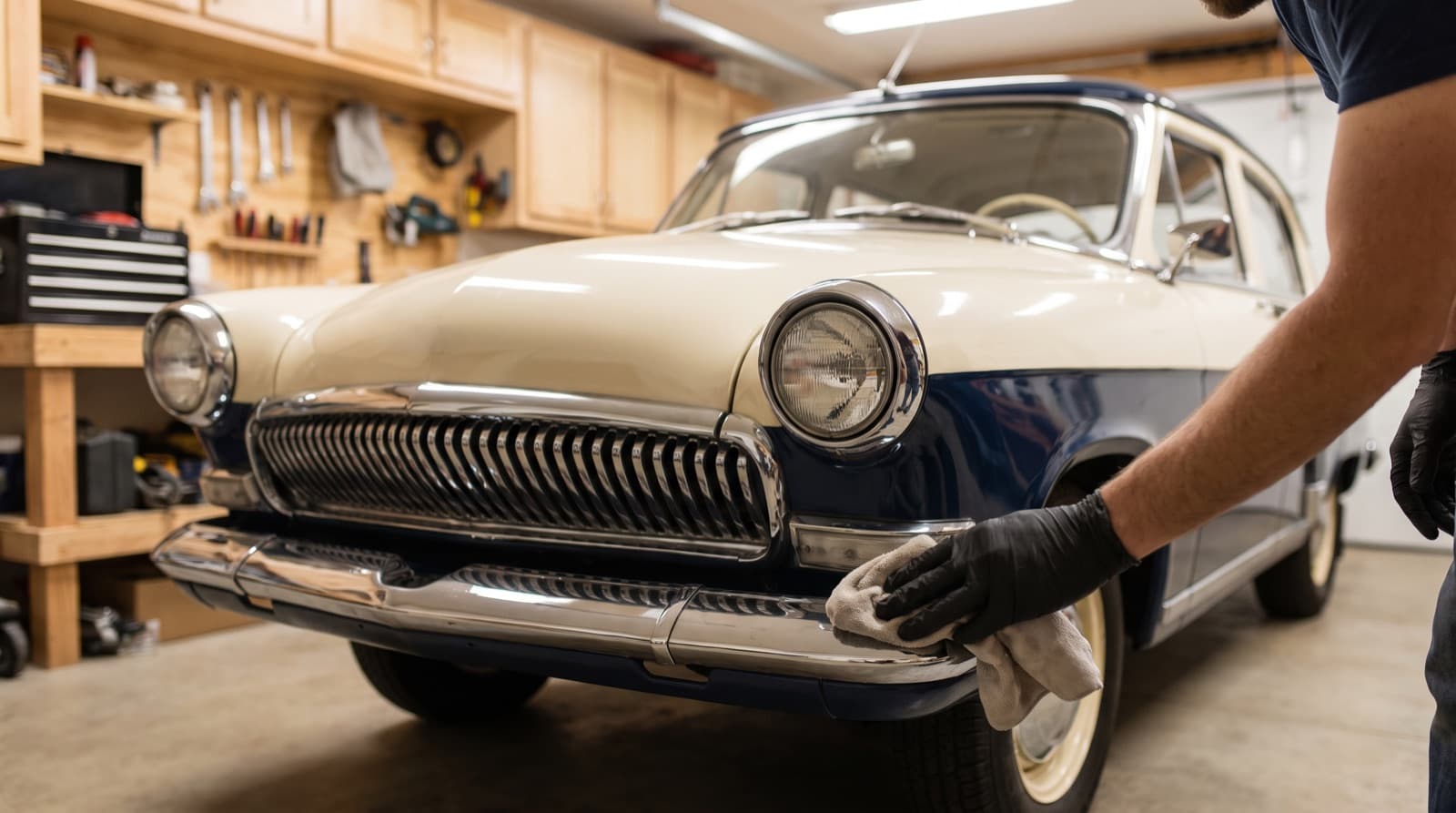
Classic car detailing is a slow, gentle clean, polish and protect job made for older cars. Old paint, chrome, rubber and vinyl do not act like the parts on a new car. So a good detailer starts with the mildest step. They only go stronger if a test spot shows it is safe.
The paint holds the biggest surprise. Many older cars wear single-stage paint (color and shine in one layer, with no clear coat on top). When you polish it, color comes off on the towel. That is normal. But it also means every pass takes away a little of your paint.
This guide covers safe home care, pro polishing, cost, and when to call a restoration shop.
What makes classic car detailing different?
Classic car detailing is different because old finishes damage easily. Many classics have single-stage paint, real chrome, and aging rubber and vinyl.
A modern car has a thin clear coat over its color. That clear layer takes the scratches and the sun. Light polishing stays in that clear layer, so the color is not touched.
Many cars built before the late 1980s left the factory with single-stage paint instead. Most cars since then use a clear coat. Some classics wear lacquer or enamel, older paint types that age differently. Others have been painted again, sometimes more than once.
Trim is often real chrome plating or stainless steel, not plastic. Rubber seals may be decades old. Seats may be vinyl or leather that has dried out.
So vintage car detailing is less about speed and more about care. The goal is to protect what is there, not strip it away.
Why is there paint on my towel when I polish?
If your car has single-stage paint, color on the towel is normal. You are seeing the top of the paint come off. On a red car, the towel turns pink.
Sun and air slowly turn that top layer dull and chalky. A light polish takes it off and brings back the gloss.
But there is a limit. Single-stage paint has no clear layer to spare. Each polish takes a little more color away. A strong compound (a gritty polish that cuts fast) can wear through to primer (the layer under the paint). Edges and body lines go first.
So the rule is simple. Use the lightest polish that works, and stop once the gloss is back.
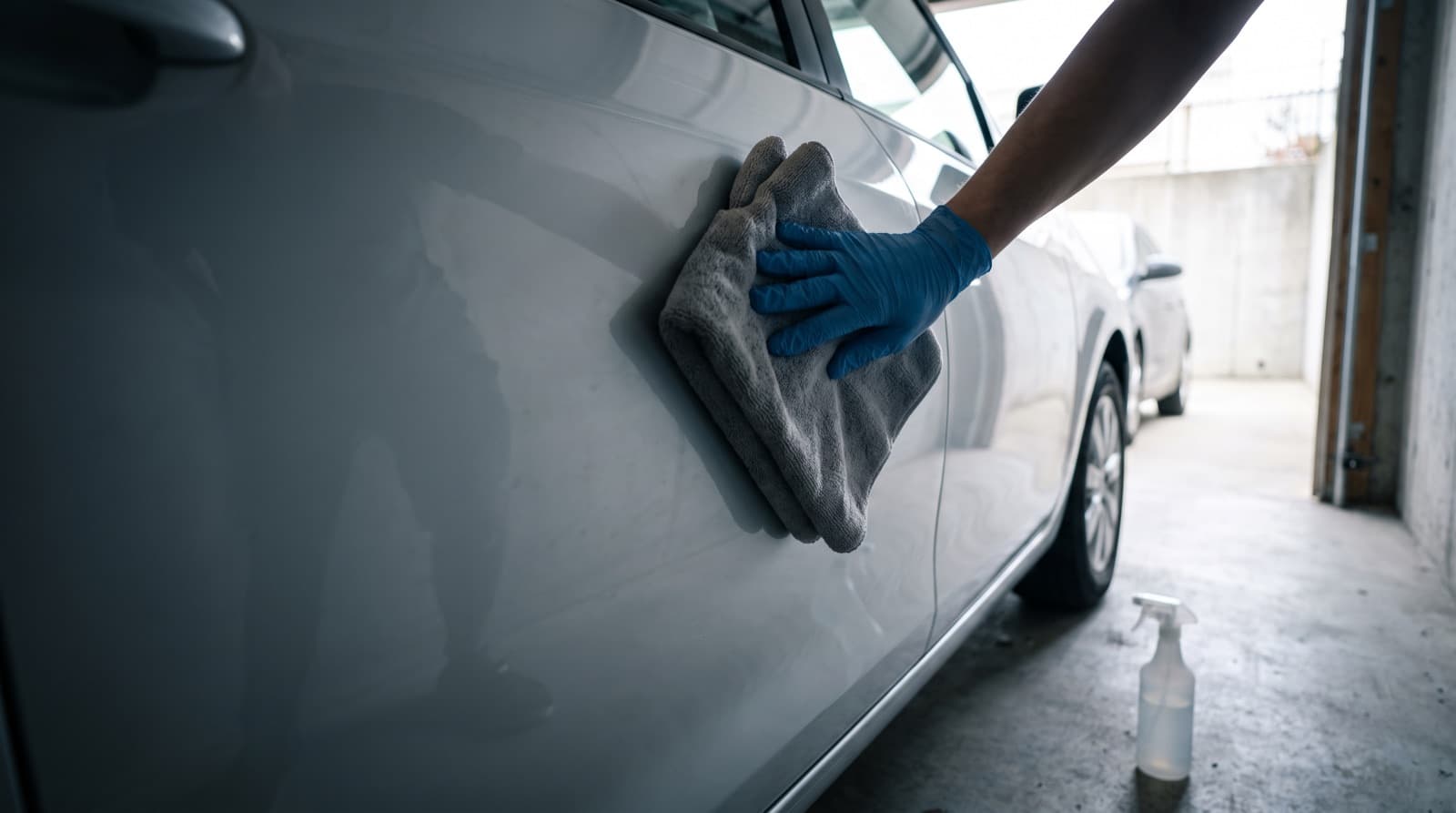
Pro tip: Our technicians start with a towel test. Put a dab of mild polish on a white microfiber towel and rub a low, hidden spot. Color on the towel usually means single-stage paint. A clean towel usually means there is a clear coat.
How do pros polish single-stage paint safely?
Pros take off as little paint as they can. That is the heart of collector car detailing: take off less, keep more. Sometimes the mildest step is no polish at all.
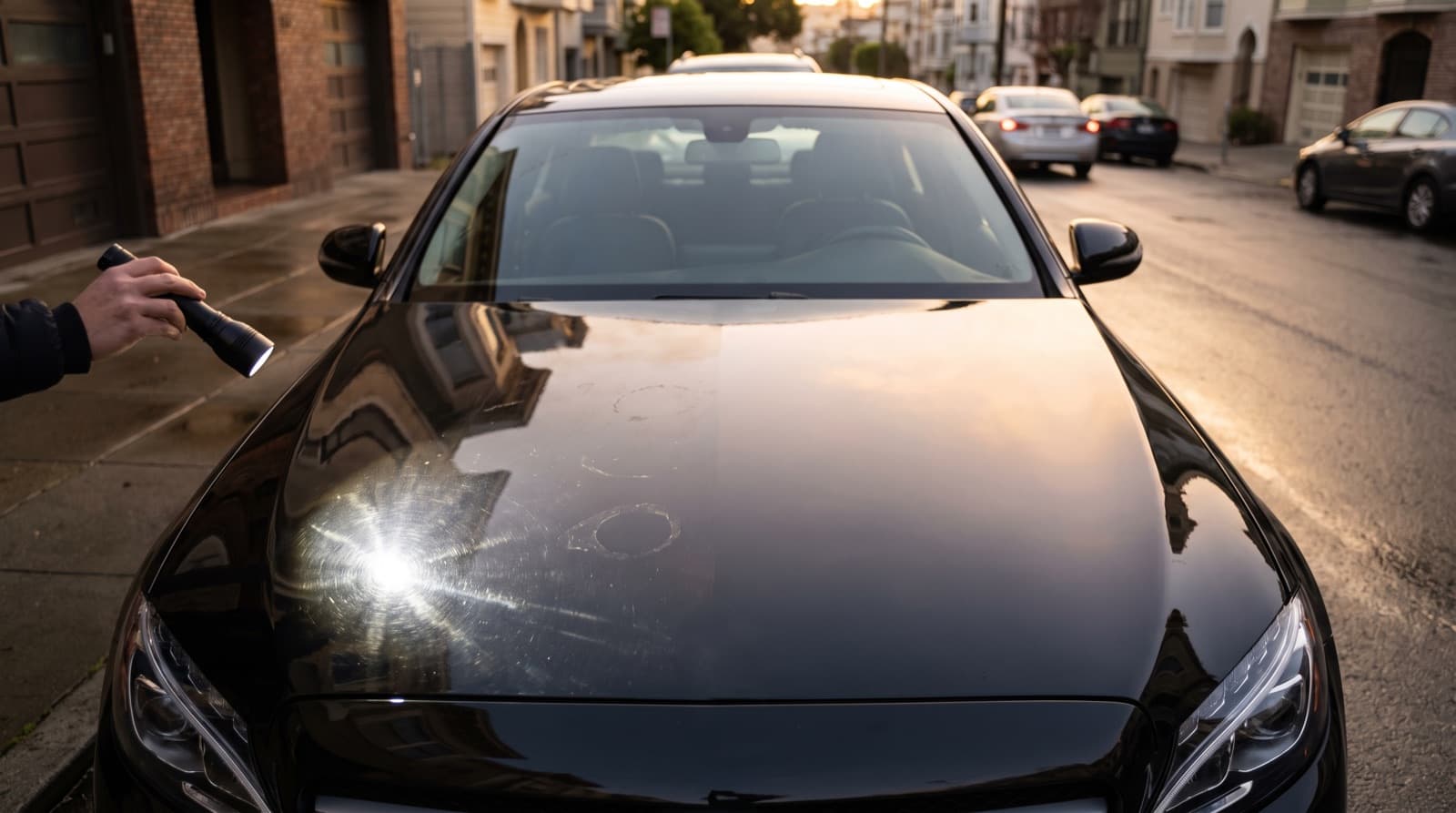
Machine polishing that removes swirls and light scratches is called paint correction. Here is what careful single-stage paint polishing looks like:
- Wash first, then clay bar (a soft clay that pulls stuck grit off paint), so grit is not ground in.
- Measure paint depth with a paint thickness gauge (a small meter that reads paint depth). Thin spots, thick resprayed panels, or big jumps between panels call for a gentler plan.
- Some gauges only read on steel, so fiberglass and aluminum panels need a different kind.
- Polish one small test spot per panel before doing the whole panel.
- Use soft foam pads, low machine speed and short passes.
- Tape off edges, emblems, rubber and trim. Edges and body lines have the thinnest paint.
- Stop as soon as the gloss comes back.
Pro tip: No gauge at home? Go slower. Tape off the edges, use a soft pad, and polish one small test spot per panel. Only work the full panel if that spot looks good.
What is the best protection for single-stage paint?
Any protection beats bare paint, and fresh-polished paint needs it most. The right choice depends on how the car is stored and driven, and how healthy the paint is.
- Wax: easy to put on by hand, with a warm glow. It wears off in weeks to a few months, so it suits a garage-kept car you wax often.
- Sealant (a man-made protectant that lasts longer than wax): still easy to apply at home. It is a good pick for a car that sees fog and street parking.
- Ceramic coating (a hard, clear layer that bonds to the paint): lasts the longest and makes washing easier. It only goes on healthy paint after polishing, since it locks in whatever is under it.
- Thin, cracked or peeling paint: fix the paint first. Do not coat over it.
Pro tip: After a ceramic coating, keep the car dry the first night. Do not wash it for 10 to 14 days while it cures. Then hand wash it. A brush tunnel wash voids our coating warranty, and a yearly Ceramic Maintenance Detail keeps the warranty active.
How do you wash a classic car at home?
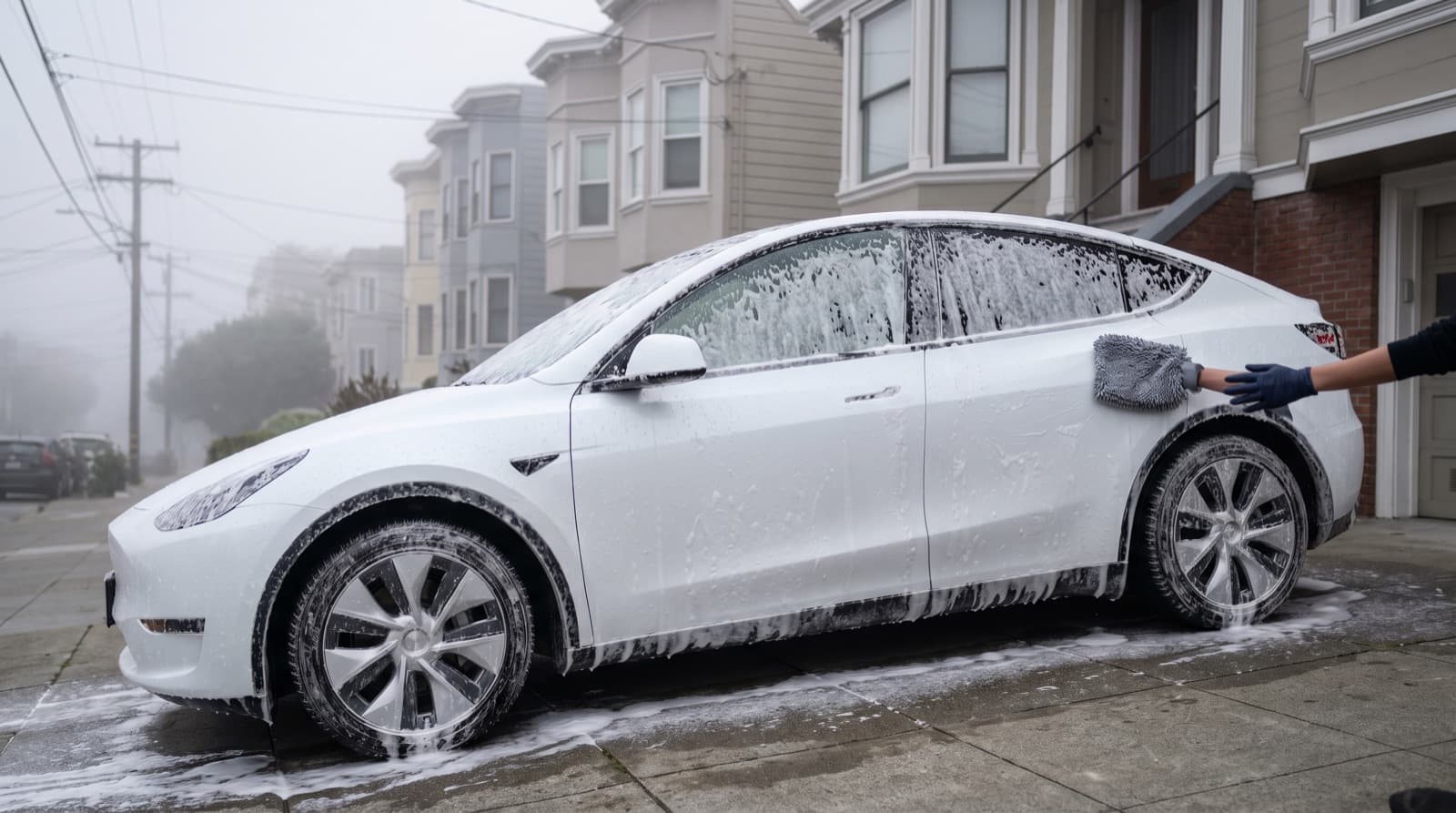
Hand wash it in the shade. Use a pH-neutral car soap (a mild soap that will not strip wax), two buckets and a soft microfiber mitt. Skip automatic washes, since old paint can be soft and scratch easily.
These steps matter most on a classic:
- Let the paint cool first. Warm panels dry fast and leave water spots.
- Rinse with gentle water pressure. Keep a pressure washer far back, or skip it.
- Do not spray hard at seals, window edges or the engine bay. Old seals can leak, and water can reach old wiring.
- Skip dish soap and strong degreasers. They strip wax and can dry out old rubber.
- Dry right away with a soft, clean drying towel.
- Open the doors, hood and trunk. Wipe the door jambs (the painted edges inside each frame) dry, so water does not sit in the seams.
How do you care for chrome, rubber, vinyl and old leather?
The rule for every material is the same. Clean it mild, protect it lightly, and test first.
Skip silicone-heavy dressings. They leave a greasy shine that traps dust, and fresh paint does not stick well over silicone.
Here is how to treat each part:
- Chrome: wash it with the paint, then use a mild chrome polish on a soft cloth. Skip dry steel wool and rough pads. The plating is thin and can wear through.
- Stainless trim: tougher than chrome, but it still scratches. Use a fine metal polish and light pressure.
- Pitted chrome: small rust pits can be cleaned and sealed, but not polished away. Deep pits or peeling plating need a plating shop.
- Rubber seals: clean with mild soap and a soft brush. Then add a water-based rubber dressing. Keep harsh degreasers and solvents off, since they can dry rubber and make it crack.
- Vinyl seats, dash and tops: use a mild vinyl cleaner and a soft brush. Finish with a non-greasy UV protectant (a dressing that helps block sun damage).
- Older leather: test a mild leather cleaner in a hidden spot first, because old dye can rub off. Condition lightly. Never use bleach on leather.
How does Bay Area weather affect a classic car?
Bay Area weather is mild, but it is not gentle on old cars. Fog and the marine layer leave a damp film on cars near the coast. Moisture that sits on chrome, in seams and under seals can lead to rust over time.
Salt air adds to it near Ocean Beach, Sausalito, Pacifica and Half Moon Bay. Rinse salt off chrome and paint gently, and vacuum out beach sand after coast drives.
Fog-wet paint that dries in the afternoon sun can leave water spots. So can sprinkler and hose overspray. Rain season runs roughly October to April. Before it starts, check that door and trunk seals still keep water out.
Care between drives matters just as much:
- Store the car in a dry garage if you can.
- Only cover a clean car, and pick a soft, breathable cover. Dust under a cover can rub fine scratches into soft paint.
- Lift light dust with a quick detailer spray (a light spray that helps a towel glide) and a plush towel. Do not wipe dry dust.
- Street parking in full sun is hard on old vinyl dash tops. A sunshade helps.
When is a restoration shop the right call?
A detailer cleans, polishes and protects. A restoration shop repairs and replaces.
A simple rule works well. If the problem sits on the surface, start with a detailer. If it is under the paint, or the part is broken, call a restoration shop.
| What you see | What a detailer can do | When a shop is better |
|---|---|---|
| Dull, chalky single-stage paint | Gentle polish, then protection | Paint is worn through to primer |
| Light swirls and haze | Paint correction | Rarely needed |
| Clear coat peeling on a respray | Nothing lasting; polish will not fix it | Panel needs new paint |
| Rust bubbles under the paint | Keep the area clean and dry | Rust repair and paint |
| Pitted chrome | Clean, polish and seal | Deep pits or flaking plating need replating |
| Cracked or dry-rotted seals | Clean and dress gently | Seals need replacing |
| Torn vinyl or split leather | Clean and condition | Upholstery repair |
How much does classic car detailing cost?
At Golden Bay Detailing, a Full Detail on a classic sedan starts from $399. The final quote depends on the car's size, its condition and how much paint work it needs.
Our technicians come to your home, garage or office, and the van brings its own water and power. We serve San Francisco, the Peninsula and Marin. Paint correction and ceramic coating also reach Palo Alto and parts of the East Bay.
These are starting prices:
- Full Detail (deep interior and exterior): from $399 for a sedan, $449 for an SUV.
- Paint correction 1-stage (one polish step): from $399.
- Paint correction 2-stage (a cutting step, then a finishing polish): from $799.
- Paint correction multi-stage (several steps for deeper marks): from $1,199.
- Ceramic coating: from $799 for a 2 to 3 year coating, with a 1-step paint correction included. SUVs and trucks add $200.
- Ceramic Maintenance Detail: from $250, needed once a year to keep the coating warranty.
Pro tip: Fragile single-stage paint often needs only the lightest polish. Our technicians test a spot first, then plan around what your paint can safely handle. Text us a few photos at (415) 483-5686 to get started.
Frequently Asked Questions
Can you machine polish single-stage paint?
Yes, with care. Use a soft pad, a light polish and low speed. Check paint thickness first, and stop as soon as the gloss comes back.
Should I polish original paint or leave it alone?
Both are fair choices. A wash, clay and wax keeps all of the original paint and may be enough. Polishing brings back more gloss, but it removes a little paint each time, so skip it on thin paint.
Is an automatic car wash safe for a classic car?
Brush washes can scratch soft paint and snag trim, antennas and mirrors. Touchless washes skip the brushes, but strong soap and high-pressure jets can strip wax and push water past old seals. A gentle hand wash is safest.
Can you put a ceramic coating on a classic car?
Yes, if the paint is healthy. It gets polished first, because the coating locks in whatever is under it. Thin, cracked or peeling paint needs repair before any coating goes on.
How long does classic car detailing take?
It depends on the car and the work. A wash and interior detail takes less time than paint work. Multi-stage paint correction and ceramic coating take a full day, so we book them ahead.
Is there classic car detailing near me in the Bay Area?
Golden Bay Detailing comes to you across San Francisco, the Peninsula and Marin. Paint correction starts from $399 and ceramic coating from $799. Request a free quote and tell us about your car's paint.
Keep reading from Golden Bay
Get a Free Quote for Your Classic Car
We come to your home or garage in San Francisco, the Peninsula and Marin. Tell us about your car, and our technicians will plan a gentle, paint-safe detail.