How-To
How to Clean a Truck Bed: Liner, Rust and Stain Guide
Key Takeaways
- To clean a truck bed, empty it, sweep out dry debris, rinse from the cab end toward the tailgate, scrub with a degreaser and a stiff-bristle brush, then rinse and dry it completely.
- Spray-in liners tolerate strong degreaser and hard brushing, while bare painted steel needs a pH-neutral cleaner and immediate drying so chips and scratches do not flash rust.
- Plastic drop-in liners trap water and grit against factory paint, so they should be unbolted and lifted out at least once a year to check the bed floor for rust.
- Dried concrete should be broken loose with a rubber mallet and a plastic scraper, then finished with a concrete dissolver rather than muriatic acid, which attacks bare steel and liner texture.
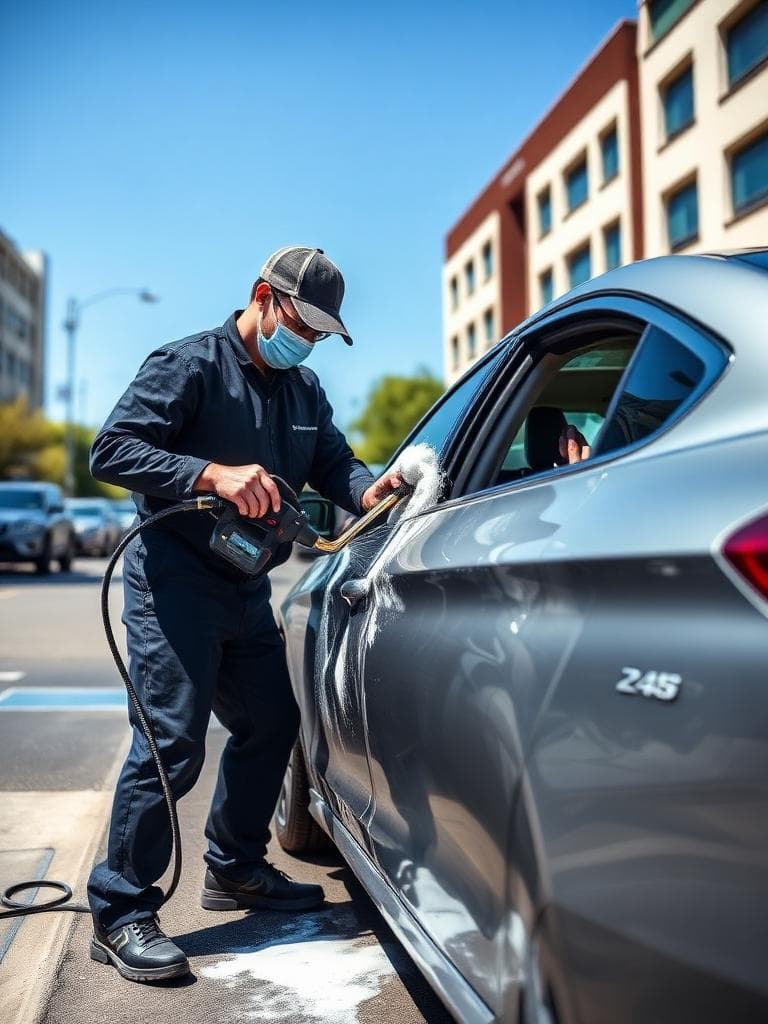
- Golden Bay Detailing details work trucks and fleets across San Francisco, the Peninsula, and Marin, bringing its own water and power to the driveway or jobsite.
Here is how to clean a truck bed properly: empty it completely, sweep out the loose debris, rinse from the cab end toward the tailgate, scrub with an all-purpose cleaner or degreaser and a stiff brush, rinse again, then dry it and protect the surface. That order works on every bed.
What changes is the chemical you reach for and how aggressive you can get, and that depends entirely on what you are looking at: bare painted steel, a spray-in liner, or a plastic drop-in liner.
Most beds do not look rough because they are dirty. They look rough because wet mulch sat in a corner for two weeks, a bag of concrete split open, or a drop-in liner got bolted over factory paint years ago and never came out. Below is the method our technicians use on work trucks in San Francisco, including the parts most guides skip.
What is the fastest way to clean a truck bed?
A dirty-but-healthy bed is a 20 to 30 minute job with a hose, a bucket, a deck brush, and a degreaser. Set-in stains and rust are what stretch it into an afternoon.
Work in the shade if you can. Cleaner drying on hot painted steel or a sun-baked liner leaves streaks you then have to scrub off a second time.
- Empty everything, including the toolbox and the pile of tie-down straps. You cannot clean around objects.
- Sweep or blow out the dry debris first. Gravel and sawdust turn into an abrasive slurry the moment you add water.
- Rinse from the front of the bed toward the tailgate so the water carries grit out instead of packing it into the front corners.
- Spray degreaser or all-purpose cleaner on the floor and up the walls. Let it dwell two to three minutes and never let it dry on the surface.
- Scrub the floor with a stiff-bristle deck brush and use a softer brush on the rails, stake pockets, and around the fuel door.
- Rinse top down, then open the tailgate and rinse the hinge area, the seam, and the drain holes.
- Dry it with a leaf blower or towel. Standing water in a truck bed is exactly how surface rust starts.
Bare metal, spray-in, or drop-in: how does the liner change the method?
Identify the surface before you buy chemicals. A degreaser that a spray-in liner shrugs off will strip wax and dull trim on painted steel, and a soft brush that works on paint will not touch grease packed into liner texture.
Beds with no liner at all are just painted panels. Treat that floor like the hood of your car, not like a concrete slab.
| Bed surface | Cleaner to use | Brush | Watch out for |
|---|---|---|---|
| Bare or painted steel | pH-neutral car soap, or a diluted all-purpose cleaner | Soft to medium bristle | Flash rust in chips and scratches. Dry it immediately. |
| Spray-in liner (Line-X, Rhino, Raptor) | Strong degreaser such as Simple Green, Oil Eater, or a purple degreaser | Stiff deck brush | Chalky UV fade on the top rails and tailgate |
| Plastic drop-in liner | All-purpose cleaner on both the top and the underside | Stiff brush, plus a full rinse underneath | Trapped water and grit slowly sanding the paint below |
| Bed mat or rubber liner (BedRug, Dee Zee) | All-purpose cleaner, rinse, then air dry fully | Medium bristle | Water wicking into the backing and staying wet for days |
Pro tip: Whatever liner you have, rinse the tailgate hinge area and the drain holes last, then check that they actually drain. A plugged drain hole turns a five-minute rinse into a week of water sitting on a seam.
What is hiding under a drop-in liner?
Drop-in liners are the most common cause of a rusted bed floor we see on older work trucks. The plastic does not sit flat against the paint. Sand, road grit, and water work their way into the gap, and then the liner holds them there in the dark where nothing dries.
If your truck lives outside in the fog belt, once a year is the bare minimum for pulling it. Spray-in liners avoid this problem entirely because there is no gap, which is why we recommend them for anyone keeping a truck long term.
- Unbolt the liner and lift it out during a dry stretch. Two people, about ten minutes.
- Wash the underside of the liner as well as the bed floor. The underside is usually filthy.
- Inspect the front corners, the wheel-well seams, and every bolt hole. Rust starts there first.
- Let the bed floor dry all the way before the liner goes back in. Dry, not damp.
- If you find bubbling paint or brown staining, treat it now while it is still surface rust and still cheap to fix.
How do you remove concrete, oil, and mulch stains?
Stains fall into two buckets: sitting on top of the surface, or soaked into it. Anything on top comes off with dwell time and mechanical scrubbing. Anything soaked into a porous spray-in liner may lighten but will not fully disappear, and that is worth knowing before you spend an hour on it.
Set your expectations by the surface. Textured spray-in liner has thousands of tiny pockets that hold pigment. Smooth painted steel gives stains up far more easily.
| Stain | What works | What to avoid |
|---|---|---|
| Dried concrete or mortar | Tap it loose with a rubber mallet and a plastic scraper, then use a concrete dissolver and rinse hard | Muriatic acid and metal chisels |
| Motor oil, hydraulic fluid, grease | Absorb it first with cat litter or oil-dry, then two passes of degreaser and a stiff brush | Pressure washing before absorbing. You just spread it wider. |
| Wet mulch, soil, fertilizer | All-purpose cleaner, plus an oxygen bleach soak on spray-in liner only | Any bleach product left sitting on bare steel |
| Paint, caulk, or adhesive | Plastic razor blade, then a citrus remover like Krud Kutter, tested in a corner first | Lacquer thinner or acetone on liner or paint |
| Rust staining from wet tools | A phosphoric acid rust remover, spot applied and rinsed thoroughly | Leaving acid on bare metal without rinsing and drying |
How do you treat surface rust and scratches down to bare steel?
Bed floors get gouged. A load of rebar or a dropped jack stand cuts straight through liner or paint, and once bare steel is exposed to fog and salt air it starts turning color within weeks.
This part is genuinely DIY friendly. Surface rust on a bed floor is cosmetic, and a careful afternoon with sandpaper and a rust converter buys you years.
Go pro when the rust has eaten through the metal, when it sits on a seam or wheel arch you cannot reach, or when you need color-matched paint on visible bed rails. Perforated metal is body shop work, not detailing work.
- Clean and dry the area first. Rust treatment applied over grease does nothing at all.
- Knock the loose rust back with 80 grit paper, a wire cup brush on a drill, or a red Scotch-Brite pad for light staining.
- Feather the edges with 220 to 320 grit so the repair does not sit as a hard ridge.
- Wipe with isopropyl alcohol and let it dry.
- Treat what remains with a converter or encapsulator such as Ospho, Rust-Oleum Rust Reformer, Eastwood Rust Encapsulator, or POR-15 for a heavier case.
- Prime, then touch up rails with matched paint, or roll a liner coating like U-POL Raptor or Herculiner on the floor.
- Seam-seal any spot where two panels meet and water can pool.
Can you fix a faded, chalky bed liner?
UV kills spray-in liners from the top down. The floor usually stays black because it is shaded, while the rails, the tailgate top, and the bulkhead go grey and chalky from taking direct sun all day.
Degrease it hard first, then pick your level of permanence. The most common mistake is dressing a liner that still has cleaner residue or dust in the texture. It goes blotchy and the product gets the blame. Clean, dry, then dress.
- A dressing such as 303 Aerospace Protectant, Chemical Guys Bare Bones, or Meguiar's Ultimate Black darkens it for a few weeks and washes off.
- A trim dye or restorer such as Solution Finish or Cerakote Trim Coat is a chemical change and holds for many months.
- A ceramic spray over clean liner adds slickness and UV resistance and makes the next wash noticeably faster.
- Rolling on fresh liner coating is the permanent answer once the texture itself starts breaking down.
What should you protect the bed with afterward?
Protection on a truck bed is not about shine. It is about keeping water off bare metal and making the next clean faster.
- Dry it completely, drain holes and tailgate seam included.
- Wax or ceramic-spray the painted bed rails and the outside of the tailgate. Those take the most sun and the most contact damage.
- Put a UV dressing or ceramic spray on the spray-in liner surface.
- Add a rubber bed mat over a spray-in liner if you haul tools and metal, but pull it out to dry after wet loads.
- Use tie-down anchors and a cargo net so loads stop sliding and gouging the liner.
- Hit the tailgate hinge and latch with a dry lube. Salt air seizes them faster than people expect.
What does San Francisco do to a truck bed?
Two things wreck beds here: salt air and never being dry. The marine layer rolls in most nights, so a bed that got wet at 4 p.m. is still damp at 8 a.m. Add airborne salt on the ocean side of the city and every chip and bolt hole becomes a rust site.
That is the reason we run mobile. We bring our own water and power to your driveway, your office, your jobsite, or your street parking spot, and we cover all of San Francisco, the Peninsula from Daly City down to San Mateo and Foster City, and Marin through San Rafael, with no travel fee in that standard area.
If you run more than one truck, a fleet rotation keeps beds and rails from ever reaching the point where they need bodywork instead of detailing.
- Contractor trucks parked on the street collect grit all week, and the fog keeps it wet against the floor.
- Very few SF trucks have a garage, or even a driveway with a working hose, so bed cleaning gets skipped for months.
- Rinse water left to air-dry leaves white mineral spotting on painted rails after every wash.
- Trucks back from Burning Man have alkaline playa dust packed into every seam, rail, and stake pocket.
- Jobsites down the Peninsula and in the East Bay mean drywall mud, gravel, and landscape debris in the bed weekly.
Pro tip: If you haul anything corrosive, keep a cheap 2-gallon pump sprayer with plain water in the cab. A same-day rinse of fertilizer, salt, or concrete slurry prevents almost every stain in this article.
Frequently Asked Questions
Can you pressure wash a truck bed?
Yes, with a wide 40-degree tip held at least a foot away. Spray-in liners handle it well, and bare painted steel is fine as long as you avoid blasting straight into chips, seams, or decal edges. Never pressure wash an oil spill before absorbing it, because you will just spread the oil across the whole floor. And do not force water under a drop-in liner unless you plan to pull the liner and dry underneath.
Does a spray-in bed liner prevent rust?
Mostly, because there is no gap where water and grit can sit against the paint. The failure mode is a deep gouge from dropped cargo that cuts through to bare steel. Water then gets under the coating and rust creeps sideways where you cannot see it. Touch up deep gouges as soon as you notice them.
How do you get dried concrete out of a truck bed?
Start mechanically. Tap the edges of the slab with a rubber mallet to crack the bond, then work a plastic scraper underneath. Most of it will pop off in sheets. Finish the ghosting that remains with a dedicated concrete dissolver in short applications, rinsing between each. Skip muriatic acid and metal chisels, which damage bare steel and liner texture faster than concrete ever will.
How often should you clean a truck bed?
A working truck does well with a monthly rinse and a full scrub every three months. Pull a drop-in liner once a year. Anything corrosive, such as salt, fertilizer, concrete slurry, or a spilled fuel can, should be rinsed the same day rather than waiting for the next wash.
Should you use bleach to clean a truck bed?
Not on bare or painted steel. Chlorine bleach accelerates corrosion and can lift paint at chip edges. Oxygen bleach is a reasonable soak for organic staining on a spray-in liner only, and it needs a thorough rinse. For everything else, a quality degreaser and a stiff brush do more with less risk.
Do detailers clean truck beds, and does Golden Bay Detailing do work trucks?
We do. Truck beds are included in our exterior detail at $149 and our full detail at $399, though a heavy contractor bed with concrete, oil, or set-in stains can add an hour or two and gets quoted separately. Send photos through the quote form or call (415) 483-5686 and we will tell you honestly what will clean up and what needs paint or bodywork. For multiple trucks, fleet detailing on a schedule is cheaper than fixing rust later.
Keep reading from Golden Bay
Work truck bed looking rough? Get a free quote.
Send a few photos of the bed through our quote form or call (415) 483-5686. We come to your driveway, office, or jobsite anywhere in San Francisco, the Peninsula, or Marin with our own water and power.