Problem Solvers
Car Key Scratch Repair: What Buffs Out and What Needs Paint
Key Takeaways
- A key scratch that stays in the clear coat can often be polished down or out. A key scratch that reaches the color, primer or bare metal needs touch-up paint or a body shop.
- The fingernail test is the quickest way to check how deep a key scratch goes. If your nail glides, polish often helps. If it catches, the scratch is likely too deep to fully polish out.
- Key scratches are often deepest where they start and stop, where the key tip digs in hardest.
- Most body shops price a keyed car by the panel, not by the inch. New paint is often blended into nearby panels, so a long line costs more.
- Golden Bay Detailing polishes clear-coat key scratches across San Francisco, the Peninsula and Marin. Spot polishing is quoted from photos, and whole-car paint correction starts at $399.
A key scratch on a car can often be polished down or out if it stays in the clear coat. The clear coat is the clear top layer of your paint. If the key cut through to the color, primer or bare metal, it needs touch-up paint or a body shop. So car key scratch repair starts with one question: how deep did the key go?
Finding your car keyed is awful. This guide shows what to do first, how to check the depth, and what each fix involves.
We will be straight with you. No product can promise to erase every key scratch. Some fade to almost nothing, some look much better but not perfect, and some need new paint.
What should you do right after your car gets keyed?
Slow down before you grab a rag. Your first job is a good record, not a fix.
If you want a record, file a report through your local police non-emergency line or online form. Take insurance or legal questions to your insurer.
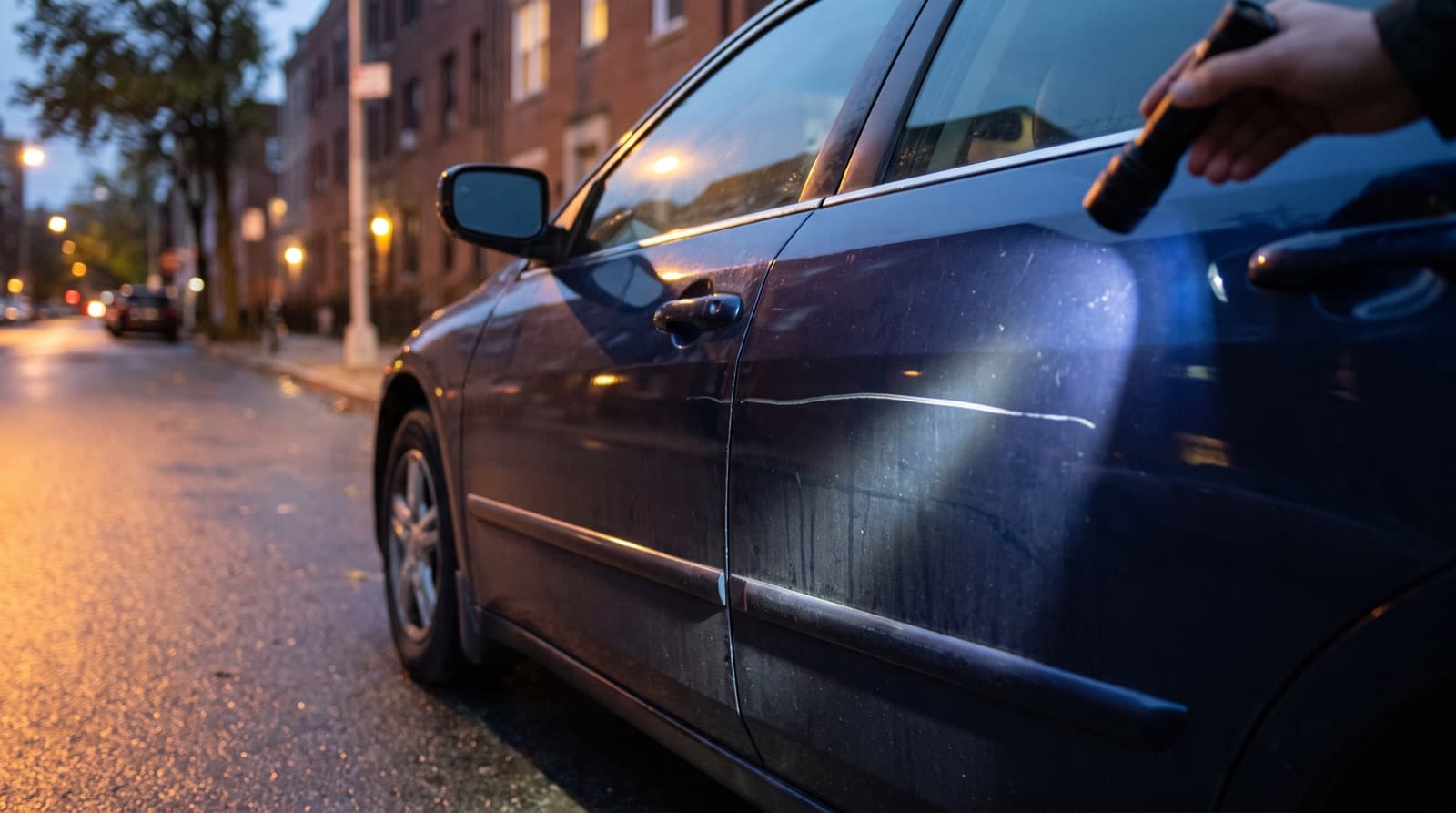
- Take daylight photos before you touch it: one close-up, one from three feet and one of the whole side.
- Note where the car was parked and when, and ask if a doorbell or garage camera faced it.
- Gently rinse off dust before any rubbing. Wiping a dusty panel adds new scratches.
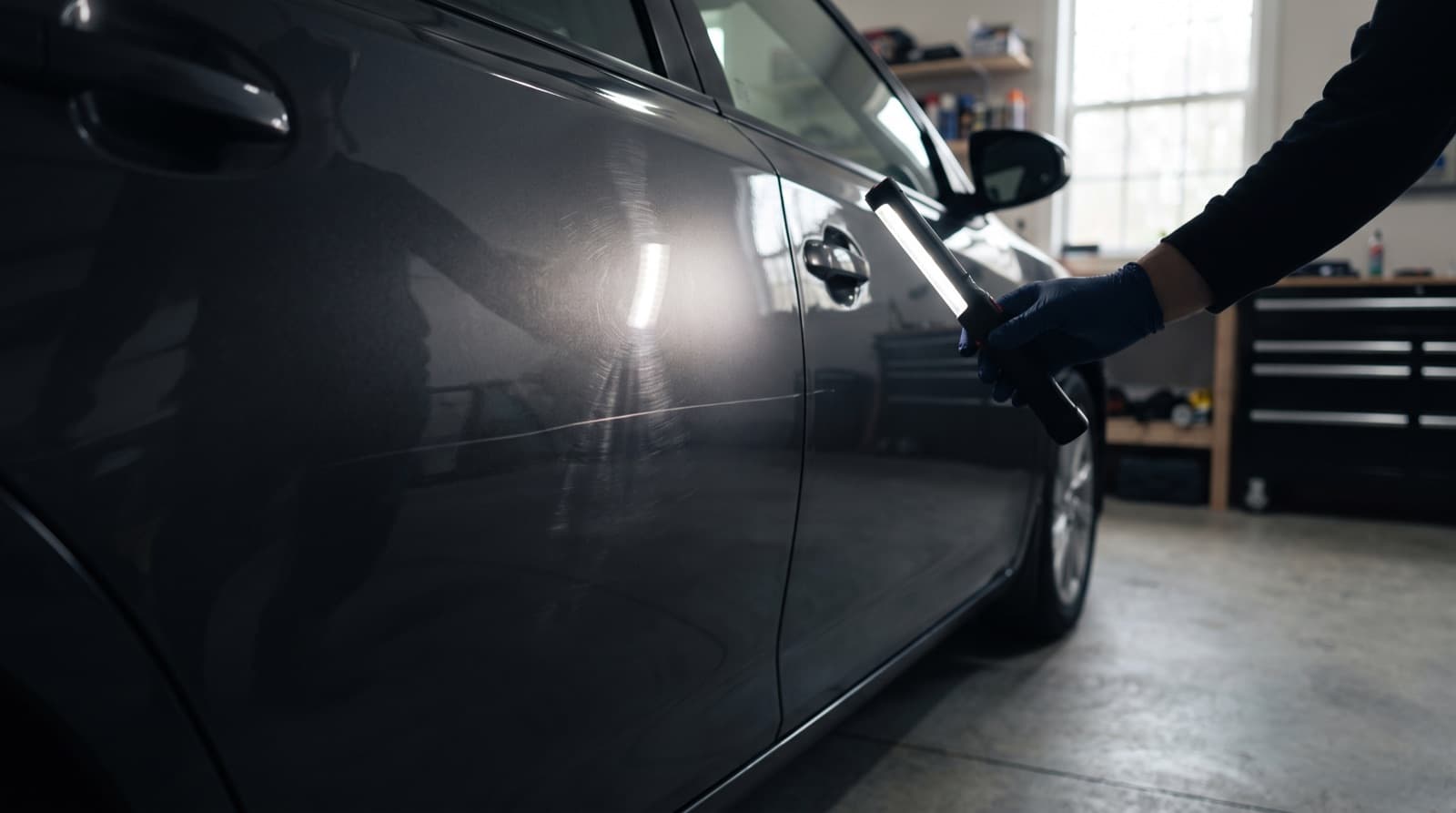
Pro tip: Shoot the scratch at a low angle in shade or soft daylight. Harsh sun and a phone flash hide depth. Set a coin next to the line to show its size.
How deep is your key scratch?
Car paint is built in layers. On top is the clear coat. Under it is the color coat, then primer (a gray or white base layer), then metal or plastic.
Start with the fingernail test. Wash the spot, then drag a nail across the scratch. If it glides, the scratch is likely in the clear coat, and if it catches, it goes deeper.
Next, do the water test. Spray a little water on the line. If it almost vanishes while wet, it is likely in the clear coat.
A white or silver line can still be clear coat, because its edges catch the light. A new color that stays visible while wet is the real warning sign.
Our scratch removal guide covers these tests in more detail. Match what you see to this chart:
| What you see | How deep it likely goes | What fixes it |
|---|---|---|
| Nail glides, line fades when wet | Clear coat only | Polish can often remove it or make it hard to see |
| Nail catches a little, no new color in the groove | Deep in the clear coat, or just into the color | Polish may fade it a lot, but it may not fully go away |
| Gray or white in the groove that stays visible when wet | Primer | Touch-up paint or a body shop |
| Bright bare metal in the groove | Metal | Seal it with paint soon, then body shop work |
| Black or gray plastic on a bumper | Through the paint to the plastic | Body shop |
Why is a key scratch deeper where it starts and stops?
A key line often has a small pit at each end. To start, the person presses the key tip into the paint, and that first push digs in hard.
In the middle, the key moves fast and often skims lighter. At the end, the hand slows, twists or lifts, and the tip can gouge again.
Body lines and panel edges add trouble. The key can jump or dig where the panel bends, and paint is often thinner on sharp edges.
So one key scratch can have two answers. Check both ends first. The long middle may polish out well, while the ends need touch-up paint.
Can you fix a key scratch yourself?
Yes, if your nail doesn't catch. A light key scratch in the clear coat is safe to work on by hand.
It helps to know how polish works. It shaves a very thin layer off the clear coat around the scratch. That levels the edges, so they stop catching light.
Clear coat is thinner than a sheet of paper, so there is only so much to shave. That is why a scratch that catches your nail rarely polishes away fully. Endless rounds on one spot are risky too.
Store-bought key scratch removers come in two kinds. Real polishes have fine grit (tiny rough bits) that levels the line. Fillers just hide it, and the line often comes back after a few washes.
Skip sandpaper, drill pads and kitchen scrubbers, which leave dull patches. For a light line, try this:
- Wash and dry the spot, then work in the shade on a cool panel.
- Put a pea-size dab of scratch remover polish on a clean foam pad or microfiber cloth.
- Rub in short back-and-forth strokes with firm pressure for about 30 seconds. Wipe and check it in soft light.
- Stop after three rounds. If the line hasn't changed, hand polish won't fix it.
Pro tip: Our technicians go slow on body lines and edges. The clear coat there is thin, and a machine polisher can cut through it in seconds.
How much does it cost to fix a keyed car?
The cost depends on how deep the key went and how many panels the line crosses. Body shop prices vary a lot, so see our scratch repair cost guide for ranges.
Keyed car repair at a body shop means adding paint back. The shop sands the area, fills deep spots and primes it. Then it sprays new color and new clear coat.
The hard part is the color match. New paint rarely matches old paint perfectly, so shops often blend it into the next panel. Blending fades fresh paint into the old, so your eye can't find the edge.
That is why most body shops price a keyed car by the panel, not by the inch. A line down one door is one panel. A line from fender to rear bumper can touch four or five.
Ask for a written estimate that lists each panel and any blending. From lowest cost to highest, here are the usual routes:
- DIY polish: the cheapest try, but only for light clear-coat lines.
- Touch-up pen matched to your paint code: low cost. It seals deep spots and ends, but rarely looks perfect up close.
- Detailer spot polish: for clear-coat lines you want gone or close to it.
- Body shop: the highest cost, because it adds new paint panel by panel.
When should you call a pro for car key scratch repair?
Call a pro when any of these fit:
- Your nail catches, and you want to know if polish can still help.
- You want the line gone or close to it, not just a bit lighter.
- The scratch crosses body lines, edges or more than one panel.
- Your car is black or dark blue, which shows every uneven spot.
- You plan to add a ceramic coating after the repair.
How does Golden Bay handle a key scratch?
We start with photos. Text 2-3 clear daylight shots to (415) 483-5686, or use our quote form.
For a key line in the clear coat, we spot polish the damaged panels. We quote from your photos, since a short bumper line and a line down both doors are different jobs.
We come to your home, office, apartment garage or legal street spot. If the whole car has swirls too, whole-car paint correction may be better value. It starts at $399 for 1-stage and $799 for 2-stage.
Before you book, our technicians check the depth and give you one of three honest answers:
- It should polish out, or come very close.
- It will look much better, but not perfect.
- It needs paint, and polish is not the right fix.
Pro tip: Got fresh body shop paint? Ask the shop how long it must cure before any polish, wax or coating. Fresh paint is soft and marks easily.
How do you protect your paint after a key scratch in the Bay Area?
Street parking and shared garages put cars close to people all day. You can't stop every vandal, but you can lower the odds.
A ceramic coating adds a slick, hard layer over the clear coat. It helps resist light wash marks and makes the car easier to clean. It won't stop a key.
Keep a new coating dry the first night. Don't wash it for 10 to 14 days while it cures.
Our coatings start at $799 with a 1-step paint correction included. A yearly Ceramic Maintenance Detail keeps the warranty active.
Paint protection film is a thick, clear film. It takes light marks better than bare paint, but a hard key can still cut it. Daily habits help too:
- Park in well-lit, busy spots, or in a garage when you can.
- A dash cam with a parking mode can record who comes near the car.
- Seal bare metal soon. Salt air near the bay and ocean can speed up rust, and so can the winter rains.
- Rinse before you wipe. Fog and the marine layer wet the car, dust sticks, and dry-wiping drags that grit across fresh polish.
- Skip brush tunnel washes. They leave swirls and fine scratches, and they void our coating warranty.
Frequently Asked Questions
Can a key scratch be buffed out?
Often, if it stays in the clear coat. Buffing shaves the clear coat around the scratch so the edges stop catching light. If your nail catches or you see primer or metal, buffing alone can't fix it.
Does toothpaste or a magic eraser fix a key scratch?
No, and both can make it look worse. They scrub unevenly and can leave a dull, hazy patch around the line. A real scratch remover polish is the safer DIY try.
Will a key scratch rust if I wait to fix it?
It can if the key reached bare steel. Seal it with touch-up paint or see a body shop soon. A line in the clear coat is only cosmetic and can wait.
Does insurance cover a keyed car?
We can't answer that, because every policy is different. Ask your insurer how it handles vandalism. Your photos, a police report and a written repair quote help that talk.
What if the key cut my paint protection film?
Then the film took the hit, and the paint under it may be fine. A damaged piece of film can usually be replaced. If the key went all the way through, check the paint too.
Can Golden Bay fix a key scratch where my car is parked?
Often, if the scratch stays in the clear coat. We polish it down or out where you park, across San Francisco, the Peninsula and Marin. Text 2-3 daylight photos to (415) 483-5686 for an honest answer and price.
Keep reading from Golden Bay
Car got keyed? Send us a photo.
Text 2-3 daylight photos for a free, honest quote. We come to you across San Francisco, the Peninsula and Marin.