RV & Marine
Cleaning RV Awnings: Vinyl vs Acrylic and Mildew Fixes
Key Takeaways
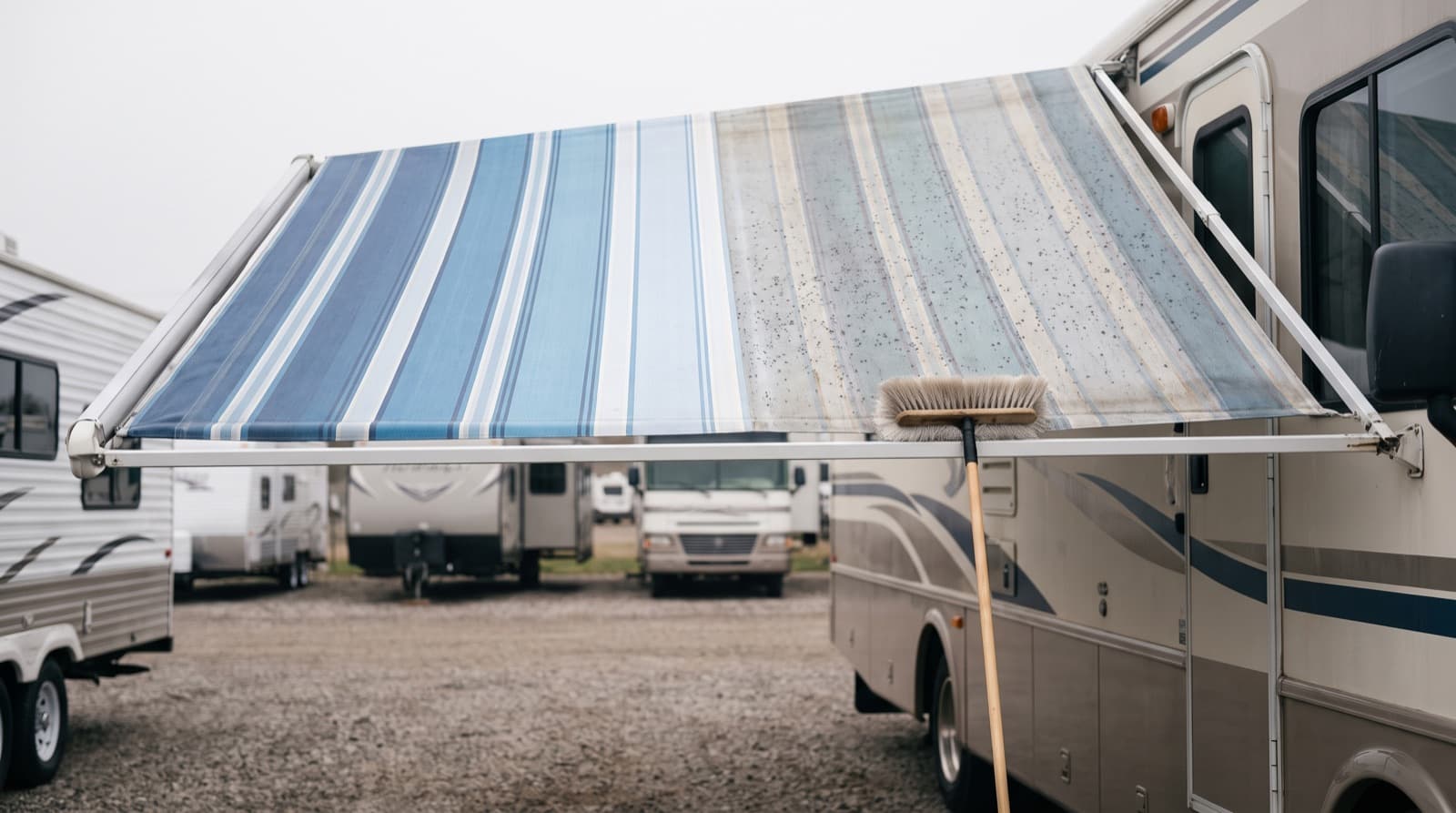
- To clean an RV awning, open it fully, rinse it, and scrub gently with mild soap and a soft brush. Rinse again and let it dry fully before rolling it up.
- Vinyl awnings feel smooth and plastic-like, while acrylic awnings feel like woven cloth. Acrylic needs gentler, low-pressure cleaning and no bleach.
- Black spots on an RV awning are usually mildew growing on dirt and tree drip. Storing the awning rolled up while damp is a common cause.
- Never use a pressure washer up close, stiff brushes or harsh household cleaners on awning fabric. Follow the awning maker's care guide first.
- Golden Bay Detailing washes and details RVs in San Francisco, the Peninsula and Marin. We come to driveways and to storage lots that allow mobile service. Text a few photos for a custom quote in under 10 minutes.
To clean an RV awning, open it, rinse it, scrub it with mild soap, rinse again and dry it fully. Use a soft brush and a garden hose, not a pressure washer. The last step matters most. A damp, rolled-up awning is where mildew starts.
Cleaning RV awnings is not one-size-fits-all. Smooth vinyl and woven acrylic need different care. So first, find out which fabric you have.
Cleaning RV awnings: is yours vinyl or acrylic?
Check the fabric before you pick a cleaner. The wrong method can wear off its coating or finish.
Look for a tag near the fabric edge, or check your owner's manual. The awning maker's care guide always comes first. If you can't find one, use the checks below.
Slide toppers (the small awnings over slide-out rooms) and window awnings are usually vinyl. Big patio awnings can be either one.
| Check | Vinyl awning | Acrylic (woven) awning |
|---|---|---|
| How it feels | Smooth and slick, a bit like a shower curtain | Soft, like canvas or outdoor cushion cloth |
| How it looks | Shiny or satin, with no weave | You can see tiny woven threads |
| What water does | Waterproof. Water sheets right off. | Water-resistant. Air passes through the weave. |
| Cleaner | Vinyl-safe awning cleaner or mild soap | Acrylic-safe fabric cleaner or mild soap |
| Brush and water | Soft brush and a garden hose | Very soft brush and a gentle hose spray |
| Bleach | Only if the maker's guide allows it | No |
| Roll-up soak for the top side | Often fine, if the maker's guide allows it | No. Keep it open while wet. |
| Where mildew grows | On dirt sitting on the surface | On dirt trapped in the weave |
| After cleaning | Ask the maker's guide about a vinyl protectant | Re-treat with water repellent when water stops beading |
How do you clean a vinyl RV awning?
Vinyl is the tougher fabric and handles a soft-brush scrub well. Pick a calm, dry day, out of hot midday sun, so soap doesn't dry on it.
- Step 1: Roll the awning all the way out. If your awning's arms adjust, lower one end a little, so water runs off.
- Step 2: Rinse both sides with a garden hose. This floats off loose dust and leaves.
- Step 3: Mix a vinyl-safe awning cleaner, or a squirt of mild dish soap in a bucket of water.
- Step 4: Wet the top side with cleaner, using a pump sprayer or a long-pole brush from the ground.
- Step 5: Many vinyl awnings allow a soak trick. Roll it in for a few minutes, so cleaner coats both faces. Then roll it back out. Check the maker's guide first, and never leave it rolled up.
- Step 6: Scrub both sides with a soft brush on a long pole. Work in small sections.
- Step 7: Rinse well, top side first. Soap left on the fabric grabs new dirt.
- Step 8: Wipe the arms and the roller tube with a damp microfiber towel. The roller tube is the long bar the fabric wraps around.
- Step 9: Leave the awning out until both sides are fully dry. The fabric near the roller and along the RV wall dries last.
Pro tip: Clean the awning before you wash the RV walls. Dirty rinse water from the awning runs straight down the side. Pros work top-down for the same reason, so nothing drips onto a clean panel.
How do you clean an acrylic RV awning?
Acrylic is a woven fabric, like outdoor furniture cloth. It often has a water-repellent finish. Hard scrubbing or a strong spray can wear that finish off and fuzz the threads.
- Brush off dry dirt, leaves and cobwebs first, before any water touches it.
- Rinse with a gentle garden hose spray. Keep the pressure low.
- Use a cleaner made for acrylic fabric, or a little mild soap in lukewarm water.
- Let it soak in for a few minutes, but don't let it dry.
- Brush with light strokes and a very soft brush. Don't grind on one spot.
- Rinse until no suds are left. Soap left in the weave holds dirt.
- Skip the roll-up soak trick. Keep acrylic open until it is fully dry.
- Each cleaning wears the water-repellent finish down a little. When water stops beading, check the maker's guide about re-treating it.
How do you get mildew and tree stains off an RV awning?
Those black or gray spots are usually mildew. Mildew is a flat fungus that feeds on dirt, pollen and tree drip on the fabric. It grows best when an awning stays damp and dark.
Sap leaves sticky spots, and wet leaves leave brown marks. Bird droppings stain too. All of them come off best while fresh.
Here's how to treat each one safely:
- Mildew: put on gloves and eye protection. Work outside in fresh air, on a calm day.
- Wet the area first, so dry spores don't puff into the air.
- Use an RV awning cleaner made for mildew and safe for your fabric. Let it sit for the time on the label, but don't let it dry.
- Brush gently, then rinse very well. Do a second round rather than scrubbing harder.
- Bird droppings: soak the spot with water and a fabric-safe cleaner for a few minutes. Then lift it off gently. Never scrape.
- Tree sap: soften it with a fabric-safe cleaner first. Use a sap remover only if its label says it's safe for your fabric, and test a hidden spot.
- Leaf stains: wash them off soon. Old brown marks can leave a faint shadow.
Pro tip: Found mildew inside the RV too? That points to a leak or damp air, not just the awning. Our RV mold guide covers what to check.
What should you never do to an RV awning?
Most awning damage comes from a few common mistakes.
- Don't store it rolled up wet. If rain forces you to pack up, open it to dry the same day you get home.
- No pressure washer up close. A strong, tight jet can tear seams, lift the coating on vinyl and fray acrylic.
- No bleach on acrylic. It can strip the water-repellent finish and weaken the stitching. On vinyl, use it only if the maker's guide allows it.
- Never mix cleaners. Bleach mixed with ammonia or vinegar makes toxic fumes.
- No stiff brushes, scouring pads or harsh solvents. Solvents can dry out vinyl and leave it stiff.
- Don't clean it in the wind. A gust can lift an open awning and bend the arms.
- Don't leave it out in the rain with both ends level. Pooled water is heavy and can bend arms or rip fabric.
- Never remove the end caps or touch the spring inside a manual awning's roller. That spring is wound very tight and can cause serious injury.
How do you reach the top of an RV awning safely?
A long pole, and the soak trick on vinyl, handle most jobs from the ground. If you still need to climb, follow these rules.
- Set the ladder on flat, firm ground, never on a slope or soft dirt.
- Never lean a ladder on the awning, its arms or the roller.
- Keep your hips between the ladder rails. Move the ladder instead of reaching far to the side.
- Have a helper hold the ladder and pass up tools.
- Stay off the RV roof unless the maker says it can hold your weight. Keep well back from the edge.
- Keep hands and tools clear of the roller while a power awning moves.
How do you stop RV awning mildew in foggy Bay Area storage?
Near the coast, fog and the marine layer can keep fabric damp for days. The marine layer is the low, wet cloud bank that rolls in from the ocean. Think of Pacifica, Half Moon Bay, the Sunset and Sausalito.
Salt air near the water leaves a film on the arms. Rain season, from about fall into spring, can pool water on an open awning. Storage lots under trees add sap, leaves and pollen.
- On a foggy morning, wait for midday sun and breeze before you roll the awning in.
- Clean the awning before you store the RV. Dirt left on the fabric feeds mildew all winter.
- In long storage, air it out every few weeks on a dry, calm day.
- Rinse salt film off the arms and hardware after coast trips. Then dry the metal.
- Park away from trees when you can.
- Wind can pick up fast near the Bay. Roll the awning in whenever you walk away from the rig.
When should you call a pro for your RV awning?
DIY is fine when you can reach safely and the fabric is in good shape. Get help when:
- The fabric is torn, the seams are splitting, or the awning won't roll in or out. That's a job for an RV repair or awning shop.
- The arms are bent, or a manual awning's spring feels weak or loose. Don't try to fix the spring yourself.
- You'd have to stand high on a ladder, or you have no safe place to work.
- Mildew or black streaks are spreading onto the RV walls.
- The whole rig needs a wash, not just the awning.
Pro tip: Golden Bay Detailing washes and details RVs at your driveway or at a storage lot that allows mobile service. We bring our own water and power. Text a few photos of the whole rig for a custom quote in under 10 minutes.
Frequently Asked Questions
Can you use dish soap on an RV awning?
Yes, in most cases. Mix a small squirt of mild dish soap into a bucket of water, and rinse very well. Check your awning maker's care guide first, since some fabrics have their own rules.
How often should you clean an RV awning?
Rinse it after dusty or beach trips. Wash it fully a few times a year and before long storage. Clean off mildew, sap and bird droppings right away.
Can you roll up an RV awning wet?
For the drive home in the rain, yes, but never store it that way. Open it to dry the same day you get home. A damp, rolled-up awning is where mildew grows.
Can you use vinegar, oxygen cleaner or a magic eraser on an RV awning?
Test vinegar or an oxygen cleaner on a hidden spot first, and follow the maker's guide. Never mix vinegar with bleach. A magic eraser is a fine scrubbing sponge, so it can dull vinyl and fuzz acrylic.
Will mildew stains come out of an RV awning?
Fresh mildew spots usually come off with a mildew cleaner made for your fabric. Spots left for months can leave a faint shadow, even after the growth is gone.
Does Golden Bay Detailing wash RVs?
Yes. We wash and detail RVs across San Francisco, the Peninsula and Marin, at driveways and approved storage lots. Text photos of your rig to (415) 483-5686 for a custom quote in under 10 minutes. Mention the awning, and we'll tell you what the quote covers.
Keep reading from Golden Bay
Want your RV washed where it's parked?
Get a free quote: text a few photos and we reply in under 10 minutes. We come to your driveway, or a storage lot that allows it, in San Francisco, the Peninsula and Marin.