RV & Marine
Mold in an RV: What Cleaning Fixes and When It's a Leak
Key Takeaways
- Small patches of surface mold on hard RV surfaces scrub off with detergent and water, followed by a full dry-out.
- Mold that keeps coming back, stains under windows, or soft and bubbled wall panels usually mean an RV leak. An RV repair shop should fix the leak before anyone cleans.
- The EPA says most people can clean a moldy patch smaller than about 10 square feet on their own. Bigger areas, or mold after a lot of water damage, may need a professional.
- To keep an RV from getting moldy, keep air moving and pull water out of the air. Check a parked rig every few weeks during the Bay Area's fog and rain seasons.
- Golden Bay Detailing cleans surface mold and mildew in RV interiors in San Francisco, the Peninsula and Marin. Text a few photos and we quote in under 10 minutes.
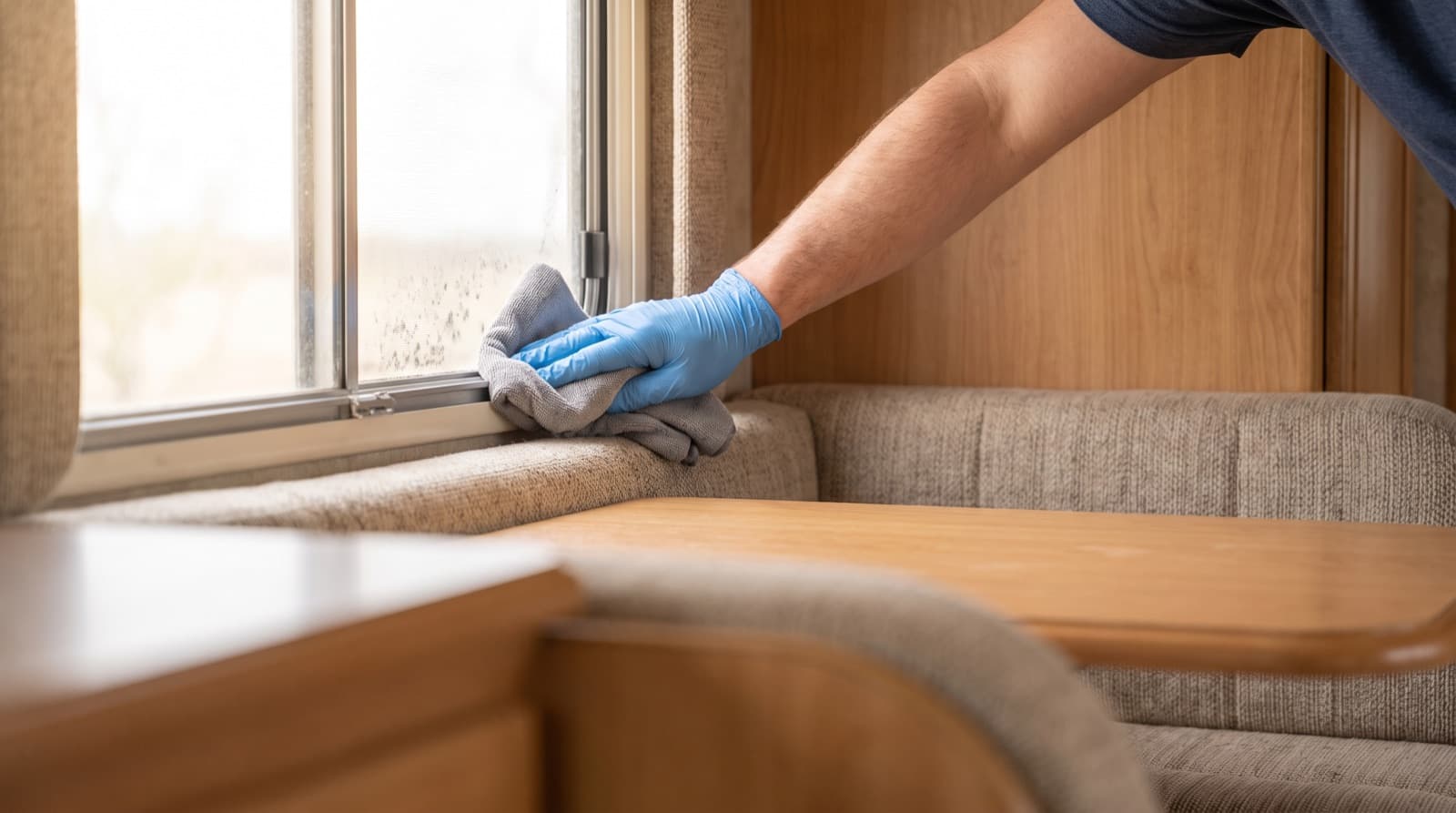
You can clean small patches of surface mold in an RV with mild soap, water and a full dry-out. But mold that keeps coming back almost always means water is getting in or staying in. Find that water first, or the mold will return.
Mold in an RV is common for a simple reason. An RV is a small, tight box. People breathe, cook and shower inside it. Then it sits parked for weeks with the windows shut. Add one roof seam or window seal that lets in rain, and mold has all it needs.
Is it mold or mildew in your RV?
Mildew is a flat, powdery growth. It looks gray or white and sits on top of a surface. You often see it on vinyl, window frames, shower walls and fabric.
Mold looks fuzzy or slimy. It can be black, green, blue or white. On soft things like foam, wood and wall board, it can grow down into the material.
Both are fungi (tiny living things that grow from spores floating in the air). Both need damp that sticks around.
Black mold in an RV looks scary. But color alone does not tell you the type or how bad it is. Handle all mold the same careful way.
Where does mold hide in an RV?
Mold grows where damp air meets a cold surface. It also grows where a slow leak keeps things wet. Check these spots first.
- Under the mattress, where body heat meets a cold bed platform all night.
- Behind cushions and inside cabinets that sit against outside walls.
- Around windows, in the corners and along the bottom of the frame.
- Near roof vents, skylights, the AC unit and the bunk over the cab.
- Under sinks and around the toilet, where small plumbing leaks hide.
- In slide-out corners, along the rubber seals and on the floor under the slide.
- In the shower, closets and any spot where wet towels or gear pile up.
- Outside on the awning fabric, if it was rolled up wet. That needs its own cleaning steps.
Why do RVs get moldy in the Bay Area?
The Bay Area is mild, but it is damp in the right places. Near the coast, summer fog and the marine layer can keep a parked rig wet for days. Think of the Sunset, Pacifica, Half Moon Bay and Sausalito.
The rain season runs from about fall into spring. That is when a tired roof seam or window seal starts to leak.
Many rigs sit for months in a driveway, side yard or storage lot. A shut RV warms up in the afternoon sun, then cools fast at night. The damp air inside turns to water drops on the cold walls and windows.
How can you tell if RV mold means a leak?
A leak leaves a trail. Look for stains that run down from a window corner, a vent or a roof seam. Press on the walls and floor near those spots. Soft, spongy or bubbled panels mean water has soaked in.
Watch for delamination too. That is when the outer wall skin comes loose from the wall behind it. It shows as waves or bubbles on the outside of the RV. It usually means water got inside the wall.
| What you see | What it usually means | What to do |
|---|---|---|
| Thin gray or white spots on vinyl, glass or trim | Surface mildew from damp air | Clean with soap and water, then dry and vent |
| Spots under the mattress or behind cushions | Damp from warm bodies on cold surfaces | Clean, dry, and add a spacer mat under the bed |
| Brown stains below a window or vent | A leaking seal or roof seam | Get the leak fixed, then clean |
| Soft, spongy floor or wall panel | Water soaked into the wood inside | RV repair shop before any cleaning |
| Wavy or bubbled outside wall | Delamination, often from water in the wall | RV repair shop |
| Musty smell that returns after cleaning | A hidden wet spot, cushion or wall | Find the source, or call a pro |
| Mold across a large area or many spots | A big leak or months of damp | Mold specialist or RV repair shop |
How do you get rid of mold in an RV safely?
Only DIY small, surface patches on things you can scrub or wash. The EPA says most people can clean a moldy patch smaller than about 10 square feet. That is roughly 3 feet by 3 feet.
Follow the EPA mold cleanup guide (epa.gov/mold) for gloves, eye protection and the right mask. If you have asthma, allergies or other breathing problems, let someone else do the job.
- Open the door, windows and roof vents. Set a fan to blow air out a window.
- Put on gloves, eye protection and a mask from the EPA guide.
- Bag loose bedding, towels and clothes, and carry the bags outside. Take them straight to the wash.
- Scrub hard surfaces with a mild detergent and warm water. Use a soft brush on textured walls.
- Wipe with a clean, damp cloth. Then dry each spot right away with a towel.
- Wash fabric covers on the hottest setting the care label allows.
- Run a fan or a dehumidifier (a machine that pulls water out of the air) for a full day.
- Check the same spots in a week. If the mold is back, look for a leak.
Pro tip: Our technicians say the scrubbing is the easy part. Drying is the real fix. After you clean, keep the vents open and a fan running. Stop when the whole rig feels dry, not just the spot you scrubbed.
What should you never do when cleaning RV mold?
These common moves make mold worse or the job unsafe.
- Never mix cleaners. Bleach mixed with ammonia, vinegar or other products can make toxic fumes.
- Keep bleach off fabric, vinyl seats, leather and seat belts. It can fade and weaken them.
- Don't dry-brush mold or shake moldy fabric. That throws spores into the air. Wet-wipe instead.
- Don't paint or seal over mold. It keeps growing underneath.
- Don't soak walls or ceilings with water or a pressure sprayer. Extra water feeds the problem.
What should you throw out instead of cleaning?
Some things soak up water like a sponge. Once mold grows inside them, cleaning the top does not reach it. The EPA notes that soft, absorbent items with mold may need to be thrown away.
- Foam mattresses and cushions with mold or a musty smell deep inside.
- Carpet and carpet pad that stayed wet for days.
- Cardboard boxes, paper and books stored in the rig.
- Particle board shelves or cabinet bottoms that swelled or crumbled. Have these replaced, often by an RV repair shop.
When should you call a pro or an RV repair shop?
Call a detailer when the mold is only on the surface but the job feels too big. We clean and treat surface mold and mildew in RV interiors. Our technicians use steam, enzyme cleaners and odor treatment on seats, cushions, floors and hard surfaces.
We quote after we see your photos. Some old stains may not fully come out, and we will tell you that up front.
Call an RV repair shop first for soft walls, bubbled panels, a spongy floor, or stains traced to a seam. The leak and any rotted wood must be fixed. Cleaning before that just resets the clock.
Call a mold specialist when mold covers a big area, grows inside walls, or follows a flood. We are a detailing company, not a mold removal company. If your photos show more than surface mold, we will say so.
How do you keep an RV from getting moldy, in use and in storage?
Keep water out and keep air moving. While you camp, get rid of damp as fast as you make it. Run the roof vent fan when you cook or shower. Crack a vent at night, since your breath adds water to the air while you sleep.
Dry wet towels, jackets and beach gear outside. Open-flame propane heaters add water to the air too. If you use one, crack a window, follow its safety label, and keep your carbon monoxide alarm working.
Before you park the rig for the season, run through this list. Then visit every two to three weeks, and more often in fog season and after big storms. Sniff for musty air, look at the ceiling corners, and press on the floor by the door.
- Clean and fully dry the inside first. Take out food, towels and wet gear.
- Check roof seams, vents and window seals before the rains start.
- Crack the roof vents open under vent covers that keep rain out.
- Set out moisture absorber tubs (crystals that pull water from the air). Empty them before they overflow.
- If you have power, run a small dehumidifier. Empty its bucket often. Drain it into the sink only if you dump the gray tank on each visit.
- Prop open the fridge, cabinets and closet doors.
- Put a spacer mat (a mesh pad that lets air flow) under the mattress, or stand cushions on edge.
- Use a breathable RV cover, not a plastic tarp that traps water under it.
- Put a cheap humidity gauge inside. Keep it under 60 percent, and closer to 50 is better.
Pro tip: Pick a parking spot with sun and a breeze if you can. A rig tucked under dripping trees in the fog belt stays wet the longest.
Frequently Asked Questions
Will mold come back after cleaning an RV?
It will if the damp stays. Cleaning removes the growth, but only dry air and a sealed shell keep it away. If it returns within a few weeks, look for a leak.
Should I use bleach or vinegar on RV mold?
On hard surfaces, the EPA suggests detergent and water, then a full dry. Keep bleach off fabric, vinyl, leather and seat belts. Never mix bleach with vinegar, ammonia or any other cleaner.
Is it safe to sleep in an RV with mold?
Wait until the visible mold is cleaned and the wet spot is fully dry. Anyone with asthma or allergies should stay out during cleanup. Ask your doctor about any health questions.
How do I get rid of a musty smell in my RV?
Dry the rig first, then wash the fabrics and clean the hard surfaces. Steam and enzyme cleaners help with smell in cushions and carpet. Ozone is only for leftover odor, with nobody inside, pets included, and a full air-out after.
How do I know if my RV has water damage?
Look for stains under windows and vents, soft spots in the floor, and waves or bubbles in the walls. An RV repair shop can check the walls with a moisture meter.
Does Golden Bay Detailing clean mold in RVs?
Yes. We clean and treat surface mold and mildew in RV interiors in San Francisco, the Peninsula and Marin. Text a few photos to (415) 483-5686. We quote in under 10 minutes and tell you if it's a detailing job.
Keep reading from Golden Bay
Found mold in your RV? Get a free photo quote
Text a few photos and we quote in under 10 minutes. We come to your driveway or a storage lot that allows mobile service, in San Francisco, the Peninsula and Marin.