RV & Marine
RV Oxidation Removal: Restore Chalky Gelcoat and Paint
Key Takeaways
- RV oxidation removal means polishing off the chalky, sun-damaged top layer of an RV's walls. Then the fresh surface gets sealed with wax, sealant or a ceramic coating.
- To check an RV for oxidation, rub a clean, dark microfiber towel on a dry wall. Chalk on the towel means oxidation, and more chalk means a stronger fix.
- On an RV's painted front cap, use a gentle, car-safe polish. A heavy gelcoat compound can cut through its thin clear coat.
- Faded RV decals cannot be polished back to color. They need to be taped off and polished around, or replaced.
- Golden Bay Detailing does mobile RV oxidation removal in San Francisco, the Peninsula and Marin. Text a few photos and we send a custom quote in under 10 minutes.
To remove oxidation from an RV, wash it, polish off the chalky top layer, then seal the fresh surface. The trick is to use the mildest product that works on your kind of wall.
So RV oxidation removal starts with a quick check, not a bottle. A fiberglass wall, a painted cap and an aluminum side all need different care. The wrong product can dull the finish, burn through paint, or tear a decal.
What causes RV oxidation?
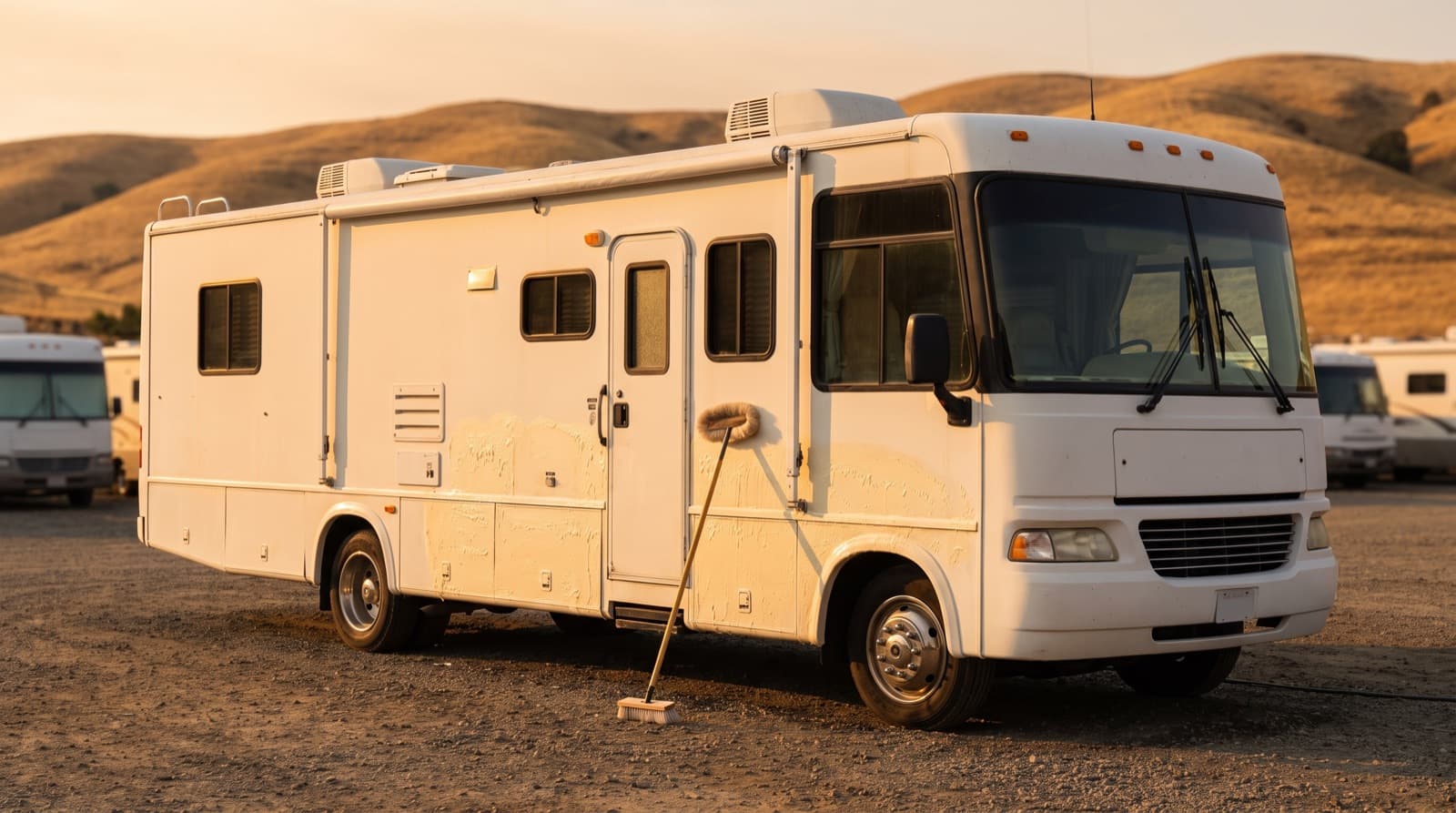
Oxidation is sun damage. UV light (the part of sunlight that fades things) slowly breaks down the top layer of your walls. The shine goes flat, the color fades, and the surface turns to a fine, chalky powder.
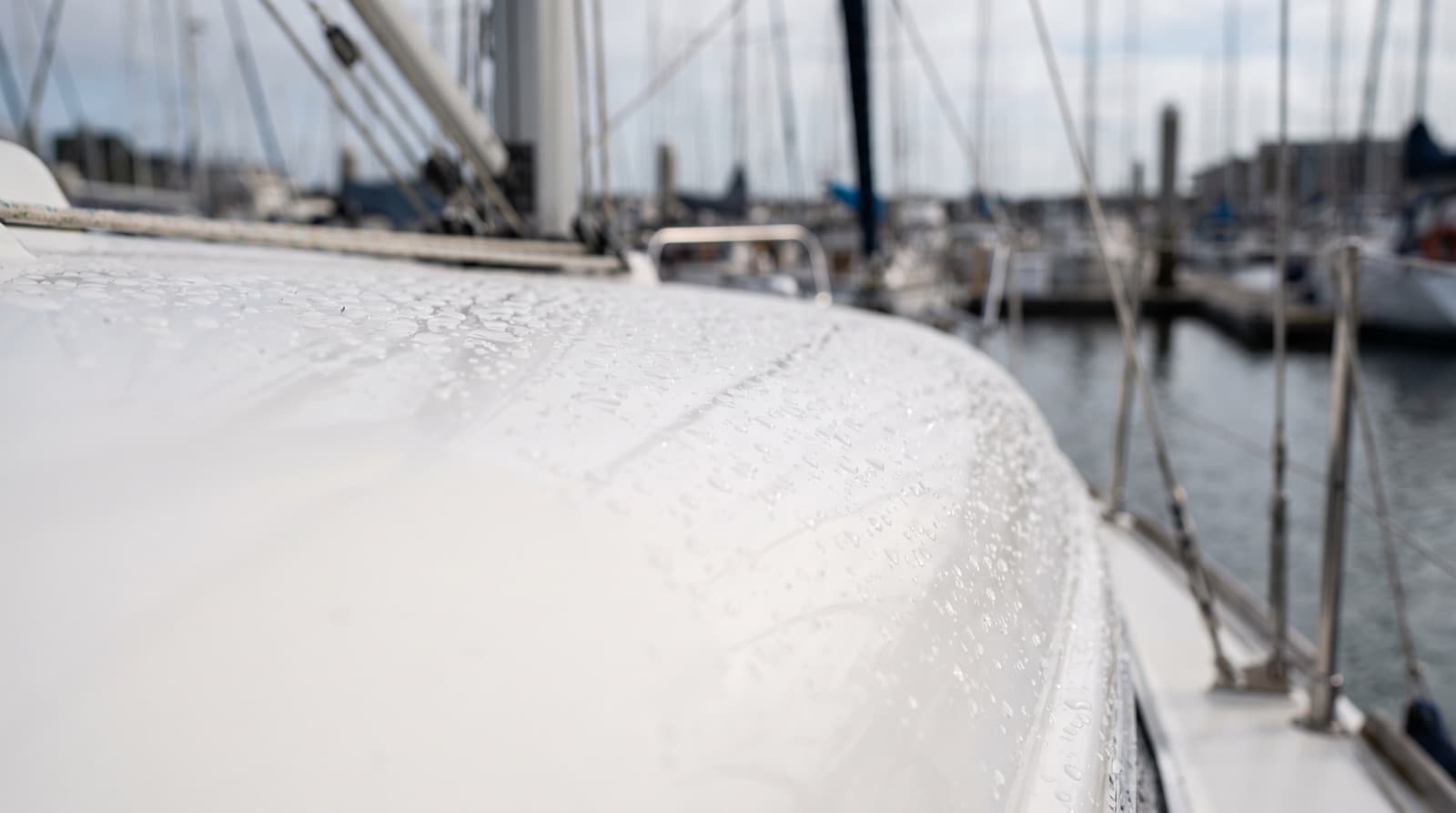
On a fiberglass RV, that top layer is gelcoat, often spelled gel coat. It is the hard, colored resin skin on molded fiberglass. Boats have the same skin, and our boat gelcoat guide explains the science.
In the Bay Area, many rigs sit still for months. On inland Peninsula storage lots, the side that faces the afternoon sun chalks first. Near the coast, in Pacifica or Half Moon Bay, salty fog dries on the walls day after day. Rain season adds black streaks from the roof, but those are dirt, not oxidation.
What is your RV's outside made of?
The fix depends on the surface, and many rigs mix two or three of these.
- Molded fiberglass with gelcoat: smooth walls and caps, often white or cream with vinyl decals. The skin is fairly thick, so it can take a real polish.
- Painted caps or full-body paint: car-style paint under a clear coat (a thin, clear top layer that guards the color). RV paint restoration here follows car-paint rules.
- Laminated fiberglass, often called Filon: a thin fiberglass sheet glued over the wall, common on travel trailers. It chalks like gelcoat, but its skin is thinner, so go gentle.
- Painted aluminum siding: the ribbed metal sides on many older trailers. The paint is thin, so skip heavy compound.
- Bare, shiny aluminum: this turns dull gray or hazy, and it rubs off black on a towel. It needs metal polish, which is a different job.
Pro tip: Not sure if a stripe is paint or a decal? Gently run a fingernail across its edge, so you don't lift it. A small step means vinyl on top. A smooth edge means paint or a decal sealed under clear coat. Use car-safe polish there.
How do you check your RV for oxidation?
Rule out dirt first. Yellow film on the front cap is road grime and bugs. Black streaks under windows and seams are dirt too. Both wash off. Oxidation is the chalk left after a good wash.
Then do the towel wipe test on a clean, dry wall. It takes one minute.
- Rub a clean, dark microfiber towel on the wall with light pressure, about ten strokes.
- White or colored powder on the towel means oxidation. More powder means worse oxidation.
- Test each side and the front cap. The sunny side is often much worse.
- Now splash water on a dull spot. If it looks glossy wet but dull dry, polish can usually bring it back.
- On most modern painted caps, the towel should show no color. Color there can mean the clear coat is worn through, which is a paint shop job.
- Older single-stage paint has no clear layer. On it, a little color on the towel is normal and can often be polished.
How bad is the oxidation? Light, moderate or heavy
Match what you see to a level, then use that fix and nothing stronger. Each pass of a strong product removes a little surface, and you only get so much.
A compound (a gritty polish that cuts off a thin layer) does the heavy lifting. A polish, sold as RV polish or car polish, is finer and brings back the gloss. A cleaner wax (a wax with a little polish mixed in) cleans and protects in one step.
On a heavy rig, full RV fiberglass restoration is usually all three steps: compound, then polish, then protect.
| Level | What you see | Towel test | What fixes it | DIY? |
|---|---|---|---|---|
| Light | Shine is a bit flat. Color still looks right. | Faint trace of chalk | Cleaner wax, by hand or on a soft machine pad | Yes |
| Moderate | Walls look dull, faded and uneven. | Clear chalk on the towel | Machine polish, then wax, sealant or coating | Yes, with a machine polisher and patience |
| Heavy | Chalky, rough and streaky. Color looks washed out. | Towel turns white or colored fast | Compound, then polish, then protect | Hard on a big rig. Often a pro job |
| Painted cap | Hazy, milky or dull clear coat | No color on most clear-coated caps | Fine, car-safe polish with light pressure | Careful DIY only |
How do you remove oxidation from an RV yourself?
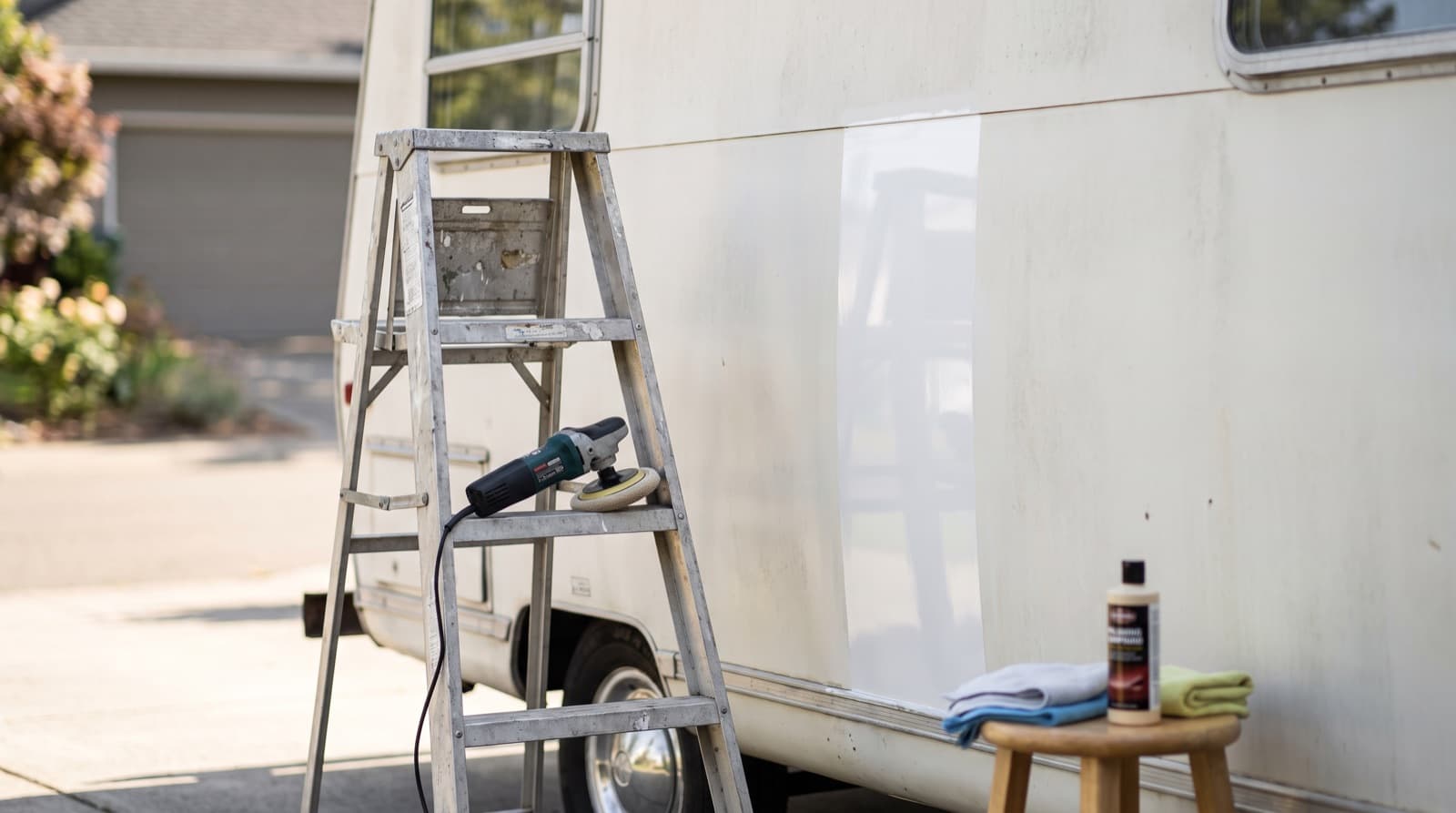
DIY is fair game on light and moderate gelcoat, if you have time and a safe place to stand. Work one side at a time.
Use a dual-action polisher (a machine whose pad spins and wobbles, so it rarely burns the finish). Skip a rotary polisher unless you are trained. It builds heat fast.
Match the pad to the step. Use a firmer foam or microfiber cutting pad with compound, and a softer foam pad with polish.
- Wash top down, roof first, so streaks don't run onto clean walls. Then dry the rig.
- Tape off decals, rubber seals, window edges, lights and trim.
- Pick a test spot about 2 feet square. Start with the mildest product.
- If the chalk stays, step up one level: cleaner wax, then polish, then compound followed by polish.
- Work in the shade on a cool wall. Keep the pad flat and moving, and wipe off residue before it dries.
- Once the test spot looks right in daylight, use that recipe across that side.
- Protect it the same day. Freshly polished gelcoat has no protection left on it.
Pro tip: Our technicians put a test spot on each side of the rig. The shady side often needs a milder step than the sunny side, so it loses less gelcoat.
Can you polish faded RV decals back?
No. Decals fade because sunlight breaks down the vinyl and its ink. Polish can't put that color back. It can scuff the decal, lift its edges, or strip what color is left.
Tape decals off and polish around them. If they are cracked or badly faded, replacing them is the real fix.
If you peel old decals off, expect a ghost outline. The hidden gelcoat under them may look brighter, and polish may not fully blend it.
How do you polish an RV safely on a ladder?
Height is the biggest risk in this job. A polisher is heavy, pulls as it runs, and needs both hands.
- Use a sturdy step ladder or work platform on firm, level ground. Lot gravel can sink under one foot.
- Never stand on the top step or top cap.
- Keep your belly button between the rails, and move the ladder instead of leaning.
- Don't run a polisher over your head. Tall walls call for a platform or scaffolding.
- Drape the cord over your shoulder, away from puddles.
- Skip windy days, and have a helper hold the ladder.
- Wear eye protection. Compound can fling off the pad.
- Don't walk on the roof unless the maker says it can hold you.
How do you keep RV oxidation from coming back?
Polishing fixes the chalk. Protection stops it from coming right back.
Wax is easy but wears off the soonest. A sealant (a man-made coat that works like wax) lasts longer. A ceramic coating is a hard, clear layer that adds UV protection and makes washing easier. Our RV ceramic coating guide compares the options.
Our coatings have rules. Keep the rig dry the first night, and don't wash it for 10 to 14 days while it cures. After that, hand wash or touchless wash only. A brush tunnel wash voids our coating warranty. A yearly Ceramic Maintenance Detail is required to keep the warranty.
Rinse off salty fog film and dust often. A breathable cover helps a stored rig, but tie it down tight so it can't flap and scuff the finish.
When should you call a pro for RV oxidation removal?
Call a pro when heavy chalk covers most of the rig, or the walls are too tall to work safely. Painted caps are another good reason, since one wrong pad can cut through the clear coat.
Bubbles, soft spots or cracks are not polish problems. They can mean the wall layers are separating, which needs an RV repair shop. Gelcoat too far gone for compound may need wet-sanding (hand sanding with very fine, wet sandpaper). That is a specialist step, and we will tell you plainly if your photos point there.
We come to your driveway or storage lot with our own water and power. Check your lot's rules first. Our technicians wash, test, use the mildest step that works, and seal the finish.
- Text a few photos: each side, the front cap, and a close-up of the towel test.
- Tell us the rig's length and where it is parked.
Frequently Asked Questions
What is the best oxidation remover for an RV?
Use the mildest product that removes your chalk. That means cleaner wax for light chalk, polish for moderate, and compound then polish for heavy. Wipe-on restorers mostly hide the dull layer, and some build up a film that must be stripped before you polish.
Can I use car polish on my RV?
Yes, and it is the right choice on painted caps. On gelcoat it handles light chalk, but heavy chalk needs compound. Coarse rubbing compound leaves haze, so always polish after it, and keep it off painted caps.
Can vinegar, a melamine sponge or acetone remove RV oxidation?
No. Vinegar leaves the chalk, and a melamine sponge acts like fine sandpaper that leaves dull, hazy patches. Acetone can harm paint, decals, seals and plastic trim. Never mix cleaning chemicals.
Will a pressure washer remove RV oxidation?
No. It removes dirt, not chalk, which has to be polished off. Keep the nozzle well back from decals, seals and windows, or it can lift edges and push water into seams.
How often should you polish an RV?
It depends on sun, storage and protection. Do the towel test each spring and fall, and polish when chalk shows up. A coated rig that gets rinsed often needs polish less often.
How much does RV oxidation removal cost?
At Golden Bay Detailing, it is a custom quote in San Francisco, the Peninsula and Marin. Rig length and height, how heavy the chalk is, painted caps and your choice of protection all change the price. Text a few photos to (415) 483-5686 and we quote in under 10 minutes.
Keep reading from Golden Bay
Chalky RV? Get a free quote in minutes.
Text a few photos and we quote in under 10 minutes. Our technicians come to your driveway or storage lot in San Francisco, the Peninsula and Marin.