RV & Marine
RV Ceramic Coating vs Wax: Cost, Care and Is It Worth It?
Key Takeaways
- An RV ceramic coating is a thin, hard layer that bonds to gelcoat or paint. It adds UV protection and helps black streaks rinse off.
- Wax fades fastest, and a polymer sealant (a man-made, wax-like protectant) holds up longer. A ceramic coating lasts the longest when the surface is prepped and washed gently.
- Chalky oxidation must be polished off before an RV is coated, or the coating seals the dull finish in.
- A newly coated RV should stay dry the first night and go unwashed for 10 to 14 days. After that, use hand or touchless washes only.
- Golden Bay Detailing coats RVs in San Francisco, the Peninsula and Marin. Text a few photos and we quote in under 10 minutes.
An RV ceramic coating is a hard, glassy layer that bonds to your gelcoat or paint. It guards against sun and grime far longer than wax, and it helps black streaks rinse off. For owners who park outside and keep a rig for years, it is usually worth it. But only if the surface is polished first.
A ceramic coating for an RV is also the biggest detail job a rig can get. So the real question is not just which product. It is how much prep your finish needs, and how you wash and store it.
What does an RV ceramic coating do?
A ceramic coating is a liquid that dries into a thin, hard, glassy layer. It bonds to the surface instead of just sitting on top like wax.
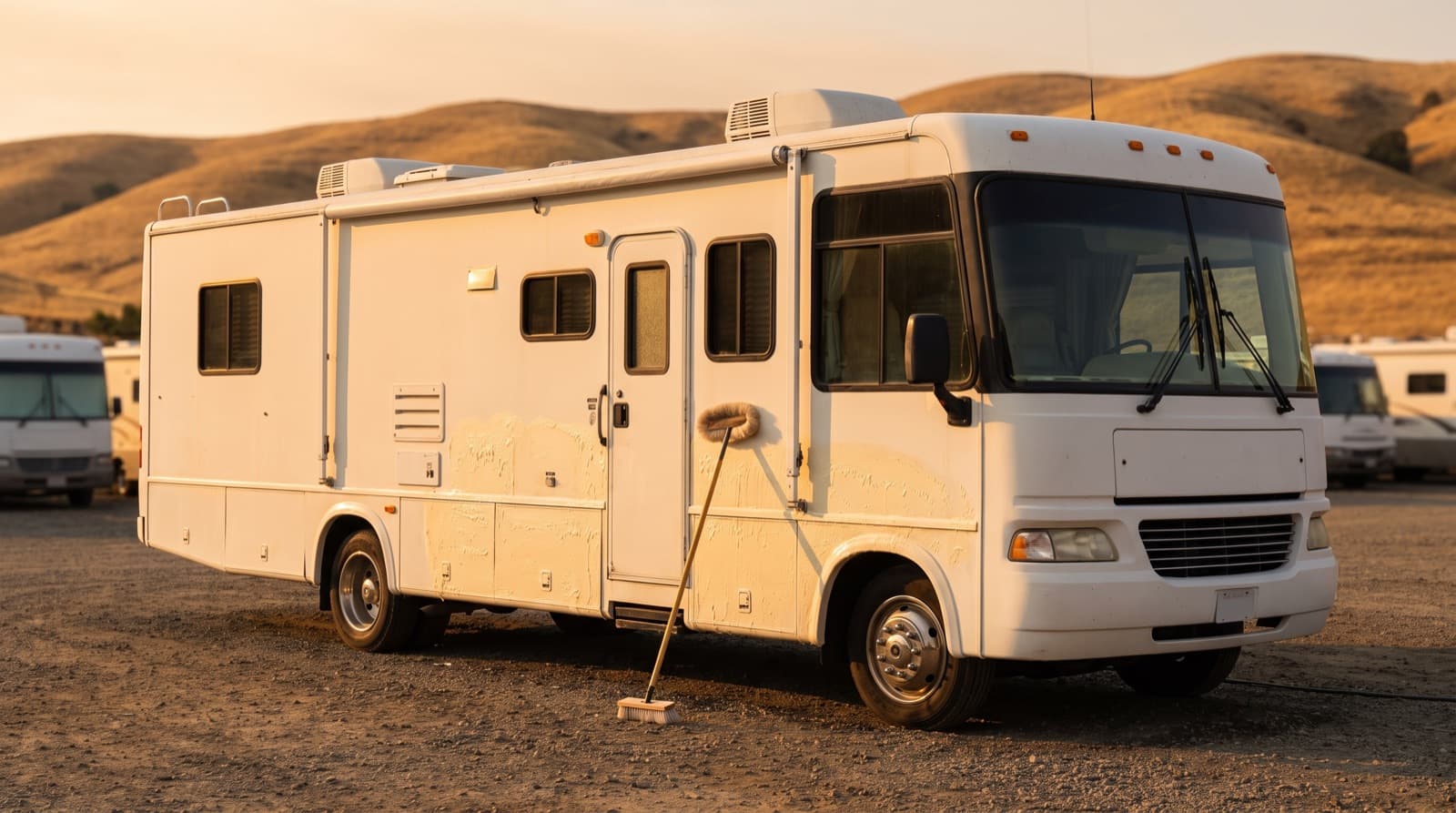
On an RV, it goes on gelcoat fiberglass. That is the shiny resin skin on many RV walls and most front and rear caps. It also goes on painted caps and sides, common on a Class A (a big, bus-style motorhome). Decals in good shape can be coated too.
What it will not do: it does not stop scratches. Branches and ladders can still mark it. It also cannot fix cracks, peeling clear coat or faded decals.
- RV UV protection: it slows the chalking of gelcoat and the fading of paint and decals.
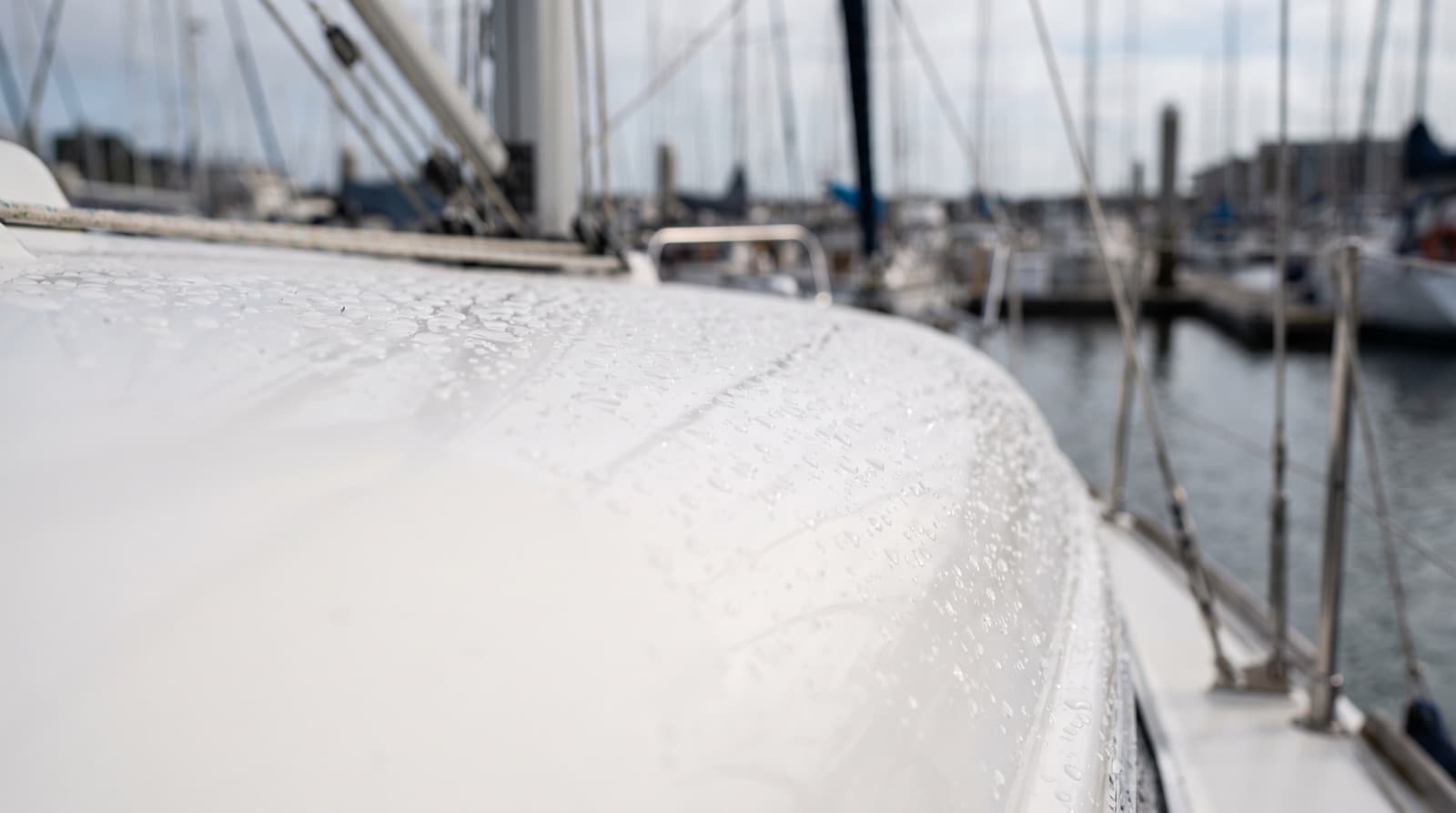
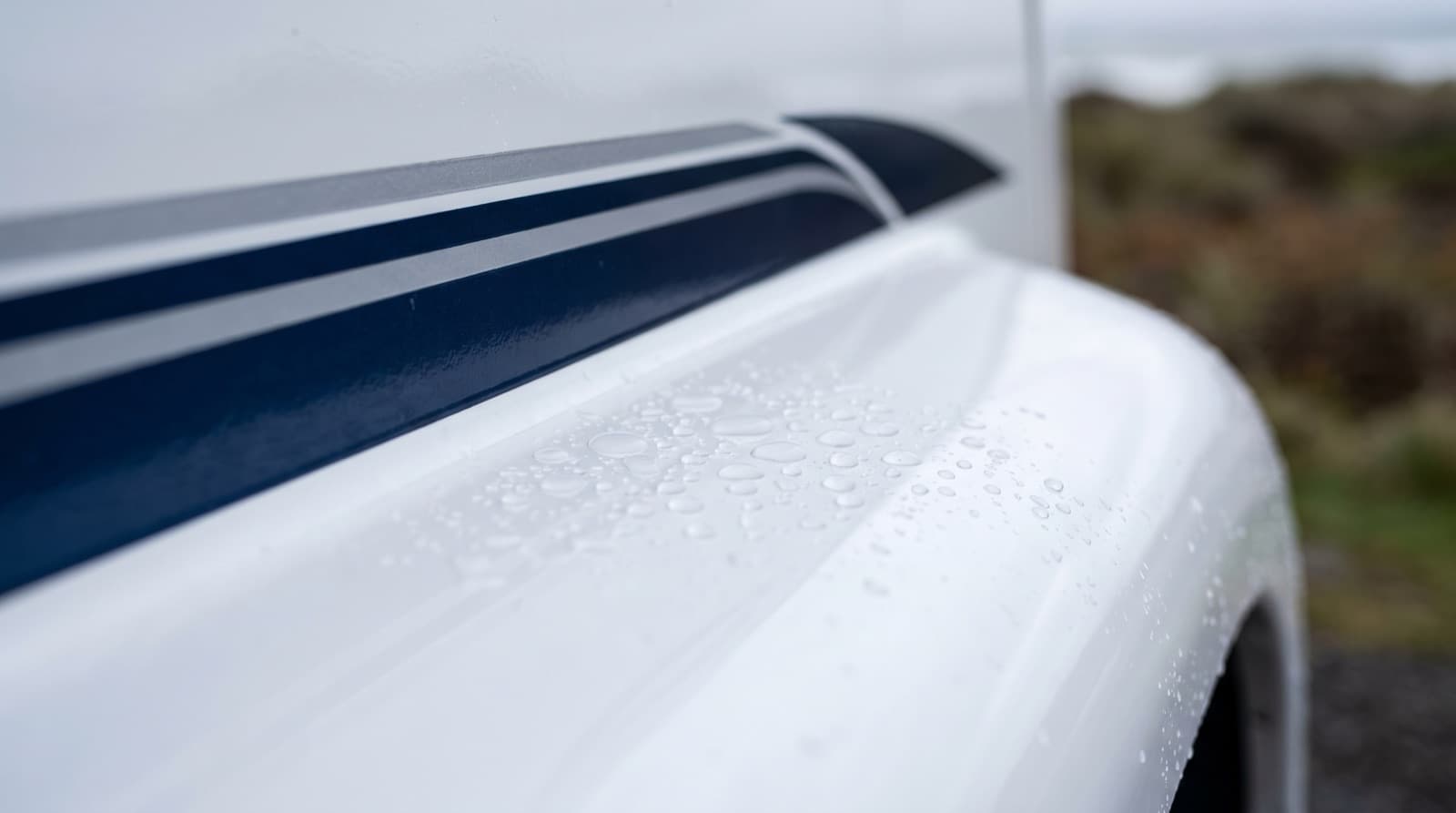
- Water beads and sheets off, taking loose dirt with it.
- Black streaks, bugs and bird droppings release with mild soap instead of hard scrubbing.
- Glass, wheels, plastic trim and painted aluminum siding can often be coated too. Each needs a product made for that surface.
RV ceramic coating vs wax vs sealant: which is better?
All three sit between the sun and your finish. The difference is how long they hold up and how much work they take on a big rig.
If you like waxing, wax works. It just has to be redone often on 35 feet of wall. A coating trades many weekend wax jobs for one careful install.
| Feature | Wax | Polymer sealant | Ceramic coating |
|---|---|---|---|
| What it is | A soft layer of natural or man-made wax | A man-made, wax-like polymer layer | A hard, glassy layer that bonds to the surface |
| How long it holds up | Fades fastest, most of all in strong sun and after many washes | Holds up longer than wax | Lasts the longest of the three with good prep and gentle washes |
| UV protection | Light, and it wears off quickly | Good while it lasts | Best of the three |
| Black streaks | Come back fast; harsh streak cleaners strip wax | Release a bit easier | Most rinse off with mild soap |
| Wash time | Slow; grime clings | Faster | Fastest; dirt sheets off with the water |
| Work on a big rig | Redo often | Redo less often | One big install, then light upkeep |
| Best for | Rigs kept indoors, or owners who enjoy waxing | A budget step up from wax | Rigs kept for years and parked outside |
Pro tip: Harsh black streak removers can quickly strip wax. On a coated RV, start with a plain rinse and a pH-neutral soap (a gentle, non-harsh soap). Most streaks slide right off.
Is RV ceramic coating worth it?
For most owners who park outside and plan to keep the rig, yes. It saves many long wax days and slows the chalky fade that sun causes.
- Worth it: you park outside, keep the rig for years, or are sick of waxing a big coach.
- Worth it: the rig is new, or the gelcoat still polishes up to a strong shine.
- Maybe not: you plan to sell soon. A fresh polish and sealant may be the better spend.
- Not yet: the gelcoat is cracked, the clear coat is peeling, or decals are failing. Fix those first, because a coating cannot.
Why does prep decide the result?
A coating locks in whatever is under it. If the gelcoat is chalky, swirled or stained, the coating seals that in, and it looks dull.
Most RVs that sit in the sun have some oxidation (a chalky, faded top layer). That layer has to come off first. Our RV oxidation removal guide shows how to check yours.
On a big rig, prep is most of the job. That is why two quotes for the same coating can be far apart. Ask what prep is included.
- Wash the whole rig, roof first, so dirty runoff does not land on clean walls.
- Remove tar, sap and stuck grit with a clay bar (a soft clay that pulls stuck grit off the surface).
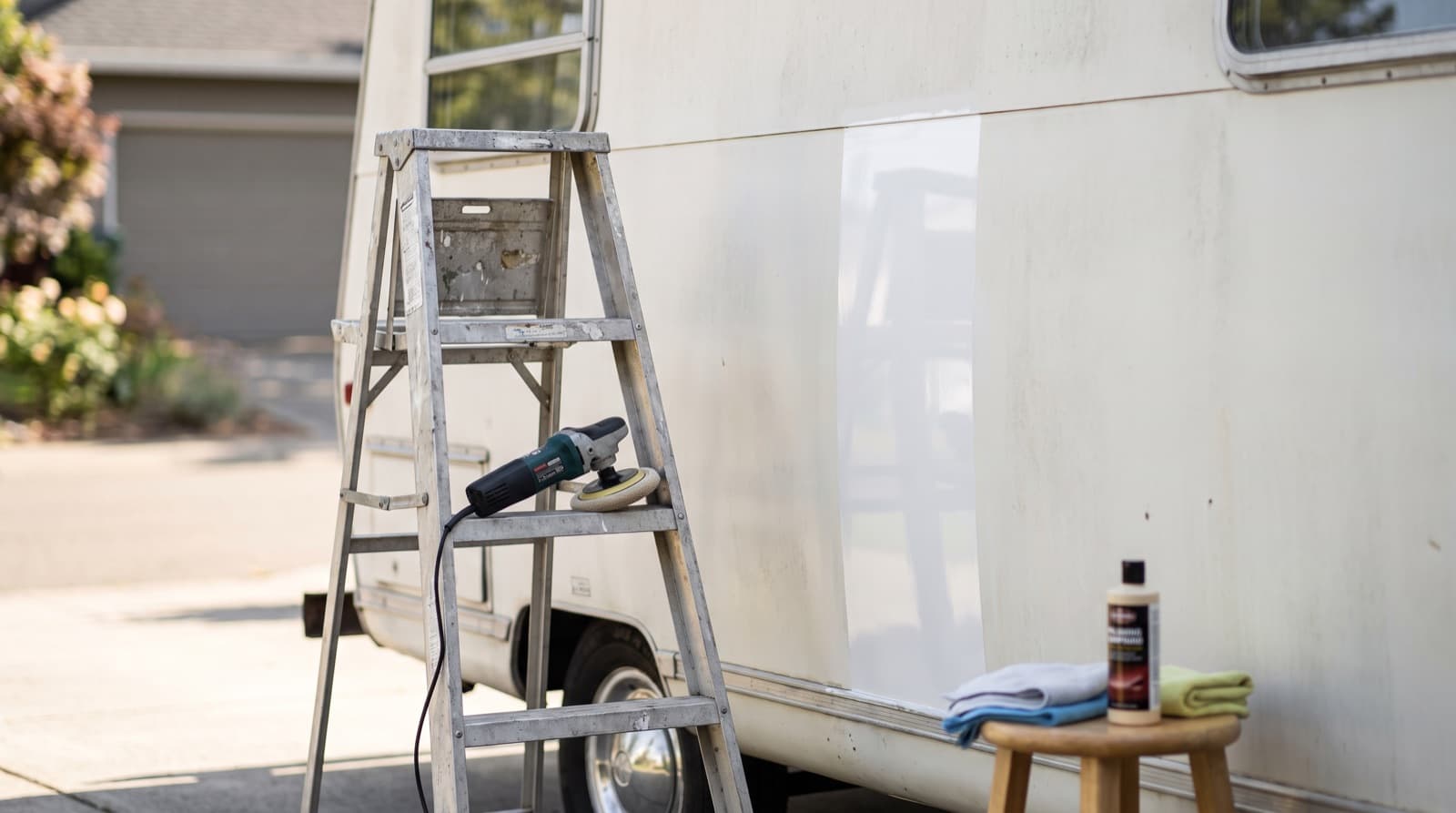
- Polish off oxidation with a machine polisher, using the mildest product that works.
- Mask decals, rubber seals and trim that should not be polished.
- Wipe every panel with a prep spray so no polish oil is left behind.
- Coat one small section at a time, and wipe off the extra so it dries even.
How much does RV ceramic coating cost?
A flat per-foot number would mislead you: size, surface and oxidation all move the price. That is why our RV page lists one fixed price per class, with oxidation removal included in the ceramic package.
Want a real number? Text a few photos of each side, the front cap and any chalky spots. We quote in under 10 minutes. Warranty and upkeep terms for an RV are confirmed in your quote.
These things move the price most:
- Length and height. A 40 foot Class A has far more surface than a 20 foot trailer.
- Surface type: gelcoat fiberglass, painted caps, or full-body paint.
- How much oxidation must come off first.
- Decals, stripes and trim that need masking.
- What gets coated: walls and caps only, or also glass, wheels and trim.
- Access, and if your storage lot allows detail work.
- How long a coating you want. Longer-lasting coatings cost more.
Can you ceramic coat an RV yourself?
Yes, if the surface is in good shape and you are patient. But a full coating on a big rig is a hard first project.
The problem is time and height. Most coatings must be wiped off within minutes. On a ladder, in wind or sun, it is easy to leave high spots. Those are dark smears that harden in place.
A spray ceramic sealant is the easier DIY step. It does not last as long, but it is much more forgiving.
- Work in shade on a cool surface, never in direct sun.
- Wash, clay and polish first.
- Use a sturdy ladder or platform on flat ground, with a helper. Stay off the roof unless the maker says it can hold you.
- Wear nitrile gloves and eye protection, and keep the area aired out.
- Coat about 2 feet by 2 feet at a time. Follow the label's wipe-off time exactly.
- Check each section with a flashlight for high spots before you move on.
- Rubber roofs (EPDM or TPO) are not paint. Use only products the roof maker approves.
Should you cover your RV, coat it, or both?
A cover and a coating do different jobs. A cover blocks sun, tree sap and bird droppings. A coating protects the surface itself and makes cleaning easy.
Covers have a downside. A cover that flaps in the wind can rub the gelcoat dull, since grit gets trapped under it. A cover that does not breathe can also trap fog moisture.
Parked indoors? A coating alone is usually enough. Parked outside in full sun for months? Coat it, and add a breathable cover you can strap snug.
Before storage, do a quick detail so grime does not bake on. For keeping the inside dry, see our RV mold guide.
- Wash and fully dry the rig, roof included.
- Remove bird droppings, bugs and sap before they stain.
- Check roof seams and caulk from a ladder. Walk the roof only if the maker says it can hold you.
- Only cover a clean, dry rig. Pad sharp corners and ladders, and check the straps after big storms.
How do you care for a coated RV in Bay Area weather?
Near the coast, fog and the marine layer wet a rig on many nights. The sun then dries those drops into spots. A coating helps the water run off first.
Near the water, in places like Pacifica, Half Moon Bay or Sausalito, salt air leaves a thin film. Rinse it off with fresh water often, most of all after windy days.
Winter rain brings the worst black streaks, as roof grime runs down the walls. For install day, pick a dry night in the forecast, or park under cover that first night.
- After the 10 to 14 day cure (hardening) time, hand wash or use a touchless wash only.
- Never use a brush tunnel or a brush truck wash. Brushes wear a coating down and can void its warranty.
- Use a pH-neutral soap and soft microfiber mitts.
- Keep a pressure washer back from seals, decals, window edges and roof seams. A close blast can force water in or lift decals.
- A yearly maintenance detail is required for our coating warranty. Your RV quote confirms the terms.
When should you call a pro for RV ceramic coating?
Call a pro when the job is bigger than a weekend and a step ladder. A coating is only as good as the polish under it.
Our technicians come to you. The van brings its own water and power. We can work at your home, a legal parking spot, or a storage lot that allows detail work.
- The gelcoat leaves color on a rag when you rub it. That means oxidation.
- A painted cap has swirls. A polisher can burn through clear coat in careless hands.
- The walls are too tall to reach safely from a ladder.
Frequently Asked Questions
How long does a ceramic coating last on an RV?
It depends on sun, outdoor parking, wash habits and upkeep. A well-prepped coating lasts far longer than wax or sealant, but none lasts forever. It needs care when water stops beading, streaks stick again, or the surface feels grabby.
How long does it take to ceramic coat an RV?
Plan on at least a full day. Big rigs and chalky gelcoat take longer, and your quote confirms the timing. Book it when the rig can sit for the 10 to 14 day cure, not before a dusty trip.
Does ceramic coating stop black streaks on an RV?
It will not stop streaks from forming, since they come from roof runoff. It does make most of them release with a rinse and mild soap. Keeping the roof clean cuts them down too.
Can you wax over a ceramic coated RV?
You do not need to. Wax sits on top and hides the slick, water-shedding feel of the coating. Use a coating-safe spray topper instead if you want extra slickness.
How soon can I wash my RV after ceramic coating?
Keep it dry the first night. Then wait 10 to 14 days before any wash so the coating can fully cure. After that, hand wash or use a touchless wash only.
Where can I get RV ceramic coating near me in the Bay Area?
Golden Bay Detailing comes to you in San Francisco, the Peninsula and Marin. Our technicians work at your home or a storage lot that allows it. Text a few photos to (415) 483-5686 and we quote in under 10 minutes.
Keep reading from Golden Bay
Get a Free RV Ceramic Coating Quote
Text a few photos and we quote in under 10 minutes. Our technicians come to you in San Francisco, the Peninsula and Marin.