Cost & Pricing
RV Detailing Cost: What Sets the Price and How to Save
Key Takeaways
- RV detailing cost is set by length, rig type, roof, oxidation, black streaks, interior work and protection.
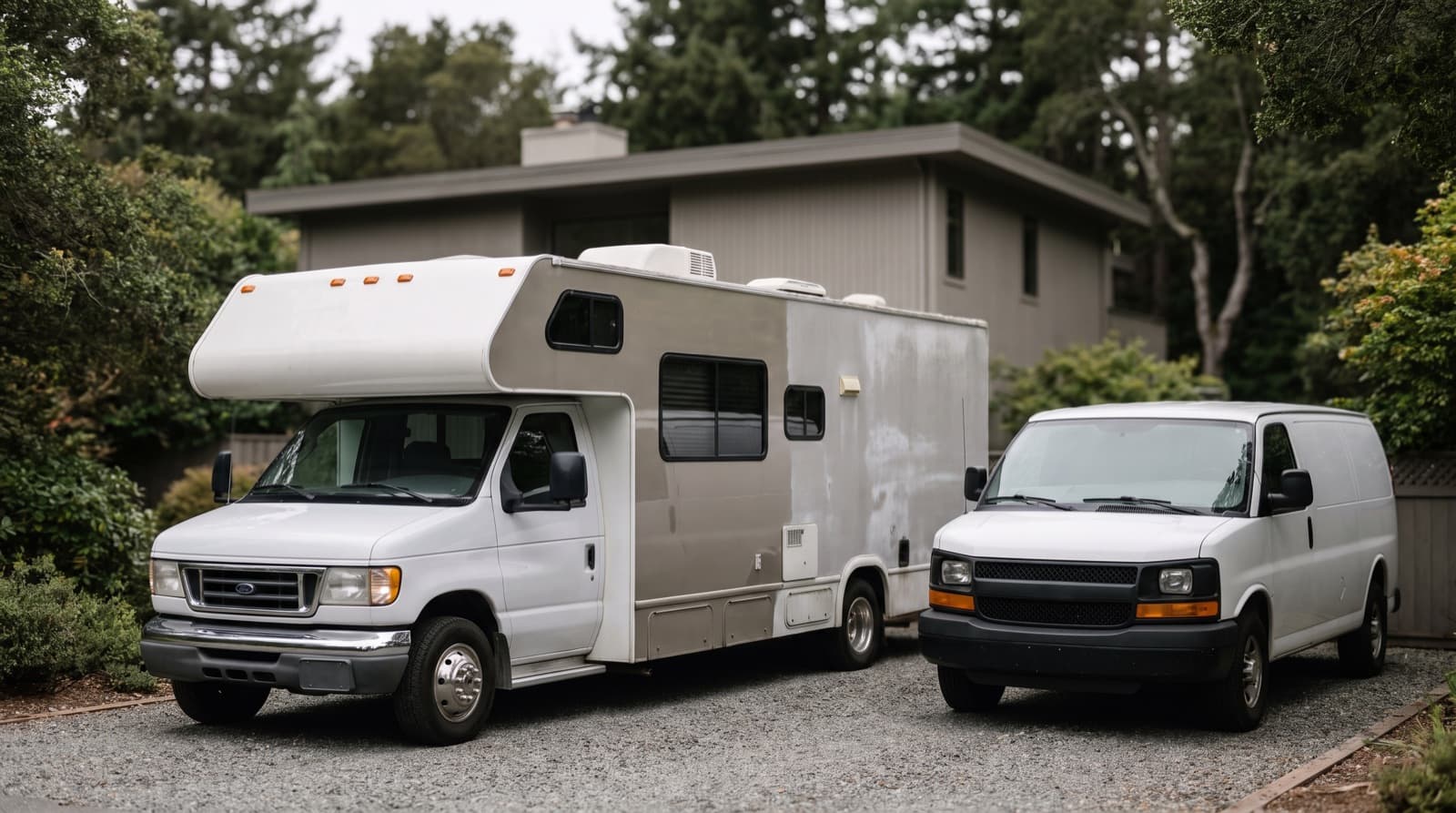
- Oxidation is the chalky, faded film the sun leaves on RV walls. Heavy chalk needs machine polishing, which takes far longer than a wash.
- Many detailers price RVs by the foot. Always ask if that rate covers the roof, the polish and the protection.
- On an RV, wax costs less up front but wears off fast. A ceramic coating costs more and lasts much longer, but needs a 10 to 14 day no-wash cure.
- Golden Bay Detailing details RVs in San Francisco, the Peninsula and Marin. Text a few photos and we quote in under 10 minutes.
RV detailing cost is set by the rig's length and condition. Many detailers start with a per-foot rate. Then they adjust for the rig type, the roof, chalky walls and interior work.
A long, tall rig with faded walls costs more than a small, clean one. That is why we quote every RV from photos, not from a menu.
This guide shows how a real RV quote is built, and how to keep your cost down.
How much does it cost to detail an RV?
The cost to detail an RV depends on how many hours the job takes. Size sets the starting point. Condition moves the price up or down.
A small camper van washed last month is a short job. A 40 foot motorhome that baked in the sun for years can take a full day or more.
Many shops price RVs by the foot. That is a fair start, but a per-foot rate means little on its own. Ask any RV detailing service:
- Is the roof cleaned, or only the walls?
- Is oxidation removal included, or is it extra?
- What protection goes on at the end: wax, sealant or ceramic?
- Are wheels, windows, the awning and the ladder included?
- Is the inside part of the price, or quoted on its own?
- Are you insured, and do you need my water or power hookup?
Pro tip: Compare quotes by what they include, not by price alone. A low price that skips the roof or the polish just leaves more work for next time.
What sets RV detailing prices?
Every price driver comes back to time. The table shows which way each one pushes your quote.
Length is the biggest starting point. Every extra foot adds more wall, roof and glass to wash, polish and protect.
Oxidation is the wild card. It is the chalky, faded film the sun leaves on fiberglass and paint. Light chalk takes one polish. Heavy chalk can take several machine passes.
Black streaks are the dark lines that run down from roof edges and windows. Fresh ones wash off. Old ones may need a special cleaner or a polish.
Roof type matters too. Many trailers have a rubber roof, a soft skin that needs mild cleaners and careful work. Fiberglass and metal roofs are tougher. AC units, vents and solar panels add time on any roof.
| Price driver | Pushes the cost down | Pushes the cost up |
|---|---|---|
| Length | Short camper van or small trailer | Long Class A or big fifth wheel |
| Height and roof | Low roof you can reach safely | Tall rig with a rubber roof or solar panels |
| Oxidation | Walls still glossy | Chalk rubs off on your hand |
| Black streaks | A few fresh streaks | Old streaks baked into the finish |
| Decals and trim | Few decals, little trim | Faded decals and lots of trim to cover with tape |
| Interior | Outside only | Full inside clean with steam and stain care |
| Protection | Spray wax | Polish plus a ceramic coating |
| Access | Open space on all sides | Tight spot close to other rigs or trees |
Does the type of RV change the price?
Yes. The type tells us the size, the height and what the walls are made of. Motorhome and camper detailing prices follow the same rule: size first, then condition.
Here is how the common types compare, roughly from the biggest job to the smallest. A long trailer can still be a bigger job than a short motorhome.
- Class A: the big, bus-shaped motorhome. It has the most wall and roof, a tall front cap (the curved nose piece) and often full paint. It is usually the largest job.
- Fifth wheel: a big trailer that hooks into a pickup bed. Its tall front cap means more ladder work.
- Class C: built on a van or truck frame, with a bed over the cab. That over-cab nose catches bugs and grows streaks.
- Travel trailer: towed behind a truck or SUV. Some have ridged metal walls, which take more hand work to polish than smooth fiberglass.
- Class B: a camper van. It is the smallest motorhome and the closest to a car detail, but still taller and longer than most cars.
What is included in an RV wash vs a full RV detail?
RV wash prices and RV detailing prices are not the same thing. A wash cleans the rig. A detail cleans it, fixes the finish and protects it.
The common levels, from the least work to the most:
- Wash: walls, windows and wheels washed by hand and dried. Ask if the roof is part of it.
- Wash plus wax or sealant: adds a layer that helps water and dirt slide off. Wax fades fastest. A sealant (a man-made coat that works like wax) lasts longer.
- Oxidation removal: a machine polish that takes off the chalk and brings back the shine. This is where exterior prices climb.
- Ceramic coating: a hard, clear layer put on after polishing. It lasts the longest and costs the most up front.
- Interior detail: vacuum, wipe-downs, glass, plus steam and enzyme cleaners for stains and smells. Enzymes break down food, sweat and pet messes.
Should you pay for wax or a ceramic coating on an RV?
Wax is the cheapest protection up front. It also wears off the fastest, so you pay for it again and again.
A ceramic coating costs more up front. The chalk must be polished off first, so prep is a big part of the price. In return, it lasts much longer, helps protect against UV fading and helps black streaks rinse off.
Plan for its care rules too. Keep it dry the first night, then skip washing for 10 to 14 days while it cures. After that, use only hand or touchless washes, where no brushes touch the rig. A brush tunnel wash voids our coating warranty, which also needs a yearly maintenance detail.
A coating often pays off if the rig lives outside and you plan to keep it for years. If you plan to sell soon, wax may be enough.
DIY or pro: which costs less in the end?
DIY saves cash, but it costs time, effort and some risk. A wash, polish and wax on a big rig can take one person more than a full weekend.
Gear adds up too: RV soap, a soft long-handled brush, microfiber towels, a safe ladder and wax. Chalky walls also need a machine polisher and the skill to use it.
Ladders and roofs cause falls. A polisher held in one spot too long can burn through gelcoat, the glossy outer layer on fiberglass. A pressure washer aimed at seams can push water inside.
A regular wash is a fine DIY job if you can reach safely. Call a pro when:
- Chalk comes off on your hand or a towel.
- Black streaks stay put after a normal wash.
- You would need to climb high, or your roof is not safe to walk on.
- You want a ceramic coating, which needs careful prep.
- Your storage lot has no water hookup but allows mobile service.
- The job would eat your whole weekend, and you would rather be camping.
How does Bay Area life affect RV detailing cost?
Many Bay Area rigs sit in storage lots, not driveways. We work at homes and at storage lots that allow mobile service, so ask your lot first. We bring our own water and power.
Steep streets are no place for a ladder. A flat driveway, a lot space or a level, legal street spot works best.
Local weather adds its own wear:
- Fog and the marine layer leave a damp film that holds dust. When the sun burns through, drops dry into spots.
- Salt air near the ocean and the Bay settles on trim, ladders and hitches. Rinse metal parts often.
- Sunny spots away from the fog bake the roof and walls, so chalk builds faster.
- Rain season washes roof dirt down the walls as black streaks. A clean roof in fall means fewer streaks in winter.
- Beach trips to Pacifica or Half Moon Bay bring sand into steps, carpets and door tracks.
How can you lower your RV detailing cost?
The cheapest detail is the one with the least to fix. A few safe habits keep chalk and streaks from piling up:
- Wash every few weeks when the rig is in use. Go top-down with RV soap and a soft brush, in the shade.
- Keep strong degreasers and citrus cleaners off a rubber roof. They can soften it.
- Keep a pressure washer away from seams, seals, decals and window edges.
- Clean the roof before the rains so less dirt runs down the walls.
- Dry the glass after a wash, and park in shade or under a breathable cover when you can.
- Keep wax or sealant on the walls. Topping it up is easier than polishing off chalk later.
Pro tip: Rub a clean, damp white towel on your sunniest wall. If it comes away chalky or tinted with the wall's color, the finish is oxidizing. Catching it early usually means a lighter polish, and a lower quote.
How do you get an exact RV detailing quote?
Photos are the fastest way to a real price. Text us these, and we reply with a quote in under 10 minutes:
- The rig's length in feet.
- The type: Class A, Class B (camper van), Class C, travel trailer or fifth wheel.
- Where it's parked: home, a legal street spot or a storage lot that allows mobile service.
- A photo of each side, including the worst side.
- A photo of the roof, only if you can take it safely.
- Close-ups of chalk, black streaks or faded decals.
- What you want: a wash, oxidation removal, wax or ceramic, and interior work.
Frequently Asked Questions
Do RV detailers charge by the foot?
Many do, since length is the easiest way to size the job. A per-foot rate can still leave out the roof, oxidation removal or protection. Always ask what the rate covers.
How long does an RV detail take?
A wash on a small or clean rig usually takes a few hours. Heavy oxidation on a big rig can take a full day or more. Ask for a time estimate with your quote.
Is RV detailing worth the cost?
For a rig that lives outside, it usually is. Regular care catches chalk early, while a light polish can still fix it. A clean, glossy rig shows better when you sell or trade it in.
How often should you detail an RV?
Plan a deeper detail with fresh protection at least once a year, or sooner if chalk shows. Between details, wash it often while in use and after beach or dusty trips.
How much does Golden Bay Detailing charge to detail an RV?
Every RV gets a custom quote, since size and condition vary so much. Text a few photos to (415) 483-5686 for a fast, free quote. We serve San Francisco, the Peninsula and Marin, and most bookings need no deposit.
Keep reading from Golden Bay
Get Your Exact RV Detailing Quote
Text a few photos for a free quote, and we reply in under 10 minutes. We come to you across San Francisco, the Peninsula and Marin, at home or at storage lots that allow it.