How-To
What Do You Need to Detail a Car? The Real Supply List
Key Takeaways
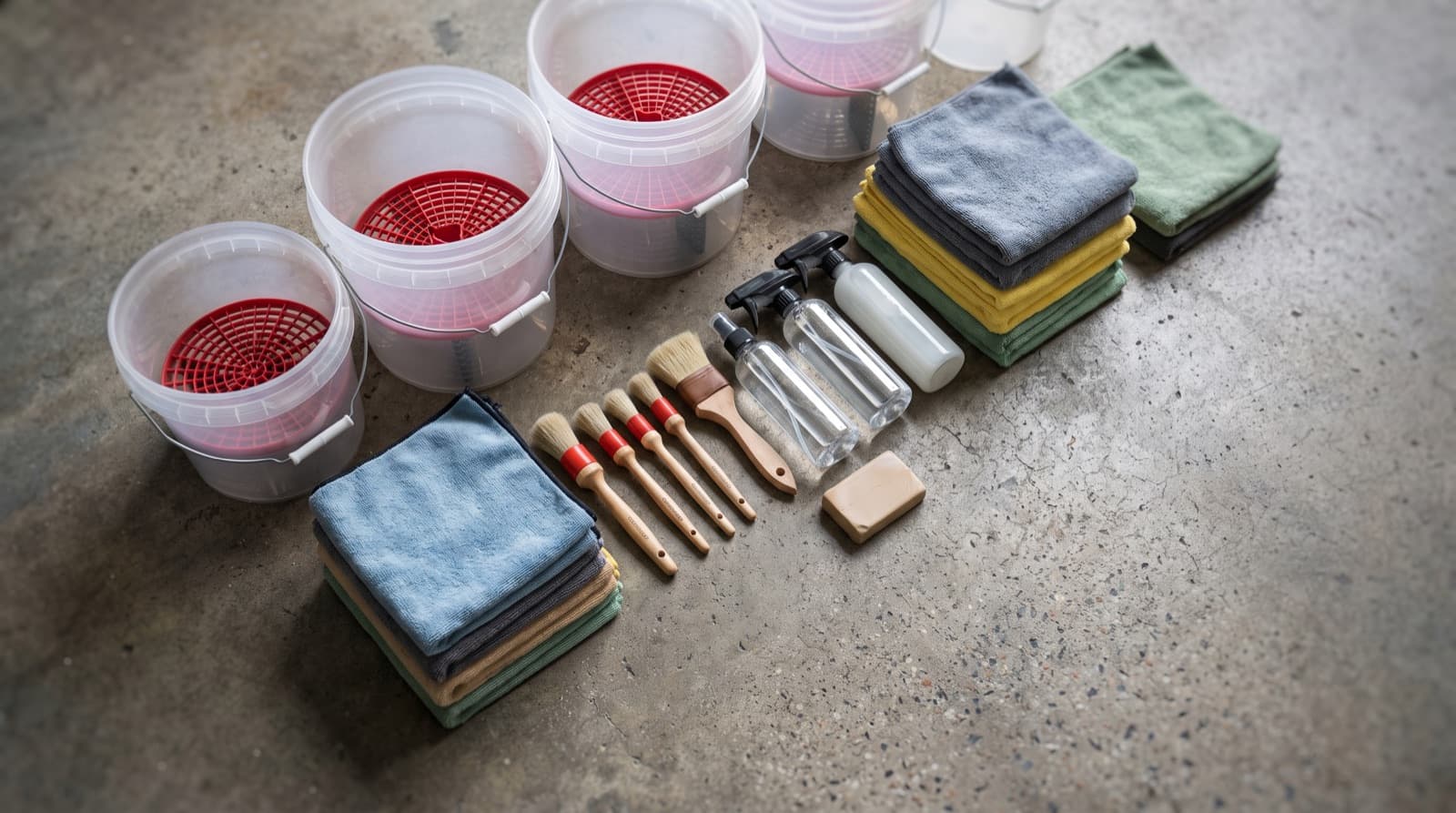
- To detail a car, you need a wash kit, an interior kit, lots of microfiber towels and a paint protectant.
- The core wash kit is two buckets, grit guards, car shampoo, a wash mitt and a drying towel.
- Dish soap, paper towels and household cleaners on screens or leather do more harm than good.
- A polisher kit, plus the time to learn it, usually costs more than one professional paint correction.
- Golden Bay Detailing brings its own supplies, water and power to cars across San Francisco, the Peninsula and Marin.
To detail a car, you need a wash kit, an interior kit, plenty of microfiber towels and a paint protectant. Clay, iron remover and a polisher come later, and only if your paint needs them.
So what do you need to detail a car beyond that? It depends on how far you want to go. Below is a 10-item starter list from our technicians. Then we sort all car detailing supplies into five kits, from basic to pro.
We also cover what to skip, what to do with no hose, and when to call a pro.
What do you need to detail a car? The starter list and 5 kits
Start with these ten items. They cover a safe wash, a clean cabin and basic protection.
The table below sorts every supply into five kits. Most people need only kits 1, 2 and 5.
- Two buckets, each with a grit guard
- pH-neutral car shampoo
- A microfiber wash mitt
- A soft wheel brush and a stiff tire brush
- A large, plush drying towel
- A big pack of microfiber towels
- A vacuum with a crevice tool, plus a soft detail brush
- Interior cleaner and ammonia-free glass cleaner
- A spray sealant to protect the paint
- Nitrile gloves and a few labeled spray bottles
| Kit | Key items | What it handles | Who needs it |
|---|---|---|---|
| 1. Wash kit | Two buckets, grit guards, car shampoo, wash mitt, wheel and tire brushes, drying towel | Dirt, dust and road film | Every car owner |
| 2. Interior kit | Vacuum, soft brushes, interior cleaner, glass cleaner, microfiber towels | Crumbs, dust, sticky spots, smudged glass | Every car owner |
| 3. Decontamination kit | Iron remover, clay bar or clay mitt, clay lube, tar remover, gloves | Rough paint, rusty-looking dots, tar | Owners whose paint feels rough |
| 4. Correction kit | DA polisher, pads, compound, polish, panel wipe, inspection light | Swirls and light scratches | Skilled DIYers only |
| 5. Protection kit | Spray sealant or wax, tire dressing, trim protectant | Helps prevent fading, water spots and fast dirt buildup | Every car owner |
What goes in a basic car wash kit?
This is the heart of any car detailing kit. Each item moves dirt off without dragging it across the paint. That is how you avoid swirls, the fine circle scratches you see in bright sun.
- Two buckets. One holds soapy water, and one holds plain rinse water. Rinse the dirty mitt before it goes back in the soap.
- Two grit guards. These plastic grates sit at the bottom of each bucket and trap dirt below the mitt.
- pH-neutral car shampoo. This gentle car soap cleans without stripping wax or sealant.
- A microfiber or wool wash mitt. Its deep fibers pull grit away from the paint. A flat sponge traps grit against it.
- A wheel kit. Use a third bucket, a soft wheel brush, a stiff tire brush and wheel cleaner. Brake dust is the dirtiest grime on the car.
- A plush microfiber drying towel. Water left to dry on its own leaves spots.
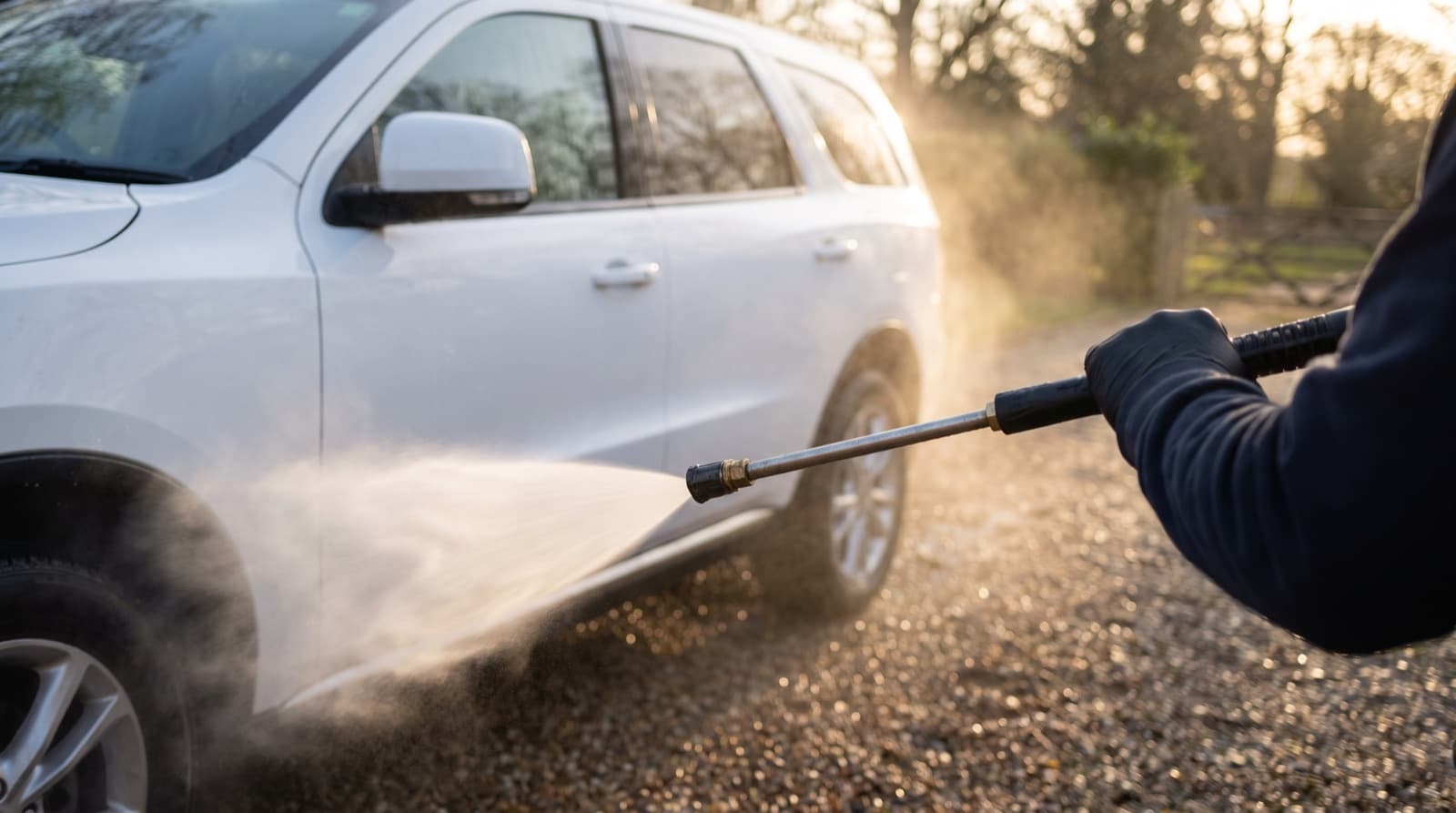
- A hose with a spray nozzle. A pressure washer is nice but not needed.
Pro tip: Our technicians color-code microfiber: one color for paint, one for glass, one for wheels. A wheel towel never touches paint again.
What do you need to detail a car interior?
- A vacuum with a crevice tool and a brush head. The crevice tool reaches seat rails and console gaps.
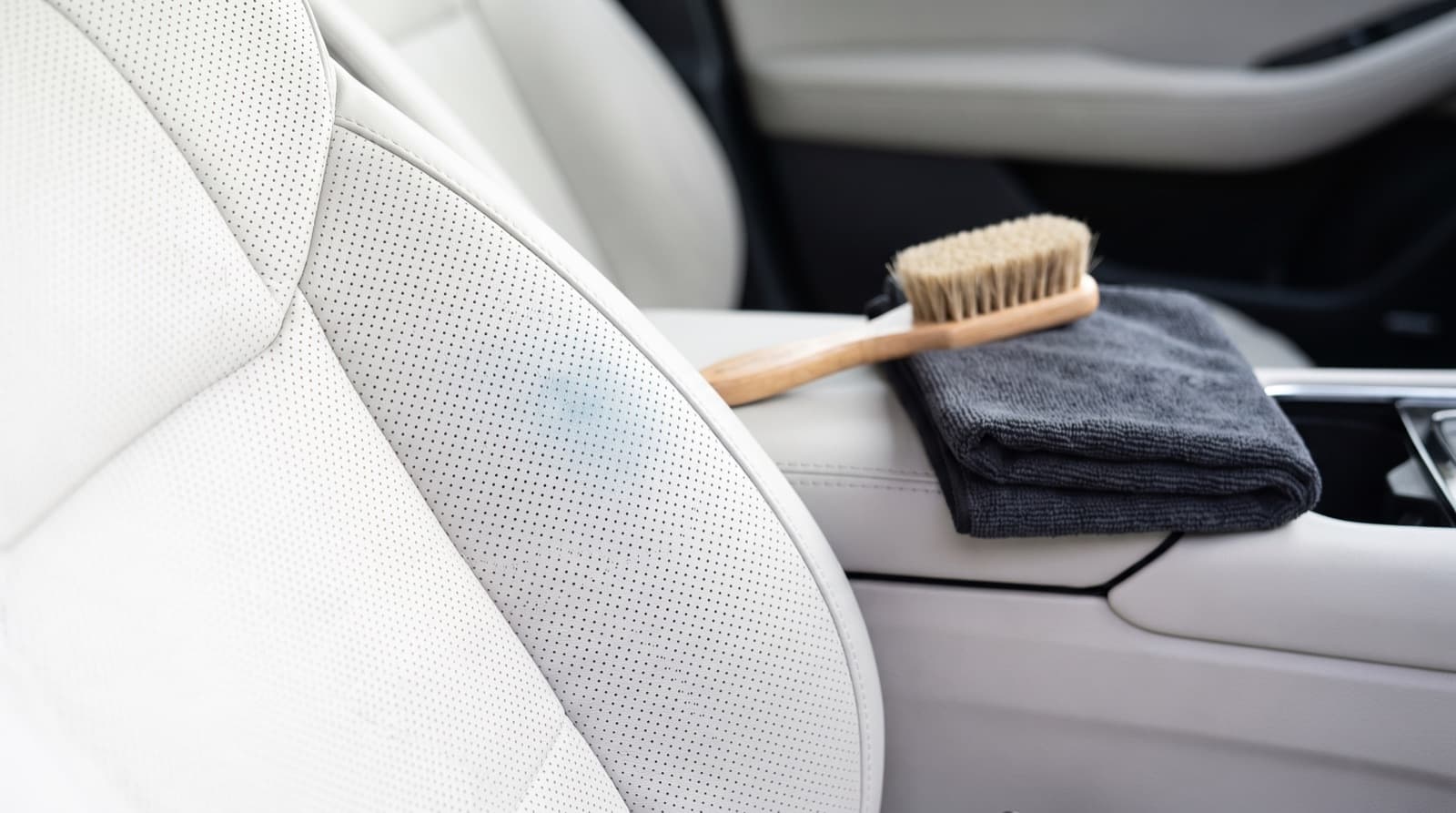
- Soft detail brushes. They lift dust out of vents, seams and buttons.
- An interior cleaner. An all-purpose cleaner (APC) also works if you mix it at the label's gentlest ratio.
- Ammonia-free glass cleaner and two waffle-weave towels: one to clean and one to buff dry.
- Leather cleaner and conditioner, if you have leather. Harsh cleaners dry leather out and make it crack.
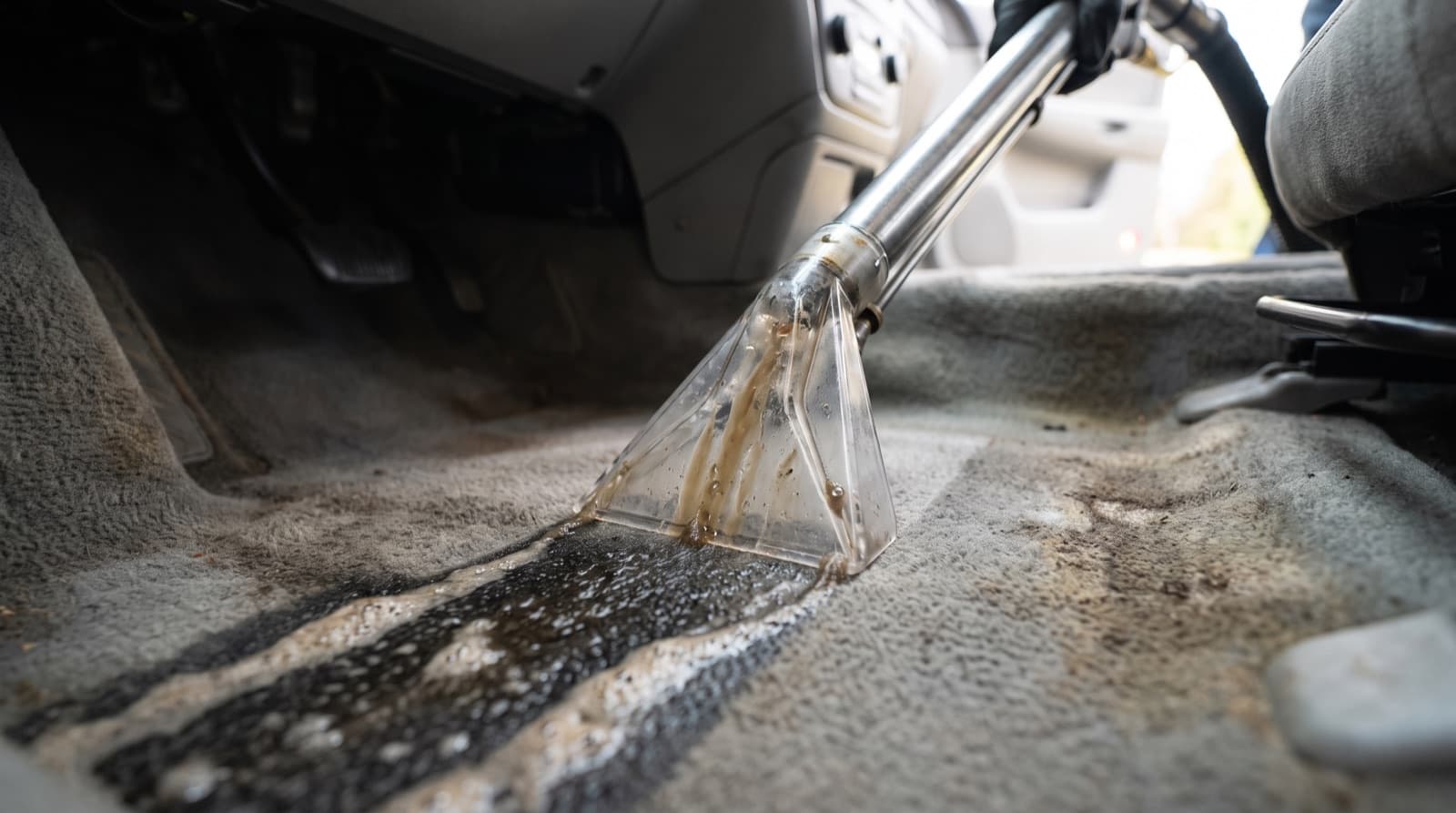
- Carpet and fabric cleaner. Use a stiff brush on floor carpet and a soft brush on seats. Blot with a dry towel or use a wet-dry vac. Never pick up liquid with a regular vacuum.
- A big stack of microfiber towels. Grab a fresh one as soon as yours looks dirty.
Pro tip: Spray cleaner onto your towel or brush, not onto screens and buttons. Liquid behind a switch can cause real trouble.
What is a decontamination kit, and do you need one?
Washing removes loose dirt, but not grime stuck to the paint. That is the job of a decontamination kit.
These products are strong. Wear nitrile gloves and eye protection, and work with fresh air. Never mix cleaners.
- Iron remover. This spray dissolves tiny metal bits from brake dust and rail dust. Many formulas turn purple or red as they work.
- A clay bar or clay mitt. Clay is a soft putty that pulls stuck grit off paint and leaves it glass-smooth.
- Clay lube. This slick spray lets the clay glide. Never rub clay on dry paint.
- Tar and bug remover. It softens tar and bug guts so you never scrub hard.
Pro tip: Try the bag test. Put your hand in a thin sandwich bag and glide it over clean, dry paint. If it feels gritty, it is time to clay.
What do you need to polish a car?
This is the correction kit. Polishing shaves off a thin layer of clear coat, the clear top layer that guards the color. That levels out swirls and light scratches.
Clear coat is thinner than a sheet of paper, and it does not grow back. That makes this kit risky in new hands.
- A dual action (DA) polisher. Its pad spins and wobbles, so it runs cooler and safer than a rotary polisher.
- Pads in two or three grades. Firm pads cut more. Soft pads finish and add gloss.
- Compound and polish. Compound cuts deeper marks. Polish refines the finish after it.
- Panel wipe. This alcohol spray strips polish oils so you see the true result. Use it with gloves and fresh air.
- A bright LED inspection light. Swirls hide in shade.
- Painter's tape. It covers rubber, trim and badges so the pad does not burn or stain them.
Pro tip: Start with the softest pad and gentlest polish on a small test spot. Step up only if that spot still looks swirled.
Which protection products should a beginner use?
Protection is the last step and the one people skip most. It keeps the car cleaner longer.
- Spray sealant or spray ceramic. It is the easiest option: spray, spread, buff. Water beads up and rolls off.
- Paste or liquid wax. It gives a warm glow but wears off faster than a sealant.
- Tire dressing. Pick a water-based one. Greasy dressings can fling black dots onto paint.
- Trim protectant. It keeps black plastic from fading to gray.
Pro tip: A spray product is not a pro ceramic coating. A pro coating needs careful paint prep and a 10 to 14 day cure with no washing at all.
What car detailing supplies should you skip?
Some things you need to detail a car are already at home. But many household products are not safe on a car.
- Dish soap. It cuts grease, so it strips wax and sealant and can dry out rubber seals.
- Glass cleaner with ammonia. It can harm window tint and the coating on touch screens.
- Kitchen wipes on leather or screens. They can dry leather and cloud screens.
- Bleach. Never use it on seat belts, leather or fabric. It weakens fibers and leaves stains.
- Melamine foam sponges on paint, gloss trim or screens. These white eraser sponges act like very soft sandpaper.
- Paper towels and old bath towels. They shed lint and can scratch clear coat.
- All-in-one miracle bottles. They do each job a little. Separate products do each job well.
- Fabric softener on microfiber. It clogs the fibers. Wash microfiber on its own and dry it on low heat.
What do you need to detail a car in an apartment with no hose?
Street parking and shared garages change the supply list. Many buildings ban hoses in the garage, so check your rules first.
The fix is a rinseless or waterless wash. A rinseless wash is one bucket of special soap that needs no rinse. A waterless wash is a spray you wipe off. Both need lots of clean towels.
Use them only on light dust. A sandy or muddy car needs a real rinse, or the towel will grind grit into the paint.
Bay Area weather adds its own needs.
- Salt air. A salty film builds up fast near Ocean Beach, the Marina or Sausalito. Wash more often and keep a sealant on.
- Beach sand. A stiff brush and a strong vacuum pull sand out of carpet.
- Fog and water spots. Fog, dew and sprinkler overspray dry into spots on warm paint. Wash in shade and dry right away.
Pro tip: One lidded plastic tote holds a full wash and interior kit. Keep it out of a hot trunk, since heat breaks down liquids. Label every spray bottle, and store clean towels in a sealed bag.
Is it cheaper to buy detailing supplies or hire a pro?
A basic wash and interior kit is worth owning. It keeps a car clean between pro details.
The math changes at the top tier. A polisher setup plus weekends of practice usually costs more than one pro correction. Our one-stage paint correction starts at $399. One slip with a polisher can also burn through clear coat for good.
For a clean inside and out, our Mini Detail starts at $249 for a sedan. A Full Detail starts at $399. We bring every supply, plus our own water and power.
Call a pro when:
- You want swirls gone or a ceramic coating. A scratch that catches a fingernail may need touch-up paint, not just polish.
- The car has vomit or urine. That calls for gloves, fresh air, steam and enzyme cleaners.
- You find surface mold. Widespread mold or a water-damaged car may need a specialist.
- Pet hair is woven deep into the carpet. It takes rubber pet-hair tools and a strong vacuum.
- You plan to sell the car or return a lease.
- You have no hose, no space or no free weekend.
Frequently Asked Questions
How many microfiber towels do I need to detail a car?
More than most people expect. You want separate towels for paint, drying, glass, wheels and the interior. A full detail can use a dozen or more.
Do I need a foam cannon?
No, it is a nice extra. A foam cannon clips onto a pressure washer and coats the car in thick soap. That loosens dirt, but the hand wash still does the real cleaning.
Do I need a steam cleaner or carpet extractor?
Not for a basic detail. An extractor sprays cleaner into carpet and sucks it back out. A steamer loosens grime in seats. Many people rent one or book a deep interior clean instead.
Is a store-bought car detailing kit worth it?
It can be a fine start. Check for a real wash mitt, grit guards and a big drying towel. Skip kits padded with tiny bottles you will never use.
Can Golden Bay Detailing detail my car if I have no supplies or hose?
Yes. Our technicians bring their own supplies, water and power to your home, office or apartment garage. We serve San Francisco, the Peninsula and Marin, and a Mini Detail starts at $249.
Keep reading from Golden Bay
Skip the Supply Run. We Bring Everything.
Our technicians come to your home, office or apartment garage with their own supplies, water and power. Get a free quote for your car today.