RV & Marine
Jet Ski Cleaning After Saltwater: Hull, Seat and Protection
Key Takeaways
- To clean a jet ski after saltwater, rinse the hull, deck, footwells and trailer the same day. Then wash it top-down with a pH-neutral boat soap, rinse again and towel dry.
- Flushing a jet ski engine after saltwater is mechanical work, and the steps differ by model. Follow your owner's manual for that part.
- Clean a jet ski seat with mild soap and a soft brush. Then add a UV protectant made for marine vinyl, and skip bleach and greasy dressings.
- Wax is the easy, low-cost way to protect a jet ski hull, but salt and sun wear it off fast. A ceramic coating lasts much longer but needs a clean, polished hull first.
- Golden Bay Detailing cleans and protects jet skis across San Francisco, the Peninsula and Marin. Text a few photos and we quote in under 10 minutes.
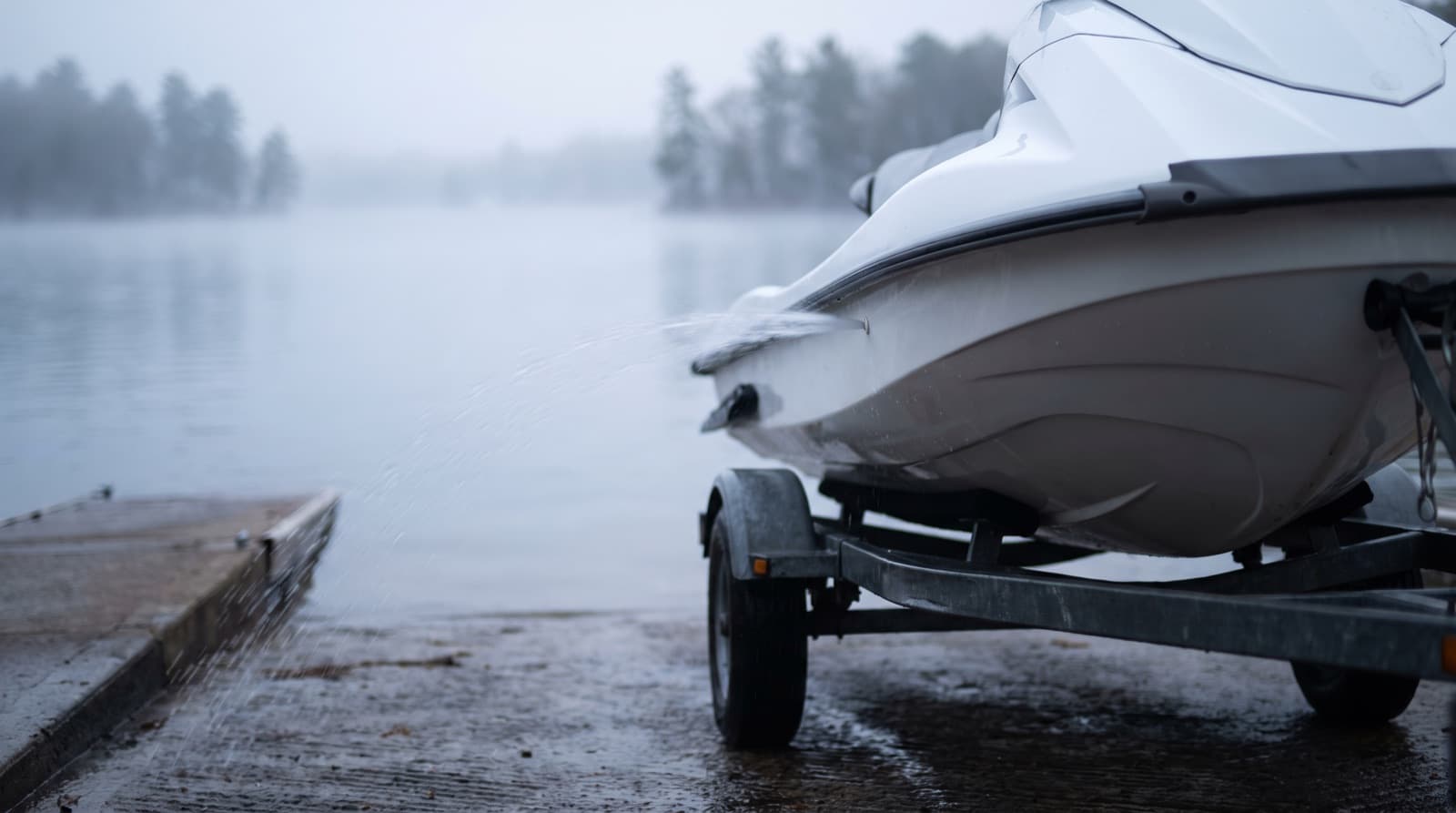
Jet ski cleaning after saltwater is simple: rinse with fresh water, wash with a gentle boat soap, then dry. Do it the same day, and dry it fully before you cover it. Dried salt dulls the hull, dries out the seat and eats at metal parts.
A jet ski (also called a personal watercraft, or PWC) gets hit harder than most boats. It sits low, sprays salt over every inch, and fills its footwells with sand. Ride on a lake or river? Use the same steps. Fresh water is gentler, so there's less rush.
This guide covers the hull, deck, intake grate, footwells, seat and trailer, plus wax and ceramic coating.
What jet ski cleaning supplies do you need?
You don't need much gear. You do need gentle gear, because soft vinyl, clear plastic and decals sit right next to the hull.
Leave dish soap, bleach, harsh home cleaners and stiff brushes in the garage. They strip wax, harm vinyl or scratch the finish.
- A garden hose with a spray nozzle.
- A pH-neutral boat soap. That means a gentle soap that is not acidic or harsh.
- Two buckets: one for soapy water and one to rinse your mitt. This keeps sand out of the soap.
- A microfiber wash mitt for the hull and deck.
- A soft brush for the seat, footwells and traction mats (the foam grip pads under your feet).
- Clean microfiber towels for drying, plus one kept only for gauges and mirrors.
- A UV protectant made for marine vinyl, and a marine wax or spray sealant for the hull.
How do you clean a jet ski after saltwater, step by step?
Do this the same day you ride. Work in the shade if you can, so soap and water don't dry on the surface. Leave the ski on its trailer so you can reach the whole hull.
- Rinse the trailer first. Spray the frame, bunks (the padded boards the ski rests on), rollers, lights and winch.
- Rinse the jet ski from the top down. Start with the handlebars and seat. Then do the deck, the hull sides and the bottom.
- Flush the footwells. Aim water under the edges of the mats to push out sand and salt.
- Rinse the intake grate from the outside. It's the metal grate under the ski where water gets pulled in. Only clear weeds with the engine off and the lanyard (the cord that stops the engine) pulled out.
- Keep strong spray away from the engine area, air vents, gauges, seat seams and decals. Your manual shows what is safe to spray.
- Mix boat soap in a bucket by the label. Wash top-down with the mitt, one small section at a time. Rinse the mitt often.
- Scrub the footwells and mats with the soft brush and soapy water.
- Rinse everything well. Soap left behind dries into a film and streaks.
- Dry top-down with microfiber towels. Press a towel into the mats to soak up water.
- Open the storage bins, and lift the seat if your manual allows. Let the inside air out before you cover the ski.
Pro tip: Salt crystals scratch like sand. Our technicians never wipe a dry, salty hull, gauge cover or mirror. Flood it with fresh water first, then wipe.
Do you need to flush a jet ski after saltwater?
Usually, yes. Many owner's manuals call for a fresh water engine flush after saltwater riding. It rinses salt out of parts a hose can't reach from the outside.
The steps, hookups and timing differ by model. Follow your owner's manual exactly. If you're not sure, ask your dealer or a marine mechanic.
This is mechanical work, and Golden Bay does not do it. You or your mechanic handle the flush. We handle the outside, the seat and the protection.
How do you clean and protect jet ski seats?
Jet ski seats are marine vinyl, a tough plastic skin over foam. Salt, sun and sunscreen dry it out over time. Then it fades, gets stiff and can crack.
Rinse the seat after every ride. Deep clean it when it feels sticky or looks gray.
Skip bleach, harsh solvents and melamine sponges (the white foam eraser pads). They can wear away the top layer of the vinyl. Skip greasy dressings too. A slick seat is a safety risk on the water.
See small gray or black dots? That is likely mildew from a seat that stayed damp. Our boat seat guide covers mildew in more depth.
- Rinse off salt and sand with fresh water.
- Mix a little boat soap or vinyl cleaner in a bucket of water.
- Scrub gently with a soft brush. Work into the seams and the grip texture.
- Rinse well, then dry with a microfiber towel.
- Wipe on a UV protectant made for marine vinyl. Buff it dry so the seat isn't slippery.
What does each part of a jet ski need?
Use this chart as your after-ride checklist.
| Part | How to clean it | What to avoid |
|---|---|---|
| Hull and deck | Fresh water rinse, boat soap wash, towel dry | Dish soap, stiff brushes, drying in hot sun |
| Intake grate (outside) | Rinse from outside; pull weeds with engine off and lanyard removed | Reaching in with the lanyard still attached |
| Seat | Mild soap, soft brush, rinse, dry, UV protectant | Bleach, melamine sponges, greasy dressings |
| Footwells, mats and boarding step | Flush out sand, brush with soap, rinse, press dry | Wax or protectant (too slippery); covering the ski while wet |
| Storage bins | Empty, wipe out salt and sand, leave open to dry | Closing them up damp |
| Gauges, mirrors, plastic trim | Damp microfiber, then a dry one | Ammonia glass cleaner, paper towels, dry wiping |
| Trailer | Rinse frame, bunks, rollers, lights and winch | Letting salt sit on it for days |
Should you wax or ceramic coat a jet ski?
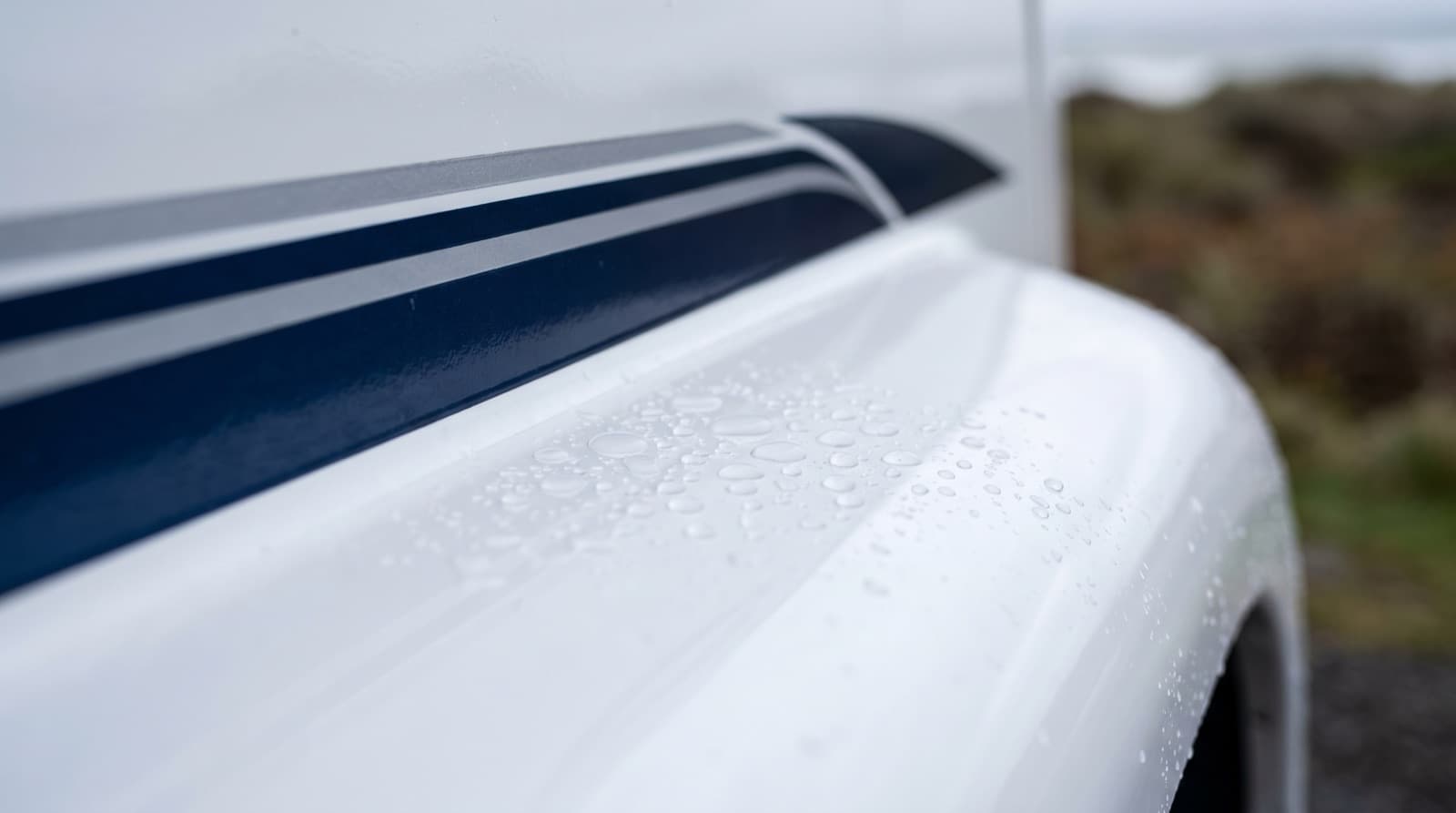
Salt and sun cause oxidation, the chalky fade that turns a bright hull dull. A layer on top slows that down and helps salt rinse off.
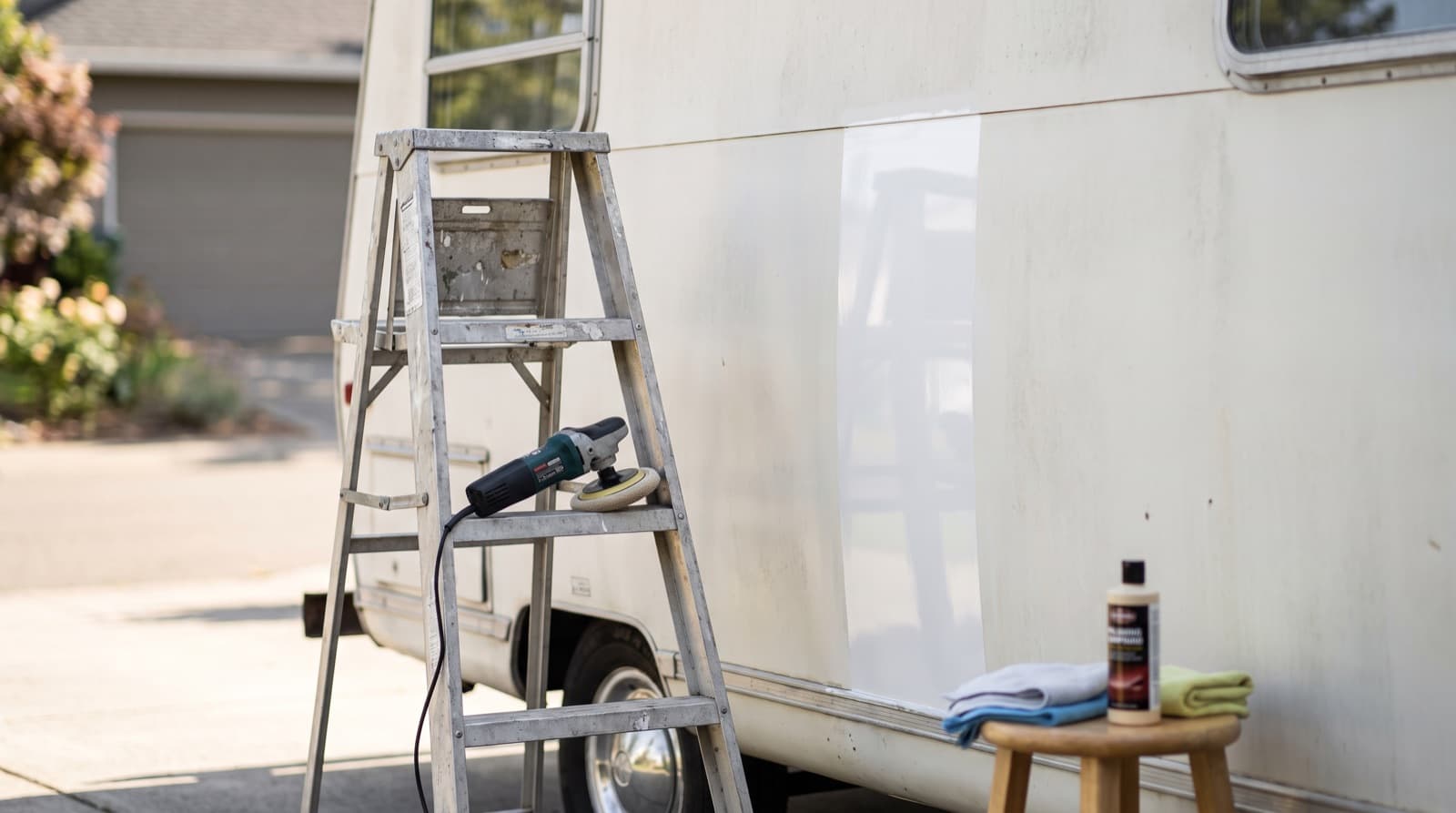
Jet ski hulls are built in different ways. Some are fiberglass with a gelcoat (a hard, shiny outer skin) or a painted finish. Others are molded plastic with the color all the way through. Check your manual before you use any wax, polish or coating.
Wax is cheap and easy, but salt and sun wear it off fast. A ceramic coating lasts much longer, but it needs a clean, polished hull first. Our boat ceramic coating guide covers the trade-offs.
A new coating needs a 10-14 day cure with no washing. A salty ski needs a rinse after each ride, so book it for the off-season.
Keep wax, sealant and vinyl protectant off the traction mats, footwells and boarding step. They make those spots slick, and that's a fall risk.
How do Bay Area salt air, fog and sand affect a jet ski?
Riding on the Bay means salt or brackish water, which is a mix of salt and fresh. Treat every Bay ride as a saltwater ride and rinse the same day.
Fog and the marine layer keep things damp for hours. A ski covered while wet stays wet, and that's how seats and bins grow mildew. Dry it fully first, then use a cover that breathes.
Salt air reaches skis parked near the water, even when they sit still. If yours lives in Pacifica, Half Moon Bay or Sausalito, rinse it every few weeks.
Beach sand hides in mats, seat seams and storage bins. Flush it out with water instead of wiping it. Sun and wind also dry water fast and leave spots, so wash in the shade and towel dry right away.
Launch ramps and marinas set their own rules. Some have a rinse station, and some limit soap or washing. Check the posted rules before you wash there.
When should you call a pro for jet ski detailing?
A home rinse and wash handles most rides. Call a pro when the problem goes past soap and water.
Got a yellow or brown scum line near the waterline? Try a marine hull stain remover first. Wear gloves, follow the label, and check that it's safe for your hull type. Keep it off the seat and decals. Rinse well, then wax that area again.
- The hull looks chalky, faded or dull. That's usually oxidation, and it often takes a machine polish to fix.
- The scum line is still there after a stain remover.
- The seat has mildew spots, stains or faded color.
- You want a ceramic coating or longer-lasting protection.
- You're selling the ski and want it to look its best.
- You have no hose or space to wash, like in an apartment or on the street.
How does Golden Bay detail a jet ski?
Jet ski detailing is a custom-quote service for us. Text a few photos of the hull, deck and seat, and we quote in under 10 minutes.
Our technicians come to you across San Francisco, the Peninsula and Marin. The van brings its own water and power, so a trailer in your driveway works fine.
We hand wash the ski and clean the footwells, mats and storage bins. We deep clean and protect the seat. We can also polish a chalky hull and add wax or a ceramic coating. We don't do engine flushes or mechanical work.
Frequently Asked Questions
How often should you clean a jet ski?
Rinse it after every ride, and soap wash it after every saltwater ride. On fresh water, a soap wash every few rides is enough. Check the wax every few weeks, and do a full clean and dry before storage.
Can you pressure wash a jet ski?
Check your manual first, because some makers say not to use one. If yours allows it, use a low setting and a wide spray tip, and stand well back. Keep it away from seals, decals, seat seams, gauges and the engine area.
Can you wash a jet ski at a self-serve car wash?
You can use the rinse wand if the bay allows trailers. Hold it a few feet back and keep it off seals and the engine area. Never use the foaming brush, since it holds grit from other vehicles that can scratch.
Can I use dish soap to clean a jet ski?
It's best not to. Dish soap strips wax and can dry out the vinyl seat. A pH-neutral boat soap cleans off salt without stripping your protection.
How often should you wax a jet ski?
Wax it when water stops beading or a clean towel drags on the hull. If you ride in salt water often, check it every few weeks.
Does Golden Bay Detailing clean jet skis?
Yes. We clean, detail and protect jet skis across San Francisco, the Peninsula and Marin. You don't need a hose or an outlet, because our van brings its own water and power. Every ski gets a custom quote from a few photos.
Keep reading from Golden Bay
Want a clean jet ski without the scrubbing?
Text a few photos for a free quote in under 10 minutes. We come to you across San Francisco, the Peninsula and Marin, with our own water and power.