RV & Marine
Boat Waxing: How to Wax a Boat and How Often to Do It
Key Takeaways
- Boat waxing puts a thin layer of marine wax over clean gelcoat. It blocks some sun, helps salt rinse off, and slows the chalky fade called oxidation.
- Wax a boat again when water stops beading, a clean towel drags on the hull, or chalk comes back. A boat in a salt water slip needs it most often.
- Never wax a boat's non-skid deck, because wax makes it slippery. Keep wax off bottom paint, canvas and clear plastic windows too.
- Wax cannot fix heavily chalked gelcoat. That hull needs to be compounded and polished before any wax goes on.
- Golden Bay Detailing details boats in San Francisco, the Peninsula and Marin. Text a few photos for a custom quote in under 10 minutes.
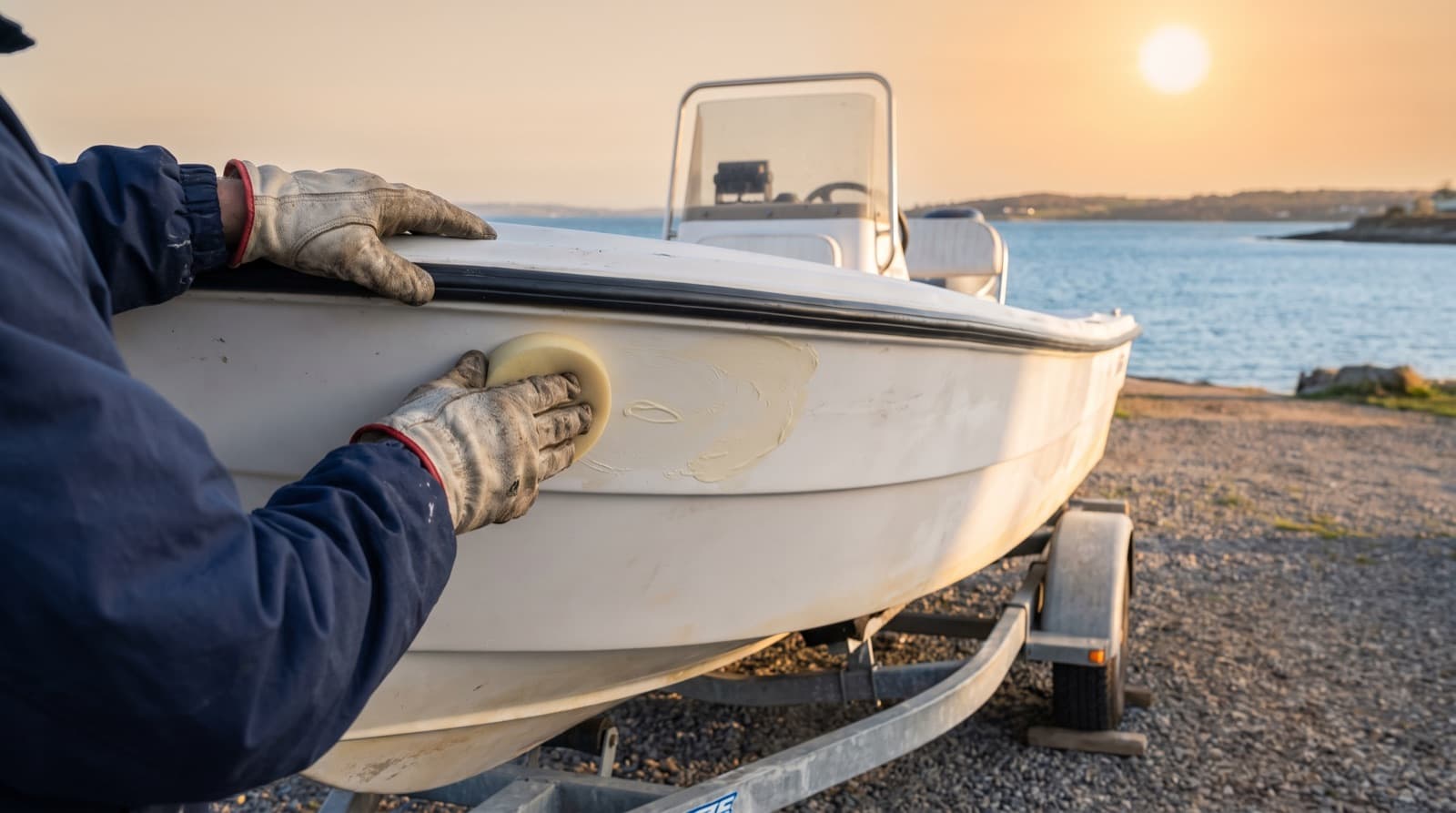
Boat waxing means washing the hull, wiping on thin marine wax in the shade, and buffing it off. Wax again whenever water stops beading on the hull. That is the sign the old coat is gone.
Gelcoat is the hard, shiny outer skin on a fiberglass boat. Sun and salt slowly break it down into a dull, chalky film. Wax takes that beating first, so the gelcoat does not have to.
This guide covers how often to wax, which marine wax to pick, and what never to wax.
What does boat waxing do?
Boat waxing adds a thin shield that wears away so your gelcoat does not. It is meant to get used up and replaced.
It has limits. Wax cannot fix heavily chalked gelcoat, and it will not stop dock scrapes. Here is what it does well:
- It blocks some UV light (the part of sunlight that fades and chalks gelcoat).
- Salt spray beads up and rinses off instead of drying into a crust.
- The scum line (the brown stain at the waterline) wipes off with less scrubbing.
- Soot, bird droppings and fish blood are less likely to stain.
- It brings out deep gloss and color.
How often should you wax a boat?
Wax a boat again whenever water stops beading on the hull. A boat in a salt water slip needs it most often, a trailered boat less, and a covered boat least.
The best times for a full wax are before launch and before the boat goes into storage. Boats that stay in the water all year need checks all year.
How the boat lives sets the pace:
- In a salt water slip all year: wax most often. Salt spray lands every day, and the sun hits the same side. Check the beading every few weeks.
- Trailered and rinsed after each trip: wax less often. A fresh water rinse clears most of the salt.
- Stored under a cover or indoors: wax least often. A fresh coat before launch is often enough.
- Dark hulls: wax more often than white ones. Dark gelcoat gets hotter in the sun and shows fading sooner.
Pro tip: Check the sunny side first. A boat in a slip often faces the same way every day. The side that gets the most sun loses its wax first.
How can you tell the wax is gone?
The clearest sign is water that sheets off instead of beading. Check the hull right after a wash, when it is clean and dry. Other signs include:
- A clean microfiber towel drags on the hull instead of gliding.
- Chalk comes back. A dark towel rubbed on the hull picks up white powder.
- The scum line and soot need hard scrubbing again.
- The color looks flat when dry but deep and rich when wet.
Which type of marine wax is best?
For gelcoat that looks a little dull, a cleaner wax is the best pick. For the longest protection on healthy gelcoat, pick a polymer sealant. Every type below works as a fiberglass boat wax.
A polymer sealant is a man-made coating that works like wax and bonds to the gelcoat. It needs very clean gelcoat to stick.
Is your hull painted instead of gelcoat? Skip cleaner waxes and polishes, since their mild grit can dull the paint. Use a product made for painted boat finishes.
| Type | What it is | Best for | How long it holds up |
|---|---|---|---|
| Cleaner wax | Wax with a mild polish mixed in | Gelcoat that looks a little dull | Short to medium |
| Paste or liquid wax | Wax with no polish in it, in a tin or bottle | A rich, deep layer on smooth gelcoat | Medium |
| Spray wax | Thin wax you spray on and wipe off | Quick top-ups between full wax jobs | Shortest |
| Polymer sealant | Man-made coating that works like wax | Longer protection in sun and salt | Longest of the four |
How do you wax a boat, step by step?
Wash, dry, test, mask, then wipe on a thin coat in the shade and buff it off. Most of the work is prep. Wax locks in whatever is under it, so start with clean, dry, smooth gelcoat.
- Wash from the top down with boat soap and fresh water. Rinse off every bit of salt.
- Lift the scum line, rust drips and soot next, then rinse again. Wax will not remove them.
- Dry the boat fully with soft microfiber towels. Water spots left under wax get sealed in.
- Do the towel test. Rub a dark microfiber towel on the hull. If it stays clean, you are ready to wax.
- A little white on the towel means light chalk. Use a cleaner wax, or a boat wax and polish combo.
- Lots of white powder means heavy chalk. Stop. That gelcoat needs repair before any wax.
- Tape off or cover canvas, vinyl seats, clear plastic windows, rubber seals and teak. Wax leaves white residue that is hard to clean off.
- Stay above the waterline. Never wax bottom paint (the paint below the waterline that keeps growth off). Wax can stop it from working.
- Work in the shade on a cool hull. Wipe on a thin coat, one small section at a time.
- Let it haze (turn cloudy) for the time on the label. Then buff it off with a clean towel.
- Want more depth? Add a second thin coat after the wait time on the label.
Pro tip: Never wax the non-skid deck, the rough, grippy part you walk on. Wax makes it slick, and a wet, slick deck is how people fall. If wax lands there, scrub it off right away with boat soap and a soft brush.
Should you wax a boat by hand or with a machine?
Both work well. Hand waxing is fine for small boats, jet skis and tight spots. A machine is faster and more even on a big hull.
- By hand: use a foam pad. Spread a thin layer in small passes that overlap.
- By machine: use a dual-action polisher (a gentle machine whose pad spins and wobbles). Pick a soft foam pad, a low speed and light pressure.
- Keep the machine off sharp edges, decals and the rub rail (the bumper strip on the side).
- Near water, use a cordless machine or a GFCI outlet. That is the kind with a test button that cuts power fast.
- Either way, buff off by hand with clean microfiber towels. Flip to a fresh side often.
- Only work where your footing is solid. A dock, ladder or trailer can shift under you.
When is wax not enough?
Wax only protects gelcoat that is still healthy. It cannot bring back a heavily chalked hull. If the towel picks up lots of white powder, the gelcoat needs compounding and polishing first. Compounding uses a gritty paste to cut off the dead layer. Our boat gelcoat oxidation removal guide covers that repair. Wax goes on at the very end.
A ceramic coating is the other choice. It is a liquid that hardens into a thin, glassy shell. It lasts much longer than wax, but it costs more and needs careful prep. Tired of waxing again and again? Our boat ceramic coating guide helps you decide.
How do Bay salt, fog and sun wear down boat wax?
Boats around San Francisco Bay face a tough mix. Wind lifts salt spray and throws it across the hull. As it dries, the salt sits on the wax and wears it down.
Fog adds to it. Morning fog leaves the boat damp, then the afternoon sun bakes it dry. Each round leaves salt spots and wears the wax a bit more.
A few habits help wax last longer here:
- Rinse the whole boat with fresh water after every outing, top to bottom. Our boat cleaning guide covers the full wash.
- Dry it with soft towels so salt spots do not bake on.
- Use a cover that breathes when the boat sits between trips.
- Ask your harbor office before you wax at the slip. Marinas in Sausalito, Tiburon, Half Moon Bay and San Francisco set their own rules. Use the products they allow, and keep drips out of the water.
When should you call a pro for boat waxing?
Waxing a small boat yourself is safe and simple if you have a free weekend. Call a pro when the job is bigger than your time or tools.
Golden Bay Detailing does boat detailing in San Francisco, the Peninsula and Marin. Our technicians work at your slip where the marina allows it. We also come to trailered boats at home. The van brings its own water and power. Every boat gets a custom quote. Text a few photos, and we quote in under 10 minutes.
- The towel test shows heavy chalk, so the gelcoat needs repair before wax.
- The boat is big, and you can only reach the hull sides from a ladder or dinghy.
- The gelcoat is dark and shows every swirl and streak.
- You want the hull polished and protected with full prep.
- The boat lives in a salt water slip, and you cannot keep up with the waxing.
Frequently Asked Questions
Can you use car wax on a boat?
Car wax will add some shine, but it is made for thin car paint. Marine wax is made for gelcoat, strong sun and salt. It usually holds up better on a boat.
Do you need to polish a boat before you wax it?
Only if the gelcoat is dull or chalky. A cleaner wax can handle light dullness in one step. Heavy chalk must be compounded and polished first, then waxed.
Can you wax a boat while it is in the water?
Yes, above the waterline. You can reach the topsides from the dock or a dinghy if your marina allows it. Bare gelcoat below the waterline has to wait until the boat is hauled out.
Is it better to wax a boat in the sun or the shade?
Shade, on a cool hull. In direct sun, wax dries too fast and streaks. It is also much harder to buff off.
How much does boat waxing cost?
It depends on the boat's length and how chalky the gelcoat is. Whether it needs a polish first matters too, and so does slip or trailer access. So every boat gets a custom quote.
Does Golden Bay Detailing wax boats?
Yes, as part of our boat detailing in San Francisco, the Peninsula and Marin. We work at your slip where the marina allows it, or at home on the trailer. Text a few photos for a custom quote in under 10 minutes.
Keep reading from Golden Bay
Get a Free Boat Waxing Quote
Text us a few photos and we quote in under 10 minutes. We come to you, at your slip where the marina allows it or at home on the trailer.