How-To
Cleaning Boat Seats: Remove Mildew From Marine Vinyl Safely
Key Takeaways
- To clean boat seats, scrub gently with a soft brush and marine vinyl cleaner, then rinse with fresh water. Dry them fully and add UV protectant.
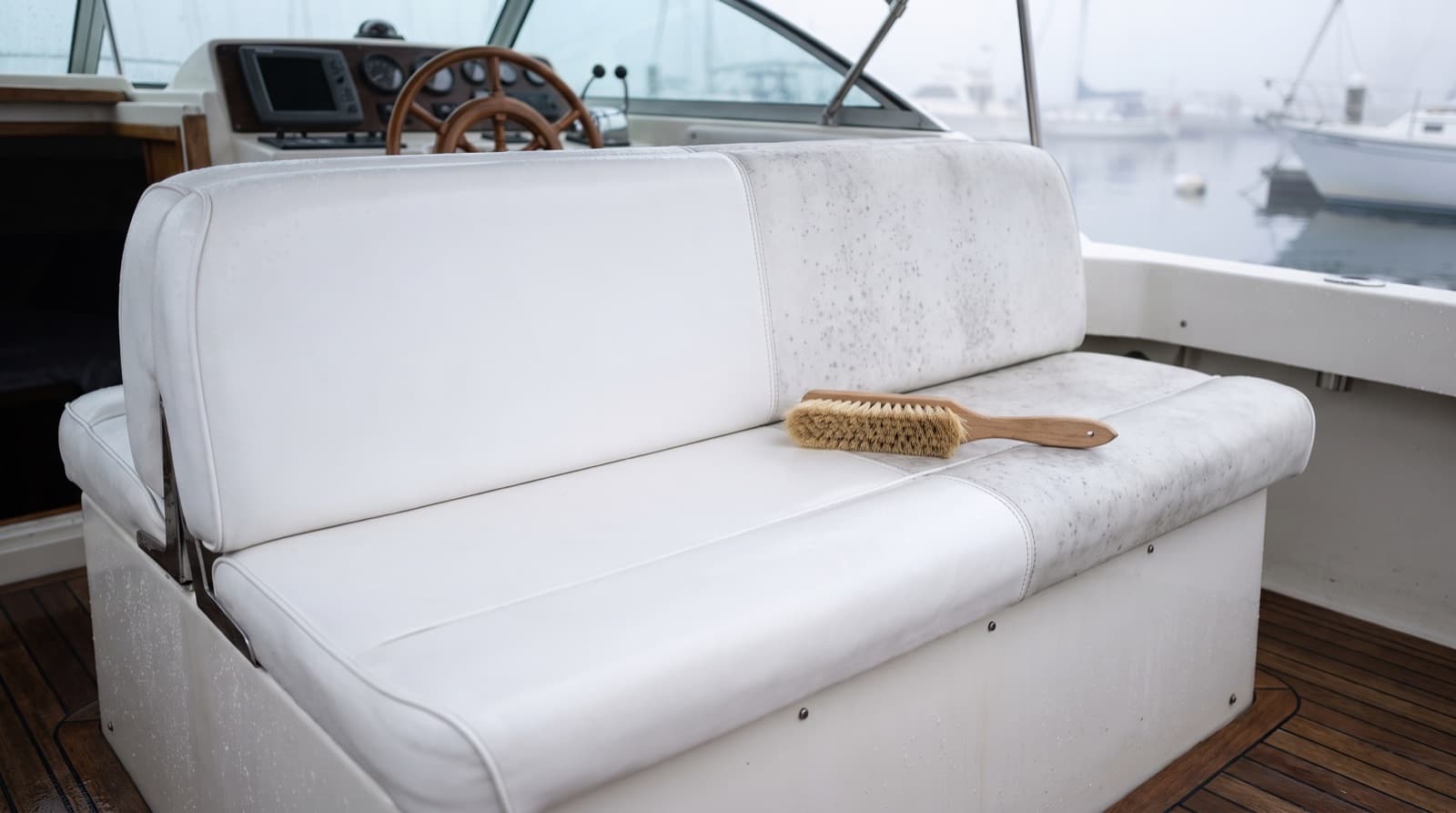
- Black spots on boat seats are usually mildew and often clean off. Pink stains are a dye left by bacteria under the vinyl, and they are often permanent.
- On boat seats, skip strong bleach, magic erasers, solvents and pressure washers. They weaken stitching, dull the finish, dry out vinyl or push water into the foam.
- Mildew keeps coming back on boat seats when the foam and cloth backing inside stay damp. That is why drying and airflow matter as much as scrubbing.
- Golden Bay Detailing details boats in San Francisco, the Peninsula and Marin. Text a few photos and we send a custom quote in under 10 minutes.
Clean boat seats with a soft brush and a marine vinyl cleaner, then rinse, dry fully and add UV protectant. Cleaning boat seats is less about strong products and more about being gentle and getting the seats truly dry.
Marine vinyl (the tough plastic skin on boat seats) has a thin top layer that blocks sun and water. Harsh products strip that layer. Then stains sink in and come back faster.
Why do black and pink stains keep coming back on boat seats?
Mildew does not just sit on top of the seat. It grows in the cloth backing, the stitching and the foam inside. You can wipe the top clean, but the growth is still there.
Every seam is a tiny doorway. Water seeps in through the thread holes and soaks the foam. Foam dries slowly, so mildew gets a damp home for days.
Mildew is a type of mold. Most boat mold on seats shows up as flat black or gray dots. The same growth can live deep in the foam, where no cleaner can reach.
Pink stains are different. Bacteria under the surface give off a pink dye. The dye moves up into the vinyl itself, so it is often permanent.
| What you see | Likely cause | Will it clean off? | What to try |
|---|---|---|---|
| Black or gray dots | Mildew on the surface or in the grain | Usually, if caught early | Marine mildew cleaner and a soft brush |
| Pink or red patches | Bacteria under the vinyl leaving a dye | Often not fully | A vinyl-safe stain remover may lighten it |
| Gray grime in the texture | Dirt, salt and skin oils | Yes | Marine vinyl cleaner and a soft brush |
| Yellow patches where arms and legs rest | Sunscreen and body oils baked in by sun | Fresh ones, yes. Old ones may only lighten | Vinyl cleaner after each trip |
| Blue tint on light seats | Dye rubbed off new jeans | Often, if cleaned fast | Vinyl cleaner soon, before the dye sets in |
| Musty smell, clean-looking seat | Growth inside the foam | Not from the outside | New foam or reupholstery |
What should you never use on boat seats?
The wrong fix can do more harm than the mildew. Skip these:
- Strong bleach. It weakens thread, so seams split. It also strips the UV top layer, so vinyl fades and cracks sooner.
- Melamine sponges (white "magic eraser" blocks). They act like fine sandpaper and wear away the top layer.
- Solvents like acetone or paint thinner. They pull out the oils that keep vinyl soft, so it stiffens and cracks.
- Pressure washers. The blast drives water through the seams and into the foam, which feeds the next round of mildew.
- Stiff brushes and scouring pads. They scratch the grain, and dirt packs into the scratches.
- Mixed cleaners. Never mix two products, and never mix anything with bleach or ammonia. Use one, rinse it off, then try the next.
How do you clean boat seats step by step?
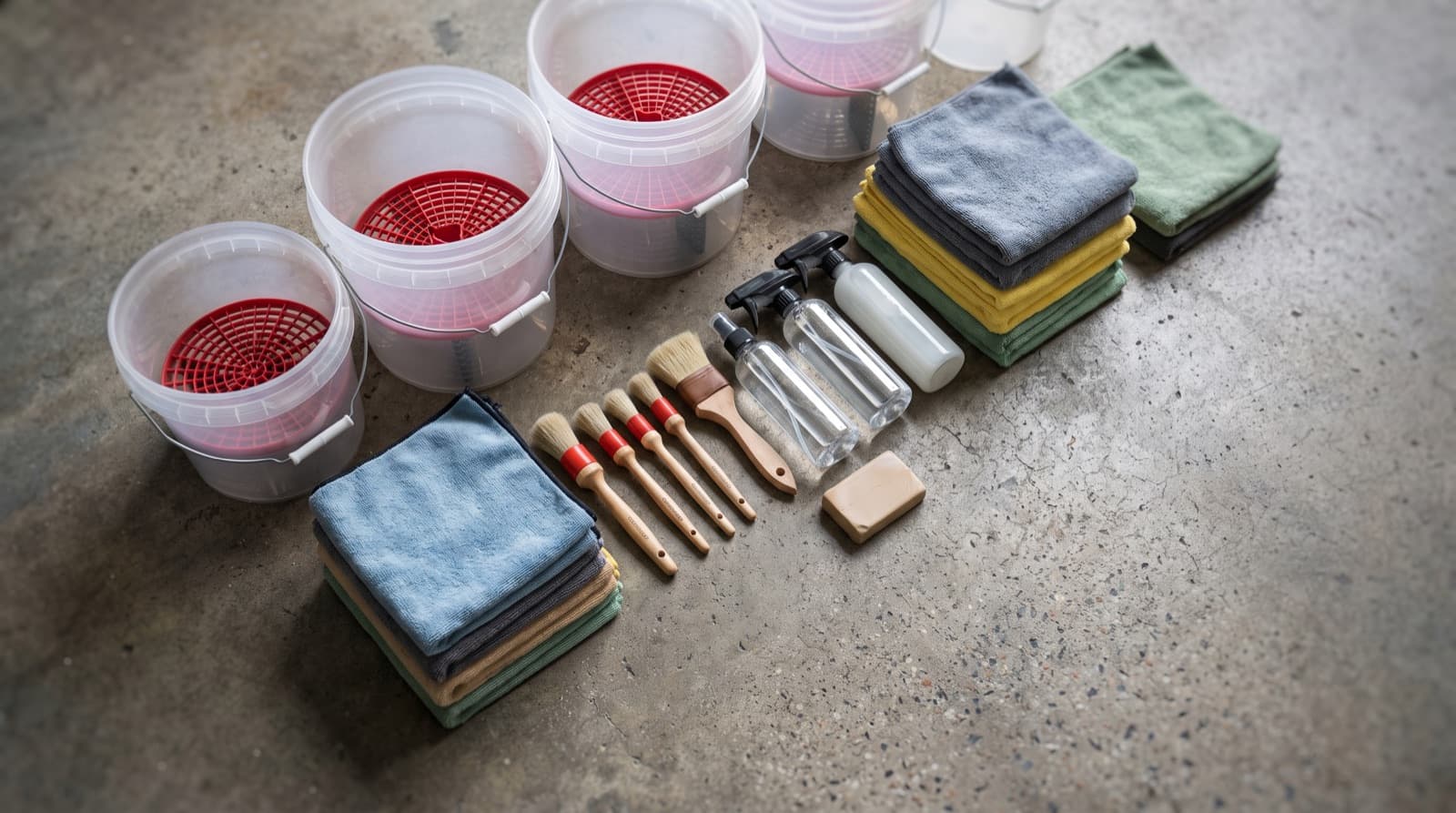
Cleaning boat vinyl seats takes a soft nylon brush, a marine vinyl or marine upholstery cleaner and microfiber towels. Add a bucket of fresh water and a UV protectant made for vinyl.
Work on a mild day, in shade if you can. Hot sun dries cleaner on the vinyl before you can rinse it. Wear gloves and keep air moving. Then follow these steps:
- Brush or vacuum off sand, salt and crumbs. Grit scratches vinyl when you scrub.
- Test the cleaner on a hidden spot, like the underside of a cushion.
- Spray one small section. Let it sit a minute, but don't let it dry.
- Scrub gently with the soft brush in small circles. Work along the seams, but don't dig at the thread.
- Wipe with a damp microfiber towel, rinsing it often in the bucket.
- Rinse with a light mist of fresh water, or wipe twice with clean, damp towels. Leftover cleaner dries out vinyl.
- Towel-dry right away. Press the towel into the seams and piping (the rolled trim along the edges).
- Let the seats air-dry fully. Stand removable cushions on edge so the bottoms can breathe.
- Once dry, wipe on a UV protectant (a sun-blocking treatment for vinyl). Buff off the extra so the seat isn't slippery.
Pro tip: A seat is only dry when the seams are dry. Press a dry towel hard into the stitching. If it comes up damp, wait before you cover the boat.
How do you remove mildew from boat seats?
For black spots, use a mildew stain remover labeled safe for marine vinyl and stitching. Many contain a mild bleach. Follow the label exactly, and never make a stronger mix.
Rinse off any other cleaner first. Then spray the spots, wait the time on the label and brush gently. Rinse very well, since leftover product keeps eating at thread and vinyl.
Light spots often lift in one or two rounds. If they don't, stop. More scrubbing hurts the seat before it removes the stain.
Be realistic about pink stains. A vinyl-safe stain remover may lighten them. But the dye sits inside the vinyl, so no one can promise it out.
Keep gloves on and hatches open, and wash your hands after.
How do you clean boat carpet and snap-in covers?
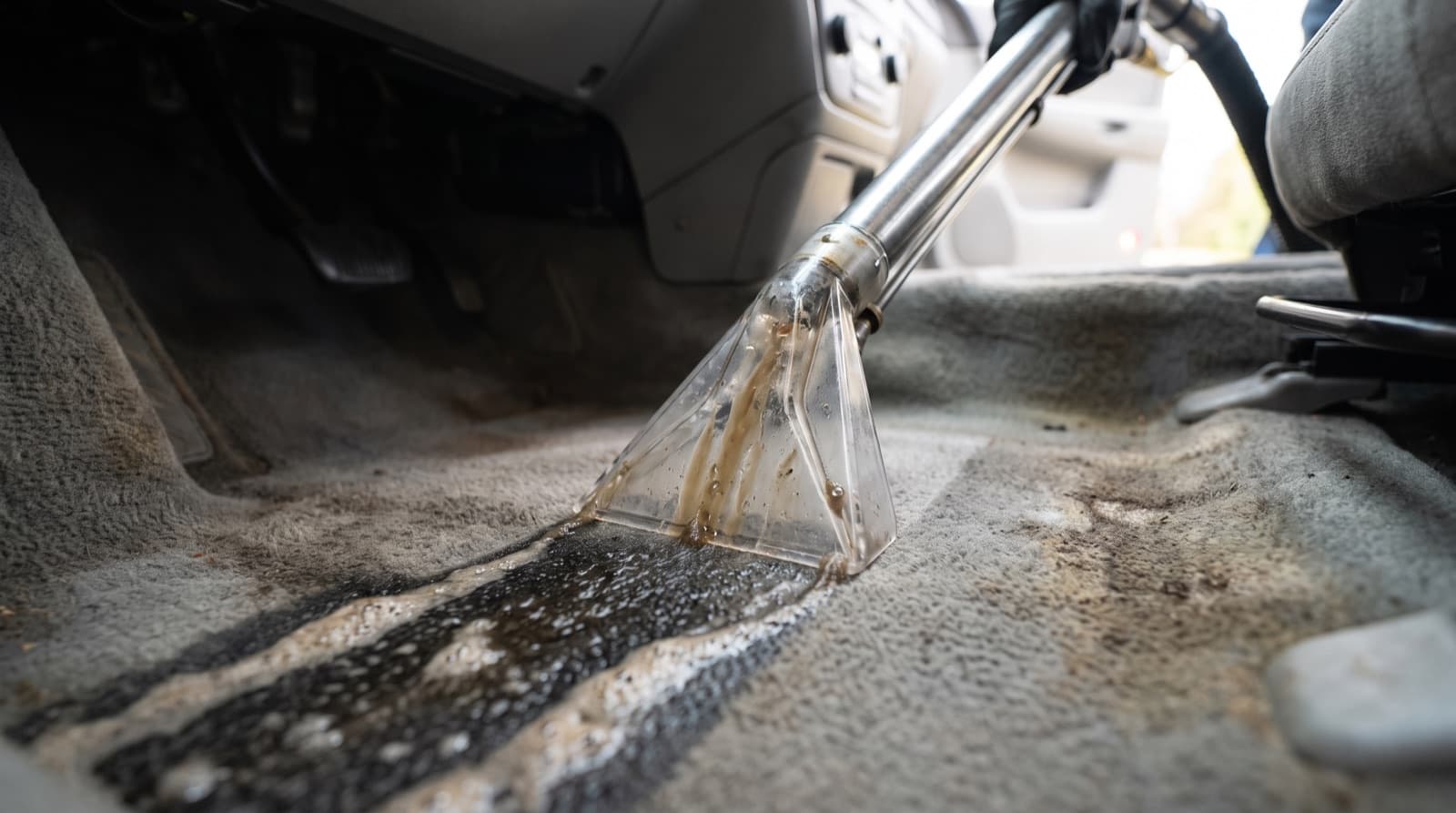
Carpet is the other half of boat interior cleaning. It traps sand, salt, fish scales and spills. It also holds water against the deck, which feeds mildew and odor.
- Snap-in carpet: take it ashore, shake it out and vacuum both sides.
- Scrub with a mild carpet cleaner and a soft brush. Rinse lightly.
- Pull the water out with a wet/dry vacuum. Hang it or lay it flat in the sun until fully dry.
- Clean and dry any damp or dark spots on the deck before the carpet goes back.
- Glued-down carpet: vacuum, clean small sections and pull the water out the same way. Open every hatch.
- Fabric covers: check the care tag. Most clean with mild soap, a soft brush and a fresh water rinse.
- Vinyl cushions: don't unzip them or machine-wash the skins. The vinyl can shrink or tear, and it is hard to refit.
Pro tip: A damp cover snapped over a damp seat is the fastest way to grow mildew. If anything is still wet at the end of the day, leave it off overnight.
How do you keep mildew off boat seats?
Mildew needs damp, still air and food, like dirt, skin oils and sunscreen. Take away any one, and it slows down.
A soaked foam cushion can take days to dry, and longer under a cover in fog. So keep water out and keep air moving.
A cover keeps rain and sun off, but it also traps damp air. If it sags, it can hold a pool of water over your seats.
- Prop the cover up with support poles so water runs off.
- Keep the cover's vents open so damp air can escape.
- Stand cushions on edge, or tip seat backs up, so the bottoms can breathe.
- Open lockers and hatches on dry, breezy days. A small fan helps.
- Set moisture-absorber tubs in the cabin and lockers. Empty them when they fill.
- If your slip has shore power, a small dehumidifier made for boats can dry the cabin air.
- Never put a wet cushion into a closed locker or a sealed bag.
- Wipe off salt spray and sunscreen after each trip.
- Add UV protectant every few weeks in season. It slows sun damage and helps dirt wipe off.
Why do boat seats stay damp in the Bay Area?
Bay Area summers are foggy. The marine layer (the low, wet cloud off the ocean) rolls in many mornings. A seat under a cover may not dry out for days.
That is why boats in Sausalito and along the city waterfront can grow mildew even in July. Even in sunnier harbors like San Rafael, damp night air settles on seats.
Salt air adds to it. Salt spray dries into a thin crust, and salt pulls water from the air. So a salty seat stays damp longer.
In the rainy season, check the cover for sags and pools of water after big storms.
Cleaning at a slip? Keep the mess out of the water:
- Ask the harbor office which cleaners the marina allows.
- Use a bucket and damp towels, not a running hose.
- Clean removable cushions ashore on a tarp.
- Empty the bucket where the marina tells you to.
- Don't let spray or drips go over the side.
When should you call a pro or replace the cushions?
DIY cleaning handles light dirt and fresh black spots. These signs mean it is time to see a marine upholstery shop:
- Black spots come back within a few weeks, even after a good clean.
- Seats smell musty when they look clean and dry.
- Cushions squish out water or feel heavy and soggy.
- The vinyl is cracked, sticky or hard, or the seams are splitting.
- Pink stains cover large areas.
What if the mildew is inside the foam?
Growth deep in the foam can't be cleaned out from the surface. The cushion needs new foam, new vinyl or both. That job is called reupholstery. It is upholstery shop work, not detailing.
If you replace the foam, ask about marine quick-dry foam. Its open cells let water drain straight through.
Need the boat itself detailed? Golden Bay Detailing serves San Francisco, the Peninsula and Marin. Text a few photos, and we send a custom quote in under 10 minutes. We come to you.
Frequently Asked Questions
Can you use bleach on boat seats?
Skip strong bleach. It weakens thread and strips the vinyl's UV top layer. Use a mildew remover labeled safe for marine vinyl, follow the label and rinse well.
Can pink stains be removed from boat seats?
Often not fully. The pink is a dye left by bacteria, and it sits inside the vinyl. A vinyl-safe stain remover may lighten it, but no one can promise it out.
Is it mold or mildew on my boat seats?
Mildew is a type of mold. Flat black or gray dots on the surface are usually mildew, and they often clean off. A musty smell from a clean-looking seat points to growth in the foam, which needs new foam.
Can I use vinegar or dish soap on boat seats?
Mild soap in fresh water is fine for light dirt on vinyl seats. The usual dish soap warning is about waxed hulls, since soap strips wax. Diluted white vinegar is a common fix for light mildew, so test it and rinse well. Never use it with bleach or a bleach-based remover.
How do I store boat cushions for winter?
Clean and dry them fully first. Store them on edge in a dry, airy place, off the boat if you can. If they stay aboard, add vents to the cover and moisture-absorber tubs.
How do I get a quote from Golden Bay for my boat?
Text a few photos of your boat to (415) 483-5686 and tell us what you want done. We send a custom quote in under 10 minutes. We serve San Francisco, the Peninsula and Marin.
Keep reading from Golden Bay
Want your whole boat detailed?
Text a few photos and get a free custom quote in under 10 minutes. We come to you in San Francisco, the Peninsula and Marin.